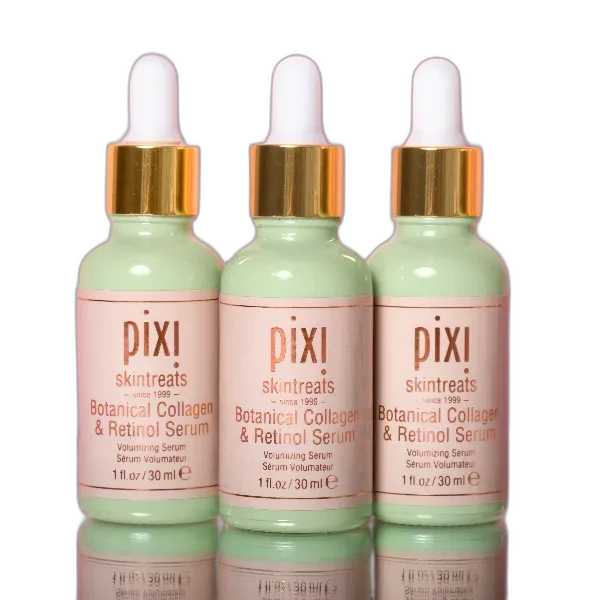
Collagen & Retinol Serum
Budget Anti-Aging Multi-Tasker
 Verified reviewer
Pros & cons.
- +Multi-active formula combines retinol, peptide, niacinamide, and botanical collagen at $24
- +Lightweight, fast-absorbing texture that layers well under moisturizer without residue
- +Fragrance-free, vegan, and cruelty-free with a clean ingredient profile
- +Botanical collagen provides noticeable immediate plumping from first application
- +SNAP-8 family peptide addresses expression lines through a different mechanism than retinol
- +Niacinamide inclusion helps buffer retinol irritation while brightening skin tone
- +Gentle enough for retinol beginners while still delivering meaningful active concentrations
- −Exact retinol percentage not disclosed, limiting transparency for informed consumers
- −Glass dropper bottle exposes retinol to light and air, potentially reducing stability
- −Vitamin C concentration too low to deliver significant standalone antioxidant benefits
- −May not be potent enough for experienced retinol users seeking aggressive anti-aging results
- −Chamomile extract poses allergen risk for those sensitive to Asteraceae plant family
The full review.
Pixi built its brand on one product: the Glow Tonic. That green bottle of glycolic acid became a Target staple and a gateway for skincare enthusiasts who learned the word ‘exfoliant’ from YouTube. When Pixi entered the retinol space, they added a twist: botanical collagen.
The Collagen & Retinol Serum pairs retinol with Acacia Seyal Gum Extract, a plant-derived polysaccharide Pixi calls botanical collagen. This is not collagen like your body produces. It does not rebuild your dermal matrix. Instead, its galactose and rhamnose sugar content binds water, creating an immediate plumping effect that makes skin look fuller from the first application. The botanical collagen provides instant gratification while the retinol works on structural remodeling over several weeks.
Retinol is third on the INCI list, after water and glycerin. This suggests a meaningful concentration likely high enough to change skin rather than just for label appeal. Pixi does not disclose the exact percentage, which limits transparency for consumers who want to know exact amounts.
Acetyl Heptapeptide-4, a member of the SNAP-8 peptide family, elevates this beyond a basic retinol serum. This neurotransmitter-inhibiting peptide works on expression lines through a different mechanism than retinol. It softens muscle contractions that create dynamic wrinkles, while retinol addresses skin texture and collagen production at the cellular level. Having both in one formula at this price point is unusual.
Niacinamide acts as a skin-brightening agent and an irritation buffer for the retinol. Ascorbic acid is also present, but its position near the end of the INCI list means it functions as a supporting antioxidant rather than a primary vitamin C treatment. It is not a replacement for a dedicated C serum.
The texture excels. It is lightweight and slightly milky—more like a liquid than thick, draggy serums. It absorbs within thirty seconds, leaves no residue, and layers under a moisturizer. This disappearing act suits people who dislike the feeling of products sitting on their skin.
The formula is clean: fragrance-free, silicone-free, oil-free, paraben-free, vegan, and cruelty-free. Beyond retinol, rosemary extract and chamomile are potential irritants; chamomile can be an allergen for those sensitive to the Asteraceae plant family. BHT and propyl gallate serve as preservative antioxidants to maintain stability.
The plumping effect from the botanical collagen is noticeable within the first few applications. Most users report improved radiance and smoother texture within two to three weeks. The real payoff occurs at the eight to twelve week mark as retinol’s effects on cell turnover and collagen stimulation compound. Fine lines soften and skin tone evens out. The effect is less ‘dramatically transformed’ and more ‘you look like you’ve been sleeping eight hours and drinking water,’ a realistic promise for a $24 serum.
The limitation is the potency ceiling. This will not match a prescription tretinoin or high-concentration retinol from a clinical brand. It fits the gentle-but-effective lane, which works for retinol beginners and maintenance users but may not satisfy experienced retinol users.
The packaging is functional but imperfect. The glass dropper bottle looks nice but is not ideal for retinol, which degrades with light and air exposure. An opaque, airless pump would better protect the formula. Some users also noted the dropper quality could be improved for nightly use over several months.
At $24 for 30ml, the value is strong. You get retinol, a SNAP-8 peptide, niacinamide, botanical collagen, and vitamin C in a cruelty-free, vegan formula for less than a fancy lunch. The price-to-active ratio is impressive, even without disclosed exact concentrations.
Pixi risked centering a retinol serum on botanical collagen, a concept that could seem like a gimmick. However, the formula uses legitimate supporting actives, a good user experience, and a price that lowers the barrier to entry. It is not the most powerful retinol available, but it is a thoughtfully formulated entry point that outperforms many serums at twice the price.
Formula
Texture
The texture excels. It is lightweight and slightly milky—more like a liquid than thick, draggy serums. It absorbs within thirty seconds, leaves no residue, and layers under a moisturizer. This disappearing act suits people who dislike the feeling of products sitting on their skin.
Best for
The plumping effect from the botanical collagen is noticeable within the first few applications. Most users report improved radiance and smoother texture within two to three weeks. The real payoff occurs at the eight to twelve week mark as retinol’s effects on cell turnover and collagen stimulation compound. Fine lines soften and skin tone evens out. The effect is less ‘dramatically transformed’ and more ‘you look like you’ve been sleeping eight hours and drinking water,’ a realistic promise for a $24 serum.
Not ideal for
The limitation is the potency ceiling. This will not match a prescription tretinoin or high-concentration retinol from a clinical brand. It fits the gentle-but-effective lane, which works for retinol beginners and maintenance users but may not satisfy experienced retinol users.
Ingredient analysis.
Full INCI list
Aqua/Water/Eau, Glycerin, Acacia Seyal Gum Extract, Retinol, Methyl Methacrylate/Glycol Dimethacrylate Crosspolymer, Acetyl Heptapeptide-4, Niacinamide, Rosmarinus Officinalis (Rosemary) Extract, Anthemis Nobilis (Chamomile) Extract, Ascorbic Acid, Tocopheryl Acetate, Citric Acid, Carbomer, Potassium Sorbate, Hydroxyethyl Cellulose, Caprylyl Glycol, Disodium EDTA, Propyl Gallate, BHT
Skin match.
The science.
The Science
Retinol works by binding to retinoid receptors in the skin, which upregulates collagen gene expression and speeds up epidermal turnover. A 2016 study by Kong et al. in the Journal of Cosmetic Dermatology shows that 12 weeks of topical retinol application reduces wrinkles and increases epidermal thickness in human subjects, proving retinol works even at over-the-counter concentrations.
Acetyl Heptapeptide-4 is a SNAP-8 peptide. It mimics the N-terminal domain of the SNAP-25 protein to control neurotransmitter release. By inhibiting SNARE complex formation, it reduces the muscle contractions that cause expression lines. This topical mechanism is similar to injectable neuromodulators but works at a much milder degree. Clinical data on SNAP-8 peptides shows wrinkle depth reduces by 10-30% during real-world cosmetic use.
The botanical collagen component, Acacia Seyal Gum Extract, is a polysaccharide containing galactose and rhamnose sugars. A double-blind, placebo-controlled study on women aged 41-50 shows this plant-derived extract provides hydration and plumping results similar to animal-derived collagen when applied topically. The mechanism is primarily hygroscopic; the sugars form a water-binding film on the skin surface instead of integrating into the dermal collagen network.
Niacinamide supports ceramide synthesis and barrier function. Multiple studies confirm niacinamide reduces transepidermal water loss and improves skin radiance at concentrations as low as 2%. In this formula, niacinamide also tempers retinol-induced irritation by strengthening the barrier that retinol's accelerated turnover can temporarily compromise.
References
- A comparative study of the effects of retinol and retinoic acid on histological, molecular, and clinical properties of human skin — Journal of Cosmetic Dermatology (2016)
Dermatologist Perspective
Dermatologists often see multi-peptide retinol serums as good entry points for patients who want anti-aging results but avoid prescription-strength retinoids. Clinicians frequently recommend combining retinol with niacinamide because niacinamide's barrier-strengthening properties mitigate the dryness and irritation common when starting retinol. Board-certified dermatologists note that botanical collagen alternatives like Acacia Seyal Gum provide humectant benefits but do not match the collagen-stimulating effects of retinoids. For patients wanting meaningful anti-aging results, this product works as a first step before upgrading to higher-potency retinoids under medical guidance.
Where it fits in your routine.
Apply 3-4 drops to clean, dry skin in the evening after cleansing and toning. Press it gently into the face and neck, but avoid the eye area. If you are new to retinol, use it every other night for the first 2-3 weeks, then move to nightly use as tolerated. Always use a moisturizer to support the skin barrier. Use SPF 30 or higher every morning because retinol increases photosensitivity. Do not layer with other retinoids, benzoyl peroxide, or strong AHA/BHA exfoliants on the same night.
At $24 for 30ml, this serum has high ingredient variety for the price. A single formula with retinol, a SNAP-8 peptide, niacinamide, botanical collagen, and vitamin C usually costs $40-60 from clinical brands. Only one size exists, so there is no bulk-buying advantage. The value is highest for retinol beginners and maintenance users wanting a multi-active nighttime serum without a large cost. Pixi's 25-year track record adds reliability; this isn't an untested newcomer making big promises.
Retinol beginners can use this affordable, multi-active anti-aging serum for a gentle learning curve. It also works for budget-conscious skincare enthusiasts who want peptide and retinol benefits without buying separate products.
People with highly sensitive or reactive skin, active eczema, or a compromised skin barrier should use this with caution or skip it. Experienced retinol users seeking aggressive anti-aging results will find this too mild.
Product details.
Lightweight, slightly milky liquid serum that absorbs fast with little residue
Virtually unscented — no added fragrance, only a faint botanical note from chamomile extract
Pixi's signature pastel-green branding covers this glass dropper bottle with squeeze pipette. A branded cardboard outer box contains it.
Most users feel a silky, lightweight application with no immediate tingling. Retinol beginners may see mild dryness or flaking after the first week. This is normal and usually ends within 2-3 weeks as skin acclimates. Start every other night.
2-3 months with nightly use (3-4 drops per application)
12 months
All Year
The backstory.
Pixi built its reputation on the Glow Tonic, a glycolic acid toner that became a cult favorite. This serum extends the brand's glow-first philosophy into anti-aging territory, using a plant-based collagen approach that aligns with their cruelty-free, nature-meets-science ethos.
About Pixi
Established Brand (5–20 years)Swedish makeup artist Petra Strand founded Pixi in 1999 in a small London boutique. The brand has a strong following after 25+ years of accessible, glow-focused skincare, but Pixi is not dermatologist-developed and does not publish proprietary clinical research.
Common myths.
Plant collagen works like animal collagen in skincare
Acacia Seyal Gum Extract differs from animal collagen's structure. It is a polysaccharide that mimics collagen's water-binding and plumping effects on the surface instead of integrating into your skin's collagen matrix.
You can't use retinol with vitamin C
The ascorbic acid in this formula acts as a supporting antioxidant, not a high-potency active. This prevents stability or irritation conflicts with the retinol.
FAQ.
Is Pixi Collagen & Retinol Serum good for beginners?
Yes — the retinol concentration is effective but not aggressive. Niacinamide and chamomile extract buffer irritation. Use it every other night, then move to nightly use over 2-4 weeks.
Does the botanical collagen in this serum actually work?
Acacia Seyal Gum Extract hydrates and plumps the skin surface using polysaccharides that bind water. It does not rebuild structural collagen like prescription retinoids, but it provides visible plumping alongside the retinol's long-term benefits.
Can I use this serum during the day?
Use it at night because UV exposure degrades retinol and increases photosensitivity. If you use it in the morning, apply SPF 30 or higher. Evening use maximizes retinol efficacy and the overnight skin repair cycle.
Is Pixi Collagen & Retinol Serum pregnancy-safe?
No — this serum contains retinol, which is unsafe during pregnancy or breastfeeding. Use bakuchiol-based alternatives as a pregnancy-safe retinol substitute.
How does this compare to more expensive retinol serums?
At $24 for 30ml, this serum uses a multi-active formula with retinol, a SNAP-8 peptide, niacinamide, and botanical collagen. It has more ingredient variety than its price suggests, though luxury retinol serums often have higher concentrations, better textures, or advanced delivery systems.
What the community says.
"Leaves skin firmer and visibly glowing"
"Lightweight texture that absorbs quickly"
"Noticeable improvement in fine lines within weeks"
"Good entry-level retinol at an affordable price"
"Non-greasy formula that layers well under moisturizer"
"Some sensitive skin users experienced irritation or redness"
"Dropper applicator quality could be better"
"Glass packaging not ideal for retinol stability"
"Vitamin C concentration too low to deliver standalone benefits"
People also looked at.