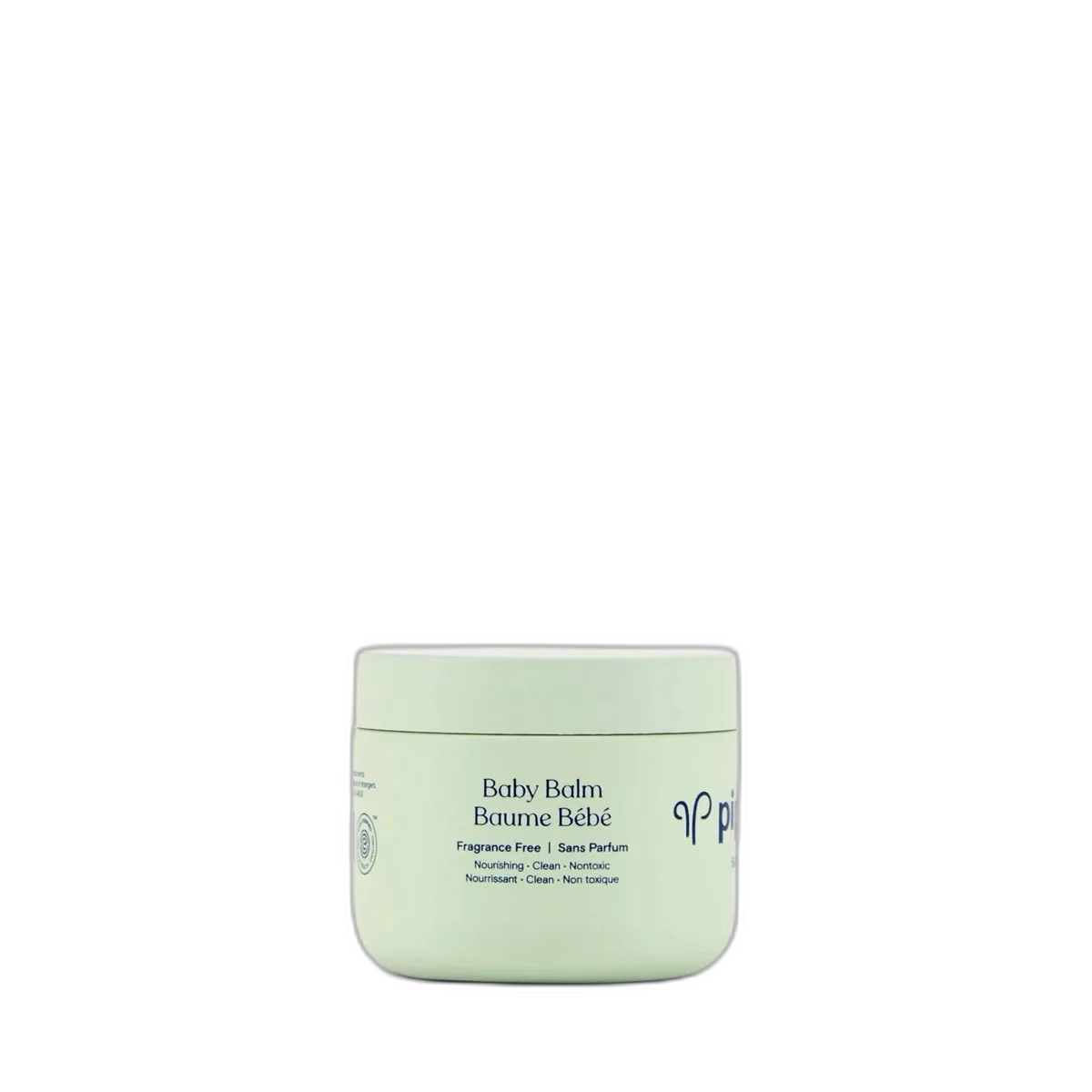
Baby Balm
Clean Baby Essential
 Verified reviewer
Pros & cons.
- +Only seven plant-derived ingredients with zero fragrances, preservatives, or fillers
- +Biotech-grade sugarcane-derived squalane as the primary ingredient
- +EWG Verified and Leaping Bunny Certified with pediatrician approval
- +Multipurpose — works for babies, adults, lips, cuticles, and dry patches
- +Silky, non-greasy texture melts on contact unlike heavy petroleum balms
- +Excellent value at $11.99 for the ingredient quality and certifications
- +Pregnancy-safe and newborn-safe from day one
- −Small 2 oz jar runs out quickly with daily multipurpose use
- −Jar packaging requires finger contact which may introduce bacteria
- −Not a treatment product — cannot resolve active eczema flares or severe rashes
- −Squalane-based occlusion is lighter than petrolatum, which may be insufficient for severely compromised skin
- −Currently sold out on the brand's website, limiting direct purchase options
The full review.
Most skincare consumers do not recognize Amyris. This biotechnology company ferments sugarcane into squalane—the same lipid human skin produces naturally before levels drop in our twenties. When Amyris launched Pipette in 2019, the goal was simple: use pharmaceutical-grade squalane to build the gentlest baby skincare line possible. The Baby Balm is the most concentrated version of that goal; parents often buy it for babies but use it on themselves.
The seven-line ingredient list explains the formula. Squalane is the first ingredient and the functional backbone. Hydroxystearic/Linolenic/Oleic Polyglycerides add emolliency and structure the balm texture. Jojoba esters provide skin-compatible moisture. Rhus Verniciflua Peel Cera (berry wax) gives the balm its semi-solid body and silky spreadability. Glyceryl Behenate/Eicosadioate acts as an emollient thickener. Pomegranate sterols deliver antioxidant-rich phytosterols to support barrier repair. Tocopherol (vitamin E) provides antioxidant protection for the skin and formula stability. That is all. This anhydrous system uses no water, no preservatives, no fragrances, no dyes, and no marketing ingredients.
Seven ingredients. Most baby products contain twenty or more components, including preservatives, emulsifiers, and fragrances. This minimalism is functional. Every ingredient moisturizes or supports the barrier. Nothing extra in the jar means nothing to react to.
The texture subverts expectations. If you use petroleum-based baby balms like Aquaphor or Vaseline, you might expect a thick, greasy paste. Instead, the squalane base feels silky and almost fluid on warm skin. It melts on contact, spreads without dragging, and absorbs partially instead of sitting as a heavy occlusive layer. It applies effortlessly to chapped lips, dry cuticles, rough elbows, and irritated diaper zones.
The occlusive properties are real but differ from petroleum. Petrolatum creates an impermeable seal, making it the gold standard for wound healing. Squalane’s occlusion is breathable; it slows transepidermal water loss without blocking skin function. This is likely preferable for healthy skin needing moisture retention. For severely compromised or actively inflamed skin, plain petrolatum may be more therapeutically effective.
Third-party validation earns this product respect. EWG Verified means the Environmental Working Group audited every ingredient for safety—a standard many baby care brands claim but few actually verify. Leaping Bunny certification confirms cruelty-free status via independent audit. Pediatrician approval and dermatologist testing add clinical credibility. These certifications reassure parents navigating newborn skin care.
Sustainability is also a factor. Traditional squalane came from shark liver, which is environmentally destructive and ethically problematic. Olive-derived squalane is an alternative but has variable purity. Amyris’s sugarcane fermentation produces squalane that is more consistently pure and more sustainable than either source. Here, biotechnology delivers on both performance and environmental claims.
At $11.99 for 2 ounces, the price-to-quality ratio is strong. You get biotech-grade squalane in a formula cleaner than products costing three times as much. The size is small; heavy users may finish it in a month. Even then, the annual cost stays under $150, which is reasonable for a daily multipurpose product.
The balm has one limitation: its scope. This is a moisturizer and barrier protector, not a treatment. It will not resolve severe eczema flares, heal active rashes, or replace medicated products. It is a gentle daily maintenance product that keeps skin healthy to reduce the need for those treatments. For delivering clean, effective, sustainable moisture protection to sensitive skin, it works well.
Ingredient analysis.
Full INCI list
Squalane, Hydroxystearic/Linolenic/Oleic Polyglycerides, Jojoba Esters, Rhus Verniciflua Peel Cera, Glyceryl Behenate/Eicosadioate, Punica Granatum (Pomegranate) Sterols, Tocopherol
Skin match.
The science.
The Science
Dermatological research supports Squalane as a skin-compatible emollient. Its unsaturated precursor, Squalene, makes up about 12% of human sebum and is a key part of the skin's natural lipid barrier. Hydrogenation to squalane increases oxidative stability but keeps the biomimetic moisturizing properties. A 2020 study in the International Journal of Cosmetic Science shows that squalane application reduces transepidermal water loss and improves skin barrier function in infant and adult skin.
Choosing Squalane over petrolatum for this formula is an evidence-based choice. Petrolatum is the most effective single-ingredient occlusive (reducing TEWL by up to 98%), but Squalane provides a breathable occlusive effect that reduces moisture loss while supporting normal skin function. Healthy skin needing maintenance hydration rather than therapeutic intervention often prefers this lighter occlusion.
Pomegranate sterols (Punica Granatum sterols) provide phytosterols structurally similar to cholesterol, a critical part of the stratum corneum's lipid matrix. Research in the Journal of Agricultural and Food Chemistry shows that pomegranate seed oil sterols have anti-inflammatory and antioxidant properties, supporting barrier repair in a plant-derived, sustainable format.
Dermatologist Perspective
Pediatric dermatologists increasingly recommend minimally formulated, fragrance-free moisturizers for infant skin care, especially for babies with atopic predisposition. Board-certified dermatologists note that Squalane's biomimetic properties—structurally similar to the squalene in human sebum and newborn vernix—make it a theoretically ideal moisturizing base for infant skin. The seven-ingredient formula removes the preservative and fragrance exposure concerns dermatologists frequently raise about commercial baby products. Dermatologists would note, however, that active eczema or diaper dermatitis may need a dedicated treatment (such as a zinc oxide barrier cream or low-potency topical corticosteroid) alongside this balm. As a daily maintenance moisturizer for prevention and general skin protection, this formula aligns with current pediatric dermatology recommendations.
Where it fits in your routine.
For babies: Apply a small amount to dry patches, chapped areas, behind ears, or the diaper area as needed. Can be used at every diaper change for preventive protection. For adults: Apply to lips, cuticles, elbows, heels, or any dry patches. Can be used as an overnight facial occlusive — apply a thin layer over your moisturizer or serum as the last step of your PM routine. Warm a small amount between fingertips before spreading for easier, more even application.
At $11.99 for 2 ounces, this biotech-grade squalane balm offers outstanding value with EWG Verified and Leaping Bunny certifications. Premium adult squalane balms cost $20-40 for similar sizes. Its multipurpose use — baby care, lip balm, cuticle treatment, and dry patch repair — adds more value. Heavy daily users may finish a jar in 3-4 weeks. No larger size exists to lower the per-unit cost.
Parents want a clean multipurpose baby balm with third-party safety certifications. Adults with sensitive, eczema-prone, or dry skin need a minimal-ingredient occlusive balm. Users seeking a sustainably sourced, cruelty-free, squalane-based petrolatum alternative will like this.
People with oily or acne-prone skin who do not need extra occlusive moisture. Anyone needing medicated treatment for active eczema, severe diaper rash, or skin infections — this is a moisturizer, not a therapeutic product. Users who prefer lightweight, water-based hydration over balm textures.
Product details.
This thick, semi-solid balm softens when it touches warm skin. It feels silky, not waxy, and spreads easily without dragging. The squalane-based formula is lighter than traditional petroleum balms.
Completely unscented — no fragrance of any kind.
Small 2 oz jar with screw-top lid. Compact and portable.
This balm melts onto skin with a lightweight, silky feel. It provides immediate soothing moisture without stinging or tingling. The formula absorbs partially instead of sitting as a heavy layer on top of skin. Chapped or dry areas feel more comfortable instantly.
1-2 months depending on frequency and area of application
12 months
fall winter
The backstory.
Pipette was created by Amyris, a biotechnology company that developed a method to produce squalane from sugarcane fermentation rather than extracting it from shark liver (the traditional source) or olives. The Baby Balm was designed to leverage this clean, sustainable squalane as the base for the gentlest possible multipurpose balm — one safe enough for newborn skin from day one.
About Pipette
Emerging Brand (2–5 years)Amyris, a biotechnology company focused on sustainable ingredient manufacturing, launched Pipette in 2019. Rosie Huntington-Whiteley co-created the brand, which biologists, pediatricians, and dermatologists helped formulate. Amyris uses proprietary fermentation technology to produce its hero ingredient — sugarcane-derived squalane.
Common myths.
Effective baby balms use petroleum or mineral oil as a base.
This formula uses squalane, jojoba esters, and plant-derived waxes to achieve comparable occlusive moisturization without petroleum derivatives. Squalane mimics the skin's natural lipids (squalene). This biomimetic alternative is a preferred choice for many dermatologists treating sensitive or compromised skin.
A product with only seven ingredients can't be effective.
The minimal ingredient list is a feature, not a limitation. Each ingredient has a specific moisturizing or barrier-supporting function. Fewer ingredients reduce potential irritants or allergens—critical for newborn and eczema-prone skin. The EWG Verified certification and pediatrician approval show that simplicity equals efficacy.
FAQ.
Can adults use Pipette Baby Balm?
Many adults use this as a lip balm, cuticle oil, overnight facial occlusive, and dry patch treatment. The squalane-first formula is gentle enough for newborns, so it is safe for all adult skin types, including sensitive and eczema-prone skin. This multi-purpose format fits any vanity.
Is Pipette Baby Balm safe for newborns?
Yes. This formula targets newborn skin. It is pediatrician-approved, dermatologist-tested, and EWG Verified. The seven plant-derived ingredients lack fragrances, preservatives, or common allergens. The squalane base mimics the natural vernix caseosa that protects babies' skin in the womb.
Can Pipette Baby Balm be used for diaper rash?
This balm soothes and protects the diaper area by creating a moisture barrier. It works for mild diaper area dryness and irritation. Consult your pediatrician for active diaper rash; you may need a zinc oxide-based diaper cream for more therapeutic intervention.
Is Pipette Baby Balm good for eczema?
Many parents and adults with eczema report relief from this balm's soothing, occlusive properties. The squalane base and minimal ingredient list reduce irritation risk. This is not a medicated eczema treatment, but it works as a barrier balm to lock in moisture — a key part of eczema management routines.
What makes Pipette's squalane different from other squalane products?
Amyris, a biotechnology company, produces Pipette's squalane by fermenting sugarcane into pharmaceutical-grade squalane. This process creates a pure, stable squalane. It avoids the environmental issues of shark-liver-derived squalane and the variability of olive-derived sources.
What the community says.
"Incredibly gentle and safe for newborn skin"
"Multipurpose — works on lips, cuticles, and dry patches for adults too"
"Only seven clean ingredients"
"No fragrance or irritants"
"Great value for the ingredient quality"
"Effective on eczema-prone skin"
"Small 2 oz size runs out quickly with regular use"
"Balm texture can feel greasy if over-applied"
"Currently sold out on brand website"
"Not effective as a standalone treatment for severe eczema flares"
"Packaging (jar format) requires finger contact which can introduce bacteria"