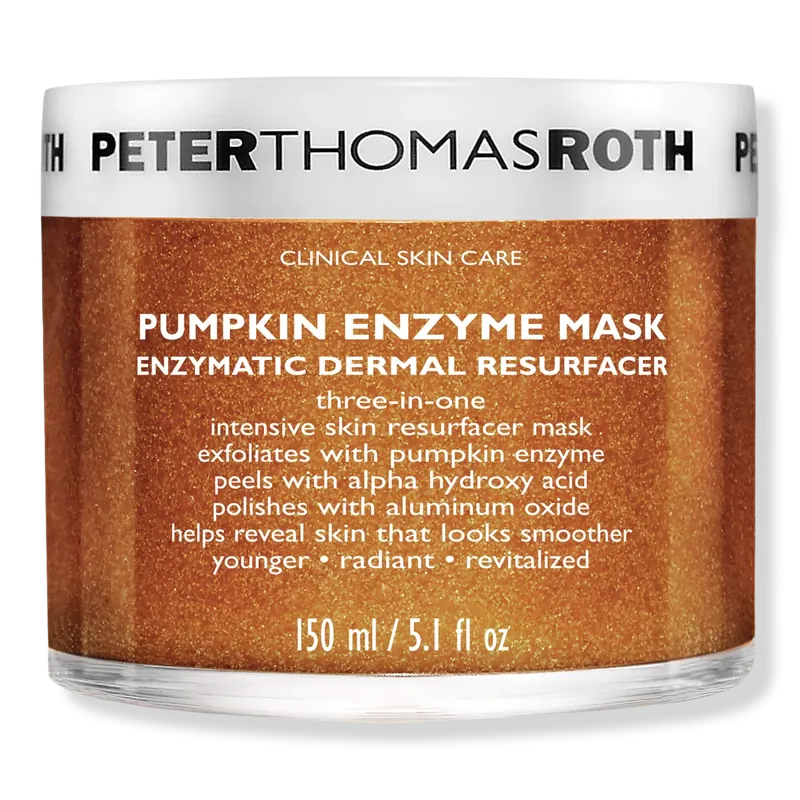
Pumpkin Enzyme Mask
Cult-Classic Resurfacer
 Verified reviewer
Pros & cons.
- +Triple-action exfoliation combining enzymatic, chemical, and physical resurfacing in one step
- +Visible brightening and smoother texture immediately after the first use
- +16% pumpkin purée concentration is higher than most competing enzyme masks
- +Fermented pumpkin extract amplifies enzymatic activity beyond raw pumpkin alone
- +Generous 5 oz jar lasts 4-6 months with regular weekly use
- +Nearly two decades on market with consistent formula and proven results
- +Sodium hyaluronate offsets exfoliation to prevent post-treatment tightness
- −Contains fragrance and cinnamal, a known EU-regulated fragrance allergen and sensitizer
- −Not suitable for sensitive, reactive, or barrier-compromised skin types
- −Aluminum oxide crystals can feel overly abrasive for delicate or thin skin
- −Jar packaging is not hygienic — fingers contact the product directly every use
- −Strong pumpkin pie scent is polarizing and overpowering for some users
- −Sixty-dollar price point is steep for a weekly-use exfoliating mask
The full review.
Peter Thomas Roth’s grandfather ran Hungarian spa resorts using pumpkin and gourd-based treatments. That heritage lives in a bright orange jar, one of the most recognizable products in prestige skincare. The Pumpkin Enzyme Mask has been on shelves for nearly twenty years, showing staying power in an industry where most products vanish within a season.
The concept combines three exfoliation methods into one seven-minute treatment. Proteolytic enzymes from 16% pumpkin purée dissolve keratin bonds between dead skin cells, citric acid and ascorbic acid provide chemical exfoliation, and aluminum oxide crystals — the same material used in professional microdermabrasion — handle the physical component. The formula balances these elements without assaulting your face.
Texture
The texture is thick and gritty. Aluminum oxide crystals sit suspended in the bright orange cream. Application requires a gentle hand; the enzymes and acids do the heavy lifting, so avoid scrubbing. Spread it on, leave it for seven minutes, and let chemistry work while the crystals provide passive physical contact rather than aggressive buffing.
Reality
Tingling starts almost immediately. Within thirty seconds of application, a distinct warming sensation peaks around the two-minute mark and then mellows. This is the proteolytic enzymes and citric acid working on the outer layer of dead cells. The sensation is tolerable for normal, oily, and combination skin, but anyone with a compromised barrier should avoid it.
Rinsing reveals the payoff. Skin feels resurface-smooth, as if a layer of dullness was gently buffed away. The brightening effect is visible immediately, especially on skin with congestion, post-inflammatory marks, or sallowness. Pores look temporarily refined, and a subtle glow lasts into the next morning.
The fermented pumpkin extract — Lactobacillus/Pumpkin Ferment Extract — distinguishes this from simpler enzyme masks. Fermentation breaks pumpkin’s active compounds into smaller, more bioavailable molecules, increasing enzymatic activity beyond what raw pumpkin purée delivers alone. The formula also includes sodium hyaluronate to provide hydration and prevent the tight, stripped feeling aggressive resurfacing treatments often leave.
Scent
This mask contains both Fragrance/Parfum and cinnamal, a known sensitizer derived from cinnamon. The scent is warm and pumpkin-pie-like, a core part of the product’s identity and a fall skincare staple. However, cinnamal is one of the EU’s 26 regulated fragrance allergens, which limits the product for anyone with fragrance sensitivities or allergies. This formula does not prioritize ingredient minimalism.
The supporting ingredients are competent. Ascorbic acid provides antioxidant support and brightening. Tocopherol and retinyl palmitate add antioxidant depth. Sunflower seed oil provides emollience. The formula is silicone-free and paraben-free, but contains preservatives including phenoxyethanol and chlorphenesin.
Works for
The mask justifies its existence through long-term performance. Used once or twice weekly for six to eight weeks, it delivers cumulative improvements in skin texture, pore appearance, and radiance. The triple-action approach addresses proteins, cellular bonds, and physical debris simultaneously, which single-mechanism exfoliants cannot replicate.
Not ideal for
The limitations are clear. Sensitive skin types should avoid this product. The combination of fragrance, cinnamal, physical exfoliants, and chemical acids creates too many irritation vectors for reactive skin. The jar packaging is not hygienic, as fingers introduce bacteria into the open jar. At sixty dollars, the price is firmly in prestige territory for a weekly treatment.
However, the five-ounce size is generous. With weekly use, it lasts four to six months, making the per-use cost reasonable. The formula has remained largely consistent for years, which shows it works.
Ingredient analysis.
Full INCI list
Water/Aqua/Eau, Cucurbita Pepo (Pumpkin), Aluminum Oxide, Glycerin, Triethanolamine, Lactobacillus/Pumpkin Ferment Extract, Ascorbic Acid, Tocopherol, Retinyl Palmitate, Sodium Hyaluronate, Leuconostoc/Radish Root Ferment Filtrate, Helianthus Annuus (Sunflower) Seed Oil, Citric Acid, Disodium EDTA, Benzoic Acid, Sorbic Acid, Potassium Sorbate, Sodium Benzoate, Chlorphenesin, Phenoxyethanol, Benzyl Alcohol, Cinnamal, Fragrance/Parfum
Skin match.
The science.
The Science
The Peter Thomas Roth Pumpkin Enzyme Mask uses a triple-action exfoliation approach with enzymatic, chemical, and physical mechanisms. The 16% pumpkin purée (Cucurbita Pepo) has proteolytic enzymes — serine proteases that hydrolyze the keratin proteins binding corneocytes together. A 2022 review in the Journal of Cosmetic Dermatology examined proteolytic enzymes as exfoliating agents; it concluded that while clinical trials are limited, evidence shows topical proteolytic enzymes exfoliate skin and improve epidermal characteristics. A 2008 study in the International Journal of Cosmetic Science found that a proteolytic enzyme product improved epidermal properties after one month and both epidermal and dermal properties after three months, showing benefits beyond surface exfoliation.
The chemical component uses citric acid, an alpha-hydroxy acid that disrupts intercellular bonds in the stratum corneum. Citric acid is a milder AHA than glycolic or lactic acid, but it creates a complementary pathway here — the AHA loosens cell adhesion while the enzymes break down protein structures, making desquamation more thorough than either mechanism alone.
The physical component — aluminum oxide (corundum) — is the same material in professional microdermabrasion devices. At a hardness of 9 on the Mohs scale, these crystals provide mechanical exfoliation, though the passive application method (spreading instead of aggressive scrubbing) makes them less abrasive than professional treatments.
The fermented pumpkin extract (Lactobacillus/Pumpkin Ferment Extract) is noteworthy. Lactobacillus fermentation breaks larger pumpkin molecules into smaller, more bioavailable compounds and may increase concentrations of metabolites like lactic acid and amino acids. The formula also uses sodium hyaluronate as a humectant buffer, a practical choice for multi-mechanism exfoliation.
References
- An overview of the use of proteolytic enzymes as exfoliating agents — Journal of Cosmetic Dermatology (2022)
- Topical proteolytic enzymes affect epidermal and dermal properties — International Journal of Cosmetic Science (2008)
Dermatologist Perspective
Dermatologists often recommend enzymatic exfoliation as a gentler alternative to high-concentration acid peels for dullness, texture, and mild hyperpigmentation. The triple-action approach in this mask — combining enzymatic, chemical, and physical exfoliation — follows the clinical principle that multi-mechanism treatments achieve better outcomes than single-pathway approaches at lower concentrations. Board-certified dermatologists note the aluminum oxide crystals provide a controlled physical component similar to in-office microdermabrasion, but at lower intensity. The inclusion of fragrance and cinnamal is the main dermatological concern — these ingredients do not improve efficacy and create an avoidable sensitization risk, especially for patients with eczema, rosacea, or contact dermatitis history.
Where it fits in your routine.
Apply an even layer to clean, dry skin, avoiding the lips and eye area. Leave on for 7 minutes — use 5 minutes if you are new to enzymatic masks. Do not scrub or massage aggressively; the crystals sit passively while the enzymes and acids work. Rinse well with lukewarm water and pat dry. Follow immediately with a hydrating serum and moisturizer to replenish the barrier. Use 1-3 times per week based on skin tolerance. Do not use with retinoids, other exfoliating acids, or benzoyl peroxide on the same evening.
At $60 for 5 fl oz, the Pumpkin Enzyme Mask is a prestige product, but the math is better than it looks. Using it once weekly makes the jar last four to six months, costing roughly $2.50-$3.50 per treatment. This per-use value is competitive for a multi-mechanism resurfacing treatment from a legacy clinical brand with nearly twenty years of market validation. The large size beats competitors that offer half the volume for similar prices. The value drops if you only use it bi-weekly or if your skin is too sensitive for the formula — then you pay a premium for a product you cannot use fully.
This mask works for normal, oily, or combination skin with persistent dullness, rough texture, or enlarged-looking pores. It delivers visible brightening from one weekly treatment if your skin handles multi-mechanism exfoliation.
Avoid this product if you have sensitive, reactive, or barrier-compromised skin. Fragrance, cinnamal, physical crystals, and chemical acids create too many irritation vectors. This mask is not for people with contact dermatitis or fragrance allergies.
Product details.
Thick, gritty orange cream contains visible aluminum oxide crystals. It feels grainy during application but spreads easily.
Strong, warm pumpkin pie aroma — distinctly seasonal and recognizable. The fragrance lasts throughout the entire treatment time.
Orange jar with a screw-on lid. Large 5 oz size. Jar packaging is less hygienic because fingers dip directly into the product.
Expect immediate warming or tingling upon application; enzymatic and AHA activity causes this. The sensation peaks within 2 minutes and then subsides. First-time users may see mild redness that fades within 30 minutes post-rinse. Skin feels noticeably smoother after the first use.
4-6 months with 1-2x weekly use
12 months
fall winter
The backstory.
Peter Thomas Roth developed this mask drawing on his Hungarian heritage, where pumpkin and gourd-based treatments were traditional spa staples. Launched in the mid-2000s, it quickly became the brand's signature product and one of the most recognizable masks in prestige skincare — the bright orange jar is practically iconic on beauty shelves.
About Peter Thomas Roth
Legacy Brand (20+ years)Peter Thomas Roth launched in 1993, using a clinical approach inspired by Hungarian spa traditions. In over three decades, the brand grew into one of the largest privately-owned skincare companies in the U.S., selling through Sephora, Ulta, and dermatologist offices worldwide.
Common myths.
Tingling shows the mask is 'working'; more tingling means better results.
Tingling shows enzymatic and acid activity, but burning or stinging signals irritation, not efficacy. If the sensation is painful, rinse immediately — the mask exfoliates gently, not aggressively.
Pumpkin enzymes are a gimmick; they do not exfoliate like acids do.
Pumpkin has proteolytic enzymes that break down keratin proteins binding dead cells. Research shows proteolytic enzymes improve epidermal properties, but this formula pairs them with chemical and physical exfoliants for more complete resurfacing.
FAQ.
How often should I use the Peter Thomas Roth Pumpkin Enzyme Mask?
Use this once a week to test your skin's tolerance, then move to 2-3 times weekly if your skin responds well. This mask combines enzymatic, chemical, and physical exfoliation, so overuse can damage your skin barrier. Do not use it on the same days as retinoids or other exfoliating treatments.
Can I use the Pumpkin Enzyme Mask with retinol?
Yes, but not on the same night. Alternate this mask with your retinol treatments — for example, use the mask on Monday and Wednesday evenings, and retinol on Friday. Using both together risks over-exfoliation and irritation because the mask delivers AHA activity and enzymatic action.
Is the Peter Thomas Roth Pumpkin Enzyme Mask safe for sensitive skin?
This mask is not ideal for sensitive skin. It contains fragrance, cinnamal (a known sensitizer), aluminum oxide crystals, and citric acid, which can trigger irritation or allergic reactions. If you have reactive skin, patch test on your jawline first and use it for only 5 minutes.
Why does the Pumpkin Enzyme Mask tingle when I apply it?
Proteolytic pumpkin enzymes and citric acid dissolve dead skin cells, causing the tingling. A mild, tolerable tingle is normal and subsides within a couple of minutes. Rinse immediately if you feel burning, stinging, or persistent redness — your skin may be too sensitized for this level of exfoliation.
How long should I leave the Pumpkin Enzyme Mask on?
Use it for 7 minutes. First-time users should start with 5 minutes and increase time gradually. Leaving it on longer than 10 minutes does not improve results but increases irritation risk, as the triple-action formula works within that window.
What the community says.
"Immediate visible brightening after one use"
"Pleasant pumpkin scent that feels like a seasonal treat"
"Smooths rough texture and reduces dullness quickly"
"Triple-action exfoliation feels thorough without being harsh"
"Generous 5 oz size lasts a long time"
"Fragrance and cinnamal can irritate sensitive skin"
"The pumpkin scent is overpowering for some users"
"Price point is steep for a weekly-use mask"
"Tingling sensation can be intense for first-time users"
"Aluminum oxide crystals feel too abrasive for delicate skin"
Featured in.
People also looked at.