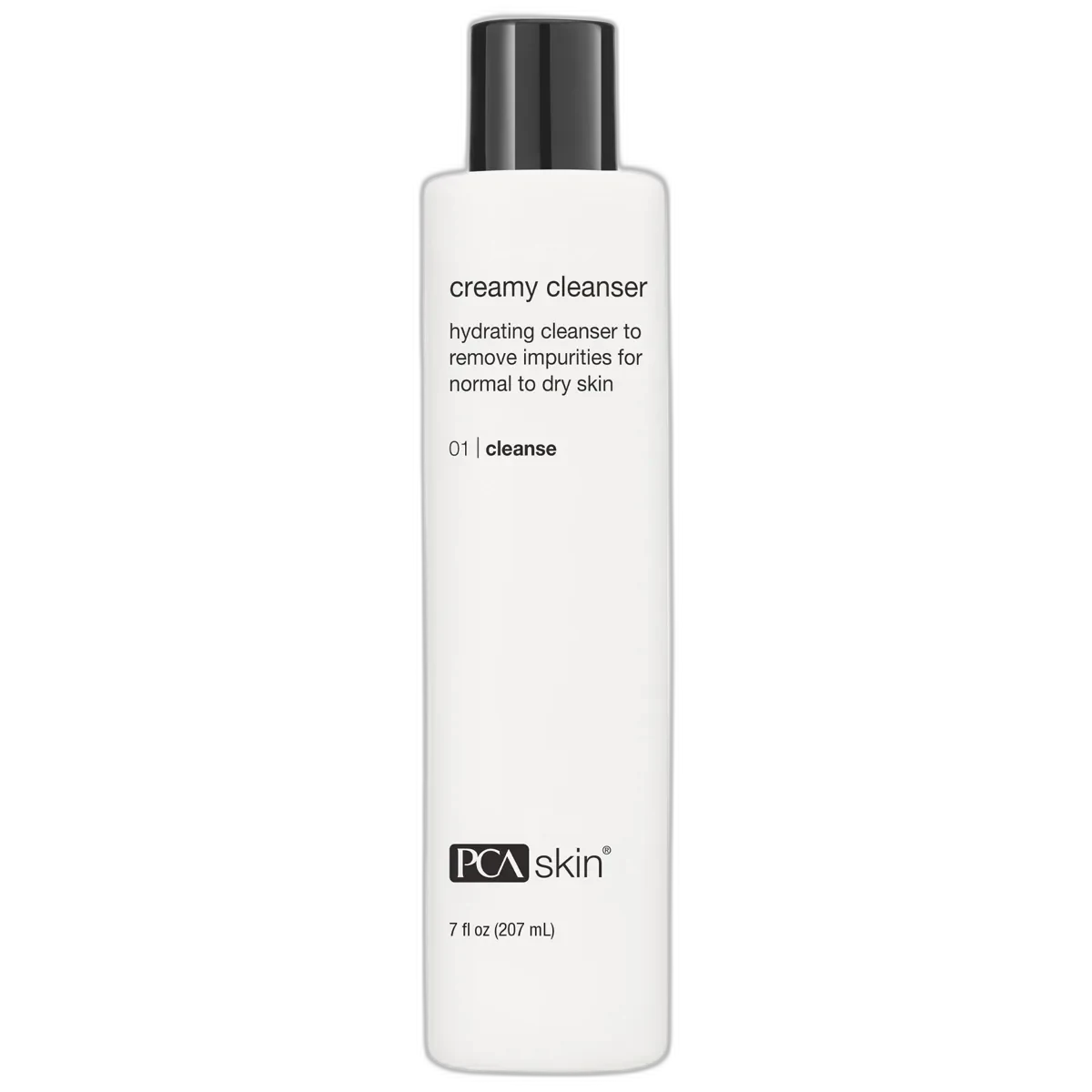
Creamy Cleanser
Sensitive Skin Safe Cleanser
 Verified reviewer
Pros & cons.
- +Amino acid-based surfactants cleanse effectively without stripping the lipid barrier
- +Rosehip and sunflower seed oils replenish skin lipids during the cleansing process
- +Glycerin-rich formula leaves skin feeling hydrated and soft not tight
- +Sulfate-free silicone-free and paraben-free formulation
- +Excellent 7 oz size lasts 4-5 months making it highly economical
- +Gentle enough for post-procedure skin and daily sensitive skin use
- +Rinses clean without leaving oily residue or film
- −Contains lavender essential oil which is a known sensitizer despite targeting sensitive skin
- −Non-foaming texture may feel insufficient for users accustomed to lathering cleansers
- −Not ideal for very oily skin that needs more thorough sebum removal
- −May require double-cleansing for heavy or waterproof makeup removal
- −Mild lavender scent from essential oil rather than being truly unscented
The full review.
In professional facial treatment rooms, the cleanser is critical. It touches the skin first before a chemical peel or laser treatment; if it irritates or strips the barrier, it compromises all subsequent steps. PCA Skin’s Creamy Cleanser was built for this high-stakes environment—designed for estheticians who need certainty that a pre-treatment cleanse won’t sensitize vulnerable skin. That professional caution is exactly what dry and sensitive skin needs in a daily wash.
The surfactant system defines Creamy Cleanser. Instead of irritating sulfates, PCA Skin uses sodium methyl cocoyl taurate and disodium cocoyl glutamate. These amino acid-based surfactants maintain the skin’s natural pH while dissolving makeup, dirt, and excess oil. Cocamidopropyl betaine acts as a gentle co-surfactant. The result is a cleanser that cleans without the tight, squeaky feeling of sulfate-based washes.
The dual-oil system sets this formula apart. Rosehip fruit oil and sunflower seed oil appear high on the INCI list, meaning they exist in meaningful concentrations. These aren’t decorative; they replenish skin lipids during cleansing. Sunflower seed oil is rich in linoleic acid, a fatty acid often deficient in dry and sensitive skin. Rosehip oil adds essential fatty acids and trace amounts of natural trans-retinoic acid for skin-conditioning.
Glycerin is second on the ingredient list and acts as the primary humectant. This helps the skin retain moisture during and after the wash. Aloe vera adds calming, anti-inflammatory support at the end of the formula.
The texture is a lightweight lotion rather than a traditional cleanser. It spreads easily on damp skin with a slippery, milky feel. It has no foam or lather, which may feel strange if you use foaming cleansers. It rinses cleanly without residue, leaving skin soft and hydrated instead of tight and stripped. Creamy Cleanser removes foundation and light eye makeup easily. For heavy waterproof makeup, use a micellar water or oil cleanser first, then use Creamy Cleanser as your second step.
One issue remains: lavender oil. It sits about two-thirds down the INCI list, so the concentration is low. However, for a product for sensitive skin and professional pre-treatment use, any essential oil is questionable. Lavender oil contains linalool and linalyl acetate, which the European Scientific Committee on Consumer Safety has flagged as contact allergens. Most people won’t react to this small amount, but for a formulation this thoughtful for reactive skin, the lavender oil is an unnecessary concession to sensory marketing.
At $42 for 7 ounces, the value is strong. This large bottle lasts four to five months with twice-daily use, making the daily cost under $0.35. For a professional-grade cleanser with amino acid surfactants and quality plant oils, this is competitive with or cheaper than many mass-market gentle cleansers.
PCA Skin’s three-decade track record in professional skincare shows in the surfactant selection, the oil blend, and the glycerin load. Creamy Cleanser is not exciting. It doesn’t promise transformation or act as a treatment product. It cleanses with respect for the skin’s barrier—and for dry, sensitive, or post-treatment skin, that restraint is the most valuable thing a cleanser offers.
Texture
The texture is a lightweight lotion rather than a traditional cleanser. It spreads easily on damp skin with a slippery, milky feel. It has no foam or lather, which may feel strange if you use foaming cleansers. It rinses cleanly without residue, leaving skin soft and hydrated instead of tight and stripped. Creamy Cleanser removes foundation and light eye makeup easily. For heavy waterproof makeup, use a micellar water or oil cleanser first, then use Creamy Cleanser as your second step.
Scent
One issue remains: lavender oil. It sits about two-thirds down the INCI list, so the concentration is low. However, for a product for sensitive skin and professional pre-treatment use, any essential oil is questionable. Lavender oil contains linalool and linalyl acetate, which the European Scientific Committee on Consumer Safety has flagged as contact allergens. Most people won’t react to this small amount, but for a formulation this thoughtful for reactive skin, the lavender oil is an unnecessary concession to sensory marketing.
Best for
PCA Skin’s three-decade track record in professional skincare shows in the surfactant selection, the oil blend, and the glycerin load. Creamy Cleanser is not exciting. It doesn’t promise transformation or act as a treatment product. It cleanses with respect for the skin’s barrier—and for dry, sensitive, or post-treatment skin, that restraint is the most valuable thing a cleanser offers.
Ingredient analysis.
Full INCI list
Water, Glycerin, Caprylic/Capric Triglyceride, Behenyl Alcohol, Helianthus Annuus (Sunflower) Seed Oil, Phenoxyethanol, Aminomethyl Propanol, Sodium Methyl Cocoyl Taurate, Cocamidopropyl Betaine, Acrylates/C10-30 Alkyl Acrylate Crosspolymer, Rosa Canina Fruit Oil, Disodium Cocoyl Glutamate, Caprylyl Glycol, Sucrose Distearate, Sucrose Stearate, Xanthan Gum, Chlorphenesin, Lavandula Angustifolia (Lavender) Oil, Sodium Cocoyl Glutamate, Tocopherol, Yucca Schidigera Leaf/Root/Stem Extract, Glycine Soja (Soybean) Oil, Aloe Barbadensis Leaf Juice
Skin match.
The science.
The Science
Creamy Cleanser uses surfactants based on current dermatological understanding of cleanser-barrier interactions. Sodium methyl cocoyl taurate and disodium cocoyl glutamate are amino acid-derived surfactants. They have lower irritation potential than sodium lauryl sulfate or sodium laureth sulfate. A 2011 study in the Indian Journal of Dermatology shows amino acid-based surfactants keep the skin's natural pH (approximately 5.5) during cleansing. SLS-based cleansers shift skin pH toward alkalinity, which disrupts the acid mantle and increases transepidermal water loss.
A 2008 study in Pediatric Dermatology supports the use of sunflower seed oil. It found that topical sunflower seed oil improved skin barrier function in preterm infants—some of the most sensitive skin on earth. The high linoleic acid content (approximately 60-70% of sunflower oil's fatty acid profile) helps restore barrier lipids that surfactants may displace during cleansing.
Rosehip oil adds alpha-linolenic acid, linoleic acid, and small amounts of natural retinoids. Research in the Journal of Cosmetic Dermatology (2015) shows rosehip oil improved skin moisture, elasticity, and visual appearance in a 60-day clinical trial. Its effects in a rinse-off product are more limited than in leave-on formulations.
Glycerin has well-documented humectant properties. The Cosmetic Ingredient Review panel affirms glycerin's safety and efficacy. Numerous studies show glycerin draws water from the environment and deeper skin layers to the stratum corneum.
References
- Effect of sunflower seed oil on the skin barrier of preterm infants — Pediatric Dermatology (2008)
- Effect of rosehip oil on skin moisture, elasticity, and firmness — Journal of Cosmetic Dermatology (2015)
Dermatologist Perspective
Dermatologists recommend gentle, non-foaming cleansers for patients with dry, sensitive, or barrier-compromised skin; Creamy Cleanser aligns with these recommendations. Board-certified dermatologists note the amino acid-based surfactant system is better than sulfate-based alternatives for patients prone to irritation or those using drying prescription treatments like retinoids or benzoyl peroxide. The plant oils and glycerin support barrier maintenance during cleansing—the 'lipid replenishment' approach dermatologists increasingly advocate. However, dermatologists specializing in contact dermatitis would likely call the lavender oil an unnecessary addition for a product for sensitive skin.
Where it fits in your routine.
Massage a small amount onto damp skin in circular motions for 30-60 seconds. Rinse well with lukewarm water; hot water strips moisture from dry skin. Use morning and evening. To remove makeup, massage onto dry skin to dissolve it, then add water to emulsify and rinse. Follow with toner and moisturizer while skin stays slightly damp.
At $42 for 7 oz, Creamy Cleanser provides strong value for professional skincare. One bottle lasts 4-5 months using it twice daily. This makes the daily cost about $0.30-0.35, which is less per use than many drugstore gentle cleansers. The amino acid surfactant system and quality plant oils justify the professional price. For dry and sensitive skin types who find cheaper cleansers irritating, this gentle formula saves money by reducing the need for redness-reducing products and barrier repair treatments.
This cleanser works for dry, sensitive, or normal skin needing a gentle daily wash that cleans without irritation or moisture loss. It suits people using prescription retinoids or other drying treatments who need a cleanser that does not increase dryness.
Creamy Cleanser won't satisfy oily skin types that prefer the deep-clean feeling of a foaming or gel cleanser. Avoid Creamy Cleanser if you have a known sensitivity to lavender oil or linalool, even at this low concentration.
Product details.
This smooth, milky cream spreads easily on damp skin with little product. It feels more like a lotion than a foam.
Mild lavender scent from the lavender essential oil — subtle but detectable
Squeeze tube bottle — hygienic and easy to dispense the right amount
It feels like a lightweight lotion instead of a traditional cleanser. It rinses cleanly without residue, but skin feels softer and more hydrated than after a foaming wash. It causes no tingling or tightness. Users used to foaming cleansers may feel the skin isn't clean enough at first, but most adjust to this gentler approach within a few days.
4-5 months with twice-daily use
12 months
All Year
The backstory.
PCA Skin designed this cleanser for the most delicate stage of professional treatment: the pre-peel cleanse. When estheticians are about to apply a chemical peel to a client's face, the last thing they want is a cleanser that strips or irritates the skin beforehand. Creamy Cleanser was formulated to remove surface impurities without compromising the barrier, ensuring the skin is clean but not sensitized before the treatment begins.
About PCA Skin
Established Brand (5–20 years)An aesthetician founded PCA Skin in 1990, developing it with dermatologists. PCA Skin is the number-one professional chemical peel brand among estheticians, with over one million peels performed globally each year. PhD chemists develop its formulations in-house.
Common myths.
A cleanser needs to foam to effectively clean your skin.
Foam shows surfactant behavior, not cleaning efficacy. Creamy Cleanser's amino acid-based surfactants dissolve makeup, dirt, and excess oil as well as foaming agents. They work without the lathering action that strips lipids from the skin surface. Less foam often means less barrier disruption.
Cream cleansers leave a residue that clogs pores.
Properly formulated cream cleansers rinse clean. Creamy Cleanser uses a surfactant blend of cocamidopropyl betaine and sodium cocoyl glutamate to ensure complete emulsification and rinse-off. The formula's oils dissolve makeup and sebum, then wash away with the surfactants instead of staying on the skin.
FAQ.
Is PCA Skin Creamy Cleanser good for sensitive skin?
The formula uses gentle amino acid-based surfactants and nourishing oils for sensitive skin. It contains lavender essential oil, a known potential sensitizer. Most sensitive skin types tolerate it well, but lavender-sensitive users should patch test first.
Does PCA Skin Creamy Cleanser remove makeup?
Yes — rosehip oil, sunflower oil, and gentle surfactants dissolve and remove daily makeup, including foundation and light eye makeup. Heavy or waterproof makeup requires a first cleanse with a micellar water or oil cleanser before using Creamy Cleanser as your second step.
Can I use PCA Skin Creamy Cleanser with acne treatments?
Yes — this cleanser's gentle formula works well with drying acne treatments like benzoyl peroxide or retinoids, as it cleanses without adding irritation or stripping. However, very oily skin may prefer a gel or foaming cleanser for more thorough oil removal.
Why doesn't PCA Skin Creamy Cleanser foam?
Creamy Cleanser uses amino acid-based surfactants rather than sulfates. These surfactants clean well but produce little to no foam. This lack of foam is a feature; it strips fewer lipids and retains more moisture during cleansing. This is why dermatologists often recommend non-foaming cleansers for dry and sensitive skin.
How long does a bottle of PCA Skin Creamy Cleanser last?
The 7 oz bottle lasts 4-5 months if used twice daily. At $42, the cost is less than $0.35 per day. This makes it one of the more economical products in PCA Skin's lineup by cost-per-use.
Community
What the community says.
"Leaves skin soft and never tight or stripped after cleansing"
"Effectively removes makeup including waterproof mascara"
"Gentle enough for daily use on sensitive and reactive skin"
"Pleasant lightweight creamy texture"
"Large 7 oz bottle lasts several months"
"Not foaming which some users find unsatisfying for feeling clean"
"May not remove heavy or waterproof makeup in one pass"
"Contains lavender oil which is a known sensitizer"
"Too gentle for oily skin that needs deeper cleansing"
Featured in.
People also looked at.