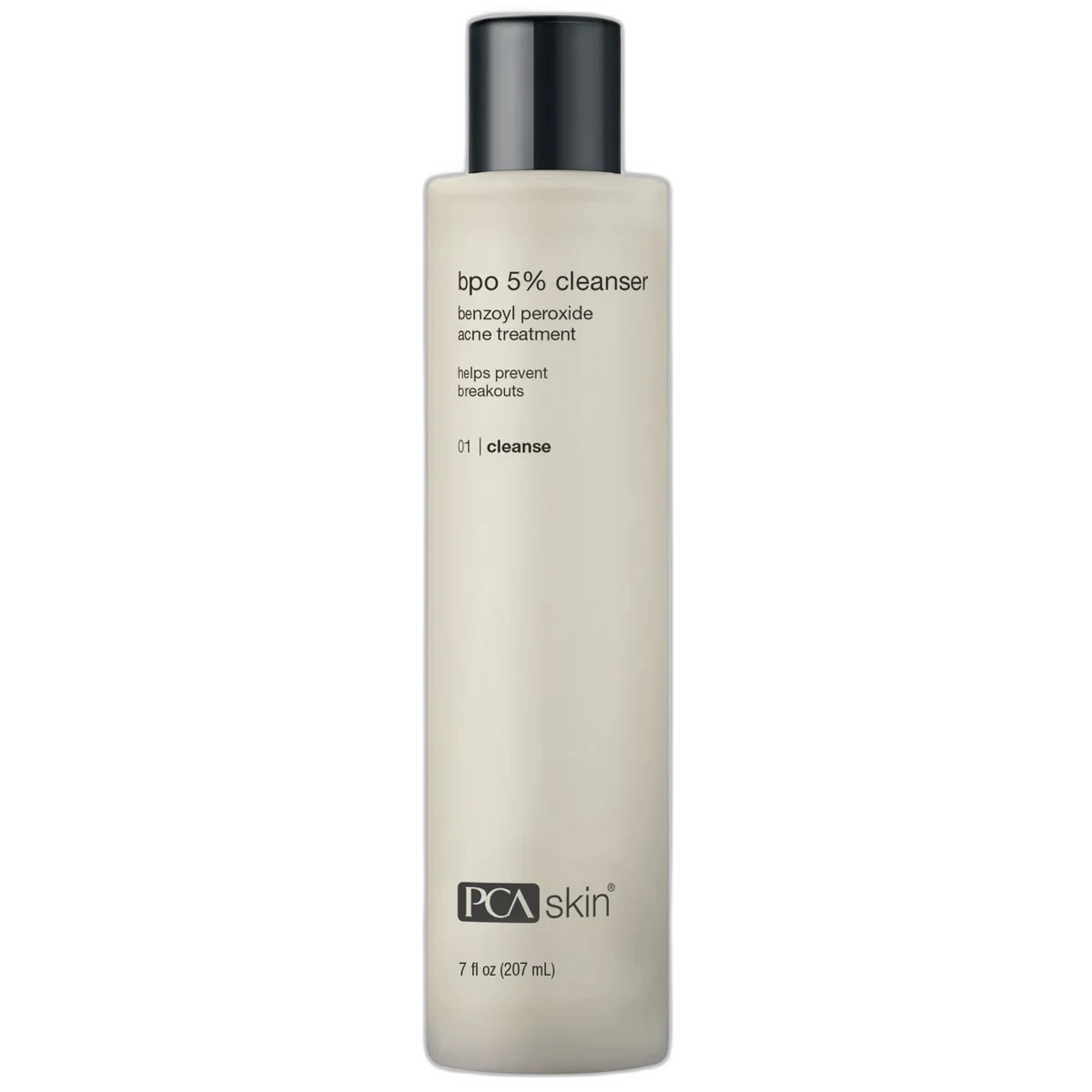
BPO 5% Cleanser
Derm-Office Acne Workhorse
 Verified reviewer
Pros & cons.
- +5% benzoyl peroxide at the clinically validated efficacy sweet spot for acne treatment
- +Gluconolactone (PHA) provides dual-action anti-comedonal exfoliation alongside antibacterial BP
- +Comprehensive botanical soothing complex (allantoin, aloe, chamomile, cucumber, panthenol) buffers drying
- +Mild sulfate-free surfactant system avoids the stripping effect of SLS-based acne cleansers
- +Generous 7 oz tube lasts 3-4 months — competitive per-ounce cost for professional-grade
- +HSA/FSA eligible as an OTC acne treatment
- −Benzoyl peroxide inherently dries and can irritate — moisturizer is mandatory
- −Bleaches colored towels, washcloths, pillowcases, and clothing on contact
- −Grapefruit peel oil is an unnecessary potential irritant in an otherwise soothing formula
- −Not suitable for sensitive, eczema-prone, or rosacea-affected skin
- −Initial purging period (1-2 weeks) can temporarily worsen breakout appearance
The full review.
Benzoyl peroxide is a blunt instrument for acne. It works; over five decades of clinical evidence and FDA OTC drug approval prove it is a top topical antibacterial agent against Cutibacterium acnes. But it works like a pressure washer on a dirty deck: effective, but causing collateral damage. Dryness, peeling, and irritation are common. It also bleaches dark fabric at the neckline. Most BP products accept these trade-offs.
PCA Skin’s BPO 5% Cleanser does not. It delivers the antibacterial payload while minimizing the scorched-earth aftermath. When a professional skincare brand with a PhD chemist formulates a benzoyl peroxide wash, the product accounts for what happens to the skin after the BP works.
Reality
The active is 5% benzoyl peroxide, the efficacy sweet spot confirmed by research. A 1991 study compared 2.5%, 5%, and 10% BP and found similar acne reduction at all levels, but significantly less irritation at lower strengths. Most acne cases do not need 10% BP; it just dries the skin more for the same antibacterial result. Five percent kills bacteria without the overkill.
PCA Skin’s BPO 5% Cleanser differs from pharmacy BP washes because of the ingredients surrounding the active. Gluconolactone is second in the inactive ingredient list, showing a high concentration. This polyhydroxy acid has a larger molecule than glycolic acid, so it penetrates less deeply or aggressively. However, it still exfoliates, hydrates (PHAs are humectants), and provides mild keratolytic action to help prevent comedonal acne. Adding this to a BP cleanser provides antibacterial and anti-comedonal action in one step.
The soothing complex is extensive for a cleanser. Allantoin promotes cell repair. Panthenol strengthens the barrier. Aloe calms inflammation. Chamomile extract adds bisabolol’s anti-irritant properties. Cucumber extract provides cooling. Sodium PCA and glycerin handle hydration. This is a coordinated system designed to buffer the BP’s aggression, not just a single ingredient for label appeal.
Jojoba seed oil and wheat germ oil add emollient moisture. This is unusual for an acne cleanser but makes sense. Because cleansers have brief contact time, these oils do not stay on the skin long enough to clog pores. Instead, they deposit a thin protective layer that reduces the tight, stripped feeling common with BP washes. This detail suggests the formulator understands the experience of using a benzoyl peroxide cleanser.
The surfactant system uses sodium C14-16 olefin sulfonate and cocamidopropyl betaine. Both cleanse effectively and are milder than the sodium lauryl sulfate in cheaper formulas. PCA Skin’s BPO 5% Cleanser correctly labels that it avoids irritating surfactants. This matters for acne-prone skin already facing the drying effects of BP.
Grapefruit peel oil is a head-scratcher. In a formula this soothing, a citrus essential oil adds a potential irritant and allergen without a clear functional purpose beyond mild fragrance. It sits near the middle of the INCI list, but for a product targeting inflamed, acne-compromised skin, it feels like an oversight.
The 7-ounce tube is generous. At forty-eight dollars, the per-ounce cost competes with other professional-grade BP cleansers and is lower than many boutique alternatives. Using it twice daily makes a tube last three to four months. This brings the monthly cost to twelve to sixteen dollars, which is reasonable for a daily treatment cleanser. HSA and FSA eligibility adds value for those with eligible health accounts.
How to Use
Expect a brief adjustment period. The first week of BP use often causes mild peeling, tightness, and occasional temporary breakouts as accelerated cell turnover brings existing comedones to the surface. This is purging, not product failure. Most users see a reduction in active lesions by week three to four. Improvement is typically significant by week six to eight.
BP products will bleach fabric. Use white towels and old pillowcases. Rinse the cleanser thoroughly from the hairline and jawline before toweling off, and let your face air dry or use a white washcloth.
PM routine
PCA Skin’s BPO 5% Cleanser does not reinvent benzoyl peroxide; you cannot improve the mechanism of an oxidizing antibacterial agent. It improves everything around the benzoyl peroxide: the surfactant choice, the PHA exfoliant, the soothing complex, and the emollient buffer. It is the difference between a prescription on a notepad and a treatment plan designed by someone who sees the patient again next week.
Ingredient analysis.
Full INCI list
Active: Benzoyl Peroxide 5.0%. Inactive: Water/Aqua/Eau, Gluconolactone, Sodium C14-16 Olefin Sulfonate, Aminomethyl Propanol, Glycerin, Cocamidopropyl Betaine, Acrylates/C10-30 Alkyl Acrylate Crosspolymer, Phenoxyethanol, Polyacrylate-13, Citrus Grandis (Grapefruit) Peel Oil, Caprylyl Glycol, Polyisobutene, Ethylhexylglycerin, Allantoin, Aloe Barbadensis Leaf Juice, Simmondsia Chinensis (Jojoba) Seed Oil, Tocopheryl Acetate, Triticum Vulgare (Wheat) Germ Oil, Hexylene Glycol, Panthenol, Sodium PCA, Polysorbate 20, Butylene Glycol, Phytic Acid, Algae Extract, Anthemis Nobilis Flower Extract, Arnica Montana Flower Extract, Cucumis Sativus (Cucumber) Fruit Extract, Vitis Vinifera (Grape) Seed Extract
Skin match.
The science.
The Science
Benzoyl peroxide's antibacterial mechanism involves the generation of reactive oxygen species that destroy C. acnes bacterial cell membranes. Unlike antibiotics, BP does not promote bacterial resistance — a critical advantage documented in a 2004 study published in the Journal of the American Academy of Dermatology, which found no development of resistant C. acnes strains even after prolonged BP use.
The 5% concentration is supported by a landmark comparative study (Mills et al., 1986, International Journal of Dermatology) that found 2.5%, 5%, and 10% BP produced statistically similar reductions in acne lesion counts after 12 weeks, while the 10% formulation caused significantly more dryness, peeling, and erythema. This finding has been replicated in subsequent studies and forms the basis for dermatological recommendations favoring lower BP concentrations.
The short-contact therapy approach — using BP in a cleanser rather than a leave-on product — is well-documented in dermatological literature. A study published in the Journal of the American Academy of Dermatology (2008) demonstrated that even brief benzoyl peroxide contact times (as short as 2 minutes) significantly reduced C. acnes counts, while producing less irritation than leave-on formulations. This makes cleanser-based delivery particularly appropriate for patients who cannot tolerate leave-on BP.
Gluconolactone, the PHA in this formula, has been studied as an alternative to glycolic acid for acne-prone and sensitive skin. A study published in the Journal of Cosmetic Dermatology demonstrated that gluconolactone provided comparable exfoliating and skin-conditioning effects to glycolic acid with significantly less stinging and irritation — making it an appropriate companion ingredient for a BP cleanser where irritation tolerance is already being tested.
Dermatologist Perspective
Dermatologists widely recommend benzoyl peroxide as a first-line topical treatment for mild to moderate acne, and cleanser-based delivery is frequently preferred for patients who experience excessive dryness with leave-on formulations. Board-certified dermatologists note that the 5% concentration in this cleanser aligns with evidence-based prescribing guidelines and offers equivalent efficacy to higher concentrations with better tolerability. The inclusion of gluconolactone is viewed positively as a non-irritating exfoliant that complements BP's antibacterial action. Dermatologists typically recommend pairing this cleanser with a non-comedogenic moisturizer and emphasize that BP does not promote antibiotic resistance — making it a sustainable long-term acne management tool, unlike topical antibiotics such as clindamycin.
Where it fits in your routine.
Wet your face with lukewarm water. Apply a quarter-sized amount and lather gently for 30 to 60 seconds so benzoyl peroxide contacts the pores. Avoid the eye area. Rinse well; ensure no product stays at the hairline or jawline. Pat dry with a white towel (BP bleaches colored fabrics). Follow immediately with a hydrating toner and non-comedogenic moisturizer. Use morning and evening, though once-daily use works for mild acne or during the adjustment period.
At $48 for 7 fl oz, this cleanser provides high value for professional skincare. One tube lasts 3-4 months using it twice daily. This makes the monthly cost $12-16, which matches or beats many drugstore BP washes per ounce. Auto-replenishment at retailers like Dermstore lowers the per-tube cost to $38.40 (20% off). HSA/FSA eligibility benefits users with eligible health accounts. The gluconolactone and comprehensive soothing complex justify the premium over $8 pharmacy BP washes.
Oily and combination skin types with mild to moderate acne seeking a professional-grade benzoyl peroxide cleanser with more soothing support than drugstore alternatives. This works for those who find leave-on BP products too drying and prefer the short-contact therapy approach.
Benzoyl peroxide irritates sensitive, dry, eczema-prone, or rosacea-affected skin, even with soothing ingredients. People allergic to wheat must avoid this formula because it contains wheat germ oil. Use this only if you accept that benzoyl peroxide products bleach fabric.
Product details.
Grapefruit peel oil gives it a mild grapefruit-citrus scent. It is not overpowering and dissipates immediately after rinsing. ***
White squeeze tube with a professional, clinical design. The 7 oz size is large for a professional-grade cleanser.
Expect mild tingling during the first few uses; this is normal for benzoyl peroxide at 5%. Skin may feel slightly tight after rinsing until you apply moisturizer. Some initial dryness and minor peeling is common during the first week as skin adjusts. Active breakouts often increase briefly (purging) before skin improves.
3-4 months with twice-daily use ***
12 months ***
All Year ***
The backstory.
PCA Skin built its reputation on professional peels before expanding into daily care products. The BPO 5% Cleanser reflects the brand's clinical pedigree — it is formulated not just to deliver benzoyl peroxide effectively, but to mitigate the side effects that cause many acne patients to abandon BP treatment prematurely. The inclusion of gluconolactone and an extensive soothing complex shows the PhD chemist mindset behind PCA's formulations.
About PCA Skin
Established Brand (5–20 years)An aesthetician founded PCA Skin in 1990 with dermatologist guidance. The brand pioneered the modified Jessner's peel and ranks as the #1 professional chemical peel brand among aestheticians. An in-house PhD chemist researches and develops the formulas. Dermatology offices and medical spas widely distribute the products.
Common myths.
Higher concentrations of benzoyl peroxide work better for acne.
Clinical research shows 2.5% and 5% benzoyl peroxide reduce acne lesions as well as 10% concentrations, but with less irritation, dryness, and peeling. The 5% concentration in this cleanser is the established clinical sweet spot.
Benzoyl peroxide cleansers fail because they rinse off too fast.
Dermatology uses short-contact therapy with benzoyl peroxide. Even 30-60 seconds of contact lets BP deposit on the skin surface and within pores. This provides antibacterial activity that lasts after rinsing. Some dermatologists prefer cleanser-based BP delivery because it reduces the dryness and irritation of leave-on treatments.
FAQ.
Is 5% benzoyl peroxide strong enough for acne?
Yes — clinical studies show 5% benzoyl peroxide reduces acne lesions as well as 10% but causes less irritation and dryness. The 5% concentration balances efficacy and tolerability. This cleanser also uses gluconolactone (a PHA) for extra exfoliation.
Can I use PCA Skin BPO 5% Cleanser with retinol?
Yes, but stagger them. Use the BP cleanser in the morning and retinol in the evening, or vice versa. Using both in one routine causes dryness and irritation. Always apply a moisturizer after the BP cleanser to buffer the drying effects before applying other actives.
Will this cleanser bleach my towels?
Yes — benzoyl peroxide is an oxidizing agent that bleaches colored towels, washcloths, and pillowcases. Use white towels to dry your face after use, and rinse the product off completely before touching colored fabrics. All BP products do this; it is not specific to this formula.
How long does it take for PCA Skin BPO 5% Cleanser to work?
Most users see fewer active breakouts within 1-2 weeks. BP accelerates skin cell turnover, so a brief purging period (temporary increase in breakouts) often happens in the first week. Significant improvement usually occurs at 4-6 weeks, and consistent use shows optimal results at 8 weeks.
Is PCA Skin BPO 5% Cleanser safe during pregnancy?
Most dermatologists consider Benzoyl peroxide safe during pregnancy. Only about 5% is absorbed systemically and the body metabolizes it rapidly. Always consult your OB-GYN before using any acne treatment during pregnancy. The short contact time of this cleanser further minimizes systemic absorption.
What the community says.
"Effectively clears active breakouts and prevents new ones"
"Less drying than other benzoyl peroxide cleansers"
"Large 7 oz size offers good value"
"Professional-grade results accessible for home use"
"Gluconolactone addition sets it apart from basic BP washes"
"Can still be drying despite soothing ingredients — moisturizer is essential"
"Benzoyl peroxide bleaches towels and colored fabrics"
"Contains grapefruit peel oil which may irritate some users"
"Not suitable for sensitive skin despite the calming botanicals"
Featured in.
People also looked at.