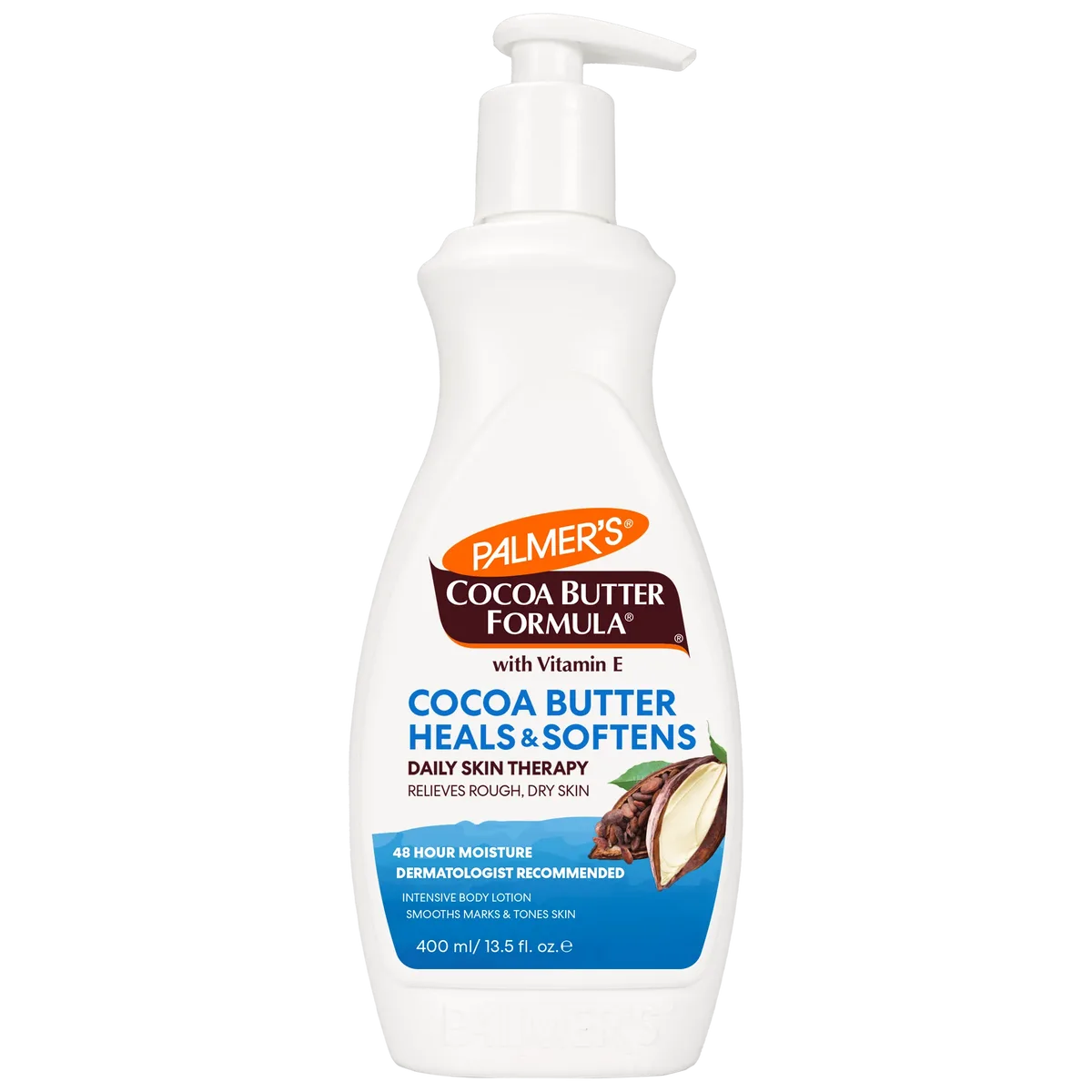
Cocoa Butter Formula Daily Skin Therapy Body Lotion
Drugstore Body Care Icon
 Verified reviewer
Pros & cons.
- +Proven moisturizing formula with petrolatum-glycerin-cocoa butter backbone validated by decades of use
- +Exceptional value at under eight dollars for 13.5 oz with even better per-ounce pricing in larger sizes
- +Iconic warm cocoa butter scent that millions of loyal users consider a signature comfort
- +Absorbs within 1-2 minutes to a comfortable satin finish without heavy residue
- +Recently reformulated to remove parabens while maintaining effectiveness
- +Available in multiple sizes from 8.5 oz to 33.8 oz for different budgets and usage patterns
- +Over 85,000 consumer reviews providing extensive real-world validation
- −Synthetic fragrance limits suitability for genuinely sensitive or eczema-compromised skin
- −Contains artificial dyes (Yellow 5 and Orange 4) that serve no functional purpose
- −Brief greasy feel for 60-90 seconds after application before full absorption
- −Coconut oil and mineral oil are comedogenic for acne-prone body skin areas
- −Not cruelty-free certified despite brand marketing claims
The full review.
Some products go beyond their ingredient list. Palmer’s Cocoa Butter Formula Daily Skin Therapy Body Lotion is one of them. With over 85,000 Amazon reviews and a history dating to the early 1970s, this is more than a body lotion—it is a sensory institution. The warm, sweet cocoa butter scent has stayed in bathrooms and bedrooms for over fifty years, crossing generational and cultural lines.
But nostalgia is not a humectant, and scent is not an active ingredient. For a review database, the question is simpler: does the formula work?
The answer is a solid yes. The Daily Skin Therapy lotion uses a straightforward moisturizing architecture that dermatology has validated for decades. Glycerin pulls water into the skin. Petrolatum seals it. Cocoa butter and coconut oil soften the surface. This is not revolutionary cosmetic chemistry; it is the moisturizing equivalent of a reliable cast iron skillet. It works well and has worked long enough that doubting it feels impolite.
The texture is a comfortable middle ground. This is not the thick, waxy solid Palmer’s built its reputation on—that original formula lives in jars and requires warming between palms. The Daily Skin Therapy is a proper lotion, pumpable and spreadable, designed to moisturize your entire body on a weekday morning in twelve minutes. It spreads easily, absorbs within a minute or two, and leaves a soft satin finish rather than the slick coating some occlusive-heavy lotions deposit.
There is a brief window of greasiness on application—perhaps sixty to ninety seconds where the lotion sits on the skin before the silicones and emulsifiers pull it into a comfortable finish. This is normal for a petrolatum-containing lotion and resolves quickly, but if you must dress immediately after applying, allow that extra moment.
Palmer’s distinguishes this formula from generic cocoa butter via its dual cocoa system. The ingredient list features cocoa extract near the top and cocoa seed butter further down to deliver Cocoa Mass Polyphenols—antioxidant compounds that laboratory research shows can protect skin cells from oxidative stress. Whether these polyphenols deliver meaningful antioxidant benefits at these concentrations in a body lotion is a fair question. The evidence is more suggestive than definitive for a rinse-off or rub-in format. However, it is a genuine point of differentiation from the store-brand cocoa butter lotions on the shelf.
The vitamin E inclusion—as tocopheryl acetate—is a sensible supporting player. It stabilizes the plant oils against rancidity and provides antioxidant support at the skin surface. Palmer’s has long marketed its products to improve the appearance of scars and stretch marks; while vitamin E has some evidence for supporting skin repair, clinical evidence for topical vitamin E’s scar-reducing ability is mixed. Use this for moisturization with confidence, but manage expectations regarding scar treatment.
Scent
Now, the fragrance. Palmer’s Cocoa Butter scent is arguably the most recognizable aroma in American body care. It is warm, sweet, chocolatey, and lingers for hours. For tens of millions of users, this scent is a feature, not a bug—it is comfort in a bottle. But for a skincare database assessing formula quality objectively, synthetic fragrance is an irritant risk. It limits suitability for sensitive or eczema-compromised skin, and it is a primary reason some dermatologists recommend the fragrance-free variant instead.
Packaging
The formula also contains artificial dyes—Yellow 5 and Orange 4—to give the lotion its light tan color. These serve no functional purpose and add a small irritation risk. They are holdovers from an era when body care products were expected to look a certain way, and many modern consumers would prefer they were removed.
Reformulation
The reformulation story is worth noting. Palmer’s has updated this formula over the years, notably removing parabens (methylparaben and propylparaben) for a phenoxyethanol, sorbic acid, and benzoic acid preservative system. This change aligns the product with current consumer preferences without sacrificing shelf stability.
How to Use
In daily use, the lotion delivers reliable hydration that lasts through the day. Applied to damp skin after a shower, it creates a moisture barrier that keeps skin soft and supple. For very dry areas—elbows, shins, feet—a heavier application works well; the formula is thick enough to manage dryness without layering additional products. It is not a heavy-duty treatment for severe xerosis or actively flaring eczema; those conditions typically require dedicated barrier repair products or ointments.
Value
Palmer’s excels at value. At under eight dollars for 13.5 ounces—and as low as thirteen dollars for a full liter—this is among the most cost-effective quality body moisturizers available. The larger sizes bring the per-ounce cost below forty cents, which is remarkable for a branded product with a proven track record. For anyone on a budget needing daily full-body moisturization, the math is inarguable.
Palmer’s Cocoa Butter Formula Daily Skin Therapy will not win awards for formulation innovation. It will not appear in minimalist skincare roundups or clean beauty gift guides. Instead, it will sit in your bathroom, pump after pump, month after month, keeping your skin soft and your mornings simple. Sometimes that is exactly what a body lotion should do.
Formula
Ingredient analysis.
Full INCI list
Water (Aqua), Theobroma Cacao (Cocoa) Extract, Glyceryl Stearate, Petrolatum, Propylene Glycol, Glycerin, Cocos Nucifera (Coconut) Oil, Mineral Oil (Paraffinum Liquidum), Theobroma Cacao (Cocoa) Seed Butter, Elaeis Guineensis Oil, Cetyl Alcohol, Dimethicone, Tocopheryl Acetate, Hydroxyethylcellulose, PEG-8 Stearate, Behentrimonium Methosulfate, Butylene Glycol, Stearalkonium Chloride, Cellulose, Sodium Acetate, Fragrance (Parfum), Phenoxyethanol, Sorbic Acid, Benzoic Acid, Stearyl Alcohol, Myristyl Alcohol, Yellow 5 (CI 19140), Orange 4 (CI 15510), Benzyl Alcohol
Skin match.
The science.
The Science
The formula uses a humectant-occlusive approach, which dermatological literature ranks as highly effective for dry skin. Glycerin, a hygroscopic polyol, pulls water from the dermis and environment into the stratum corneum. A 2008 review in the British Journal of Dermatology confirmed that glycerin concentrations above 2% significantly improve skin hydration and barrier function.
Petrolatum acts as the occlusive, reducing transepidermal water loss by up to 99% — a figure from Ghadially et al. in the Journal of Clinical Investigation (1992). The research shows petrolatum does not just sit on the skin surface; it penetrates the intercellular lipid domains of the stratum corneum to help barrier repair.
The Cocoa Mass Polyphenols Palmer's highlights are scientifically interesting. Theobroma cacao contains many flavonoids, specifically epicatechin and catechin. A 2006 study in the Journal of Nutrition by Heinrich et al. found that dietary cocoa flavanols improved dermal blood flow, oxygen saturation, and skin hydration in humans over 12 weeks. Topical cocoa polyphenols have less established benefits, though in vitro studies show cocoa extracts have antioxidant activity on keratinocytes.
Tocopheryl acetate, the vitamin E form used here, is an ester prodrug that skin esterases convert to active tocopherol. A 2016 review in the Indian Dermatology Online Journal confirmed topical vitamin E supports skin barrier function and provides antioxidant protection against UV-induced free radical damage. However, evidence for vitamin E improving existing scar appearance is mixed — a randomized controlled trial by Baumann and Spencer in Dermatologic Surgery (1999) found topical vitamin E did not improve scar appearance and caused contact dermatitis in one-third of patients applied to surgical wounds.
References
- The role of glycerol and glycerol-containing creams in maintaining skin barrier function — British Journal of Dermatology (2008)
- Petrolatum: Barrier repair and antimicrobial responses underlying this inert moisturizer — Journal of Clinical Investigation (1992)
- Long-term ingestion of high flavanol cocoa provides photoprotection against UV-induced erythema and improves skin condition in women — Journal of Nutrition (2006)
- The effects of topical vitamin E on the cosmetic appearance of scars — Dermatologic Surgery (1999)
Dermatologist Perspective
Dermatologists view Palmer's Cocoa Butter Formula as a reliable over-the-counter moisturizer for general dry skin. The petrolatum-glycerin combination follows American Academy of Dermatology recommendations for skin hydration. Board-certified dermatologists note the synthetic fragrance in this formula is why they recommend the fragrance-free variant to eczema patients. For patients without fragrance sensitivities needing an affordable daily body moisturizer, dermatologists see this as a reasonable option. The brand's claim that three out of four dermatologists recommend Palmer's when recommending cocoa butter comes from a brand-commissioned survey rather than independent endorsement.
Where it fits in your routine.
Apply a large amount to damp skin right after bathing; water increases the glycerin's humectant effect. Massage using upward circular motions, targeting dry areas like elbows, knees, shins, and heels. Wait 1-2 minutes for full absorption before dressing. Apply twice daily for maximum hydration. In winter or for very dry skin, layer over a lightweight body oil to increase occlusion. Store at room temperature; the formula may thicken in cold conditions.
The value is outstanding. At approximately $7.99 for 13.5 fluid ounces, the lotion costs about $0.59 per ounce—excellent for a branded body lotion with proven ingredients. The 33.8 oz pump bottle at around $13 drops the per-ounce cost below $0.40. Multiple sizes exist, and larger formats offer better value. For a product used daily on the entire body, the annual cost is low. The formula matches the moisturizing efficacy of products priced two to three times higher, even if it lacks their ingredient elegance.
This works for dry to normal skin needing a reliable, affordable daily body moisturizer. It suits those who like or tolerate the classic Palmer's cocoa butter scent. It is ideal for budget-conscious consumers, people with chronically dry skin, and loyal Palmer's users wanting the everyday lotion format of the iconic solid formula.
People with fragrance sensitivities or active eczema inflammation should use the fragrance-free version. Synthetic fragrance and artificial dyes may deter consumers seeking clean or minimal ingredient lists. The coconut oil and mineral oil content requires caution for those prone to body acne.
Product details.
The iconic Palmer's warm cocoa butter fragrance smells sweet, chocolatey, and comforting. The scent has moderate intensity and stays on skin for several hours after application. ***
A brown-bronze plastic pump bottle features Palmer's signature gold accents. The pump dispenses a large amount per press. Smaller flip-cap squeeze bottles and a large 33.8 oz economy pump bottle are also available. ***
The lotion feels slightly greasy upon first application, but this resolves within 1-2 minutes as it absorbs. The warm cocoa butter scent is immediate. Skin feels softer and smoother after the first use. This formula causes no adjustment period, purging, or tingling. ***
2-3 months with twice-daily full-body application using the 13.5 oz bottle ***
12 months ***
All Year ***
The backstory.
When Arnold Neis acquired E.T. Browne Drug Co. in 1971, the company's cocoa butter formula became the foundation of a brand that would grow into a global icon. The Daily Skin Therapy lotion evolved from the original solid formula to meet the demand for an everyday, full-body-friendly format. Its warm, distinctive scent has become a sensory signature — the kind of product that triggers childhood memories and spans generations of loyal users.
About Palmer's
Legacy Brand (20+ years)E.T. Browne Drug Co. founded Palmer's in 1840, making it one of America's oldest skincare companies. The Cocoa Butter Formula line launched in the early 1970s. It is the #1 cocoa butter brand globally and sells in over 80 countries with strong cultural significance across multiple communities.
Common myths.
Palmer's Cocoa Butter can prevent stretch marks
Many people use topical products during pregnancy, but clinical evidence shows no product prevents stretch marks. Genetics and hormonal changes primarily determine stretch marks. The lotion keeps skin moisturized and supple to reduce itching and dryness, but it cannot alter the structural changes that cause stretch marks.
Cocoa butter clogs pores and causes body acne
Cocoa butter has a moderate comedogenic rating. This formula also contains coconut oil and mineral oil. Many users see no issues on body skin, but those prone to body acne on the chest, back, or shoulders should patch-test first. Body skin is generally less acne-prone than facial skin.
FAQ.
Does Palmer's Cocoa Butter Daily Skin Therapy contain parabens?
No — the current formulation is paraben-free. Palmer's reformulated this product, replacing methylparaben and propylparaben with a phenoxyethanol, sorbic acid, and benzoic acid preservative system.
How is Palmer's Daily Skin Therapy different from the original Cocoa Butter Formula?
The original Palmer's Cocoa Butter Formula is a thick, waxy solid in a jar for dry patches. The Daily Skin Therapy is a lighter, pumpable lotion for full-body daily use. Both use the signature cocoa butter base, but the lotion absorbs faster and works better for daily all-over application.
Is Palmer's Cocoa Butter body lotion safe during pregnancy?
This formula is safe during pregnancy. It lacks retinoids, high-dose salicylic acid, or other pregnancy-contraindicated ingredients. Many pregnant women use it for body moisturization, but it does not prevent stretch marks.
Is Palmer's cruelty-free?
Palmer's lacks Leaping Bunny or PETA cruelty-free certification. The brand says it does not test on animals in the US, but it sells products globally in markets where law requires animal testing. Palmer's claims the product is vegan.
What size Palmer's Cocoa Butter lotion offers the best value?
The 33.8 fl oz (1 liter) pump bottle has the best value at about $0.39 per fluid ounce. The 13.5 oz pump bottle is the most popular size at roughly $0.59 per ounce, but the 8.5 oz bottle costs the most per ounce.
What the community says.
"Deep moisturization that lasts all day without needing reapplication"
"Beloved warm cocoa butter scent that users have repurchased for years or decades"
"Absorbs well without leaving long-lasting greasy residue"
"Excellent value for money especially in larger sizes"
"Effective for eczema management and chronically dry skin"
"Initial greasy feel for 1-2 minutes before full absorption"
"Cocoa butter scent may be too strong for some users"
"Contains synthetic fragrance which limits use for truly sensitive skin"
"Pump mechanism occasionally clogs or malfunctions"
"Contains mineral oil and artificial dyes which some consumers prefer to avoid"