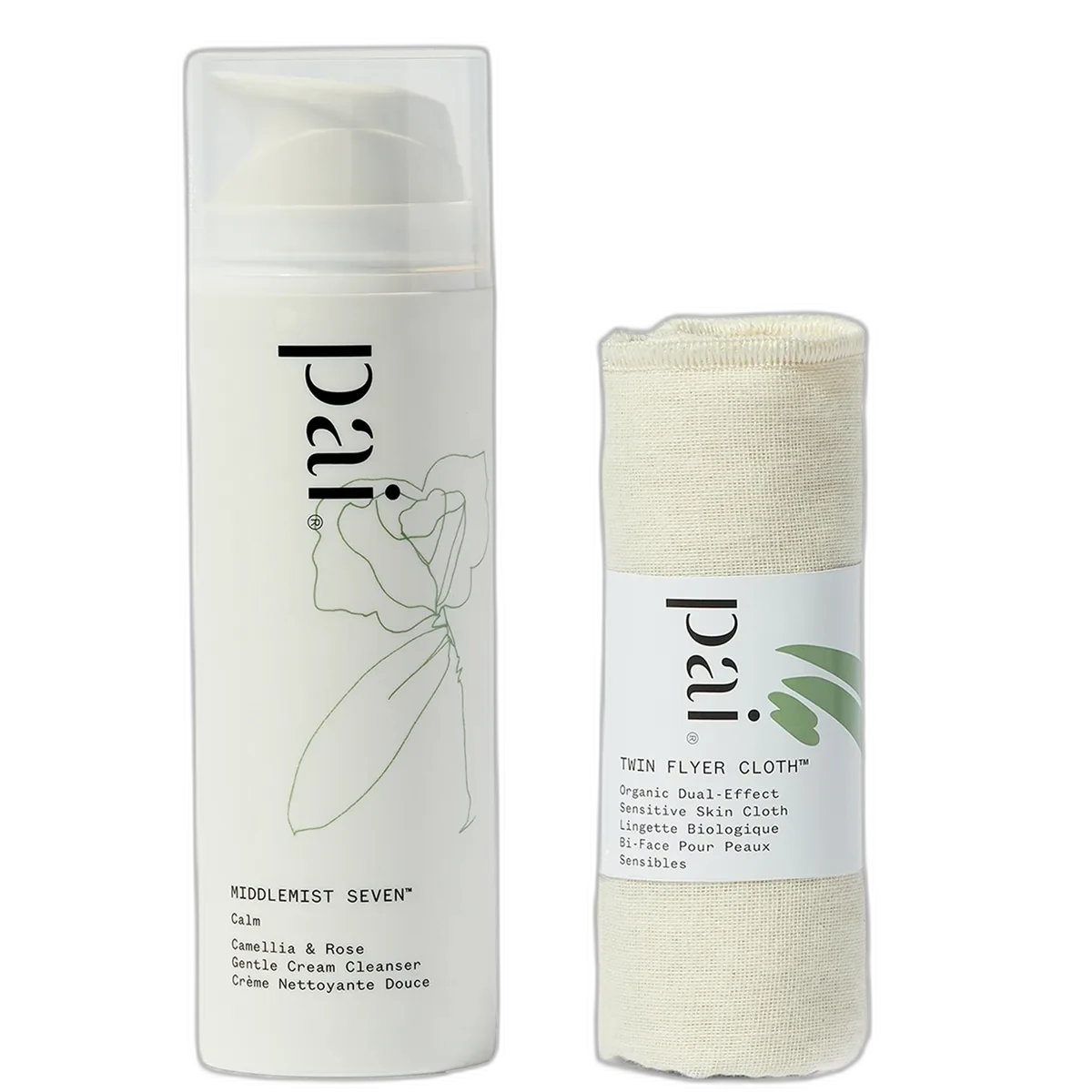
Middlemist Seven Camellia & Rose Gentle Cleanser
Sensitive Skin Sanctuary
 Verified reviewer
Pros & cons.
- +Completely surfactant-free formula that cleanses without disrupting the skin barrier
- +COSMOS Organic certified with 100% natural origin ingredients
- +Included dual-sided muslin cloth adds exfoliation and cleansing versatility
- +Leaves skin feeling soft and moisturized rather than tight or stripped
- +Independently patch tested and dermatologically approved for sensitive skin
- +Lactobacillus ferment provides natural preservation and microbiome support
- +Recyclable aluminum packaging aligns with sustainability values
- −Essential oils including lavender and geranium may irritate the most reactive skin types
- −Premium price of $69 for 150mL is steep for a rinse-off product
- −Not effective enough alone for heavy waterproof makeup removal
- −No-lather format takes adjustment for those used to foaming cleansers
- −Six-month PAO is shorter than many conventional cleansers
The full review.
Sarah Brown’s skin turned against her in her twenties. Urticaria — a condition that makes skin erupt in hives at seemingly random provocations — meant that every cleanser on the market felt like a negotiation with her own face. The Middlemist Seven was her answer: a cream cleanser built entirely on plant oils, without a single synthetic surfactant in the formula. Named after one of the rarest flowers on Earth, it launched with the audacious premise that you could cleanse skin thoroughly using nothing more than camellia, castor, and sweet almond oils.
The formula is disarmingly simple. Where most cleansers rely on surfactants to bind oil and water, the Middlemist Seven uses the oils themselves to dissolve makeup and debris, then emulsifies when you add water. Camellia oleifera seed oil leads the charge — rich in oleic acid and natural saponins that provide gentle cleansing action without disrupting the acid mantle. Castor oil, long used in the oil cleansing method, acts as a natural emulsifier that helps everything rinse away cleanly. Sweet almond oil rounds out the trio with linoleic acid and vitamin E, adding a moisturizing dimension that makes this feel more like a treatment than a wash.
The supporting cast is thoughtfully chosen. Lactobacillus ferment pulls double duty as both a natural preservative and a microbiome-friendly ingredient — a clever formulation choice that avoids synthetic preservatives while keeping the product stable. Glycerin sits mid-list providing humectant hydration during the cleansing step, and shea butter adds richness to the texture. The preservation system is completed by sodium levulinate and sodium anisate, both naturally derived antimicrobials that round out COSMOS Organic certification requirements.
Using it is a sensory experience. The cream has a velvety, almost balm-like texture that feels substantial on the fingertips. You apply it to dry skin — a departure from the wet-hands routine most people are used to — and massage for thirty seconds to a minute. There is no lather, no foam, no squeaky feedback. Just the slow dissolution of the day. Add water, and the cream transforms into a milky emulsion that rinses away cleanly, though the included muslin cloth does a more thorough job. The dual-sided cloth — one textured for gentle exfoliation, one smooth for everyday — is a thoughtful inclusion that adds real value to the package.
After rinsing, skin feels genuinely different from what surfactant cleansers deliver. There is no tightness, no sensation of having been scrubbed clean. Instead, skin feels soft and slightly cushioned, as though a thin layer of moisture has been deposited rather than removed. For anyone who has ever winced at the post-cleansing tight feeling, this is revelatory.
Now, the asterisk. Pai markets this as a sensitive skin product, and it largely is — no sulfates, no synthetic fragrance, no harsh detergents. But the formula contains four essential oils: rosa damascena, pelargonium graveolens, lavender, and litsea cubeba. These are present at low concentrations and the product has been independently patch tested, but essential oils remain a legitimate concern for the most reactive skin. If you have contact allergies to any of these botanicals, the otherwise gentle formula becomes a problem. It is a meaningful contradiction in a product designed for sensitivity, even if the majority of sensitive skin types will tolerate it fine.
The other conversation is price. At sixty-nine dollars for 150 milliliters, this is a premium cleanser by any measure. A smaller 50-milliliter size exists for those who want to trial it without full commitment, which is a welcome option. You are paying for COSMOS Organic certification, London-based in-house manufacturing, organic plant oils, and independent dermatological testing. Whether that premium is justified depends on your sensitivity threshold. For someone who cycles through drugstore cleansers that all cause irritation, spending more on one that actually works can end up being the economical choice. For someone whose skin tolerates most gentle cleansers, the value proposition is harder to defend.
The scent deserves mention. It is unmistakably rose — soft, natural, and distinctly floral without being perfumey. The essential oils provide it, which means there is no way to get this exact product without the fragrance. If you love a rose-scented skincare experience, this delivers beautifully. If you prefer truly fragrance-free products, this is not your cleanser regardless of how gentle the formula otherwise is.
Pai has been making this cleanser for nearly a decade, and its longevity speaks to a loyal following. The COSMOS Organic and Soil Association certifications are not easy to obtain and reflect genuine commitment to ingredient sourcing and manufacturing standards. The brand’s transparency about formulation — born from a founder who needed to read every ingredient list for her own safety — translates into a product you can trust compositionally.
The Middlemist Seven does what it promises: it cleanses without stripping, nourishes without clogging, and respects the skin barrier in a way that surfactant-based cleansers fundamentally cannot. It is not trying to be everything — it will not deep-clean oily skin or power through waterproof mascara on its own. But for dry, sensitive, and reactive skin types who have made peace with paying more for products that do not hurt them, this rare flower of a cleanser earns its place on the shelf.
Ingredient analysis.
Full INCI list
Aqua (Water), Camellia Oleifera Seed Oil, Ricinus Communis Seed Oil (Castor Oil), Prunus Amygdalus Dulcis Oil (Sweet Almond Oil), Lactobacillus Ferment, Cetearyl Alcohol, Glycerin, Butyrospermum Parkii Butter (Shea Butter), Tocopherol, Beta-Sitosterol, Rosa Damascena Oil, Squalene, Pelargonium Graveolens Oil, Sodium Levulinate, Lavandula Angustifolia Oil, Lactic Acid, Litsea Cubeba Fruit Oil, Sodium Stearoyl Glutamate, Sodium Anisate
Skin match.
The science.
The Science
The Middlemist Seven cleanses using the principle that oil dissolves oil, a concept used widely in cosmetic chemistry. Camellia oleifera seed oil is the primary ingredient. It has high oleic acid levels (74-87% of its fatty acid profile) and natural saponins that act as mild surfactants without the irritation of synthetic detergents.
A 2024 review in Molecules examined the antioxidant, anti-inflammatory, and moisturizing effects of Camellia oleifera oil. The review confirms the oil reduces transepidermal water loss and supports barrier function via its fatty acid composition. The study notes the oil's polyphenol content—specifically catechin derivatives shared with Camellia sinensis (green tea)—contributes to its anti-inflammatory activity.
A 2025 study in Skin Research and Technology investigated camellia oil's restorative effects on the skin barrier in an atopic dermatitis model. Topical application significantly reduced barrier disruption markers and improved skin hydration metrics. Although this research studied leave-on application instead of cleansing, it supports the idea that camellia oil contact with skin—even briefly during cleansing—offers protective benefits beyond removing dirt.
The lactobacillus ferment in the formula reflects a growing area of skincare science. Research shows ferment lysates can produce antimicrobial peptides and support the skin's native microbiome. In this formula, it works primarily as a preservation adjunct, but its presence aligns with research showing that microbial diversity on the skin surface supports barrier health.
Glycerin is one of the most studied humectants in dermatology. Decades of evidence show it improves skin hydration and barrier function, even in brief-contact products like cleansers.
References
- The Antioxidant, Anti-Inflammatory and Moisturizing Effects of Camellia oleifera Oil and Its Potential Applications — Molecules (2024)
- Restorative effects of camellia oil on the skin-barrier function in a model of DNCB-induced atopic dermatitis — Skin Research and Technology (2025)
Dermatologist Perspective
Dermatologists often recommend surfactant-free or low-surfactant cleansers for patients with eczema, contact dermatitis, or compromised skin barriers. The oil-based cleansing approach in this formula follows clinical guidance to minimize barrier disruption during cleansing. Board-certified dermatologists note that products like this—which cleanse through oil dissolution instead of detergent action—suit dry, atopic, and post-procedure skin. However, dermatologists caution that essential oils can sensitize some patients even at low concentrations. Those with known fragrance allergies should patch test carefully despite the product's gentle profile.
Where it fits in your routine.
Apply a small amount (roughly a quarter-sized dollop) to dry fingertips. Massage over dry skin in gentle circular motions for 30-60 seconds, targeting areas with makeup or sunscreen. Add a small amount of warm water to emulsify until the cream turns milky. Rinse thoroughly or use the included muslin cloth dampened with warm water for more thorough removal. Use the textured side of the cloth for gentle exfoliation (2-3 times weekly) and the smooth side daily. Follow immediately with toner and moisturizer.
At $69 for 150mL, Middlemist Seven is a premium cleanser. A 50mL travel size lets you test it first. The price covers COSMOS Organic and Soil Association certifications, London-based manufacturing, and the included muslin cloth. For sensitive skin that reacts to many products, the cost is worth it if the formula works. If your skin tolerates conventional gentle cleansers, the premium is harder to justify—the ingredient list is high quality but similar to cheaper organic brands. Pai's nearly two-decade track record and founder-driven mission add value, but the formula must justify the spend for your skin.
Dry, sensitive, and reactive skin types want a certified organic, surfactant-free cleanser that prioritizes comfort over deep cleansing. This works for anyone whose skin reacts to conventional cleansers or those who value sustainability certifications and transparent ingredient sourcing.
Oily skin types needing a deeper cleanse, people sensitive to essential oils (especially rose, lavender, or geranium), users who prefer foaming or lathering cleansers, or anyone who finds $69 too high for a daily cleanser without unique active ingredients.
Product details.
Thick, velvety cream with a balm-like consistency that melts into the skin and emulsifies with water
Essential oils provide a soft, natural rose and geranium fragrance — noticeable but not overpowering
Recyclable aluminum tube with a screw cap. Includes a dual-sided organic muslin cloth for gentle cleansing and exfoliation.
The first use feels nourishing, like applying a face balm rather than a cleanser. Skin feels different when transitioning from foaming or gel cleansers because it does not lather. Most users adjust within a few days and notice calmer skin.
2-3 months with twice-daily use
6 months
All Year
The backstory.
Pai founder Sarah Brown developed this cleanser after her own skin became hypersensitive due to urticaria in her twenties. Unable to find a cleanser gentle enough for her reactive skin that still removed makeup, she created this surfactant-free formula. The name 'Middlemist Seven' references the Middlemist Red, one of the rarest flowers in the world — a nod to the rare combination of gentleness and efficacy.
About Pai Skincare
Established Brand (5–20 years)Sarah Brown founded Pai Skincare in London in 2007 after her own urticaria and hypersensitive skin struggles. Organic cosmetic specialists formulate and manufacture all products in-house. These products are COSMOS Organic certified and undergo independent patch testing for sensitive skin suitability.
Common myths.
Cream cleansers can't properly remove makeup and sunscreen
The three-oil system in this formula — camellia, castor, and almond — uses the 'like dissolves like' principle to dissolve oil-based makeup and sunscreen. The castor oil acts as an effective emulsifier that rinses everything away cleanly.
Synthetic preservatives work better than natural ones
The lactobacillus ferment and sodium levulinate/sodium anisate system provides robust antimicrobial protection. This COSMOS-certified preservation approach keeps the product stable during its years on market.
FAQ.
Does the Pai Middlemist Seven cleanser remove makeup?
Yes — the camellia, castor, and sweet almond oils trio dissolves makeup, including foundation and sunscreen. Use a dedicated eye makeup remover for heavy waterproof eye makeup. For everyday makeup, this cleanser works well, especially with the included muslin cloth.
Is the Pai Middlemist Seven cleanser good for eczema-prone skin?
This surfactant-free, oil-based formula cleanses without disrupting the skin barrier, a major concern for eczema-prone skin. It contains essential oils like lavender and geranium, which some eczema sufferers react to. Patch testing is recommended.
Why is the Pai Middlemist Seven cleanser so expensive?
The price covers COSMOS Organic certification, London-based in-house manufacturing, organic plant oils, independent patch testing for sensitive skin, and the included muslin cloth. Value depends on your skin's reactivity — for those seeking a cleanser that avoids irritation, this investment can save money on treating reactions.
Is Pai Middlemist Seven fragrance free?
No — it contains natural fragrance from essential oils like rosa damascena, pelargonium graveolens (rose geranium), lavender, and litsea cubeba. The product uses low concentrations and passes patch tests for sensitive skin, but people with known essential oil sensitivities should be cautious.
How do you use the Pai Middlemist Seven cleanser?
Massage a small amount into dry skin using circular motions for 30-60 seconds. Add water to emulsify the oils, then rinse or use the included muslin cloth soaked in warm water to remove. The cloth side exfoliates gently; use the smooth side for everyday use.
What the community says.
"Leaves skin soft and hydrated, never tight"
"Gentle enough for very sensitive skin"
"Luxurious rose scent"
"Removes makeup effectively without stripping"
"Beautiful cream texture"
"Expensive for a cleanser"
"Essential oils may irritate the most sensitive skin"
"Doesn't remove heavy waterproof makeup alone"
"Small bottle for the price"
People also looked at.