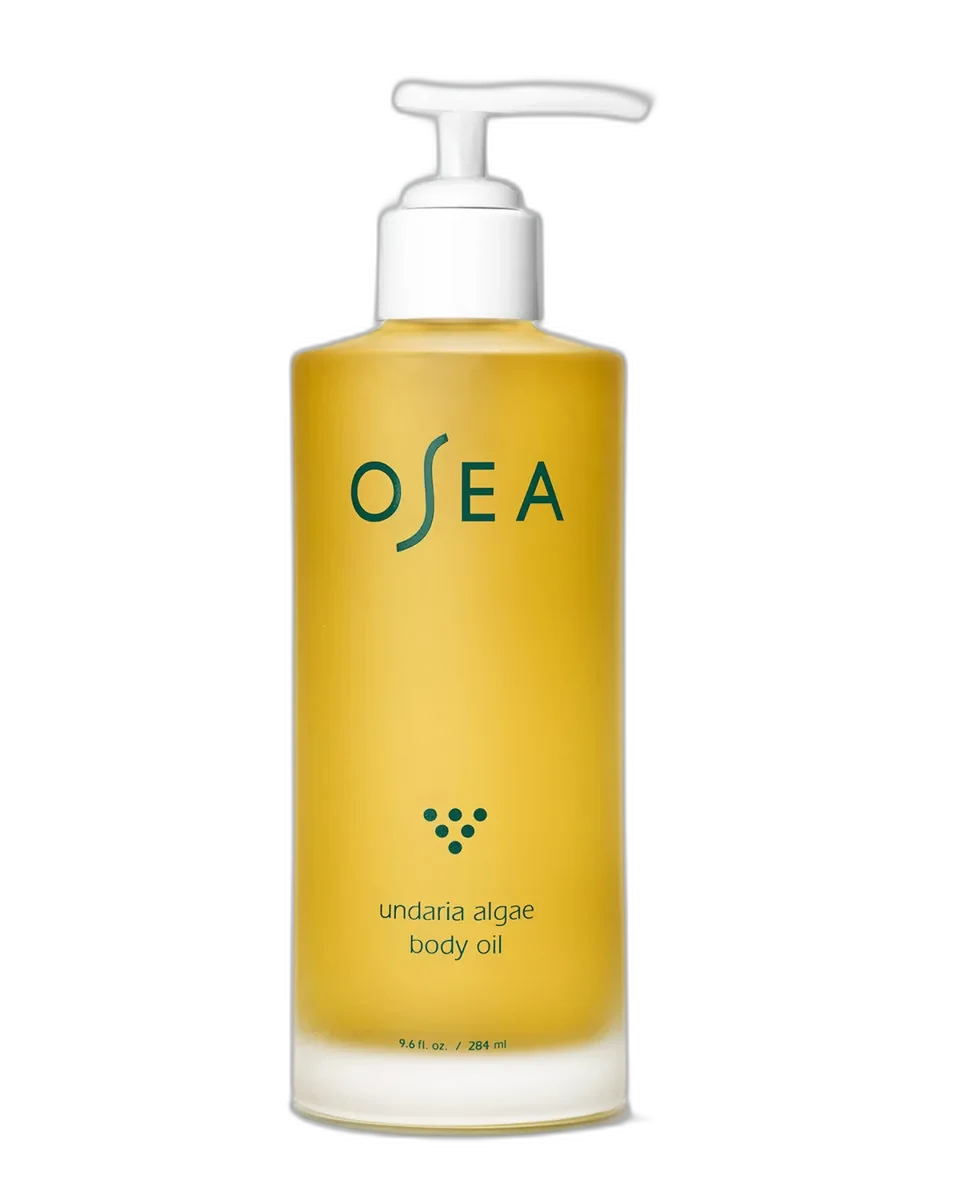
Undaria Algae Body Oil
Clean Beauty Cult Favorite
 Verified reviewer
Pros & cons.
- +Unique six-month seaweed infusion process creates a genuinely differentiated body oil
- +Non-greasy finish absorbs quickly on damp skin without clothing transfer
- +Third-party clinical study demonstrates measurable improvements in skin elasticity
- +Seven-oil botanical blend provides comprehensive antioxidant and emollient coverage
- +Fresh citrus scent is energizing without being overpowering
- +Fragrance-free version available with National Eczema Association Seal of Acceptance
- +Glass bottle with pump dispenser feels premium and controls dispensing
- −Premium price of $52 for 5 oz is steep for a body oil used daily
- −Citrus essential oils may irritate sensitive or eczema-prone skin in the original version
- −Firming claims, while clinically tested, may not be noticeable on all skin types
- −Glass bottle is fragile and not travel-friendly
- −Natural seaweed sediment at the bottom can be off-putting to first-time buyers
The full review.
Most body oils are made in a day. Ingredients enter a vat, mix, bottle, and ship. The Osea Undaria Algae Body Oil uses a different approach: USDA Certified Organic Undaria Pinnatifida seaweed sits in barrels of botanical oils for six full months. This allows minerals, polysaccharides, and antioxidants to release into the blend through natural diffusion. This old-world infusion technique applies to modern clean beauty and makes this product worth discussing on its own terms.
Undaria Pinnatifida — commonly known as wakame, the seaweed in miso soup — is rich in fucoidan. This sulfated polysaccharide attracts research interest for its antioxidant and skin-conditioning properties. Infusing it slowly into a carrier oil base instead of adding a powdered extract aims for a more complete extraction of bioactive compounds. Whether the six-month timeline is necessary or branding is a fair question, but the process differentiates this product from competitors that take shortcuts.
The oil blend is carefully constructed. Sunflower seed oil provides a high-linoleic base for skin barrier support without heaviness. Passion fruit seed oil adds beta-carotene and linoleic acid. Acai pulp oil brings anthocyanin antioxidants. Linseed oil delivers omega-3 fatty acids. Babassu oil contributes lauric acid for a smooth, fast-absorbing texture. Rice bran oil adds gamma-oryzanol, a natural antioxidant. This seven-oil blend uses each ingredient for a specific reason.
Texture
Texture is the main selling point. This oil absorbs on damp skin in under two minutes with zero greasy residue. The high proportion of lightweight, high-linoleic oils instead of heavy oleic ones makes this possible. You get a subtle, dewy sheen that looks healthy rather than oily, and you can dress without fabric transfer. This may change the mind of anyone who avoids body oils to avoid the slip-on-pants struggle.
Scent
The citrus essential oil trio — grapefruit, lime, and cypress — creates a bright, clean fragrance like a morning smoothie or a spa treatment. It is energizing but not aggressive, and it fades to something barely perceptible within fifteen to twenty minutes. For those who prefer fragrance-free products, OSEA offers a dedicated fragrance-free version with the National Eczema Association Seal of Acceptance — a distinction for reactive skin types.
Common Praise
The firming claims deserve examination. OSEA commissioned a third-party clinical study with 53 women aged 25 to 65. After one use, 100% showed improved skin elasticity and moisturization. After two weeks, 100% agreed their skin looked firmer and less crepey. These are strong numbers, and third-party testing adds credibility. However, any body oil temporarily improves skin elasticity appearance through hydration and light reflection. The question is whether the undaria extract and white lupin provide benefits beyond what a well-formulated botanical oil delivers alone. Fucoidan research is promising but not conclusive.
White lupin seed extract is the secondary hero ingredient. It contains oligopeptides that research suggests can support collagen-related pathways in the skin to help a firmer look over time. As an emerging ingredient in body care, its inclusion shows OSEA treats body care like premium facial skincare serums — using active ingredients with a proposed mechanism of action rather than just emollient window dressing.
Value
Value is a factor. At fifty-two dollars for five ounces, this is a premium body oil. A 9.6-ounce size at eighty-four dollars offers better per-ounce economics. The five-ounce bottle lasts roughly two to three months with daily full-body use, making the monthly cost seventeen to twenty-six dollars. This is not outrageous for a daily luxury product, but it costs more than coconut oil from a grocery store. You pay for the sourcing, infusion process, clinical testing, and glass packaging. The value depends on whether you view body care as maintenance or ritual.
With over 3,300 reviews and a 4.7-star average, this is one of the most reviewed products in clean beauty body care. It earned bestseller status through performance and word of mouth, not a viral TikTok moment. Seaweed sediment that occasionally settles at the bottom of the bottle proves the infusion process; it is not a quality issue, though first-time buyers sometimes mistake it for one.
Ingredient analysis.
Full INCI list
Helianthus Annuus (Sunflower) Seed Oil, Undaria Pinnatifida Extract, Euterpe Oleracea (Acai) Pulp Oil, Linum Usitatissimum (Linseed) Seed Oil, Orbignya Oleifera (Babassu) Seed Oil, Oryza Sativa (Rice Bran) Oil, Passiflora Edulis (Passion Fruit) Seed Oil, Sesamum Indicum (Sesame) Seed Oil, Tocopherol, Citrus Aurantifolia (Lime) Oil, Citrus Paradisi (Grapefruit) Peel Oil, Cupressus Sempervirens (Cypress) Oil
Skin match.
The science.
The Science
Undaria Pinnatifida, the brown seaweed in this formula, is a growing focus of cosmeceutical research. Its main bioactive compound, fucoidan, is a sulfated polysaccharide. In vitro and clinical studies show fucoidan has antioxidant, anti-inflammatory, and anti-aging properties. A 2021 review in Marine Drugs examined seaweed's anti-photoaging and skin health benefits; it noted fucoidan from brown algae species inhibits matrix metalloproteinases (MMPs)—the enzymes that break down skin collagen and elastin.
The carrier oil blend uses skin barrier science. Sunflower seed oil has high linoleic acid levels. A 2018 study in the International Journal of Molecular Sciences identified linoleic acid as essential for stratum corneum integrity. Linoleic acid deficiency impairs barrier function, and topical high-linoleic oils help restore ceramide synthesis—making sunflower seed oil a smart base for a body oil.
Passion fruit seed oil provides linoleic acid and vitamin A precursors. Research in the Journal of Medicinal Food (2010) documented its anti-inflammatory properties, finding Passiflora edulis seed oil reduced skin inflammation markers in topical application models.
Mixing multiple botanical oils creates a 'balanced fatty acid profile.' This blends linoleic, oleic, and lauric acids in proportions that mimic natural skin lipids. This method improves absorption and barrier compatibility compared to single-oil formulations.
References
- Anti-Photoaging and Potential Skin Health Benefits of Seaweeds — Marine Drugs (2021)
Dermatologist Perspective
Dermatologists know well-formulated botanical oils support skin barrier function and improve dry, aging skin. Board-certified dermatologists note the high-linoleic oil base in this formula matches current barrier repair science. The fucoidan from Undaria Pinnatifida adds antioxidant value, but dermatologists say topical firming claims are cosmetic improvements in appearance, not structural changes to collagen or elastin. Dermatologists recommend the fragrance-free version for patients with eczema or citrus sensitivity, which carries the National Eczema Association Seal of Acceptance.
Where it fits in your routine.
Product details.
This lightweight, silky oil absorbs fast for a body oil. It leaves no sticky or greasy residue, only a dry oil finish and a subtle sheen.
Fresh grapefruit, lime, and cypress citrus blend. It feels energizing and spa-like but stays subtle. The scent fades to a clean note within 15-20 minutes.
Glass bottle with pump dispenser. The glass is heavy. OSEA notes that natural seaweed sediment may settle at the bottom; this is normal and does not affect efficacy.
Skin feels silky and hydrated after the first application. The oil absorbs into damp skin within 1-2 minutes and leaves a healthy sheen without transferring to clothing. There is no adjustment period; results show from day one.
2-3 months with daily full-body application using 4-6 pumps
12 months
All Year
The backstory.
This is the product that put OSEA on the map. Born from founder Jenefer Palmer's decades-long fascination with seaweed's skin benefits, the Undaria Algae Body Oil has become the brand's number-one bestseller and the gateway product that introduces most customers to the line. Its cult following grew largely through word of mouth before the clean beauty boom amplified its visibility.
About Osea
Established Brand (5–20 years)Jenefer Palmer founded Osea in 1996 in Malibu, California, as an early clean beauty brand. Osea uses seaweed-based formulations and a multi-generational family legacy built over nearly three decades. The brand has credibility through consistent ingredient transparency and a loyal following. This particular product is their bestseller and has undergone third-party clinical testing.
Common myths.
Body oils are always greasy and stain clothes.
This formula uses a blend of lightweight botanical oils — sunflower, passion fruit, and linseed — that absorbs fast on damp skin without grease. Apply to damp, not dry, skin and wait 1-2 minutes before dressing.
Seaweed extract in body oils is just a marketing gimmick.
Undaria Pinnatifida (wakame) has fucoidan, a polysaccharide with antioxidant and skin-conditioning properties. This six-month infusion extracts more than blending in seaweed powder, but the final product's exact concentration of active compounds is not disclosed.
FAQ.
Does the Osea Undaria Algae Body Oil actually firm skin?
In OSEA's third-party clinical study of 53 women, 100% showed improved skin elasticity after one use, and 100% agreed skin looked firmer after two weeks. Results vary by person — the oil's botanical blend and white lupin extract improve skin appearance, but they do not replace collagen loss or tighten loose skin.
Myth
Reality
Is the Osea Undaria Algae Body Oil good for sensitive skin?
The original formula contains citrus essential oils (lime, grapefruit) that irritate sensitive skin. OSEA offers a fragrance-free version that is hypoallergenic, dermatologist-tested, and carries the National Eczema Association Seal of Acceptance — choose that version for reactive or eczema-prone skin.
How to Use
Apply 3-6 pumps to damp skin right after showering. Water on your skin helps the oil emulsify and absorb faster to prevent greasiness. Massage in circular motions and wait 1-2 minutes before dressing. Use daily, morning or evening.
Is the Osea Undaria Algae Body Oil worth $52?
The 5 fl oz bottle lasts 2-3 months if used daily, costing roughly $17-26 per month. The six-month seaweed infusion process, organic botanical oils, and clinical testing explain the premium price. A 9.6 fl oz size costs $84 and offers better per-ounce value for regular users.
What does the Osea Undaria Algae Body Oil smell like?
Grapefruit, lime, and cypress essential oils give it a fresh, bright citrus scent. The fragrance is energizing but not overpowering; it fades to a subtle, clean scent within 15-20 minutes. A fragrance-free version exists for those who prefer unscented products.
What the community says.
"Non-greasy formula absorbs quickly"
"Beautiful citrusy scent"
"Leaves skin glowing and soft"
"Visibly firms and smooths skin over time"
"Lightweight enough for year-round use"
"Expensive compared to drugstore body oils"
"Citrus scent may not appeal to everyone"
"Firming claims feel overstated by some users"
"Small bottle size for a body product"