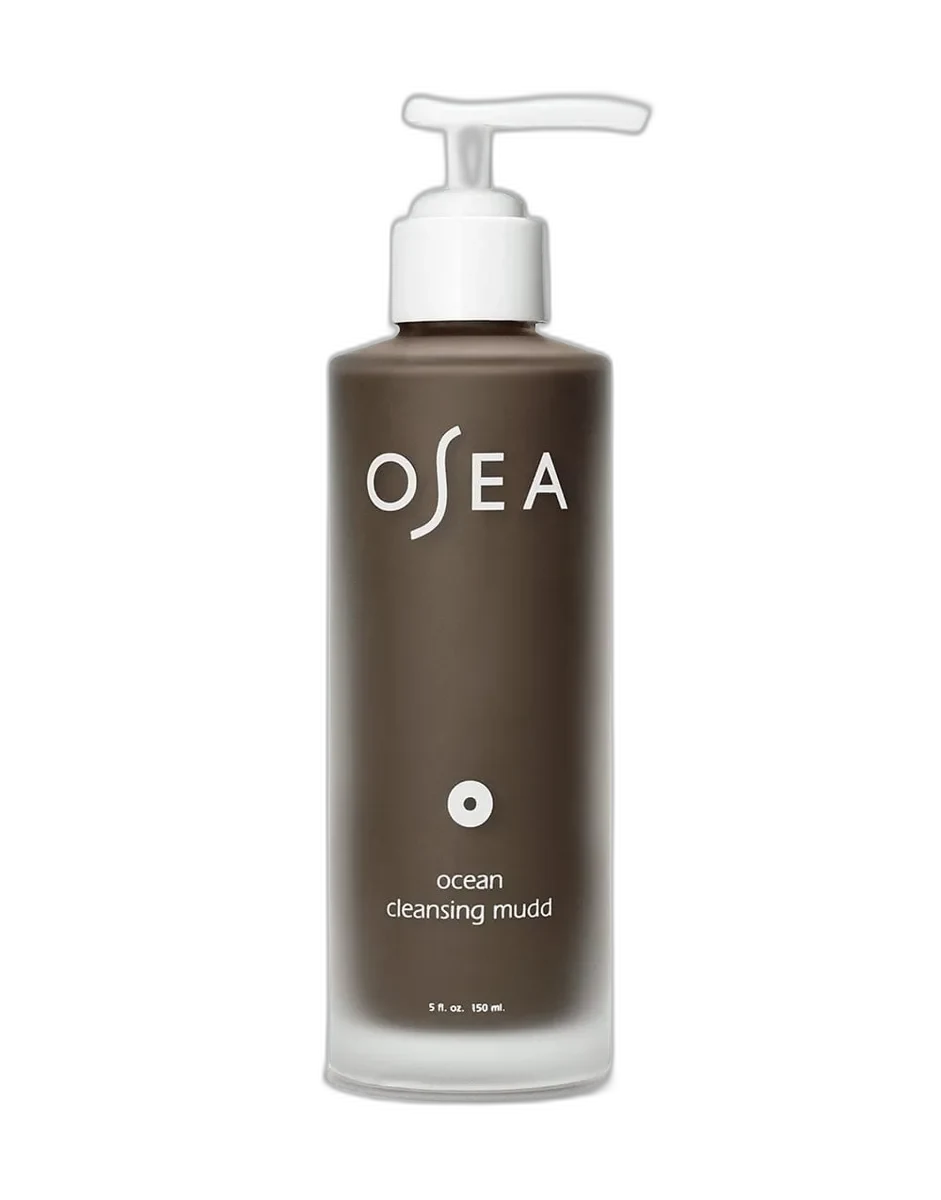
Ocean Cleansing Mudd
Clean Beauty Oil-Control Staple
 Verified reviewer
Pros & cons.
- +Dual seaweed formula provides mineral-rich antioxidant and anti-inflammatory benefits beyond typical clay cleansers
- +Sulfate-free gentle surfactants cleanse effectively without stripping the skin barrier
- +Tea tree oil delivers well-documented antibacterial action against acne-causing bacteria
- +Natural smectite clay absorbs excess sebum without the aggressive drying of bentonite
- +Invigorating mint cooling sensation creates a genuinely enjoyable cleansing ritual
- +Vegan, cruelty-free, and formulated without parabens, sulfates, or synthetic fragrance
- +Glycerin, jojoba, and safflower oils counterbalance clay drying for a balanced post-cleanse feel
- −Essential oil trio (tea tree, peppermint, wild mint) makes it unsuitable for sensitive or reactive skin
- −Premium $48 price for a rinse-off cleanser that stays on skin for under a minute
- −Strong mint scent may be overwhelming for those sensitive to aromatic essential oils
- −Vitamin C and antioxidant actives sit at the tail of the INCI list suggesting low concentrations
- −Not effective for dry skin types — the clay and mint combination skews strongly oil-control
The full review.
Jenefer Palmer mixed ocean-derived formulas in her Malibu garage in 1996, long before “clean beauty” or seaweed became wellness trends. The Ocean Cleansing Mudd stems from that original work—a belief that the sea provides real solutions for troubled skin, not just marketing.
The formula uses two seaweed species. Fucus Vesiculosus, or bladderwrack, is a brown algae rich in fucoidan polysaccharides; research links this to antioxidant and anti-inflammatory activity. Laminaria Digitata, a kelp species, provides a complementary mineral profile and shows promise in supporting collagen production and skin hydration in cosmeceutical studies. Together, they create a marine mineral foundation that exceeds typical kaolin-and-bentonite clay approaches.
The formula uses magnesium aluminum silicate, a natural smectite clay. This provides oil absorption and pore-purging action without the aggressive drying effect of pure bentonite. It creates a thick, dark greenish-gray paste flecked with visible seaweed particles.
The surfactant system uses decyl glucoside and sodium lauroyl oat amino acids. Both are sulfate-free, biodegradable, and less likely to disrupt the skin barrier than the sodium lauryl sulfate or cocamidopropyl betaine found in many mass-market cleansers. They provide enough lather to clean the face without a squeaky, stripped sensation.
An essential oil trio defines the product’s personality. Tea tree oil is an antibacterial agent with evidence supporting its use against Cutibacterium acnes. Peppermint and wild mint oils add an intense cooling tingle within seconds of application. This cleanser delivers that ice-on-your-face sensation. However, reactive skin may react poorly.
The cooling sensation is unmistakable. Apply the mudd to damp skin, massage for about a minute, and feel the minty freshness. Tea tree oil works as an antibacterial, the clay absorbs sebum, and the seaweed delivers minerals. Because the mint is intense, people with rosacea, eczema, or a compromised moisture barrier should look elsewhere. This cleanser does not prioritize gentleness.
The product rinses clean without residue, leaving skin purified rather than parched. Glycerin, jojoba oil, and safflower seed oil counteract the clay’s drying tendency. Most users with oily or combination skin report a balanced feel rather than tightness. The product is not for dry skin types.
The INCI list ends with magnesium ascorbyl phosphate, a stable vitamin C derivative, and tocopherol. Their positions suggest modest concentrations. This is not a vitamin C treatment, but the antioxidant support is a thoughtful addition for a rinse-off product.
Value is a factor. At forty-eight dollars for five ounces, this is a premium cleanser. You pay for OSEA’s nearly three decades of seaweed expertise, vegan and cruelty-free formulation, and the sensory experience. Whether ten dollars per ounce justifies a sixty-second application is a personal calculation. The travel size at eighteen dollars for 0.6 ounces is less economical and works best as a trial.
The Ocean Cleansing Mudd clears oil, fights blemishes, and delivers a sensory experience rooted in marine ingredients with scientific backing. It does not try to be everything to everyone; this focus is both its strength and its limitation.
Formula
Not ideal for
Ingredient analysis.
Full INCI list
Aqua (Water), Decyl Glucoside, Sodium Lauroyl Oat Amino Acids, Fucus Vesiculosus Powder, Magnesium Aluminum Silicate, Sorbitan Olivate, Glycerin, Leuconostoc/Radish Root Ferment Filtrate, Laminaria Digitata Powder, Carthamus Tinctorius (Safflower) Seed Oil, Simmondsia Chinensis (Jojoba) Seed Oil, Melaleuca Alternifolia (Tea Tree) Leaf Oil, Mentha Arvensis (Wild Mint) Leaf Oil, Mentha Piperita (Peppermint) Oil, Xanthan Gum, Tocopherol, Citric Acid, Magnesium Ascorbyl Phosphate
Skin match.
The science.
The Science
The two seaweed species in this formula have garnered increasing attention in cosmeceutical research. Fucus Vesiculosus (bladderwrack) is particularly rich in fucoidan, a sulfated polysaccharide that has demonstrated antioxidant, anti-inflammatory, and photoprotective properties. A 2020 study published in Marine Drugs explored the biological potential of Fucus species for skin applications, finding significant free radical scavenging activity and inhibition of enzymes related to skin aging, including collagenase and elastase.
Laminaria Digitata has been studied for its effects on collagen synthesis and skin barrier function. Research published in the Journal of Clinical and Aesthetic Dermatology examined macroalgae extracts in cosmeceuticals, noting that Laminaria species improved type I collagen production and supported keratin 10 expression, a protein critical to the skin's functional barrier.
The tea tree oil component (Melaleuca Alternifolia) has arguably the strongest evidence base of any ingredient in this formula. A landmark study published in the Medical Journal of Australia (1990) compared 5% tea tree oil to 5% benzoyl peroxide for the treatment of acne, finding comparable efficacy with fewer side effects. Subsequent research has confirmed tea tree oil's antimicrobial activity against Cutibacterium acnes at concentrations as low as 0.5-1%.
The combination of mineral-rich seaweed extracts with antibacterial essential oils and oil-absorbing clay creates a multi-mechanism approach to blemish-prone skin: the clay physically removes sebum, the tea tree targets bacteria, and the seaweed extracts provide antioxidant and anti-inflammatory support to reduce post-inflammatory redness.
References
- Highlighting the Biological Potential of the Brown Seaweed Fucus spiralis for Skin Applications — Marine Drugs (2020)
- Clinical Studies of the Safety and Efficacy of Macroalgae Extracts in Cosmeceuticals — Journal of Clinical and Aesthetic Dermatology (2020)
- A comparative study of tea-tree oil versus benzoylperoxide in the treatment of acne — Medical Journal of Australia (1990)
Dermatologist Perspective
Dermatologists generally recognize tea tree oil as a viable topical antibacterial for mild acne, with the caveat that it can cause contact dermatitis in sensitized individuals. Board-certified dermatologists note that clay-based cleansers can be effective for reducing surface sebum in oily skin types, but they recommend following with a non-comedogenic moisturizer to prevent rebound oil production. The essential oil content in this formula — particularly peppermint and mentha arvensis — would typically prompt dermatologists to advise patch testing before regular use, especially for patients with a history of contact sensitivity or rosacea. For oily, blemish-prone patients who tolerate essential oils well, this type of multi-active botanical cleanser can complement a broader acne management regimen.
Where it fits in your routine.
Wet your face with lukewarm water. Squeeze a nickel-sized amount onto your fingertips. Massage it over your face in circular motions for 30 to 60 seconds so the clay and seaweed contact the skin. Avoid the eye area. Rinse well with cool to lukewarm water. Use it morning and evening for oily skin, or once daily in the evening for normal-to-combination skin. Follow immediately with a hydrating toner and moisturizer to replace moisture the clay displaces.
At $48 for 5 fl oz, Ocean Cleansing Mudd is a premium cleanser. A 0.6 fl oz travel size costs $18, which has poor per-ounce economics. The price reflects OSEA's clean beauty positioning, vegan certification, and seaweed sourcing, but the active ingredients use concentrations typical of mid-range products. Oily-skin devotees who value the sensory ritual and the brand's clean ingredient philosophy will find the price justifiable. Those seeking blemish control can find effective tea tree and clay cleansers for much less, though few match this formula's seaweed-forward approach.
Oily and combination skin types want a deep-cleansing, blemish-fighting cleanser in the clean beauty space. This works for users who want an invigorating sensory experience and a sulfate-free formula that cleanses thoroughly.
The tea tree, peppermint, and wild mint oils likely irritate sensitive, dry, or reactive skin. The premium price also makes this a poor choice for tight skincare budgets, as the cost is hard to justify for a rinse-off product.
Product details.
Peppermint, wild mint, and tea tree oils create a strong herbal-minty aroma. The application feels cooling, like a spa facial or a eucalyptus steam room.
A recyclable squeeze tube uses a flip cap. The clean, ocean-inspired minimalist design matches OSEA's branding.
The mint and tea tree oils cause an immediate cooling tingle. This is normal and fades within one minute of rinsing. Skin feels clean and slightly taut after the first use. If tingling feels excessive, use once daily until skin adjusts.
2-3 months with twice-daily use on face only ***
12 months ***
spring summer ***
The backstory.
Born from OSEA founder Jenefer Palmer's belief in the ocean's healing power, this cleanser channels the brand's nearly three-decade commitment to seaweed-based formulations. It was designed to offer oily and blemish-prone skin types a serious deep-clean option within the clean beauty space, where many cleansers skew gentle to the point of being ineffective for acne-prone users.
About Osea
Established Brand (5–20 years)Osea was founded in 1996 in Malibu, California by Jenefer Palmer, making it one of the original clean beauty brands. With nearly three decades of seaweed-based formulations and a multi-generational family legacy, the brand has built credibility through consistent ingredient transparency and a loyal following, though it relies more on clean beauty ethos than peer-reviewed clinical trials of its specific products.
Common myths.
Clay cleansers strip the skin and damage the moisture barrier.
This formula combines smectite clay with glycerin, jojoba oil, and safflower oil to prevent the clay from drying the skin. The gentle surfactants (decyl glucoside, oat amino acids) are some of the mildest available and strip less than sulfate-based clay cleansers.
Seaweed in skincare is a gimmick with no real benefits.
Both Fucus Vesiculosus and Laminaria Digitata have documented antioxidant and anti-inflammatory properties in cosmeceutical research. While specific clinical trials on this exact cleanser formulation don't exist, the individual seaweed extracts have demonstrated skin-soothing and photoprotective potential in peer-reviewed studies.
What the community says.
"Skin feels clean without stripping"
"Refreshing mint scent and cooling sensation"
"Effective at reducing excess oil"
"Works well for blemish-prone skin"
"Pleasant spa-like experience"
"Can feel drying for non-oily skin types"
"Strong mint scent may be overwhelming"
"Expensive for a cleanser"
"Not suitable for sensitive or very dry skin"
People also looked at.