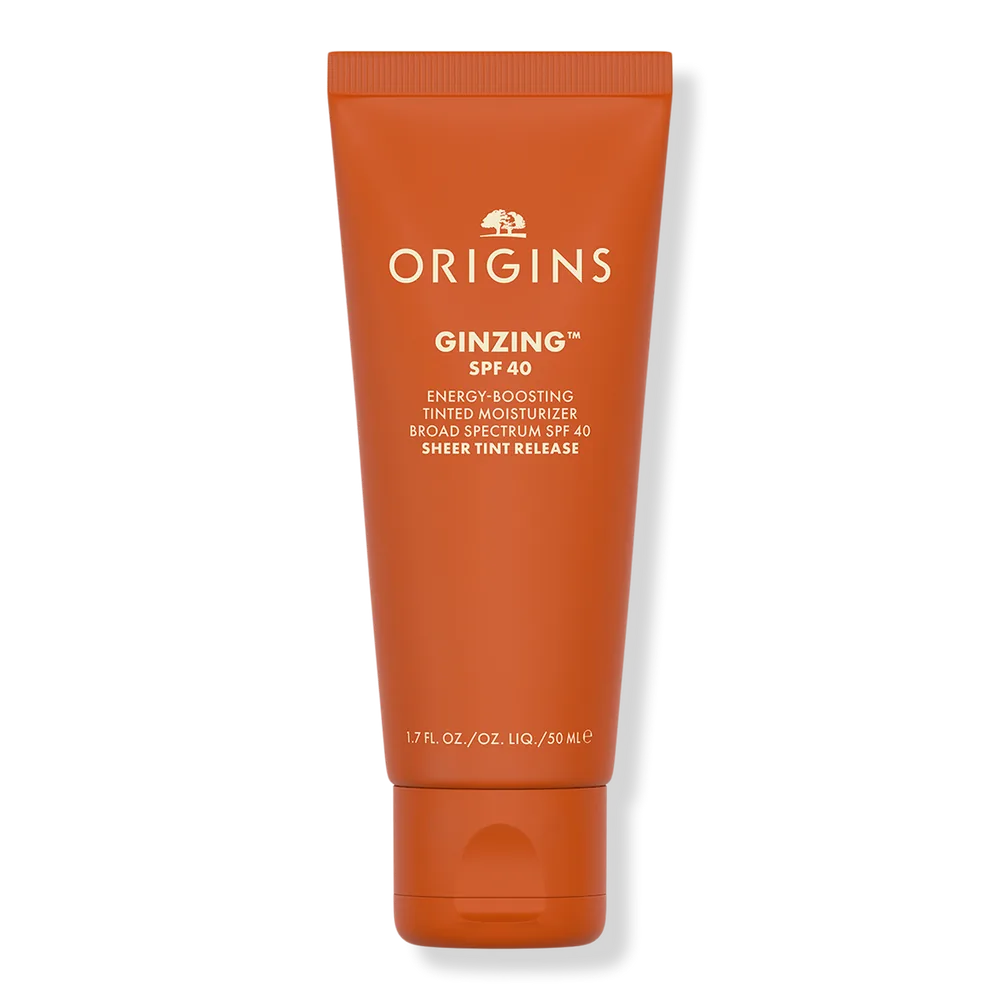
GinZing SPF 40 Energy-Boosting Tinted Moisturizer
Morning Glow Multitasker
 Verified reviewer
Pros & cons.
- +SPF 40 broad-spectrum with five UV filters provides robust daily protection
- +Caffeine and ginseng deliver visible immediate brightening
- +Replaces moisturizer, sunscreen, and light foundation in one step
- +Lightweight, natural-looking finish with buildable sheer tint
- +Iron oxides provide additional visible light protection
- +Vegan and cruelty-free
- −Heavy essential oil load with multiple citrus oils — photosensitizing and irritating
- −Very limited shade range excludes most skin tones
- −Tint can oxidize and turn orange on fair skin
- −Contains octinoxate and octocrylene (environmental and safety concerns)
- −Spearmint oil can cause irritation and cooling sensation
- −Not suitable for sensitive or rosacea-prone skin
The full review.
Origins built the GinZing line on a simple premise: tired skin needs the same ingredients that wake you up internally (caffeine, ginseng) to energize your complexion externally. The SPF 40 Energy-Boosting Tinted Moisturizer executes this as a single-step morning product that hydrates, protects, tints, and energizes before you finish your coffee.
The sun protection is strong. Five UV filters—a hybrid of chemical (octinoxate, octisalate, octocrylene) and mineral (titanium dioxide, zinc oxide)—deliver SPF 40 broad-spectrum protection. This hybrid approach works well: chemical filters provide a clear, elegant finish, while mineral filters add protection and use iron oxides for tinting. Zinc oxide is a broad-spectrum UV filter that protects against both UVA and UVB.
Caffeine and ginseng provide more than marketing; their effects are modest by dermatological standards. Caffeine is a proven vasoconstrictor that reduces puffiness and has antioxidant properties. Applied topically, it improves the appearance of sallow skin within minutes. Panax ginseng root extract contains ginsenosides—triterpenoid saponins with antioxidant and mild anti-inflammatory activity. Together, they create a visible, immediate brightening effect, even if they do not change your skin biology.
Magnesium ascorbyl phosphate (a stable vitamin C derivative) and sodium hyaluronate provide active support. The vitamin C adds antioxidant protection alongside the UV filters, while hyaluronic acid delivers hydration so the tinted formula sits smoothly instead of clinging to dry patches.
The tint is sheer and buildable, offering a natural, radiant finish rather than full coverage. On light to medium skin tones, it evens tone and creates a glow that looks like skin rather than makeup. The iron oxides used for color also protect against visible light—a benefit traditional sunscreens lack.
The Estée Lauder Companies heritage provides Origins with significant formulation resources, and the GinZing line has been refined since 2012. The brand’s sustainability efforts—including a packaging recycling program and tree-planting initiatives—add ethical value, though this does not offset formulation concerns.
The product works best as a morning shortcut. Applied over a hydrating serum, it provides a glow that photographs well and lasts the workday without fading or separating. Setting it with a light powder extends wear on combination skin.
The critique begins with the essential oil content. Lemon peel oil, grapefruit peel oil, spearmint leaf oil, and orange peel oil create the GinZing citrus scent but also increase irritation risk. These phototoxic and sensitizing essential oils are applied to the face under sunlight—a combination dermatologists advise against. Citrus oils can cause photosensitive reactions like hyperpigmentation, which is ironic for a brightening product.
The shade range is limited. With one universal shade, the product only works for a narrow range of skin tones. Darker skin tones may see an ashy tint or unnatural cast, while very fair skin may experience the orange oxidation reported by multiple reviewers. A single-shade tinted moisturizer from a prestige brand is an oversight in an era of expanded shade ranges.
Octinoxate and octocrylene are among the UV filters, which may concern environmentally-conscious consumers or those sensitive to chemical filters. These filters are legal and effective, but octinoxate faces scrutiny for its impact on coral reefs, and octocrylene can generate benzophenone, a suspected carcinogen, as it ages.
Squalane, dimethicone, and cetyl alcohol create a comfortable base that wears well without excessive shine or heaviness. The texture is pleasant—more moisturizer than makeup, which is how a tinted moisturizer should feel.
Guava fruit extract and mangosteen peel extract add polyphenol antioxidant support; both are tropical fruits with documented free-radical scavenging activity. While concentrations are likely modest, they add to the antioxidant network alongside caffeine, vitamin C, and ginseng. Chestnut seed extract (Castanea sativa) provides anti-inflammatory benefits, and cordyceps sinensis (a medicinal mushroom) adds to the adaptogenic theme.
Trehalose and hyaluronic acid provide moisture retention, helping the tinted moisturizer avoid the dry, cakey look of early tinted SPF products. Squalane adds emollient support. Together, they keep the product looking fresh rather than settling into fine lines.
At $42 for 1.7 ounces, the value is decent for a product replacing three morning steps. However, the essential oil load, limited shade inclusivity, and controversial UV filters prevent a universal recommendation. For light-to-medium skin tones who are not fragrance-sensitive and enjoy the ritual, it is a good morning product. For others, the market has better alternatives.
Ingredient analysis.
Full INCI list
Active Ingredients: Octinoxate 7.5%, Octisalate 2.0%, Octocrylene 2.0%, Titanium Dioxide 3.0%, Zinc Oxide 3.0%. Inactive Ingredients: Water/Aqua/Eau, Butylene Glycol, Cetyl Alcohol, Neopentyl Glycol Diheptanoate, C12-15 Alkyl Benzoate, Dimethicone, Laureth-4, PEG-100 Stearate, Hydrogenated Lecithin, Citrus Limon Peel Oil, Citrus Grandis Peel Oil, Mentha Viridis Leaf Oil, Citrus Aurantium Dulcis Peel Oil, Limonene, Linalool, Citral, Garcinia Mangostana Peel Extract, Panax Ginseng Root Extract, Castanea Sativa Seed Extract, Psidium Guajava Fruit Extract, Caffeine, Sodium Hyaluronate, Squalane, Tocopheryl Acetate, Magnesium Ascorbyl Phosphate, Iron Oxides (CI 77491, CI 77492, CI 77499), Titanium Dioxide (CI 77891), Phenoxyethanol
Skin match.
The science.
The Science
The hybrid UV filter system uses chemical and mineral approaches for broad-spectrum SPF 40. Zinc oxide (3%) provides the broadest individual UVA protection spectrum (absorption across 290-380 nm), while titanium dioxide (3%) adds UVB protection. The chemical filters (octinoxate, octisalate, octocrylene) fill gaps in the mineral protection curve and ensure easy application.
Dermatological studies document the topical effects of caffeine. Research in Skin Pharmacology and Physiology (2015) shows topical caffeine reduces UV-induced erythema and has anti-inflammatory effects by inhibiting phosphodiesterase and modulating adenosine receptors. Its vasoconstrictive properties reduce puffiness and improve under-eye appearance.
Panax ginseng root extract contains ginsenosides (primarily Rg1, Rb1, and Rg3) that show antioxidant and anti-aging properties in skin studies. Research in the Journal of Ginseng Research (2017) confirms ginsenosides increase collagen production and inhibit MMP expression in UV-damaged skin. However, the concentration in this cosmetic formula is likely below the levels used in those studies.
The iron oxide pigments provide an extra benefit: protection against visible light and blue light. A study in the Journal of Cosmetic Dermatology (2019) shows tinted sunscreens with iron oxides provide superior protection against visible-light-induced hyperpigmentation compared to non-tinted formulas, which matters for melasma patients.
Dermatologist Perspective
Board-certified dermatologists like the convenience of tinted SPF moisturizers but worry about the essential oil content in this formula. Citrus peel oils are phototoxic agents — applying them to the face under UV exposure works against sun protection goals. Dermatologists prefer this formula without the essential oils. The SPF 40 hybrid filter system works well, and the iron oxide tinting adds real photoprotective value. Dermatologists increasingly recommend tinted sunscreens for patients with melasma or PIH, though they prefer fragrance-free options.
Where it fits in your routine.
Apply a nickel-sized amount to clean, moisturized skin as your final AM step. Blend using fingers or a beauty sponge. Let it set for 1-2 minutes before you apply makeup. Reapply every 2 hours during extended sun exposure.
At $42 for 1.7 oz, this three-in-one product has reasonable value. However, other tinted SPF products at similar or lower prices have better formulations and no essential oil baggage. The primary value is convenience — it replaces moisturizer, sunscreen, and a light base.
Light-to-medium skin tones seeking a one-step morning product with SPF, light coverage, and an energizing effect. Best for users who like citrus scents and are not fragrance-sensitive.
Sensitive or rosacea-prone skin, darker skin tones (limited shade range), people with fragrance allergies, and users seeking mineral-only or fragrance-free sunscreens.
Product details.
This lightweight, fluid tinted cream blends easily and gives sheer, buildable coverage. It feels more like a moisturizer than a foundation.
Multiple essential oils create a distinct citrus-ginger fragrance. It is part of the GinZing brand experience — pleasant but strong.
Squeeze tube — practical for daily use and travel.
Immediate brightening and light coverage. The citrus scent is noticeable. Skin looks refreshed and energized. The tint provides a natural, even tone for light to medium skin tones.
3-4 months with daily face application
12 months
All Year
The backstory.
The GinZing line has been Origins' energy-focused collection since 2012, built around the premise that skincare should wake up tired-looking skin the way coffee wakes up the rest of you. The SPF 40 tinted version extended that concept into sun protection, creating a one-step morning product for the busy, the time-crunched, and the routine-averse.
About Origins
Established Brand (5–20 years)Leonard Lauder founded Origins in 1990 as part of The Estée Lauder Companies. The brand uses nature-powered skincare and follows a strong sustainability ethos, operating ~1,400 stores globally. Formulations are vegan and focus on plant-derived ingredients.
Common myths.
Tinted moisturizers don't provide real SPF protection
This formula uses five UV filters at declared concentrations to reach SPF 40 broad-spectrum protection — the same as dedicated sunscreens. Iron oxides provide the tint and add visible light protection. You must apply enough product — a nickel-sized amount for the face.
Ginseng and caffeine are marketing ingredients in skincare
Both have documented topical benefits. Caffeine is a proven vasoconstrictor that reduces puffiness and has antioxidant properties. Panax ginseng root extract contains ginsenosides with antioxidant and anti-inflammatory activity. They do not replace retinol, but they provide real, modest skin benefits.
FAQ.
Does Origins GinZing tinted moisturizer turn orange?
Users with fair skin report the sheer tint oxidizes slightly during the day, turning warmer or more orange. This happens more often on very light skin tones. The limited shade range works best for light to medium complexions. Test it in-store before you buy.
Is Origins GinZing SPF 40 enough sun protection?
Yes — SPF 40 uses five UV filters (both chemical and mineral) for broad-spectrum protection during daily use. Apply a nickel-sized amount to the face for full SPF coverage. Reapply every 2 hours for extended outdoor activity.
Is Origins GinZing tinted moisturizer good for sensitive skin?
No — the formula has multiple essential oils (lemon, grapefruit, spearmint, orange), fragrance allergens (limonene, linalool, citral), and irritating chemical UV filters (octinoxate, octocrylene). Sensitive or rosacea-prone skin needs fragrance-free tinted SPF alternatives.
Can Origins GinZing replace foundation?
Yes, if you prefer light, natural-looking coverage. The sheer tint evens skin tone and leaves a radiant finish. For more coverage, use it as a base under concealer on problem areas. It does not replace medium-to-full coverage foundation.
Is Origins GinZing cruelty-free and vegan?
Yes — Origins is cruelty-free and this product is vegan. The Estée Lauder Companies owns the brand and commits to no animal testing.
What the community says.
"Lightweight, natural-looking tint with radiant finish"
"Pleasant energizing citrus scent"
"Good SPF 40 protection in one step"
"Hydrating formula doubles as light foundation"
"Sheer tint can oxidize and turn orange on fair skin"
"Heavy essential oil content — multiple citrus and mint oils"
"Limited shade range excludes many skin tones"
"Chemical UV filters (octinoxate, octocrylene) may concern some users"
"Contains Mentha viridis (spearmint) oil which can irritate"
People also looked at.