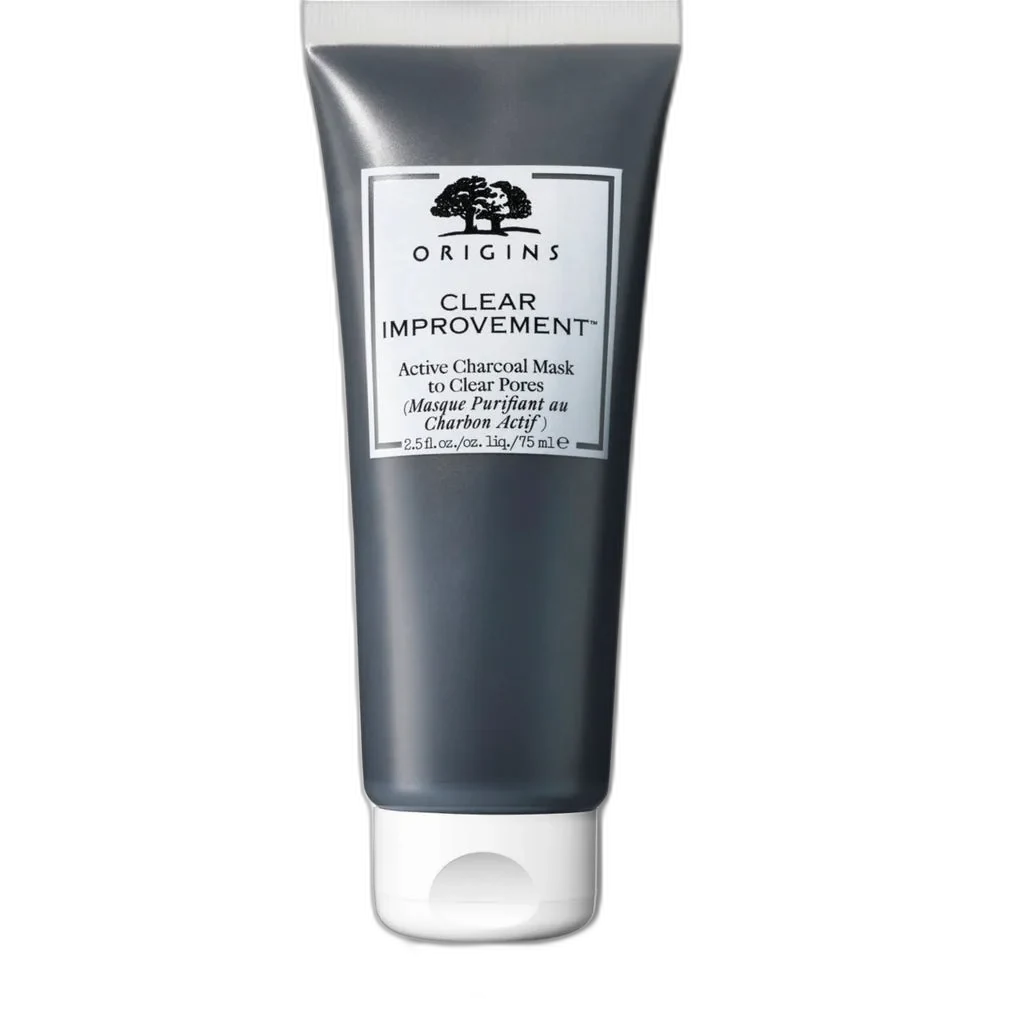
Clear Improvement Active Charcoal Mask
Pore-Clearing Cult Classic
 Verified reviewer
Pros & cons.
- +Triple-clay system at 18% concentration provides genuine, substantial oil absorption
- +Completely fragrance-free — rare and valuable in the charcoal mask category
- +Clean, minimal ingredient list avoids common irritants like essential oils and alcohol
- +Visible pore-clearing results after a single 10-minute application
- +Decade-plus track record with thousands of positive reviews confirms reliability
- +Vegan, cruelty-free, and formulated without parabens or sulfates
- −Can feel overly drying on non-oily skin types even with the glycerin inclusion
- −Dark charcoal tint requires thorough rinsing and can stain washcloths
- −Pore-minimizing effects are temporary and reset within 1-2 days
- −At $30 for 2.5 oz, it's priced above many effective drugstore clay masks
- −Jar packaging exposes the product to air and contamination with each use
The full review.
The charcoal mask craze had a starting point. Before every brand from luxury to dollar-store added activated charcoal to their packaging, Origins launched Clear Improvement Active Charcoal Mask in 2013, defining a category. Over a decade later, despite countless imitators, the original still works—not because it is revolutionary, but because its formulation is better than most competitors.
The formula uses a triple-clay foundation of kaolin, bentonite, and montmorillonite, totaling approximately 18% of the formula. This is a substantial clay load. Many competing charcoal masks use a single clay at much lower concentrations, using charcoal for marketing while lacking the clay concentration to absorb oil. Origins did the opposite—the clays do the work, and the bamboo charcoal (at 1%) adds adsorptive capacity to an already competent purifying system.
Kaolin is the gentlest of the trio, absorbing oil without aggressively pulling moisture from the skin. Bentonite is the powerhouse—it swells when hydrated and develops a net negative charge that attracts the positively charged proteins and debris that clog pores. Montmorillonite adds mineral-rich adsorption capacity. Together, they create a mask that feels purposeful rather than theatrical. When this mask dries and tightens, the clays are actively pulling oil and debris to the surface.
The bamboo charcoal needs context. Activated charcoal is an excellent adsorbent in medical and filtration applications, but its efficacy in a ten-minute topical mask is more modest than marketing suggests. It binds to some impurities on the skin surface, and the overall purifying effect is real when combined with the clay system. But the 1% charcoal is not the hero—the clays are. Origins formulated the product so the charcoal has a strong functional base rather than acting as a lone gimmick ingredient.
What sets this apart from most charcoal masks is what is absent. No fragrance. No essential oils. No menthol or camphor for a faux-clean tingle. No alcohol. No sulfates. The ingredient list is clean and purposeful: water, clays, charcoal, emulsifiers, glycerin for hydration, and preservatives. That is it. In a category full of unnecessary additions, this restraint is unusual, especially for those whose skin reacts to fragrance but needs the deep-cleansing benefits of a clay mask.
The experience is straightforward. The thick, dark gray paste spreads smoothly over cleansed skin and dries into a firm, matte shell in about ten minutes. The tightening sensation is noticeable—some find it gratifying, others find it mildly uncomfortable. Upon rinsing, the skin looks and feels cleaner. Pores that were visible before masking appear tighter. Oily areas are matte. The effect is temporary—pore size is genetic and resets as sebum refills—but as a weekly maintenance ritual, the results are reliable.
Rinsing is the one minor annoyance. Charcoal-tinted masks require more thorough rinsing than white clay masks; residue can linger around the nose, hairline, and jawline if you are not careful. A soft washcloth helps. Keep it away from white towels.
At thirty dollars for 2.5 ounces, this is premium for a clay mask but reasonable for a prestige product that lasts three to four months with weekly use. The larger 3.4 oz size offers better value per ounce. The formula has not changed meaningfully since launch, showing a brand that got it right the first time and resisted chasing trends with reformulations.
Clear Improvement does not try to be more than it is. It is not an acne treatment. It is not a pore-shrinking miracle. It is a well-made clay mask that removes oil and surface debris, leaves the skin looking cleaner and tighter, and avoids irritating additions. In a category of overpromising, that reliability is the product’s greatest strength.
Ingredient analysis.
Full INCI list
Water/Aqua/Eau, Myrtus Communis (Myrtle) Leaf Water, Kaolin, Bentonite, Butylene Glycol, Montmorillonite, Polysorbate 20, PEG-100 Stearate, Charcoal Powder, Xanthan Gum, Lecithin, PEG-150 Distearate, Propylene Glycol Stearate, Sorbitan Laurate, Glycerin, Propylene Glycol Laurate, Simethicone, Caprylyl Glycol, Ethylhexylglycerin, Hexylene Glycol, Trisodium EDTA, Dehydroacetic Acid, Phenoxyethanol
Skin match.
The science.
The Science
This mask uses two adsorption pathways. Bentonite and montmorillonite are smectite clays that swell in water, forming a high-surface-area lattice with a net negative electrical charge. This charge attracts positively charged molecules, such as proteins, some bacteria, and organic compounds in pores. Research in the International Journal of Pharmaceutics (2010) shows bentonite has high adsorption capacity for organic molecules, making it a topical purifying agent.
Activated charcoal adds a second pathway. While clays use electrostatic mechanisms, charcoal adsorbs via van der Waals forces across its porous surface. Bamboo-derived charcoal has a high surface area—up to 300 square meters per gram in some preparations. However, whether a 1% concentration in a 10-minute topical application meaningfully adds to the clay system's adsorption is debatable. The charcoal likely adds modest purification but is not the primary active.
Kaolin works differently than smectite clays. It is a non-swelling clay with a lower cation exchange capacity; it absorbs oil through physical entrapment instead of electrical attraction. Because its mechanism is milder, kaolin-dominant masks are usually less drying than pure bentonite formulations. In this formula, kaolin moderates the aggressive absorption of the bentonite and montmorillonite.
Glycerin is a smart addition: it acts as a humectant that draws moisture to the skin surface during masking, partially offsetting dehydration from extended clay contact. This distinguishes a well-formulated clay mask from a crude one—the glycerin makes a potentially punishing experience a tolerable weekly ritual.
Dermatologist Perspective
Board-certified dermatologists often recommend clay-based masks as a weekly adjunct for oily and acne-prone skin. Clear Improvement's fragrance-free formula is one of the safer options in this category. Dermatologists say clay masks work best within a complete skincare regimen rather than as a standalone treatment. The triple-clay system absorbs oil, but dermatologists warn against overuse—using it more than twice weekly can compromise the skin barrier, even for oily skin. For patients with sensitive or dry skin, dermatologists suggest shorter application times (5-7 minutes) or skipping clay masks for gentler options.
Where it fits in your routine.
Cleanse your face and pat dry. Apply a thick, even layer to the entire face, but avoid the eyes and lips. Leave it on for 10 minutes; the mask tightens and dries as the clays absorb oil. Rinse well with lukewarm water. Use a soft washcloth to remove charcoal residue from the nose and hairline. Apply a hydrating toner and moisturizer immediately to replace moisture the clays remove. Use 1-2 times per week. Do not leave on for more than 15 minutes.
At $30 for 2.5 oz, this clay mask is premium-priced. Weekly use lasts 3-4 months, making the per-use cost roughly $2—reasonable for a prestige beauty product. A 1 oz size ($15) is available for trial, while the 3.4 oz ($36) offers better per-ounce value. The fragrance-free, clean formula and triple-clay concentration justify the premium over drugstore alternatives, even though the ingredients are not expensive. You pay partly for the Origins brand experience and clean beauty positioning.
This mask targets oily and combination skin types needing a reliable, fragrance-free weekly deep cleanse. It works well for those with blackheads, visible pores, and mid-day shine who want visible results from one session without a complicated ingredient list.
Skip this if you have dry, dehydrated, or sensitive skin. The 18% clay concentration removes oil and leaves non-oily skin feeling tight and uncomfortable. Also pass if you want a treatment-level acne mask; this purifies but lacks active acne-fighting ingredients like salicylic acid or sulfur.
Product details.
Virtually unscented — a faint mineral/clay note is the only detectable scent
Jar with screw-top lid, available in 1 oz, 2.5 oz, and 3.4 oz sizes
The mask feels cool and smooth when first applied. It tightens noticeably over 10 minutes as it dries; some users find this satisfying while others find it uncomfortable. Rinsing leaves skin looking cleaner and tighter. Oily areas show less shine for 24-48 hours. No adjustment period is needed.
3-4 months with once-weekly use (2.5 oz size)
12 months
spring summer
The backstory.
Launched in 2013 as part of Origins' Clear Improvement line, this mask quickly became one of the brand's all-time bestsellers and helped popularize the charcoal mask trend that swept the beauty industry in the mid-2010s. It capitalized on the emerging interest in 'detoxifying' skincare while maintaining Origins' commitment to naturally derived formulations.
About Origins
Leonard Lauder founded Origins in 1990 under The Estee Lauder Companies, starting the naturally derived prestige skincare category. The brand uses over 35 years of plant science expertise and was an early prestige brand to seek USDA organic certification. *Established Brand (5–20 years)*
Common myths.
Charcoal masks 'detoxify' the skin by drawing out toxins.
Skin does not accumulate toxins that require removal. Charcoal and clay adsorb excess sebum and surface debris via physical binding. This is a useful function, but it is deep cleansing rather than detoxification.
Charcoal masks permanently shrink pores.
This mask's pore-minimizing effect is temporary. The clays remove oil and debris that stretch pores, making them look smaller. Pore size is mostly genetic, and the effect resets when sebum production returns within 1-2 days.
FAQ.
How often should I use Origins Clear Improvement Charcoal Mask?
Use 1-2 times per week for oily skin, once per week for combination skin. Frequent use over-dries even oily skin. The triple-clay formula is potent; weekly masking delivers consistent results without stressing the skin barrier.
Can I use Origins Clear Improvement Mask with retinol?
Yes, but not on the same evening. Use the charcoal mask on retinol-free nights to prevent skin irritation or dryness. The clay and charcoal can temporarily compromise the skin barrier; applying retinol immediately after adds more stress.
Is Origins Clear Improvement Charcoal Mask fragrance-free?
Yes — this is a rare prestige charcoal mask with no fragrance, essential oils, or added scent. The clay and charcoal have a subtle mineral smell, so it works for fragrance-averse users.
Does the charcoal mask stain skin or towels?
The dark gray-black color tints the skin near the nostrils and hairline if you do not rinse thoroughly. Use lukewarm water and a washcloth to remove it completely. Do not use white towels while rinsing, as charcoal residue transfers.
Will Origins Clear Improvement Mask help with acne?
It prevents acne by removing excess oil and pore-clogging debris, but it is not an acne treatment. The charcoal and clays lack acne-fighting actives like salicylic acid or benzoyl peroxide. Use it as a maintenance tool with targeted acne treatments instead of a standalone solution.
Can I leave Origins Clear Improvement Mask on overnight?
No — this rinse-off clay mask works for 10-minute applications. Leaving it on longer, especially overnight, dehydrates the skin because the clays absorb moisture past the intended use time. Always rinse within 10-15 minutes.
Is Origins Clear Improvement Charcoal Mask good for sensitive skin?
The fragrance-free formula avoids common irritants, but the 18% clay concentration and charcoal make this a potent oil absorber that may dry out sensitive skin. If you try it, apply a thin layer for 5 minutes during your first use to see how your skin responds.
What the community says.
"Visibly pulls impurities from pores after a single use"
"Fragrance-free formula is a rarity in charcoal masks"
"Skin feels deeply clean without excessive tightness"
"Noticeably reduces oiliness for 1-2 days after use"
"Simple, no-fuss application and easy rinse-off"
"Can feel drying on non-oily skin types"
"Charcoal tints the skin slightly during rinsing — requires thorough cleanup"
"Results are temporary and require consistent weekly use"
"Price is premium for a clay mask with basic ingredients"
"Some users report initial purging with increased breakouts"
People also looked at.