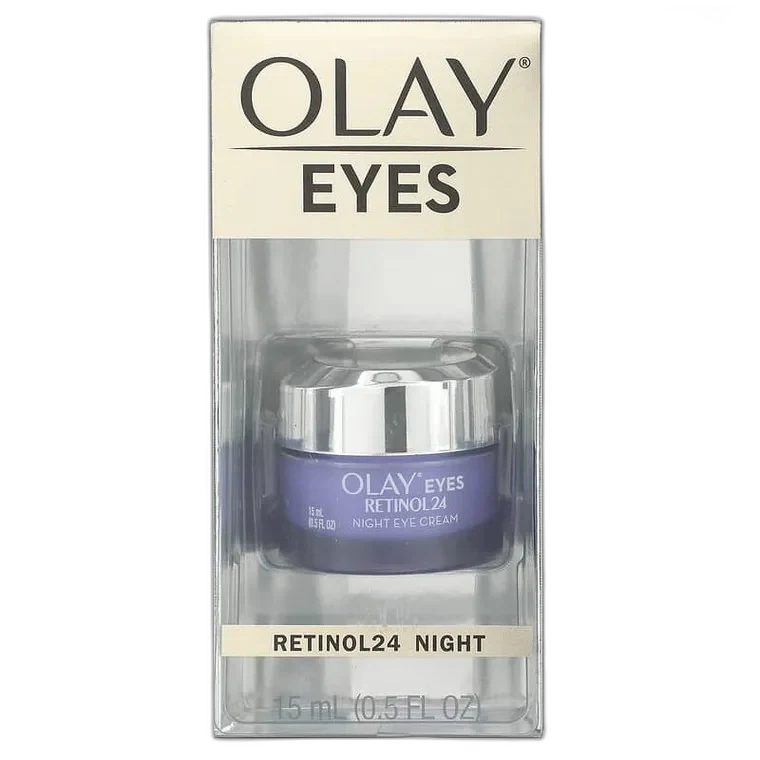
Regenerist Retinol 24 Night Eye Cream
Retinol for the Risk-Averse
 Verified reviewer
Pros & cons.
- +Dual-retinoid system calibrated for the thin periorbital skin's lower tolerance threshold
- +Niacinamide and vitamin E provide barrier support and antioxidant protection around the delicate eye area
- +Fragrance-free, fast-absorbing formula that doesn't migrate into the eyes or cause stinging
- +Effective for fine lines, crow's feet, and pigmentation-based dark circles with consistent use
- +Silicone-based vehicle stays in place overnight without greasy migration
- +Strong value versus prestige retinol eye creams with similar active profiles
- −Contains DMDM Hydantoin — a preservative concern amplified by application to the thinnest facial skin
- −Jar packaging exposes light-sensitive retinol to air with each use
- −Not suitable during pregnancy or breastfeeding due to retinoid content
- −Results on vascular or structural dark circles are limited — best for pigmentation-based discoloration
- −Small 0.5 oz jar requires frequent repurchasing
The full review.
About Olay
Eye skin is roughly 0.5mm thick — half the thickness of the rest of your face. It has fewer oil glands, moves constantly (the average person blinks 15,000 to 20,000 times a day), and shows visible aging signs first. It is the most challenging terrain on the face for any active ingredient. When Olay put retinol there, they had to be intentional.
Reality
The Regenerist Retinol 24 Night Eye Cream uses the same dual-retinoid philosophy as the Retinol 24 face products, but with a specific calibration. The combination of pure retinol and retinyl propionate controls intensity rather than just extending the activity window. Pure retinol converts to active retinoic acid in one enzymatic step. Retinyl propionate takes two steps. This extra conversion delay reduces peak-load irritation on skin with low tolerance.
How to Use
The eye cream feels like nothing special on application — which is the point. There is no tingling, no warming sensation, and no immediate visual change. Tap a small amount around the orbital bone at night; it absorbs in seconds. The absence of drama is a design feature.
Works for
Niacinamide is the tolerability backbone of this formula. Beyond brightening and barrier-strengthening, niacinamide increases ceramide production in the stratum corneum, bolstering the skin barrier that retinol can compromise. This is critical for the eye area; a compromised periorbital barrier causes puffiness, irritation, and crinkly redness.
Works for
Tocopheryl acetate (vitamin E) adds an antioxidant layer. It protects the retinol from degradation in the jar and protects newly turned-over eye area skin from oxidative stress. This is a thoughtful inclusion not found in every drugstore retinol eye cream.
Works for
Results follow a typical retinol trajectory but with a gentler curve. The first morning after use, the eye area looks more hydrated due to the glycerin, dimethicone vehicle, and niacinamide. Over the first two weeks, fine lines look slightly softened, likely from hydration as much as retinoid activity. Real retinol benefits — improved crow’s feet depth, skin texture, and under-eye crepiness — emerge around the four to eight week mark as cell turnover and collagen stimulation accumulate.
Works for
Dark circles vary by cause. If dark circles are pigmentation-based (brownish discoloration), the retinol’s cell turnover and niacinamide’s melanin transfer inhibition can lighten them. If they are vascular (bluish-purple), improvement is modest. If they are structural (deep tear troughs), no eye cream addresses the anatomy. This product works best for the first category and provides hydration for all three.
Texture
The silicone-heavy vehicle works well around the eyes. Dimethicone and dimethicone crosspolymer create a smooth, non-greasy film that does not migrate into the eyes like oil-based eye creams. The formula stays where you put it, does not sting if it drifts, and creates a breathable barrier that helps actives maintain skin contact overnight.
Common Complaints
The formula uses DMDM Hydantoin, a formaldehyde-releasing preservative, like the rest of the Retinol 24 line. While concentrations are within FDA safety limits, applying a formaldehyde-releasing ingredient to the thinnest, most sensitive skin on the face concerns some users. This ingredient is in many mass-market products, but the optics are less ideal for the eye area.
Packaging
The jar packaging is a brand-identity choice rather than an optimal formulation choice. Retinol is unstable when exposed to air and light. The opaque purple jar blocks light, but unscrewing the lid introduces air to a molecule sensitive to oxidation. A small pump or airless tube would better preserve the active ingredients’ potency.
Value
At roughly $29 for half an ounce, the value is typical for drugstore eye creams — competitive given the retinol and niacinamide content. One jar lasts two to three months with nightly use, costing about $10-15 per month. Prestige retinol eye creams with similar ingredients cost $50-100 for the same volume. The question is whether you would notice a difference between this and something three times the price. For most users, the answer is likely no.
Formula
Ingredient analysis.
Full INCI list
Water, Dimethicone, Glycerin, Dimethicone Crosspolymer, Retinol, Retinyl Propionate, Niacinamide, Tocopheryl Acetate, Polyacrylamide, C13-14 Isoparaffin, Titanium Dioxide, DMDM Hydantoin, Polysorbate 20, Laureth-4, Acrylates/C10-30 Alkyl Acrylate Crosspolymer, Laureth-7, Dimethiconol, Aminomethyl Propanol, Disodium EDTA, Iodopropynyl Butylcarbamate, Capric/Caprylic Triglyceride.
Skin match.
The science.
The Science
A 2015 randomized, double-blind study by Randhawa et al. in the Journal of Drugs in Dermatology shows that a stabilized retinol formulation improves crow's feet wrinkles, under-eye wrinkles, and periorbital photodamage after 12 weeks of use.
This formula uses a dual-retinoid approach with two different pharmacokinetic profiles. Pure retinol oxidizes once to retinoic acid via retinol dehydrogenase enzymes in the epidermis. Retinyl propionate requires ester hydrolysis to retinol and then oxidation to retinoic acid. This two-step process creates a time-delayed release of active retinoid. This staggered activation extends the therapeutic window and reduces peak-concentration irritation, which helps the thin, sensitive periorbital skin.
Niacinamide does more than support the surface barrier. Research by Bissett et al. shows that topical niacinamide increases ceramide and free fatty acid levels in the stratum corneum, reinforcing the lipid barrier that retinoids can disrupt. This barrier reinforcement is critical for maintaining retinol tolerance in the eye area, where the stratum corneum is thinner and has fewer lipid layers.
Tocopheryl acetate stabilizes the retinol molecule. Retinol is susceptible to photooxidation and can generate reactive oxygen species during degradation. Vitamin E acts as a radical scavenger that protects retinol from premature breakdown and shields new skin cells — created by retinol-accelerated turnover — from oxidative damage.
References
- Retinoids in the treatment of skin aging: an overview of clinical efficacy and safety — Clinical Interventions in Aging (2006)
Dermatologist Perspective
Dermatologists know the periorbital area has unique challenges for retinoid delivery: thinner skin, higher sensitivity, and constant blinking. Board-certified dermatologists note that combining a lower retinol dose with retinyl propionate and buffering agents follows current best practices for eye area retinoids. For retinol-naive patients or those who have experienced irritation from retinol eye products, dermatologists often suggest starting with gentle formulations like this one before using stronger options. The fragrance-free formulation is valuable because the periorbital area is highly vulnerable to contact dermatitis from fragranced cosmetics.
Where it fits in your routine.
Apply a rice-grain-sized amount to each eye area every evening after cleansing. Tap the product along the orbital bone using your ring finger — from the inner corner along the brow bone, and from the outer corner underneath the eye. Do not apply directly to the eyelid or too close to the lash line. Follow with your nighttime face moisturizer. If you are new to retinol eye products, use it every-other-night for the first two weeks. Always wear SPF 30+ sunscreen the next morning.
At approximately $28.99 for 0.5 fl oz, this eye cream costs more than most drugstore options, but its retinol-grade actives justify the price. Monthly spending is roughly $10-15 — much less than prestige retinol eye creams with similar formulations. No larger size exists, so you must repurchase often, but the per-jar cost stays accessible. For a retinol eye cream that balances efficacy and tolerability from a 70-year-old brand backed by P&G research, the price-to-performance ratio is solid.
This eye cream works for people in their late twenties to fifties who want to treat early fine lines, crow's feet, or pigmentation-based dark circles with gentle retinol. It suits retinol beginners nervous about applying retinol near the eyes and budget-conscious users seeking retinol-grade eye care without prestige pricing.
Skip this if you have active eczema, rosacea, or dermatitis near the eye area — retinol, even buffered, can worsen these conditions. Do not use during pregnancy or breastfeeding. This is not for users already using prescription-strength tretinoin on their face who want an equally potent eye treatment — this is a gentle introduction, not a clinical-strength product.
Product details.
This thick, lightweight cream uses silicones to glide across the eye area. It absorbs in seconds without tugging or pulling the delicate periorbital skin.
Fragrance-free with no detectable scent.
Small opaque jar with a purple twist-off lid, matching the Retinol 24 family design. The opaque container shields retinol from light, but the jar format lets air reach the product every time you open it.
Most users report smooth, hydrated eye area the morning after first use. The cream tolerates well on thin periorbital skin — most users feel no tingling, stinging, or need for an adjustment period. If sensitivity occurs, apply every other night for the first two weeks. Results build gradually; patience is key.
2-3 months with nightly application to both eyes
12 months
All Year
The backstory.
The eye cream was part of Olay's 2019 Retinol 24 launch, which was built around a single consumer insight: people want retinol's anti-aging benefits but fear the irritation, especially around the eyes. Olay's solution was the dual-retinoid system paired with heavy buffering — a formula designed to make retinol accessible to the widest possible audience, even those who'd never considered putting retinol near their eyes.
About Olay
Legacy Brand (20+ years)Procter & Gamble owns Olay, founded in 1952. The Regenerist line launched in 2004 and is one of the most tested mass-market anti-aging ranges. The Retinol 24 collection launched in 2019; clinical data shows 96% of users experience zero irritation.
Common myths.
You should never apply retinol around the eye area.
Retinol benefits the eye area because early signs of aging appear there. Use a formula designed for the periorbital area with lower concentration, better buffering, and a non-irritating vehicle. This eye cream uses these exact specifications.
Retinol eye creams that do not cause tingling are not working.
Tingling and irritation are side effects, not signs of efficacy. Retinol works by activating retinoid receptors at the cellular level—a process that is invisible and sensation-free. This formula's niacinamide and silicone vehicle prevent the irritation signals people mistake for "working."
FAQ.
Is retinol safe to use around the eyes?
Yes, if formulated correctly. This eye cream uses a lower-concentration dual-retinoid system buffered with niacinamide and vitamin E for thin periorbital skin. Apply to the orbital bone instead of the eyelid, and tap gently to avoid tugging.
Can I use this with the Olay Retinol 24 Night Moisturizer?
Yes — apply this eye cream to the eye area first, then apply the face moisturizer while avoiding the eye zone. Both products use the same retinol/retinyl propionate system. They work in the same routine without doubling up on retinol around the eyes.
How long until I see results from this eye cream?
Hydration improves after the first night. Fine lines and crow's feet soften within 1-2 weeks. Dark circles and deeper wrinkles show meaningful improvement after 4-12 weeks of consistent nightly use, as retinol rebuilds collagen gradually.
Does this eye cream help with dark circles?
It treats dark circles using two mechanisms: retinol speeds cell turnover to reduce pigmentation, and niacinamide inhibits melanin transfer. Results show within 4 weeks for dark circles from pigmentation or thin skin. Results are more limited for dark circles from genetics or vascular factors.
Is Olay Retinol 24 Eye Cream safe during pregnancy?
No — this product contains retinol and retinyl propionate. Avoid both retinoids during pregnancy and breastfeeding. Use a peptide-based or niacinamide-based eye cream instead, like Olay's Collagen Peptide 24 Eye Cream.
What the community says.
"Noticeable reduction in fine lines around eyes within weeks"
"No stinging or irritation on the sensitive eye area"
"Smooth, hydrated feel the morning after application"
"Good value compared to prestige retinol eye creams"
"Contains DMDM Hydantoin, a formaldehyde-releasing preservative"
"Small jar depletes quickly"
"Some users see minimal results compared to stronger retinol products"
"Jar packaging not ideal for retinol stability"
People also looked at.