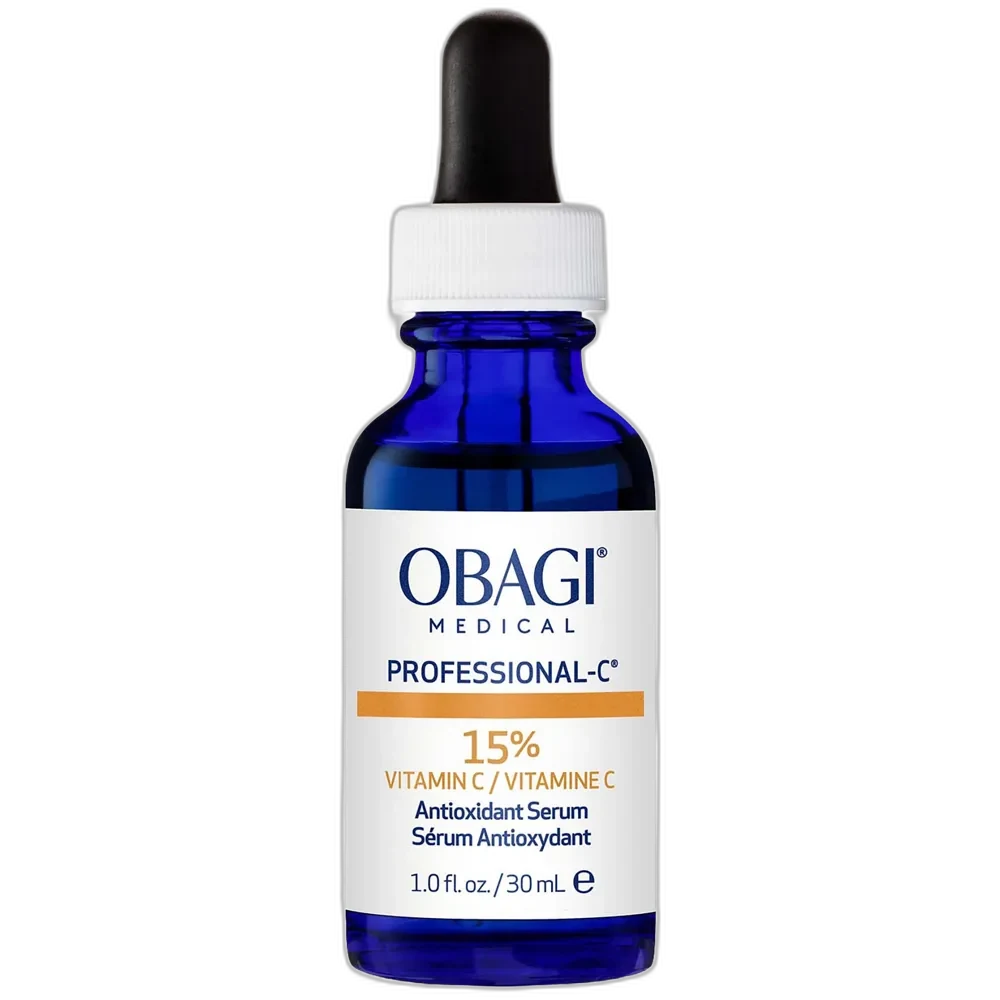
Professional-C Serum 15%
Science-Optimal Vitamin C
 Verified reviewer
Pros & cons.
- +15% L-ascorbic acid matches the scientifically optimal tissue saturation concentration
- +Dual-form vitamin C with ascorbyl glucoside extends duration of antioxidant activity
- +Faster absorption and better cosmetic feel than the 10% version
- +Meaningful brightening effect noticeable within the first 2-4 weeks
- +Over a decade of physician-channel use provides clinical validation
- −Still lacks ferulic acid and vitamin E that would double photoprotective efficacy
- −Contains alcohol which can be drying for daily use
- −At $130 retail significantly overpriced for a 6-ingredient formula
- −Fragrance inclusion is unnecessary in a clinical antioxidant serum
- −Mild tingling upon application may concern first-time vitamin C users
The full review.
The 15% formulation sits in the middle of Obagi’s Professional-C lineup. This concentration is the sweet spot for L-ascorbic acid efficacy according to most dermatological research. It is neither the gentlest nor the most aggressive option—it is the most efficient.
Pinnell et al. research established that L-ascorbic acid achieves maximal tissue saturation at approximately 15%. Higher concentrations increase irritation without increasing how much vitamin C the skin absorbs or utilizes. This makes the 15% concentration scientifically optimal; Obagi’s formulation at this level is intentional.
The formula differs from the 10% version. It replaces propylene carbonate with alcohol as a co-solvent and adds ascorbyl glucoside, a more stable vitamin C derivative that supplements the L-ascorbic acid. This dual-form approach works well: L-ascorbic acid provides immediate, potent antioxidant activity, while ascorbyl glucoside offers a slower-release, more stable reservoir that extends vitamin C availability in the skin. It is not a time-release system, but it addresses the inherent instability of pure L-ascorbic acid in a water-based formula.
The alcohol inclusion matters. As a solvent, it improves penetration and feel—the serum dries faster and feels less tacky than the 10% version. However, alcohol can dry skin and disrupt the barrier with daily use, especially for the normal-to-combination skin this product targets. This is a formulation trade-off: better texture and absorption versus potential long-term drying.
On the skin, the 15% feels more active than the 10%. Users feel a mild warmth upon application—not stinging, but a signal that the vitamin C is working. This subsides within thirty seconds for most. The serum absorbs quickly, leaving a subtle glow that grows more apparent over the first two weeks. The brightening effect at 15% is meaningful; users report more luminous, even-toned skin, and dark spots improve within four to six weeks.
The fragrance is consistent across the line. The formula still lacks ferulic acid and vitamin E—the antioxidant synergy team that would amplify the vitamin C’s photoprotective and collagen-stimulating effects. In 2026, this is a notable omission for a premium-priced physician-channel serum.
For normal-to-combination skin that handles active vitamin C without barrier disruption, the 15% is the most evidence-aligned choice in the Professional-C range. It delivers the concentration science suggests is most effective in a formula that absorbs cleanly and layers well under sunscreen. The question is whether the minimalist formula and premium price point compete with modern products that offer the same concentration with better supporting ingredients.
Ingredient analysis.
Full INCI list
Propylene Glycol, Water (Aqua), L-Ascorbic Acid, Alcohol, Ascorbyl Glucoside, Fragrance.
Skin match.
The science.
The Science
This serum uses a 15% L-ascorbic acid concentration, matching Pinnell et al. (Dermatologic Surgery, 2001) research. That study shows topical vitamin C reaches maximal tissue saturation at about 15%. Concentrations above this level do not increase skin levels proportionally but do increase irritation.
The dual-form vitamin C approach combines L-ascorbic acid with ascorbyl glucoside to add stability. Glucosidases in the skin enzymatically convert ascorbyl glucoside to L-ascorbic acid, creating a slow-release reservoir of active vitamin C. A study in Biological & Pharmaceutical Bulletin (2004) shows ascorbyl glucoside delivers vitamin C activity with more stability than pure L-ascorbic acid in aqueous solutions.
The formula lacks ferulic acid and vitamin E. Lin et al. (Journal of Investigative Dermatology, 2005) showed that 15% L-ascorbic acid, 1% vitamin E, and 0.5% ferulic acid provides eight-fold protection against UV-induced erythema, whereas vitamin C alone provides four-fold protection. This synergy is the current gold standard in antioxidant serum formulation.
References
- Topical L-ascorbic acid: percutaneous absorption studies — Dermatologic Surgery (2001)
- A topical antioxidant solution containing vitamins C and E stabilized by ferulic acid provides protection for human skin against damage caused by ultraviolet irradiation — Journal of Investigative Dermatology (2005)
Dermatologist Perspective
Board-certified dermatologists view 15% as the most evidence-based concentration for topical L-ascorbic acid. Dermatologists often recommend this as the optimal Professional-C variant for normal-to-combination skin patients who tolerate moderate-strength vitamin C without barrier disruption. However, many dermatologists note that adding ferulic acid and vitamin E would make the formula more effective—ingredients most modern clinical vitamin C serums include as standard.
Where it fits in your routine.
Apply 5-7 drops to a clean, dry face and neck every morning. Spread the liquid quickly and evenly, avoiding the eye area. Wait 1-2 minutes for absorption before you apply moisturizer and broad-spectrum SPF 30+. Use a hydrating moisturizer to offset alcohol-induced dryness. Use within 3-4 months of opening.
At $130 for 1 oz, this serum costs a premium for a 6-ingredient formula. Sale prices near $75 improve its value. The dual-form vitamin C (L-ascorbic acid plus ascorbyl glucoside) provides more value than the simpler 10% version. Still, SkinCeuticals, Timeless, and Paula's Choice serums offer 15% L-ascorbic acid with ferulic acid and vitamin E at similar or lower prices.
This serum works for normal-to-combination skin seeking clinical-grade quality and optimal vitamin C concentrations. It suits users with established vitamin C tolerance who want to maximize brightening and antioxidant effects without using 20% strength.
Dry or sensitive skin types can use 10% or a different brand's buffered vitamin C. Budget-conscious shoppers find more complete formulations at lower prices. Users wanting the full CE Ferulic antioxidant synergy should choose competing formulations with all three ingredients.
Product details.
Thin, liquid consistency absorbs faster than the 10% version because of the alcohol co-solvent. It dries with minimal tackiness.
Light fragrance, similar to the 10% version. Not overpowering.
Dark amber glass bottle with dropper. Protects light-sensitive vitamin C.
Mild warmth or light tingling occurs during first application — this is normal and temporary. It subsides within 30 seconds for most users. The alcohol may make skin feel slightly tight if you do not use moisturizer promptly.
2-3 months with daily morning use
4 months
All Year
The backstory.
Positioned as the middle tier of Obagi's three-concentration Professional-C system, the 15% is recommended by dermatologists as the optimal balance of efficacy and tolerability. The dual-form vitamin C approach — combining immediate-release L-ascorbic acid with slower-release ascorbyl glucoside — represents a formulation upgrade over the simpler 10% version.
About Obagi
Legacy Brand (20+ years)Board-certified dermatologist Dr. Zein Obagi founded Obagi Medical in 1988. The Professional-C line has stayed in dermatology offices for over a decade and shows Obagi's clinical-grade antioxidant protection approach.
Common myths.
Higher percentage vitamin C always means better results.
Research shows skin tissue saturates with vitamin C at about 15%. Increasing to 20% raises irritation without increasing absorption proportionally. A 15% concentration is the most efficient choice for most skin types.
FAQ.
Why is 15% the optimal vitamin C concentration?
Pinnell et al. research shows L-ascorbic acid reaches maximal tissue saturation at about 15%. Higher concentrations do not increase skin absorption of vitamin C; they only increase irritation risk. A 15% concentration offers the best ratio of efficacy to tolerability.
What is ascorbyl glucoside and why is it in this formula?
Ascorbyl glucoside is a stable vitamin C derivative that supplements pure L-ascorbic acid. L-ascorbic acid provides immediate, potent antioxidant activity, while ascorbyl glucoside offers a stable, slower-release form. This extends vitamin C availability and creates a dual-release system unique to this product.
Will the alcohol in this serum dry out my skin?
Denatured alcohol helps the serum absorb faster and feels less tacky, but daily use can cause dryness, especially for dry skin. Apply a hydrating moisturizer immediately to offset drying effects. The 10% version is alcohol-free and works better for dry skin.
How does this compare to SkinCeuticals C E Ferulic?
Both use 15% L-ascorbic acid, but SkinCeuticals adds ferulic acid and vitamin E—a combination that doubles vitamin C's photoprotective effects. The Obagi formula uses ascorbyl glucoside instead. SkinCeuticals has more published clinical data but costs more.
Can I mix this with other serums?
Apply this serum to clean skin first for direct absorption. Wait 1-2 minutes for it to absorb, then layer hydrating serums like hyaluronic acid on top. Do not apply with niacinamide or benzoyl peroxide at the same time, as these reduce vitamin C effectiveness.
What the community says.
"Noticeable brightening effect within the first few weeks"
"Absorbs quickly with minimal tackiness"
"Dual-form vitamin C provides both immediate and sustained activity"
"Good middle-ground concentration for most skin types"
"Alcohol content can be drying for some users"
"Still lacks ferulic acid and vitamin E"
"Expensive for a 6-ingredient formula"
"Fragrance unnecessary in a clinical-grade serum"
People also looked at.