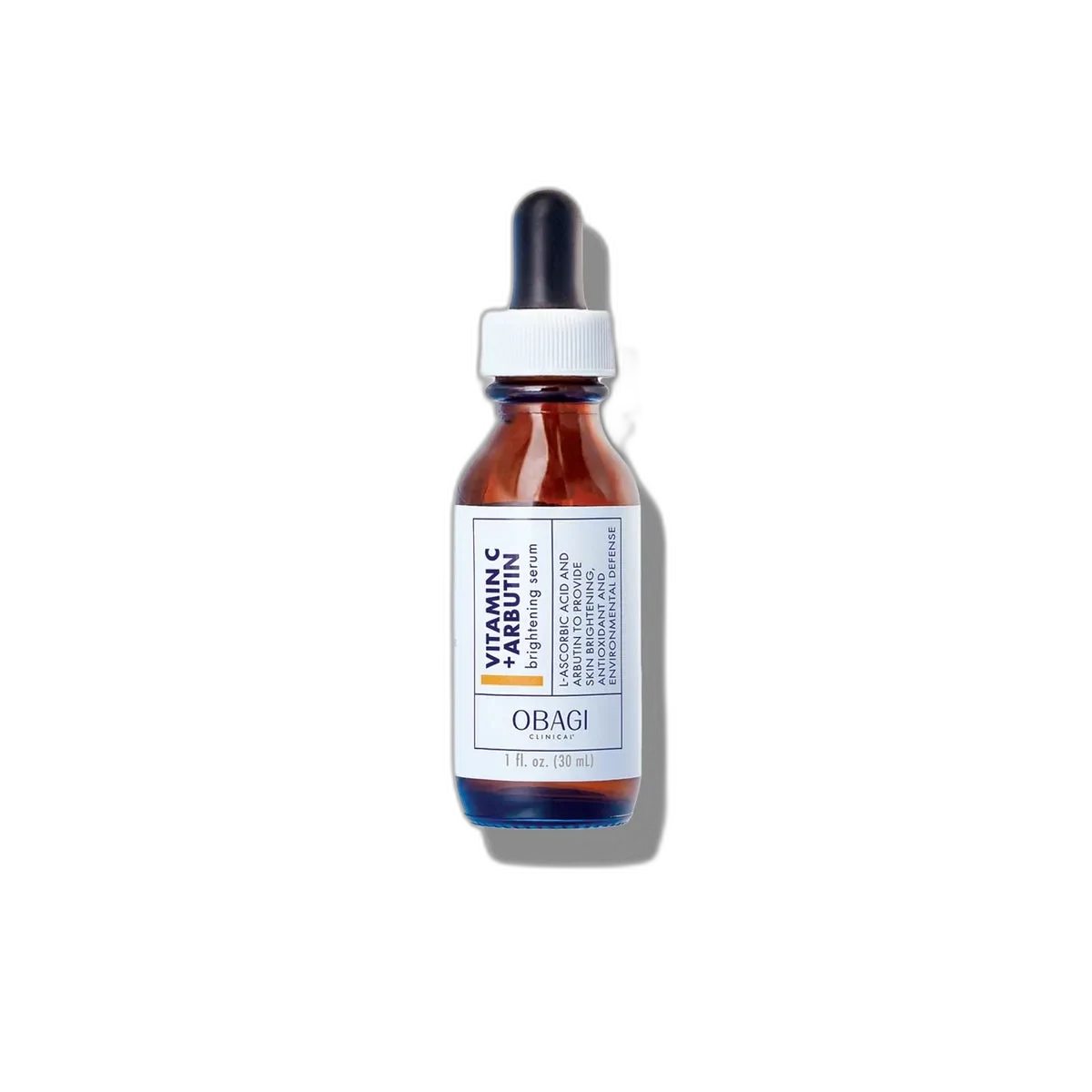
Clinical Vitamin C+ Arbutin Brightening Serum
Minimalist Brightening Power
 Verified reviewer
Pros & cons.
- +Dual-pathway brightening with L-ascorbic acid and arbutin targets pigmentation from two angles
- +Ultra-lightweight watery texture absorbs almost instantly with zero residue
- +Fragrance-free and silicone-free formulation minimizes common serum sensitivities
- +Minimalist 9-ingredient list reduces the chance of reactions to filler ingredients
- +Amber glass packaging protects light-sensitive vitamin C from degradation
- +Layers invisibly under moisturizer and sunscreen without pilling or interference
- −Alcohol denat. high on the ingredient list is drying and potentially barrier-compromising for daily use
- −SLS inclusion in a leave-on serum is unusual and concerning for sensitive skin types
- −At 2 per ounce, dramatically overpriced for the simplicity of the formulation
- −Pure L-ascorbic acid in a water base has limited stability and a short effective shelf life
- −Absorbs so fast that even application requires very quick hands
The full review.
Charging ninety-two dollars for a nine-ingredient serum is audacious. The Obagi Clinical Vitamin C+ Arbutin Brightening Serum uses radical minimalism, stripping everything except actives, the vehicle, and functional necessities. This philosophy works well on paper and mostly in practice.
The ingredient pairing is clever. L-ascorbic acid at 10% handles antioxidant work—neutralizing free radicals, inhibiting melanin synthesis at the oxidative level, and providing photoprotection for morning routines. Arbutin works differently by blocking the tyrosinase enzyme to stop melanin production. Together, they use a two-pronged approach to brighten pigmentation at multiple stages. This is a coordinated strategy, not just vitamin C with a sidekick, and it works noticeably well.
The texture is weightless—a watery liquid from the glass dropper that absorbs almost instantly. This creates a logistical challenge. You must work quickly; five to seven drops on the face and neck vanish in about fifteen seconds. There is no slip or massage moment. It is functional, fast, and invisible. This serum will disappoint those who want a noticeable texture, but it is nearly ideal for those who want it to disappear under moisturizer and sunscreen.
The results are impressive. Many users see luminosity within one or two days as antioxidant activity quenches free radicals. Real brightening of dark spots and post-inflammatory hyperpigmentation takes longer. Typical timelines show meaningful improvement in tone evenness over two to three months of consistent daily use. The arbutin appears to amplify the vitamin C, delivering results for moderate hyperpigmentation.
However, the other seven ingredients make this minimalism puzzling. Alcohol denat. is third on the list, meaning it is present in significant quantity. In a leave-on serum for daily use on potentially sensitized skin, denatured alcohol is a drying agent that can compromise barrier function over time. It helps the formula dry fast and likely improves active penetration, but modern formulations avoid this cost.
Then there is the sodium lauryl sulfate. SLS in a leave-on product is unusual. At the trace levels suggested by its position near the end of the list, it likely functions as an emulsifier or solubilizer rather than a cleanser, but it is a known irritant. Including two well-known irritants in a nine-ingredient formula marketed through dermatology offices feels like an unforced error, especially as competition has moved past both.
The fragrance-free, silicone-free, and paraben-free status is a positive. For people reacting to dimethicone, tocopherol, or fragrance compounds, this list offers fewer potential triggers—if their skin tolerates alcohol and propylene glycol. It is a paradox: fewer ingredients mean fewer triggers, but the remaining ingredients carry risks.
The amber glass dropper bottle protects L-ascorbic acid from light, which is essential for stability. Even with good packaging, a water-based ascorbic acid formula has a limited shelf life. Use the bottle within three to four months of opening and watch for color changes. If the serum shifts from clear or pale yellow to deep orange or brown, the vitamin C has oxidized.
Value is the main issue. At 2 for one fluid ounce, the price usually covers formulations with multiple patented complexes, advanced delivery systems, or stabilized vitamin C derivatives. This is pure L-ascorbic acid in a water-propylene glycol base—effective, but not technologically complex. The Obagi Clinical name and physician-channel distribution add perceived value, but the formula does not justify the premium over competing vitamin C serums at half or a third of the price.
The serum is not merely overpriced because it does what it promises. The ascorbic acid and arbutin combination is clinically sound and absorption is effortless. For those tired of heavy, sticky, or pilling vitamin C serums, the near-invisible texture is a revelation. It layers under anything and works well with most moisturizers and sunscreens. If you trust the Obagi ecosystem, it will not let you down. But on formulation merit alone, the ninety-two-dollar price for a nine-ingredient list containing alcohol denat. and SLS is difficult to defend.
Formula
###

### Texture

The texture is weightless—a watery liquid from the glass dropper that absorbs almost instantly. This creates a logistical challenge. You must work quickly; five to seven drops on the face and neck vanish in about fifteen seconds. There is no slip or massage moment. It is functional, fast, and invisible. This serum will disappoint those who want a noticeable texture, but it is nearly ideal for those who want it to disappear under moisturizer and sunscreen.

###

### Scent

The fragrance-free, silicone-free, and paraben-free status is a positive. For people reacting to dimethicone, tocopherol, or fragrance compounds, this list offers fewer potential triggers—if their skin tolerates alcohol and propylene glycol. It is a paradox: fewer ingredients mean fewer triggers, but the remaining ingredients carry risks.

###

### Packaging

The amber glass dropper bottle protects L-ascorbic acid from light, which is essential for stability. Even with good packaging, a water-based ascorbic acid formula has a limited shelf life. Use the bottle within three to four months of opening and watch for color changes. If the serum shifts from clear or pale yellow to deep orange or brown, the vitamin C has oxidized.

###

### Best for

The serum is not merely overpriced because it does what it promises. The ascorbic acid and arbutin combination is clinically sound and absorption is effortless. For those tired of heavy, sticky, or pilling vitamin C serums, the near-invisible texture is a revelation. It layers under anything and works well with most moisturizers and sunscreens. If you trust the Obagi ecosystem, it will not let you down. But on formulation merit alone, the ninety-two-dollar price for a nine-ingredient list containing alcohol denat. and SLS is difficult to defend.Ingredient analysis.
Full INCI list
Water (Aqua), Propylene Glycol, Alcohol Denat., Dipropylene Glycol, Ascorbic Acid, Arbutin, Propylene Carbonate, Sodium Lauryl Sulfate, Hydroxyacetophenone.
Skin match.
The science.
The Science
L-ascorbic acid is the most studied topical vitamin C. Evidence shows it works as an antioxidant, photoprotector, and anti-pigmentation agent. A landmark study by Pinnell et al. in Dermatologic Surgery (2001) found that 10-20% topical vitamin C provides photoprotection and stimulates collagen synthesis, with tissue levels saturating at about 15%. This serum uses a 10% concentration, which is effective but at the lower end.
Arbutin adds a second mechanism. Arbutin is a glycosylated hydroquinone derivative found in bearberry, cranberry, and mulberry; it inhibits tyrosinase activity without the cytotoxicity of hydroquinone. A study in the Journal of Cosmetic Dermatology (2017) confirmed arbutin works as a skin-lightening agent at concentrations as low as 1% and is safe for long-term use.
The dual-active approach in this serum is theoretically sound. L-ascorbic acid reduces melanin by intercepting reactive oxygen species that trigger melanogenesis and by interfering with melanin synthesis, while arbutin blocks tyrosinase activity at a downstream step. A study in Pigment Cell & Melanoma Research (2006) showed that combining multiple melanogenesis inhibitors at different pathway points brightens skin better than single-agent approaches.
The alcohol denat. content is worth noting. It helps actives penetrate and creates a fast-drying texture, but research in the Journal of Investigative Dermatology shows repeated exposure to denatured alcohol can impair skin barrier function and increase TEWL—which may counterproductive for skin with post-inflammatory hyperpigmentation.
References
- Topical L-ascorbic acid: percutaneous absorption studies — Dermatologic Surgery (2001)
Dermatologist Perspective
Board-certified dermatologists often recommend vitamin C serums as a brightening regimen cornerstone. They consider the combination of L-ascorbic acid and arbutin in this product a well-designed dual-active approach. Dermatologists note 10% L-ascorbic acid provides antioxidant protection with less irritation risk than 15-20% formulations, making it a good starting concentration for vitamin C beginners. However, some dermatologists worry about the alcohol denat. in a daily leave-on product and advise patients with dry or barrier-compromised skin to use vitamin C formulations with gentler vehicles.
Where it fits in your routine.
Apply 5-7 drops to a clean, dry face and neck every morning. Spread it fast; the serum absorbs almost instantly. Avoid the eye area. Wait 1-2 minutes for full absorption before you apply moisturizer and sunscreen. Always use broad-spectrum SPF 30+ when using vitamin C. Store the bottle in a cool, dark place and use within 3-4 months of opening. If the serum turns dark orange or brown, it has oxidized and you should discard it.
At 2 for 1 fl oz, this serum costs much more than similar vitamin C and arbutin combinations from The Ordinary, Timeless, and Paula's Choice. The 9-ingredient formula is ultra-minimalist and lacks the complexity of premium products — it has no ferulic acid or vitamin E to stabilize antioxidants, no advanced delivery systems, and no proprietary complexes. You pay for the Obagi clinical brand and physician-channel distribution. Budget-conscious consumers can find similar or better formulations for much less.
This serum works for normal to combination skin with mild-to-moderate hyperpigmentation, sun damage, or general dullness. It is a fast-absorbing, fragrance-free vitamin C that sinks under other products. Use it if you use active ingredients and do not have dry skin.
Avoid this serum if you have dry, sensitive, or barrier-compromised skin — the alcohol denat. and SLS can increase dryness and irritation. Budget-conscious shoppers can find equally effective vitamin C and arbutin options for much less from other brands.
Product details.
No added fragrance. The ascorbic acid has a faint chemical scent that dissipates seconds after application.
An amber glass dropper bottle protects the light-sensitive vitamin C from UV. The dropper enables precise 5-7 drop dosing per application.
The ascorbic acid causes a slight tingle on first application; this is normal and fades within a minute. The serum absorbs almost immediately. Skin feels slightly tacky for a moment before drying down. You won't experience purging, but users with propylene glycol sensitivity may see mild irritation during the first week.
2-3 months with daily morning use of 5-7 drops
6 months
All Year
The backstory.
The Obagi Clinical line was developed as a more accessible, direct-to-consumer complement to the brand's traditional physician-dispensed products. This serum represents Obagi's attempt to bring its brightening expertise — built over decades of prescription-grade hydroquinone products — into an OTC format using vitamin C and arbutin as the active duo.
About Obagi
Legacy Brand (20+ years)Dr. Zein Obagi, a board-certified dermatologist and skin health restoration pioneer, founded Obagi Medical in 1988. Dermatologist offices and medical spas distribute the brand widely. Decades of clinical use back its prescription-grade and OTC product lines.
Common myths.
Minimalist ingredient lists mean better, gentler products.
Fewer ingredients reduce clutter, but this formula contains alcohol denat. and SLS — ingredients many longer-formulated serums have removed. Simplicity works only when every ingredient helps the skin, not just the formula.
Vitamin C serums work best at the highest concentration.
Research shows 10-20% L-ascorbic acid penetrates skin and provides antioxidant activity effectively. Concentrations above 20% do not increase benefits proportionally and raise irritation risk. This serum's 10% sits at the lower, effective end of that range.
FAQ.
Does the Obagi Clinical Vitamin C+ Arbutin serum really work for dark spots?
10% L-ascorbic acid and arbutin target dark spots via two pathways: vitamin C inhibits melanin production at the oxidative level and arbutin blocks the tyrosinase enzyme. Most users see visible dark spot improvement after 4-6 weeks of daily use, with full results by 8-12 weeks.
Why does this serum contain alcohol and SLS?
alcohol denat. is a quick-drying solvent that makes the watery formula absorb fast. SLS works as an emulsifier at low concentrations. Both ingredients can dry and irritate skin, a drawback for a leave-on product for skin with post-inflammatory hyperpigmentation.
Can I use this serum with retinol at the same time?
Separate them: use this vitamin C serum in the morning and retinol at night. The ascorbic acid in this formula is already irritating, and layering it with retinol in one routine increases redness, dryness, and barrier disruption.
How should I store this vitamin C serum?
Store in a cool, dark place away from direct sunlight. The amber glass bottle protects the L-ascorbic acid from light degradation, but heat and air exposure still cause oxidation over time. If the serum turns dark orange or brown, it has oxidized and you must replace it.
Is this serum safe during pregnancy?
L-ascorbic acid and arbutin are generally safe for topical use during pregnancy. This serum lacks retinoids, hydroquinone, or other pregnancy-contraindicated ingredients. However, consult your OB-GYN before adding any new active to your routine during pregnancy.
What the community says.
"Visible glow and radiance within the first few days of use"
"Lightweight watery texture absorbs quickly without stickiness"
"Effective at evening out skin tone with consistent use"
"Fragrance-free formulation appreciated by sensitive noses"
"High price point relative to the simple ingredient list"
"Alcohol denat. can cause dryness and irritation in some users"
"Some users report breakouts after initial use"
"Needs to be spread quickly as it absorbs almost instantly"
Featured in.
People also looked at.