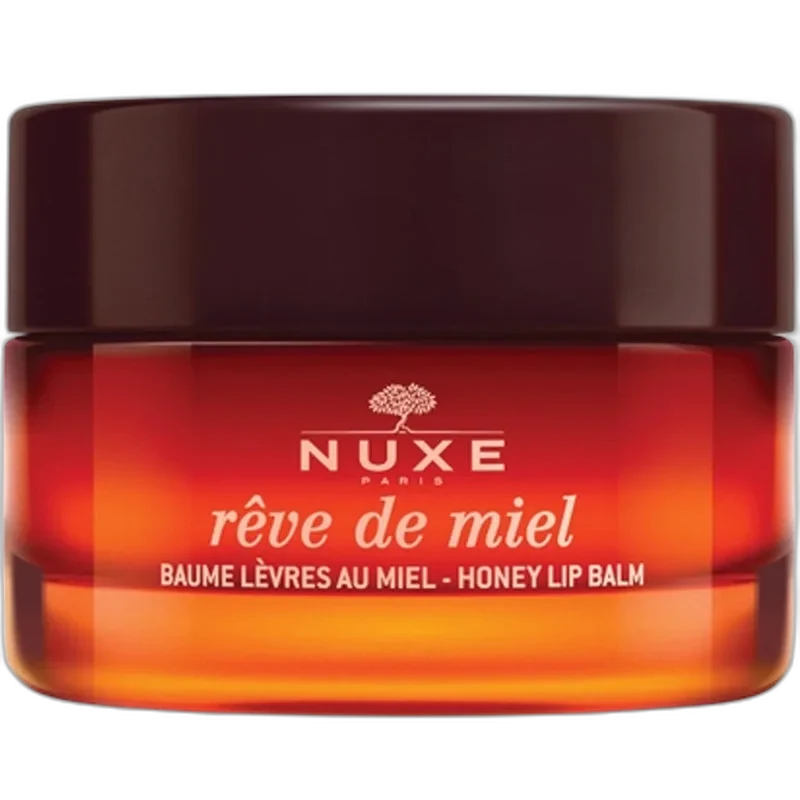
Rêve de Miel Ultra-Comforting Lip Balm
French Pharmacy Icon
 Verified reviewer
Pros & cons.
- +Honey, propolis and shea trio genuinely repairs cracked corners
- +Thick cushiony texture feels like an overnight lip mask
- +20+ years of French pharmacy credibility behind the formula
- +Long-lasting under layers and through the night
- +Hydrating humectant action plus occlusive wax sealing
- +Travel-friendly glass jar holds up to daily use
- +Pregnancy-safe actives and clean pharmacy formulation
- −Fragrance load is higher than it needs to be in 2026
- −Contains multiple fragrance allergens including linalool and limonene
- −Jar packaging is inelegant and requires fingertip application
- −Not suitable for vegan users due to honey and beeswax
- −Beeswax and honey can aggravate perioral acne if applied too widely
The full review.
Ask a French pharmacist what to do about lips cracked raw at the corners in February and, sooner or later, someone will point you at a small glass jar with a gold lid. Rêve de Miel — honey dream — has been sitting on French pharmacy shelves since 2005, and the reason it’s still there when most of its contemporaries have quietly disappeared is simple: for the specific job of fixing chapped, angry, winter-ruined lips, very few balms still come close. It’s the kind of product that got famous not through a marketing campaign but through one person telling another one, for the better part of two decades. The formula is built around honey, which is the brand’s whole identity and sits meaningfully high in the ingredient list. Honey on lips isn’t a new idea, but most balms that use it either treat it as a flavor flourish or drown it in petrolatum so thoroughly that it stops contributing anything. Nuxe does the opposite. The honey is supported by propolis wax — another bee-derived ingredient with its own antimicrobial track record — and then wrapped in a matrix of shea butter and sweet almond oil, with beeswax and carnauba doing the structural work. The result is a balm that feels unlike any petrolatum slick. When you dip a finger in for the first time the texture is almost firm, closer to a solid butter than a salve, and then it warms and spreads into something cushioned and dense. There’s no gloss. There’s no slick. There’s a thick, comforting pad of emollient that sits on the lip surface and stays there. The scent, which is probably the single most polarizing thing about Rêve de Miel, is unapologetically honey-forward with a soft fragrance overlay — warm, a little nostalgic, entirely intentional. Nuxe is a pharmacy brand but it’s still a French brand, and restraint on fragrance was never going to happen. Where it truly earns its reputation is on the overnight application. A thicker layer applied before bed turns the balm into a genuine lip mask, and if you’ve got cracked corners — the small, painful vertical splits that so many winter balms fail to heal — you’ll see a measurable difference by the second morning. That’s not marketing copy, that’s what the twenty-plus years of five-star Sephora reviews are talking about. The honey’s humectant action holds moisture at the surface, the shea and almond oil refill the depleted lipid layer, and the waxes keep everything from migrating off while you sleep. By the third night, the cracks are usually closed. The honest caveats matter. The jar packaging is inelegant in 2026 — most lip balms of this price have moved to tubes or twist-up applicators — and some users genuinely do not like dipping fingers into a pot. There’s also real fragrance in the formula, including fragrance components like linalool, limonene and geraniol that are potential sensitizers. If you’re one of the small minority whose lips react to fragrance, or if you have a known bee-product allergy, this isn’t the balm for you, and that’s not a knock on the product so much as a basic match-fit issue. Anyone prone to perioral acne should also keep application strictly to the lip surface, because beeswax and honey are not friends with follicular breakouts. What stops this review from slipping into full worship is that the fragrance load, in 2026, is frankly higher than it needs to be. Nuxe could absolutely produce a fragrance-free version for the sensitive-lip crowd and hasn’t. The size is also modest for the price. But if none of those caveats apply to you, and you want a lip balm that genuinely repairs rather than just seals, Rêve de Miel is still, two decades in, one of the best answers on the shelf — and there are a lot of shelves.
Ingredient analysis.
Full INCI list
Paraffinum Liquidum, Butyrospermum Parkii Butter, Mel, Helianthus Annuus Seed Oil, Copernicia Cerifera Cera, Hydrogenated Coco-Glycerides, Beeswax, Prunus Amygdalus Dulcis Oil, Octyldodecanol, Parfum, Propolis Cera, Tocopherol, Diisostearyl Malate, Pentaerythrityl Tetra-Di-T-Butyl Hydroxyhydrocinnamate, Aqua, Glycerin, Potassium Sorbate, Sodium Benzoate, Citric Acid, Benzyl Benzoate, Benzyl Salicylate, Geraniol, Hexyl Cinnamal, Limonene, Linalool
Skin match.
The science.
The Science
Dermatology has thoroughly studied honey's role in wound healing and skin repair. Medical-grade honey has antibacterial, humectant, and mild anti-inflammatory action. Research in journals like Burns and the Journal of Wound Care shows honey accelerates healing on broken skin. This humectant-antimicrobial combination makes honey functional in a lip balm: it holds water at the stratum corneum, reduces microbial load on compromised lip skin, and helps close small fissures. Propolis — the resinous material bees use to seal their hives — has research supporting its antimicrobial and wound-healing activity, driven by flavonoid content. In a lip balm, propolis wax provides both bioactives and occlusive structure. The shea butter and beeswax system is the more conventional part of the formula. Shea butter's fatty acid profile (primarily oleic and stearic acids) refills lipid-depleted skin. Studies on dry-skin conditions show shea butter improves transepidermal water loss. Beeswax and carnauba form an occlusive matrix that slows water loss from the lip surface — lips, which lack the sebaceous glands the rest of the face enjoys, are chronically prone to this. This combination uses a textbook humectant-plus-occlusive repair strategy, which is why the balm works well for cracked-corner repair specifically.
Dermatologist Perspective
Dermatologists generally consider honey- and propolis-based lip balms a reasonable option for patients with chapped lips and angular cheilitis, especially in cold-weather climates where petrolatum alone sometimes isn't enough. Board-certified dermatologists note that the humectant-plus-occlusive structure here — honey pulling water in, shea and waxes holding it there — is the same two-step strategy they recommend for any compromised barrier. Clinical caveats include fragrance and bee-product allergy: patients with known propolis sensitivity or contact allergy to fragrance compounds should choose a fragrance-free alternative. For perioral dermatitis or fungal acne patients, dermatologists typically recommend strictly petrolatum-based balms, as beeswax and honey can aggravate those conditions when they contact follicular skin.
Where it fits in your routine.
Apply a small amount throughout the day when your lips feel dry or tight. Swipe a clean fingertip across the lip surface; a little goes a long way. For overnight repair, apply a thick layer just before bed to use as a lip mask. For very damaged lips, use a gentle lip scrub once a week before application so the balm's humectant ingredients work on a cleaner surface. Keep application to the lip surface if you get breakouts around the mouth, and do not share the jar.
At about $19 for 15 grams, Rêve de Miel fits the French pharmacy midrange, a fair price for this complex formula. Nuxe only sells this specific balm in one size, so no larger jar offers per-unit savings. Compared to other lip balms at this price, Rêve de Miel relies on its honey-propolis-shea trio. You pay for an honest repair formula with two decades of dermatology-adjacent credibility, not gold packaging or a celebrity founder. Daily use lasts a jar four to six months, making the per-day cost under fifteen cents.
Use this for seriously chapped lips, cracked corners, or winter wind damage that regular drugstore balms fail to fix. It also suits people who prefer pharmacy-brand skincare and formulas with clear, traceable heritage ingredients like honey.
Skip this if you are vegan, allergic to bee products, or highly fragrance-reactive. If beeswax-based balms cause breakouts around your mouth, or if you prefer tube or stick packaging for hygiene, choose a different Nuxe lip product or a tube-format balm from another brand.
Product details.
Dense, butter-like balm that warms to a thick slick; not glossy, more cushiony
Warm honey with a soft floral-fragrance overlay
Small glass jar with gold-accented screw lid
The first dip into the jar feels thick — the balm is firm at room temperature but softens on contact. It applies with a cushiony, non-glossy texture and has a noticeable honey scent. Cracked corners feel calmer within minutes, and a thick overnight layer shows visible results by morning.
4-6 months with daily day-and-night use
12 months
fall winter
The backstory.
Nuxe launched Rêve de Miel — French for 'honey dream' — in 2005, and the lip balm became the franchise's breakout product almost immediately. It's been a fixture on French pharmacy shelves ever since and has collected generations of loyal users who refuse to travel without the little glass pot.
About Nuxe
Legacy Brand (20+ years)Nuxe is a French pharmacy skincare brand founded in 1989. It has stocked French pharmacies for nearly four decades. Rêve de Miel is its signature franchise and stays among the most recommended lip balms in French derm circles.
Common myths.
Honey lip balms are just sugar and dry out your lips.
At this concentration, honey is a humectant, not a sugar exfoliant. In this wax-and-butter matrix, honey holds water at the lip surface to support hydration instead of stripping it.
Jar packaging is unsanitary and will contaminate the balm
Propolis and honey have antimicrobial properties. Potassium sorbate and sodium benzoate preserve the formula. Use clean fingers and keep the jar closed to stay safe for the 12-month PAO window.
FAQ.
Is Nuxe Rêve de Miel lip balm worth the price?
If petrolatum alone fails to fix cracked corners or winter chapping, use this. The honey, propolis, shea and almond oil combination is more complex than most drugstore balms. One jar lasts four to six months with daily use.
Is Rêve de Miel vegan?
No. The formula uses honey, beeswax and propolis. These bee-derived ingredients define the product's identity and benefits. Vegan users should choose Nuxe's plant-based lip options instead.
Can I use it overnight as a lip mask?
Yes, and it performs best then. Apply a thick layer before bed. The wax-butter scaffold holds the honey and propolis against your lips for eight hours of repair. Most users see visible changes in cracked patches by the second morning.
Is it safe during pregnancy?
Yes — the formula lacks retinoids, salicylic acid, or other concerning actives. Pregnant users with specific allergies should check the fragrance and honey with their clinician.
Will it break me out around the mouth?
Heavy application can cause perioral acne in prone individuals. The beeswax and honey combination has a high comedogenic rating for some skin types. Applying it only to the lip surface usually prevents this.
How does it compare to other French pharmacy lip balms?
Rêve de Miel is the thickest and most repair-focused French pharmacy balm. Other French pharmacy brands offer lighter, gloss-like formulas that work better under lipstick, but Nuxe wins for genuine chapped-lip recovery.
What the community says.
"heals cracked corners overnight"
"rich cushiony texture"
"genuine honey scent"
"long-lasting on lips"
"elegant jar format"
"fragrance for sensitive noses"
"jar packaging is unhygienic"
"can feel sticky at first"
"not vegan"
"small size for the price"