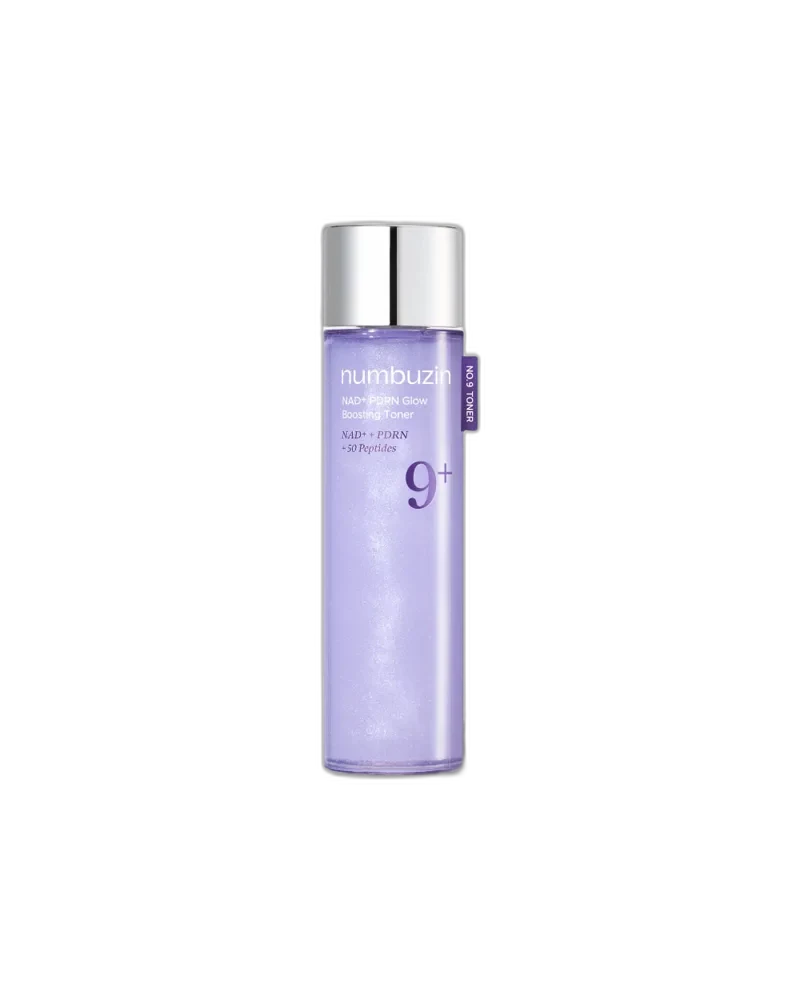
No. 9 NAD+ PDRN Glow Boosting Toner
K-Beauty PDRN Pioneer
 Verified reviewer
Pros & cons.
- +PDRN at 1000ppm brings the hottest Korean clinic ingredient to a consumer toner format
- +Stunning violet tint from vitamin B12 and ceramide pearlescent particles create a premium aesthetic
- +50+ peptides, NAD+, niacinamide, ceramide NP, and multiple collagen forms in a single toner
- +Exceptional value at $16.50 for 150ml — 2-3 months of twice-daily use for under $8/month
- +Fragrance-free, alcohol-free, silicone-free formulation suitable for most skin types
- +Lightweight texture absorbs instantly and layers perfectly under serums and moisturizers
- −Topical PDRN at 0.1% concentration is far below injectable doses with limited evidence for efficacy
- −100+ ingredients means most are present at trace concentrations with uncertain individual impact
- −Very new product (2025 launch) with minimal independent reviews or long-term data
- −NAD+ topical delivery remains scientifically unproven
- −Pearlescent finish may not suit those who prefer completely matte toners
The full review.
Walk into an aesthetic clinic in Gangnam and ask what’s popular. The answer, for the past few years, has been salmon injections — PDRN (Polydeoxyribonucleotide), a purified DNA fragment derived from salmon that’s injected into the skin to promote tissue regeneration, collagen synthesis, and that coveted Korean glass skin glow. It’s one of the most requested treatments in Korean dermatology, and it costs hundreds of dollars per session.
Numberzin’s No. 9 NAD+ PDRN Glow Boosting Toner takes that clinic darling and puts it in a 150ml bottle for $16.50. Whether that translation from injection to toner maintains any meaningful clinical efficacy is the central question — but the formula is interesting enough to deserve serious analysis.
The toner itself is beautiful. There’s no other word for it. The liquid has a soft violet tint from cyanocobalamin (vitamin B12), and suspended within it are visible pearlescent particles derived from ceramide NP. Shake the bottle, and the pearls swirl through purple water like a snow globe designed by a cosmetic chemist. It’s the most visually striking toner in K-beauty, and the aesthetic isn’t accidental — it signals that this isn’t your standard hydrating toner.
PDRN at 1000ppm (0.1%) is the headline. In injectable form, PDRN activates A2A adenosine receptors on cell surfaces, triggering a cascade of tissue repair responses: increased cell proliferation, enhanced collagen synthesis, improved microcirculation, and anti-inflammatory effects. It’s been clinically studied for wound healing, scar treatment, and skin rejuvenation when delivered intradermally. The question is whether topical application at cosmetic concentrations can meaningfully replicate these effects.
The honest answer: probably not at injectable levels. Topical PDRN faces the same bioavailability challenges as most large molecules — the skin barrier exists specifically to prevent DNA fragments from casually entering. Research on topical PDRN is emerging but limited, with most positive studies being in-vitro or using higher concentrations than cosmetic products typically contain. The 1000ppm concentration is standard for Korean PDRN skincare, but it’s a cosmetic dose, not a clinical one.
But Numbuzin, characteristically, doesn’t bet everything on one ingredient. The formula backs PDRN with NAD+ for cellular energy restoration, niacinamide at what appears to be a significant concentration (third in the ingredient list) for barrier strengthening and brightening, and their signature 50+ peptide library for multi-pathway anti-aging signaling. Ceramide NP supports barrier repair. Adenosine provides proven anti-wrinkle benefits. Hydrolyzed collagen, soluble collagen, elastin, and hydrolyzed elastin add structural protein support. Resveratrol and glutathione provide antioxidant protection.
The prebiotic sugar complex — xylitylglucoside, xylitol, anhydroxylitol, glucose — supports skin microbiome health, mirroring the approach in the No. 6 Deep Sleep Mask Serum. It’s a thoughtful addition that recognizes the connection between microbiome health and skin appearance.
The texture on application is lightweight and quickly absorbed. The pearlescent particles dissolve on contact, leaving a subtle luminous finish rather than visible shimmer. It’s enough glow to notice but not enough to look glittery — the effect is more “skin that’s been professionally treated” than “skin that has product on it.” Under subsequent skincare and makeup, it creates a lit-from-within base that photographs beautifully.
The vitamin B12 (cyanocobalamin) adds a functional dimension beyond color. While primarily known as a dietary supplement, topical B12 has shown anti-inflammatory properties in studies on atopic dermatitis. At the concentration present here, the benefit is likely minimal, but it’s a more interesting colorant choice than an arbitrary dye.
At $16.50 for 150ml, this is extraordinary value for the formulation complexity. The ingredient list runs to over 100 components, including PDRN, NAD+, ceramide NP, 50+ peptides, three forms of collagen, elastin, resveratrol, glutathione, and a full prebiotic complex. Whether each ingredient is present at truly efficacious concentrations is a valid concern — with this many actives, dilution is inevitable — but the supporting cast of proven ingredients (niacinamide, ceramide, adenosine) ensures meaningful skincare benefits regardless of how the more exotic components perform.
The 150ml bottle lasts 2-3 months with twice-daily use, making the per-month cost around $6-8. For a treatment toner with this ingredient roster, that’s exceptional value by any market standard.
This toner works best as the opening act of a comprehensive No. 9 routine — apply it after cleansing to lay down the PDRN and peptide foundation, then follow with the Lifting-sil Essence for more concentrated anti-aging delivery. But it’s effective as a standalone treatment toner too, providing hydration, gentle brightening, and that distinctive glow that’s become the toner’s calling card.
The Numbuzin No. 9 PDRN Glow Boosting Toner is the kind of product that perfectly captures where K-beauty is heading: clinic-inspired ingredients at consumer prices, cutting-edge actives supported by proven classics, and an aesthetic presentation that makes the science feel luxurious. Whether topical PDRN becomes the next niacinamide or fades as a trend ingredient, this toner will still work — because the formula behind the headline is genuinely good.
Ingredient analysis.
Full INCI list
Water, Methylpropanediol, Niacinamide, PEG/PPG-17/6 Copolymer, Propanediol, 1,2-Hexanediol, Tripropylene Glycol, Glyceryl Glucoside, Xylitylglucoside, PEG-40 Hydrogenated Castor Oil, Anhydroxylitol, Glycerin, Polyglyceryl-10 Laurate, Candida Bombicola/Glucose/Methyl Rapeseedate Ferment, C20-40 Pareth-10, Tocopheryl Acetate, Xylitol, Cetearyl Alcohol, Sodium DNA, Hydrogenated Lecithin, Glucose, Polyacrylate Crosspolymer-6, Ethylhexylglycerin, Adenosine, Ceramide NP, Sodium Phytate, Helianthus Annuus (Sunflower) Seed Oil, Melia Azadirachta Leaf Extract, Melia Azadirachta Flower Extract, Citric Acid, Hydroxyethylcellulose, Sodium Citrate, Phytosterols, Coccinia Indica Fruit Extract, Aloe Barbadensis Flower Extract, Solanum Melongena (Eggplant) Fruit Extract, T-Butyl Alcohol, Ocimum Sanctum Leaf Extract, Curcuma Longa (Turmeric) Root Extract, Corallina Officinalis Extract, Cyanocobalamin, Caprylic/Capric Triglyceride, Hydrolyzed Collagen, Butylene Glycol, Adenosine Triphosphate, Nicotinamide Adenine Dinucleotide, Resveratrol, Pullulan, Sodium Palmitoyl Sarcosinate, Palmitic Acid, C12-14 Alketh-12, Pisum Sativum (Pea) Peptide, Stearic Acid, Polyglyceryl-6 Laurate, Caprylyl Glycol, Dipeptide Diaminobutyroyl Benzylamide Diacetate, Dextran, Hydrolyzed Elastin, Soluble Collagen, Acetyl Tetrapeptide-3, Trifolium Pratense (Clover) Flower Extract, Disodium EDTA, Myristic Acid, Acetyl Hexapeptide-8, Mannose, SH-Octapeptide-4, SH-Decapeptide-7, Palmitoyl Pentapeptide-4, Palmitoyl Tripeptide-1, Copper Tripeptide-1, Hexapeptide-9, Nonapeptide-1, Tripeptide-1, Arachidic Acid, Collagen, Elastin, Glutathione, Palmitoyl Tetrapeptide-7, Arginine/Lysine Polypeptide, Oligopeptide-29, Oligopeptide-32, Acetyl Tetrapeptide-5, Acetyl Tetrapeptide-9, Acetyl Tetrapeptide-2, Acetyl Octapeptide-3, Acetyl Hexapeptide-1, Alanine/Histidine/Lysine Polypeptide Copper HCL, Acetyl Dipeptide-1 Cetyl Ester, Acetyl SH-Pentapeptide-1, Biotinoyl Tripeptide-1, Dipeptide-4, Hexapeptide-11, Hexapeptide-12, Lauric Acid, Myristoyl Pentapeptide-17, Myristoyl Hexapeptide-16, Myristoyl Pentapeptide-4, Nicotinoyl Tripeptide-1, Nonapeptide-7, Nicotinoyl Tripeptide-35, Nicotinoyl Dipeptide-26, Nicotinoyl Dipeptide-23, Octapeptide-2, Palmitoyl Tripeptide-5, Palmitoyl Hexapeptide-12, Pentapeptide-13, Palmitoyl Tetrapeptide-10, Palmitoyl Tripeptide-38, Palmitoyl Tripeptide-29, Palmitoyl Tripeptide-8, Tetrapeptide-44, Tetrapeptide-30, Tripeptide-10 Citrulline, Tripeptide-32, Tripeptide-29, SH-Polypeptide-22, SH-Oligopeptide-1, SH-Polypeptide-1, SH-Polypeptide-9, SH-Oligopeptide-23, Polypeptide-11, SH-Polypeptide-3, SH-Polypeptide-16, SH-Polypeptide-62
Skin match.
The science.
The Science
PDRN (Polydeoxyribonucleotide) comes from salmon DNA and has extensive research for tissue repair in injectable form. Research in the International Journal of Molecular Sciences (2017) shows PDRN activates A2A adenosine receptors, which increases cell proliferation, collagen synthesis, and anti-inflammatory responses via VEGF signaling. Wound healing studies in the Annals of Plastic Surgery show injectable PDRN accelerates tissue regeneration and reduces healing time.
Moving PDRN from injectable to topical use faces bioavailability challenges. PDRN molecules are large nucleotide polymers, and the skin barrier restricts hydrophilic macromolecule penetration. A study in the Journal of Cosmetic Dermatology (2021) tested topical PDRN in a cream formulation; it found better skin hydration and elasticity, though the study noted the mechanism likely involves surface-level signaling instead of deep tissue penetration.
Combining PDRN with NAD+ is theoretically synergistic. PDRN provides DNA building blocks, while NAD+ supports the cellular energy needed for DNA repair and replication. Research in Molecular Cell (2016) shows NAD+ depletion causes DNA damage accumulation, suggesting that restoring NAD+ levels enhances the utility of exogenous DNA fragments.
Niacinamide's early position in the formula suggests a high concentration, and its topical efficacy evidence is robust. A study in the International Journal of Cosmetic Science (2004) confirmed niacinamide increases ceramide and fatty acid biosynthesis in the stratum corneum at concentrations as low as 2%. As a precursor to NAD+ through the salvage pathway, niacinamide also contributes to intracellular NAD+ levels, complementing the exogenous NAD+ in the formula.
Ceramide NP acts as both a functional ingredient and the source of the toner's pearlescent particles, with established evidence for barrier repair. Research in the Journal of Clinical Investigation shows ceramide-containing formulations restore barrier function in compromised skin by integrating into the lamellar lipid structures of the stratum corneum.
References
- PDRN as a biological regulator of wound healing and tissue regeneration — International Journal of Molecular Sciences (2017)
- Niacinamide increases biosynthesis of ceramides and other stratum corneum lipids — International Journal of Cosmetic Science (2004)
Dermatologist Perspective
Korean dermatologists know PDRN well from its common use in injectable skin rejuvenation, and they view the consumer skincare crossover with cautious optimism. Board-certified dermatologists note topical PDRN at cosmetic concentrations cannot replicate injectable results, but they acknowledge the ingredient has biological plausibility for surface-level cellular stimulation. The supporting formula — niacinamide, ceramide NP, adenosine — provides independently validated skincare benefits. Dermatologists may see this toner as a reasonable maintenance product between clinic PDRN treatments, or as an accessible entry point for patients curious about PDRN who aren't ready for injections.
Where it fits in your routine.
Shake gently to distribute the pearlescent particles. Dispense a quarter-sized amount onto palms or a cotton pad. Pat into face and neck after cleansing. Can be layered 2-3 times for extra hydration and glow. Follow with serum and moisturizer. Use morning and evening as the first treatment step after cleansing.
At $16.50 for 150ml, this toner has high ingredient complexity for the price. The PDRN, NAD+, 50+ peptides, ceramide NP, multiple collagen forms, and antioxidant complex would cost $40-60 at premium brands. The 150ml volume lasts 2-3 months with twice-daily use, so the monthly cost is about $6-8. Even if the exotic ingredients (PDRN, NAD+) provide marginal topical benefits, the proven actives (niacinamide, ceramide, adenosine) alone offer value above the price.
K-beauty enthusiasts want PDRN as a clinic-inspired ingredient at consumer prices. This anti-aging toner works for anyone over 30 to enhance glow as a first step. It suits those who value ingredient innovation and a thick texture in their routine.
If you doubt ingredients lacking topical clinical evidence, the PDRN and NAD+ positioning may frustrate you. Skip this if you have a severe fish allergy (consult a dermatologist first) or want transparent, particle-free toners — the ceramide pearls dissolve but are visible at first.
Product details.
Lightweight liquid toner with a soft violet hue and visible pearlescent particles that dissolve on contact. It absorbs quickly and is not sticky.
Unscented — no detectable fragrance.
150ml bottle with flip cap. The violet toner shows through the packaging, matching Numbuzin's clean aesthetic.
The violet-tinted toner with floating pearlescent particles looks striking. Shake gently before use to distribute the ceramide pearls. The pearls dissolve into the skin on application and leave a subtle luminous glow. The texture is lighter than expected and absorbs within seconds.
2-3 months with twice-daily use
12 months
All Year
The backstory.
PDRN (Polydeoxyribonucleotide) has been one of the biggest trends in Korean aesthetic medicine, where 'salmon injections' containing salmon-derived DNA fragments are hugely popular for skin rejuvenation. Numbuzin's No. 9 PDRN toner translates this clinic trend into an accessible daily product, combining it with their signature NAD+ and peptide technology. The vitamin B12-derived violet tint and ceramide pearls add a sensory dimension that makes the clinical-inspired formula feel luxurious rather than medicinal.
About Numbuzin
Established Brand (5–20 years)Numbuzin launched in 2019 via Korea's Benow Inc. This toner enters the PDRN trend—a salmon-derived DNA fragment ingredient. PDRN is a top ingredient in Korean aesthetic medicine and now moves into consumer skincare.
Common myths.
PDRN in a toner works the same as PDRN injections.
Injectable PDRN enters the dermis at concentrations orders of magnitude higher than topical formulations. At 1000ppm (0.1%) in this toner, the PDRN provides a cosmetic-grade version that stimulates surface-level cellular processes but cannot replicate the deep dermal rejuvenation of clinical injections.
Salmon DNA in skincare means you apply fish DNA to your face.
PDRN is purified polydeoxyribonucleotide—a DNA fragment isolated and processed to pharmaceutical or cosmetic grade. It lacks proteins, allergens, or recognizable salmon material. These DNA fragments work as signaling molecules, not genetic material.
FAQ.
What is PDRN and why is it in a toner?
PDRN (Polydeoxyribonucleotide) is a purified salmon-derived DNA fragment that activates cellular repair pathways. It is the active ingredient in Korea's popular 'salmon injections' for skin rejuvenation. This toner uses 1000ppm of PDRN to provide a cosmetic-grade version of that clinic treatment for daily use.
Why is this toner violet-colored?
Cyanocobalamin (Vitamin B12), a naturally purple-red vitamin, creates the violet hue. It gives the toner its color and provides mild antioxidant benefits. The visible pearlescent particles come from ceramide and dissolve when they touch skin.
Do I need to shake this toner before use?
Yes — shake the bottle gently before dispensing to distribute the ceramide pearlescent particles evenly. These particles dissolve into your skin on application and leave a subtle luminous glow.
Is salmon DNA safe for people with fish allergies?
PDRN is a highly purified DNA fragment without the proteins that cause fish allergies. If you have a severe fish allergy, consult your dermatologist before use as an extra precaution.
How does this compare to the Numbuzin No. 9 Lifting-sil Essence?
The toner is light and works as a first treatment step after cleansing. The essence is thick and goes on later. The toner has PDRN and ceramide pearls for glow, but the essence lacks PDRN. Both use NAD+ and 50-peptide technology. Use them together for a full No. 9 routine.
What the community says.
"Beautiful pearlescent glow effect from ceramide particles"
"Instant radiance boost after application"
"Lightweight texture that absorbs without stickiness"
"Impressive ingredient list for the price"
"Violet tint from vitamin B12 is aesthetically appealing"
"PDRN concentration may be too low for meaningful clinical effect"
"Overwhelmingly long ingredient list with many at trace levels"
"Very new product with limited proven track record"
"Pearlescent effect may not suit those preferring a fully matte toner"