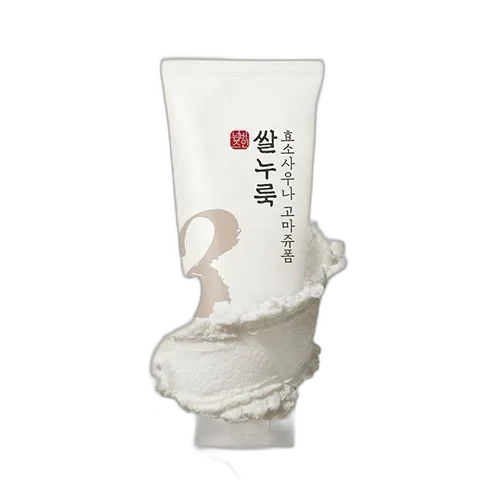
No. 3 Rice Enzyme Skin Softening Cleansing Foam
Multi-Tasking Enzyme Cleanser
 Verified reviewer
Pros & cons.
- +Four-enzyme system provides comprehensive biochemical exfoliation without harsh acids or scrub beads
- +Amino acid surfactant base is exceptionally mild — produces rich foam without stripping the barrier
- +Genuinely multi-purpose: daily cleanser, enzyme exfoliator, and mini treatment mask in one
- +Fragrance-free, sulfate-free, and silicone-free — minimal irritation risk profile
- +Ceramide NP and centella support barrier integrity even during cleansing
- +Outstanding value at $13 for 170ml of this ingredient quality
- +Clinical testing showed measurable barrier improvement after two weeks
- −Enzyme exfoliation may be too active for very sensitive or reactive skin with daily use
- −Initial grainy texture can be off-putting before you learn to add water
- −Not effective as a standalone for removing heavy waterproof makeup
- −As a relatively new product, long-term data is still limited
- −Tube format makes it harder to control exact amount dispensed compared to pump bottles
The full review.
Korean women have used rice water for centuries. This starchy, milky liquid from rinsing rice grains was prized for softening and brightening skin long before its biochemistry was understood. Numbuzin’s No. 3 Rice Enzyme Cleansing Foam applies this traditional wisdom to a modern formulation, making it one of the more interesting K-beauty cleansers recently.
The texture is the first thing you notice. It exits the tube as a thick, grainy paste with visible rice-like granules that look like a scrub. Do not let the appearance mislead you. These granules are cellulose and rice starch, not abrasive scrub beads. They dissolve completely in water, turning the paste into a dense, whipped-cream foam that feels like a high-end product.
The innovation happens during washing. Four enzymes work: papain (from papaya) and bromelain (from pineapple) break down dead protein cells; protease targets keratin buildup in pores; lipase dissolves excess sebum. This is not aggressive chemical exfoliation via glycolic acid or physical abrasion from a scrub—it is biochemical digestion of the substances that cause dullness and roughness. Because enzymes work at skin temperature without pH dependence, they are gentler than acid exfoliants.
The surfactant system avoids common irritants. Instead of sodium lauryl sulfate or its relatives, Numbuzin uses three amino acid-derived surfactants: sodium cocoyl glycinate, sodium lauroyl glutamate, and sodium methyl cocoyl taurate. These are among the mildest cleansing agents, producing foam without stripping the barrier. Disodium cocoamphodiacetate adds amphoteric mildness, and lauryl betaine provides more foam without increasing irritation. The cleanser generates impressive foam while leaving the moisture barrier intact.
Supporting ingredients improve the formula. Glycerin is at the top of the list—before water—providing humectant hydration that survives the rinse. Ceramide NP helps replenish barrier lipids during brief contact. Centella asiatica extract soothes any enzyme-induced irritation. Kojic dipalmitate, a stabilized kojic acid, regulates melanin. Beta-glucan provides more soothing. Kaolin and hydrated silica offer gentle oil absorption for the mask technique.
The multi-purpose design is functional. Used as a daily foam cleanser (massage for 30-60 seconds, then rinse), it provides gentle daily exfoliation and cleansing. Applied to dry skin for two to three minutes before adding water, it works as an enzyme mask; the longer contact time lets enzymes work on texture and congestion. This makes it act like two products in one.
Numbuzin’s clinical data is modest but credible: 6.8% improvement in moisture barrier function and 1.92% improvement in skin tightness after two weeks. For a rinse-off product used for under a minute, these numbers show the amino acid surfactant and ceramide combination helps the barrier even during brief contact.
The skin feels different after rinsing. It has a distinctive softness—not the squeaky-clean tightness of standard foam cleansers, but a smooth, hydrated feel. Skin looks subtly brighter immediately. With consistent use over weeks, the enzyme exfoliation improves texture, reduces dullness, and clears pores.
The fragrance-free formulation is correct for a product with multiple exfoliating mechanisms. Since the skin must tolerate four enzymes, kaolin, and hydrated silica, adding fragrance adds unnecessary risk. The faint natural rice ferment scent is barely perceptible and disappears after rinsing.
At thirteen dollars for 170ml, the value is high. This tube is larger than most K-beauty cleansers and contains amino acid surfactants, four enzymes, fermented rice, centella, ceramide NP, kojic dipalmitate, and beta-glucan. The per-use cost is low, the ingredient profile is strong, and the dual cleanser-exfoliator function can replace two products.
One potential issue is that enzyme activity may be too high for very sensitive skin used daily. Start every other day and build up. Also, despite the kaolin, this is not a match for heavy waterproof makeup alone; you still need a first-step oil cleanser.
This product earns its place by being excellent at multiple tasks.
Formula
Ingredient analysis.
Full INCI list
Glycerin, Water, Cellulose, Sodium Cocoyl Glycinate, Sodium Lauroyl Glutamate, Kaolin, Disodium Cocoamphodiacetate, 1,2-Hexanediol, Hydrated Silica, Lauryl Betaine, Sodium Chloride, Sodium Methyl Cocoyl Taurate, Ethylhexylglycerin, Hydroxyacetophenone, Acrylates/C10-30 Alkyl Acrylate Crosspolymer, Polyglycerin-3, Citric Acid, Oryza Sativa (Rice) Extract, Oryza Sativa (Rice) Lees Extract, Lactobacillus/Rice Ferment, Hexylene Glycol, Butylene Glycol, Hydrogenated Lecithin, Ficus Carica (Fig) Fruit Extract, Centella Asiatica Extract, Beta-Glucan, Ceramide NP, Hydroxypropyl Starch Phosphate, Carbomer, Mannitol, Papain, Bromelain, Protease, Oryzanol, Kojic Dipalmitate, Lipase
Skin match.
The science.
The Science
This cleanser uses a four-enzyme system with distinct biochemical mechanisms. Papain (from Carica papaya) is a cysteine protease that selectively cleaves peptide bonds in dead keratinized cells but leaves living cells largely unaffected — a 2002 study in the Archives of Dermatological Research shows papain provides effective desquamation with minimal irritation. Bromelain (from Ananas comosus) is a sulfhydryl protease with documented anti-inflammatory properties beyond exfoliation — research in Biomedical Reports shows it reduces inflammatory mediators while digesting dead tissue.
Protease and lipase provide complementary exfoliation. Protease breaks protein bonds between dead corneocytes, while lipase targets sebaceous lipids that cause pore congestion and blackhead formation. This combination addresses both cellular and lipid surface debris — a more comprehensive approach than using either enzyme alone.
The amino acid surfactant system — sodium cocoyl glycinate, sodium lauroyl glutamate, and sodium methyl cocoyl taurate — follows current best practice for mild cleansing. A comparative study in Skin Research and Technology shows amino acid-based surfactants cause significantly less protein denaturation and barrier disruption than SLS, while maintaining equivalent cleansing efficacy. Glycerin is the first ingredient (before water) to provide extra barrier protection during cleansing.
Kojic dipalmitate is a lipophilic derivative of kojic acid with improved stability and lower irritation potential. Research in the Journal of Cosmetic Science shows it effectively inhibits tyrosinase activity and is better tolerated than free kojic acid. This makes it suitable for a rinse-off product where contact is limited but repeated daily exposure produces cumulative brightening effects.
References
- Papain as a desquamation agent in skin care — Archives of Dermatological Research (2002)
- Comparative evaluation of surfactant-induced skin barrier disruption — Skin Research and Technology (2006)
Dermatologist Perspective
Dermatologists view enzyme-based exfoliation as a gentler alternative to chemical exfoliation with AHAs or BHAs, especially for patients who cannot tolerate acid-based products. Board-certified dermatologists note the amino acid surfactant base follows current best practice in mild cleansing, and the inclusion of ceramide NP in a rinse-off product shows formulation awareness. For patients with textured skin, mild comedonal acne, or dullness, this cleanser offers daily exfoliation without the irritation risks of leave-on acid treatments. Dermatologists advise building up from every-other-day to daily use, and recommend against combining this with other exfoliating treatments on the same day to avoid over-exfoliation.
Guidance
Where it fits in your routine.
For daily cleansing: Wet your face and hands, squeeze a small amount of product onto your palm, add water to make a foam, and massage over the face for 30-60 seconds before rinsing with lukewarm water. For enzyme mask treatment (1-2 times per week): Apply a thin layer to dry, clean skin and leave for 2-3 minutes. The enzymes act on dead cells and sebum during this time. Then add water, work into a foam, massage briefly, and rinse. Follow with your toner, serum, and moisturizer.
At $13 for 170ml, this offers high value in the K-beauty cleanser market. The amino acid surfactant base, four-enzyme system, fermented rice complex, centella, ceramide NP, and kojic dipalmitate cost more in Western clinical brands. The larger-than-average tube size increases value, and the multi-purpose functionality (cleanser + exfoliator + enzyme mask) replaces two separate products. This pricing is aggressive for an emerging brand to win market share through value-for-money.
This cleanser provides gentle daily exfoliation during cleansing. It works well for oily, combination, and normal skin types with dullness, texture, or congested pores. It suits K-beauty beginners wanting a multi-functional product and those who prefer enzyme exfoliation over chemical acids.
Skip this if you have very sensitive, reactive skin or an actively compromised barrier — even gentle enzymes irritate skin that is inflamed or healing. If you use strong daily exfoliants (AHA, BHA, retinol), adding enzyme exfoliation from your cleanser can exceed your skin's tolerance threshold.
Product details.
No added fragrance. Faint, natural rice ferment scent that's barely perceptible.
Plastic squeeze tube (170ml) with a flip-cap lid. Clean Numbuzin branding with the No. 3 line designation. The generous 170ml size is larger than most K-beauty cleansers.
The first squeeze reveals a surprising, grainy rice-like texture. Adding water turns it into a whipped foam. The enzymatic exfoliation feels subtle during the first use; it does not sting or feel aggressive. Skin feels softer and smoother after rinsing, without the tightness common in foam cleansers. The effect shows most when used as a brief enzyme mask (2-3 minutes on dry skin before foaming).
2-3 months with once-daily use, 6-8 weeks with twice-daily use
12 months
All Year
The backstory.
This cleanser represents Numbuzin's entry into the enzyme cleansing category that has deep roots in Japanese and Korean beauty traditions. The rice-based formulation nods to the centuries-old practice of using rice water for skin brightening, updated with modern enzyme technology and amino acid surfactants. Clinical testing showed a 6.8% improvement in moisture barrier function and 1.92% improvement in skin tightness after just two weeks — respectable numbers for a rinse-off product.
About Numbuzin
Emerging Brand (2–5 years)Numbuzin launched in 2019 via Korean startup Benow and won top honors at the 2022 Olive Young Awards. The brand uses a numbered product system and shows ingredient transparency, but lacks a long track record and independent clinical trials on its specific formulations.
Common myths.
Enzyme cleansers are just scrubs with a fancy name.
Cellulose and rice starch create the cleanser's grainy texture instead of abrasive scrub particles. Exfoliation happens biochemically: papain, bromelain, protease, and lipase use enzymatic digestion to break down dead cells and sebum. This method is gentler and more precise than physical scrubbing. The granules dissolve during use.
Foam cleansers strip the skin and damage the moisture barrier.
This cleanser uses amino acid-derived surfactants (sodium cocoyl glycinate, sodium lauroyl glutamate) instead of SLS/SLES. These surfactants are among the mildest available; they foam without stripping the skin. Glycerin (first ingredient), ceramide NP, and centella also support barrier integrity during cleansing.
FAQ.
Is the Numbuzin Rice Enzyme cleanser fragrance-free?
This cleanser is fragrance-free, essential oil-free, and sulfate-free. It uses amino acid-based surfactants to cleanse gently. This makes it suitable for people who avoid fragrance in their skincare routine.
Can I use this cleanser every day?
Yes — the amino acid surfactants and gentle enzyme formula work for daily use. If your skin is new to enzyme exfoliation, use it every other day for the first week, then move to daily use. If you use the mask technique, limit it to 1-2 times per week.
Does the Numbuzin Rice Enzyme cleanser help with blackheads?
Yes — the four-enzyme system targets the dead cells and sebum that cause blackheads. Protease and papain break down keratin plugs, and lipase dissolves sebum trapped in pores. Daily use reduces blackhead formation within 2-3 weeks.
What skin types is this cleanser best for?
This cleanser works for oily, combination, and normal skin types that want gentle daily exfoliation and brightening. Dry skin types can use it, but once daily is better. Very sensitive or reactive skin types should use it cautiously because the enzyme complex causes irritation.
What the community says.
"Rice-like grainy texture transforms into satisfying whipped cream foam"
"Skin feels genuinely softened and smooth after rinsing — not stripped"
"Multi-purpose: works as cleanser, exfoliator, and mini enzyme mask"
"Fragrance-free and sulfate-free formula is gentle despite enzyme actives"
"Enzyme exfoliation may be too much for very sensitive skin with daily use"
"Initial grainy texture can feel unusual before adding water"
"May not remove heavy waterproof makeup effectively as a standalone"
"Tube runs out faster than expected with twice-daily use"
People also looked at.