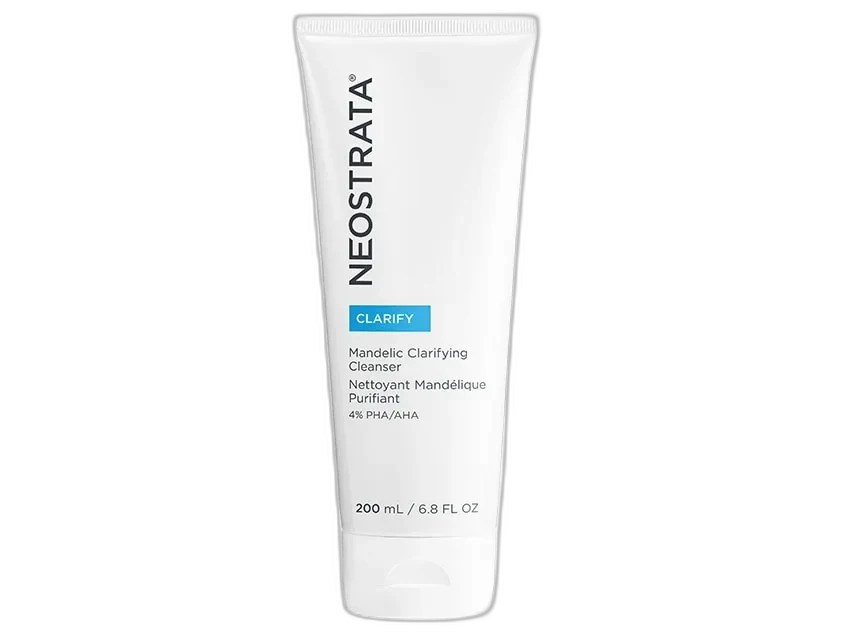
Mandelic Clarifying Cleanser
Triple-Acid Pore Clarifier
 Verified reviewer
Pros & cons.
- +Triple-acid formula combines AHA, BHA, and PHA for multi-depth exfoliation in a single cleansing step
- +Mandelic acid provides gentler AHA exfoliation with partial oil-solubility for better pore penetration
- +Gluconolactone adds hydrating PHA exfoliation that prevents the cleanser from stripping skin
- +Fragrance-free formula suitable for acne-prone skin that reacts to added fragrances
- +Generous 6.8 oz size lasts 3-4 months at $34, strong value for a clinical-grade acid cleanser
- +Visible blackhead reduction typically within 2-3 weeks of consistent daily use
- +From the brand that invented both AHA and PHA acid technology
- −Sulfate surfactants may be too stripping for dry or combination skin with drier zones
- −Triple-acid formula is not suitable for sensitive or barrier-compromised skin
- −Tea tree oil is a potential sensitizer for those with known essential oil sensitivities
- −Brief contact time limits the depth of acid exfoliation compared to leave-on treatments
- −Some users report a slight film sensation after rinsing that requires extra water
The full review.
Building a cleanser around an ingredient your founders pioneered adds authority. Dr. Van Scott and Dr. Ruey Yu did more than study alpha hydroxy acids; they patented their topical application in 1973 and spent fifty years refining how acids interact with skin. When NeoStrata uses mandelic acid as a cleanser’s core, it uses that history.
Mandelic acid sits in a unique middle ground among AHAs. Its molecular structure is larger than glycolic acid, so it penetrates more slowly and causes less irritation. For acne-focused cleansers, mandelic acid is interesting because it is partially oil-soluble. While not a true BHA, mandelic acid has enough lipophilic character to interact with sebum inside pores. NeoStrata uses this by pairing it with salicylic acid to target different depths.
Gluconolactone shows NeoStrata’s PHA expertise. Polyhydroxy acids were another NeoStrata innovation. In a cleanser, gluconolactone exfoliates and acts as a humectant. While other acids remove dead cells, gluconolactone pulls moisture in to prevent skin from feeling stripped. This allows the cleanser to clarify while protecting the skin.
The supporting ingredients add more function. Panthenol follows the acids on the INCI list to provide vitamin B5’s soothing and barrier-supporting properties. Tea tree oil adds antimicrobial activity against P. acnes bacteria in oily, congested pores. The product is fragrance-free, though tea tree oil provides a subtle medicinal note.
The gel has a clear, weighted feel. A small amount foams quickly into a fine, thorough lather. The first few uses may cause mild tingling as the acids work at the formula’s pH, but this fades as skin acclimates. The rinse is clean and leaves skin feeling decongested. Oily skin types see immediate matte clarity.
Consistent use shows cumulative effects. Blackheads diminish by week two or three through steady, gentle dissolution. Pores look tighter because they are cleaner. The texture of oily, bump-prone skin smooths out, showing that the brief acid contact works beneath the surface.
There are limitations. This cleanser contains ammonium laureth sulfate and sodium laureth sulfate. These surfactants cut oil and create foam effectively but are not the gentlest options. This works for oily skin, but for combination skin with dry zones or a compromised barrier, these sulfates and the triple-acid formula can cause tightness and irritation. NeoStrata places this in the Clarify line for this reason.
Tea tree oil is a known sensitizer. If you react to tea tree products, use this with caution.
At $34 for 6.8 oz, the price sits between drugstore and prestige levels. You get three clinically validated acid types from the brand that pioneered AHA and PHA technology in a size that lasts months. For oily and acne-prone skin types wanting daily acid exfoliation without a leave-on treatment, this is a scientifically grounded option. It does what it promises at a fair price from a brand with forty years of acid chemistry proof. For its target audience, it is a compelling package.
Formula
Ingredient analysis.
Full INCI list
Aqua/Water/Eau, PEG-80 Sorbitan Laurate, Glycerin, Gluconolactone, Ammonium Laureth Sulfate, Triethanolamine, Disodium Cocoamphodiacetate, Mandelic Acid, Salicylic Acid, Panthenol, Melaleuca Alternifolia (Tea Tree) Leaf Oil, PEG-150 Distearate, Cocamidopropyl Betaine, PEG-40 Hydrogenated Castor Oil, Sodium Laureth Sulfate, Sodium Laureth-13 Carboxylate, Sodium Chloride, PEG-150 Pentaerythrityl Tetrastearate, PPG-2 Hydroxyethyl Cocamide, Polyquaternium-10, Polysorbate 20, Benzalkonium Chloride, BHT, Chlorphenesin, Phenoxyethanol
Skin match.
The science.
The Science
NeoStrata's published research over decades explains why this cleanser combines three acid classes. Mandelic acid has a larger molecular weight (152.15 g/mol vs glycolic acid's 76.03 g/mol), so it penetrates the stratum corneum more slowly and uniformly. This produces exfoliation with less irritation. A 2019 study in the Journal of Cutaneous and Aesthetic Surgery shows 45% mandelic acid peels work as well as 30% salicylic acid peels for mild-to-moderate acne. These peels also show better tolerability and no post-inflammatory hyperpigmentation — a key result for darker skin tones.
Salicylic acid uses a known keratolytic mechanism: as a lipophilic BHA, it dissolves into sebum-filled follicles to break apart dead cells that cause comedones. Multiple dermatological studies document its efficacy at concentrations as low as 0.5-2% in rinse-off products.
NeoStrata's founders co-developed Gluconolactone, the PHA component, as a gentler alternative to traditional AHAs. Its larger polyhydroxy structure exfoliates, chelates metal ions to reduce free radical formation, and acts as a humectant. Research in the Journal of the European Academy of Dermatology and Venereology shows PHA formulations provide anti-aging and exfoliating benefits comparable to AHAs but with less sensory irritation. This makes them ideal to combine with other actives without adding irritation.
References
- Comparative study of efficacy and safety of 45% mandelic acid versus 30% salicylic acid peels in mild-to-moderate acne vulgaris — Journal of Cutaneous and Aesthetic Surgery (2019)
- Effects of Topical Mandelic Acid Treatment on Facial Skin Viscoelasticity — Skin Research and Technology (2018)
Dermatologist Perspective
Board-certified dermatologists often recommend acid-based cleansers as a first-line approach for mild acne and congested pores, especially if patients avoid leave-on treatments. Clinicians favor NeoStrata's combination of mandelic acid and salicylic acid because mandelic acid's slower penetration reduces the irritation typical of glycolic acid cleansers. Dermatologists say this formula works best for Fitzpatrick skin types I-IV with oily or acne-prone skin. They generally advise patients to start gradually — once daily for the first week before moving to twice daily — to check tolerance.
Where it fits in your routine.
Wet your face with lukewarm water. Put a quarter-sized amount on your fingertips and massage into skin using circular motions for 30-60 seconds until the gel foams. Stay away from the immediate eye area. Rinse well with water. Use twice daily — morning and evening. Always use moisturizer and SPF during the day, because the AHA and BHA increase sun sensitivity. If you use leave-on acid treatments (retinol, AHA serums), use this cleanser once daily to prevent over-exfoliation.
At $34 for 6.8 fl oz, this cleanser offers high value in clinical skincare. The triple-acid formula comes from a brand with four decades of acid expertise. It has more sophisticated ingredients than most drugstore acne cleansers and costs less than half the price of comparable prestige acid cleansers. One tube lasts 3-4 months, making the monthly cost under $12. This provides one of the best cost-per-use ratios in the medicated cleanser category for oily and acne-prone skin types.
This cleanser works for oily, acne-prone, or congestion-prone skin needing daily chemical exfoliation during cleansing. It suits users who find leave-on acid treatments too irritating but want the pore-clarifying benefits of AHA and BHA.
Avoid this cleanser if you have dry, dehydrated, or sensitive skin. The triple-acid formula and sulfate surfactants increase dryness and irritation. People with rosacea, eczema, or a compromised skin barrier should also look elsewhere. The salicylic acid content makes it not recommended during pregnancy.
Product details.
All Year Certifications Dermatologist testedAllergy tested Background
The backstory.
When NeoStrata expanded their Clarify line for acne-prone skin, they leaned into their deepest expertise: acid chemistry. Rather than following the trend of high-concentration leave-on acid treatments, they formulated a cleanser where three acid types work in brief contact during the wash step — delivering meaningful exfoliation without the irritation risk of prolonged acid exposure. It's a strategy that reflects the brand's belief that well-chosen acids at the right pH can do more in thirty seconds than many leave-on products.
About NeoStrata
Legacy Brand (20+ years)Dermatologist Dr. Van Scott and dermatopharmacologist Dr. Ruey Yu founded NeoStrata in 1988. They invented alpha and polyhydroxy acid technology. NeoStrata has over 110 patents and nearly 250 published clinical studies and journal papers.
Common myths.
Acid cleansers fail because rinsing removes them before they exfoliate.
Contact time is shorter than leave-on treatments, but the mandelic, salicylic, and gluconolactone acids in this cleanser's low-pH environment exfoliate during a 30-60 second wash. The effect is cumulative; gentle daily exfoliation builds over weeks.
Foaming cleansers always strip the skin barrier.
This cleanser uses panthenol and gluconolactone to counterbalance the surfactants. It contains sulfate surfactants that may be too aggressive for dry or sensitive skin, but the formula cleanses oily skin types without excessive barrier disruption.
FAQ.
Can I use NeoStrata Mandelic Cleanser every day?
The brand recommends twice-daily use for oily and acne-prone skin. If you use other exfoliating products (retinol, AHA/BHA serums, or peels), use this cleanser once daily to avoid over-exfoliation. If you notice persistent dryness or tightness, use it every other day.
Does NeoStrata Mandelic Cleanser help with blackheads?
Yes — the mandelic acid and salicylic acid combination in this formula targets blackheads. Salicylic acid dissolves sebum plugs inside pores, and mandelic acid exfoliates surface pore openings. Most users see blackhead reduction within 2-3 weeks of consistent use.
Is this cleanser safe for sensitive skin?
This cleanser targets oily and acne-prone skin. The triple-acid formula and sulfate surfactants can irritate sensitive or compromised skin. For sensitivity concerns, NeoStrata's Restore line with PHAs is a gentler choice.
What is the pH of NeoStrata Mandelic Clarifying Cleanser?
NeoStrata does not disclose its exact pH. However, the formulation uses a low pH so the mandelic, salicylic, and gluconolactone acids work effectively. AHA cleansers work best at pH 3.5-4.5, which lets the acids exfoliate during the short wash contact time.
Community
What the community says.
"Noticeably reduces blackheads within the first few weeks"
"Leaves skin feeling deeply clean without excessive tightness"
"Gel texture foams nicely and rinses clean"
"Effective for controlling oiliness throughout the day"
"Can feel drying for those with combination-to-dry skin"
"Some users report a slight film sensation after rinsing"
"Tea tree oil scent is noticeable despite fragrance-free claim"
"Not gentle enough for daily use on sensitive skin"
People also looked at.