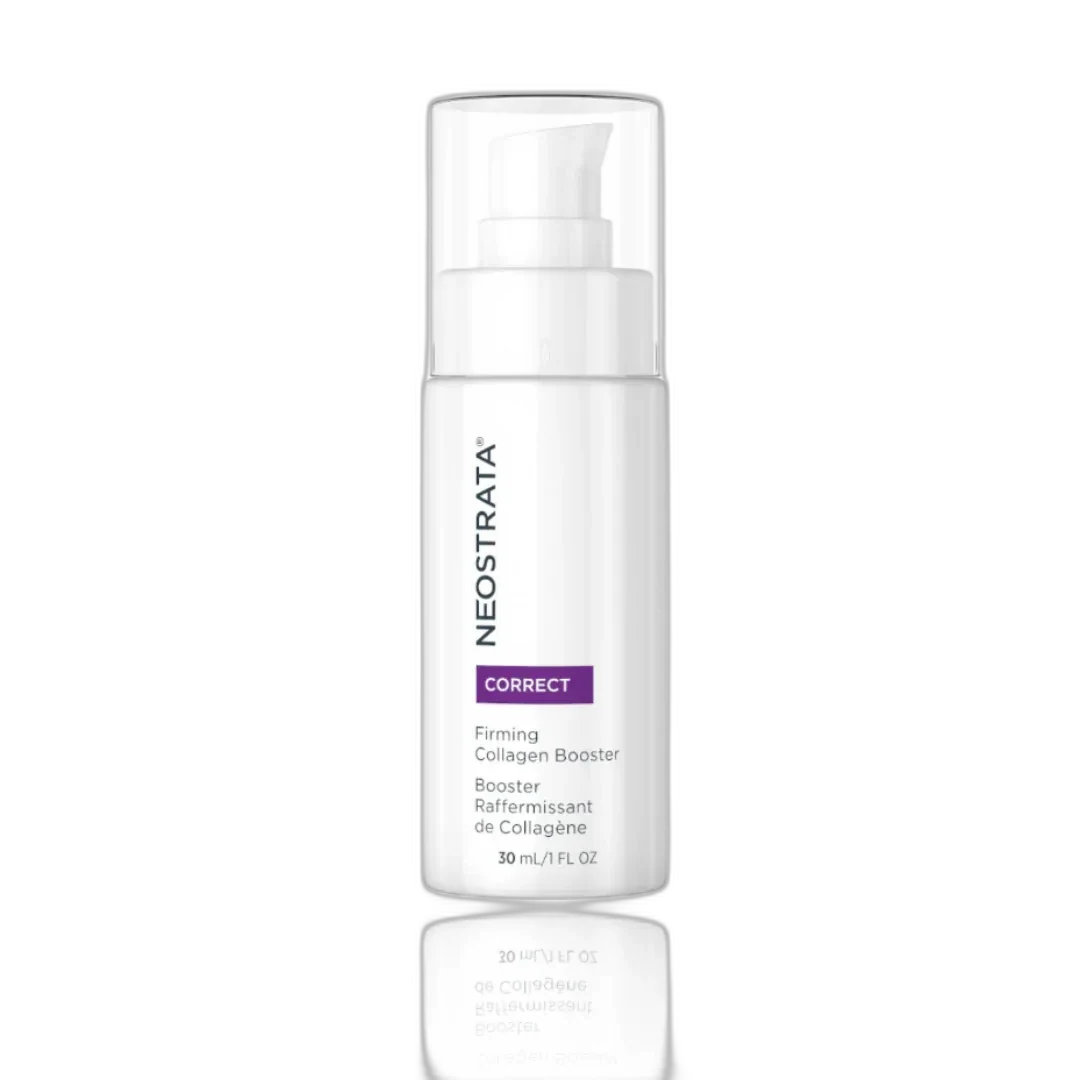
Firming Collagen Booster Serum
Collagen Science Pioneer
 Verified reviewer
Pros & cons.
- +Triple-mechanism collagen support addresses stimulation, signaling, and raw material supply simultaneously
- +Patented NeoGlucosamine at 6% backed by published fibroblast research showing significant collagen increase
- +Matrixyl 3000 peptide complex with clinical evidence for wrinkle depth reduction
- +Oil-soluble vitamin C derivative penetrates deeper than water-soluble forms for collagen cofactor support
- +Lightweight texture absorbs fully and layers well under moisturizer and sunscreen
- +From the brand that invented alpha hydroxy acid technology with over 110 patents
- +Collagen-precursor amino acids provide building blocks alongside stimulatory ingredients
- −Denatured alcohol as the fourth ingredient may compromise skin barrier with long-term daily use
- −Essential oils (lavender, clary sage) and linalool introduce unnecessary allergen and irritation risk
- −Only available in 1 oz size, making the per-ounce cost quite high at $78
- −Brief tacky phase during absorption may bother those who prefer instantly dry-down serums
- −Not suitable for sensitive or reactive skin types due to alcohol and fragrance components
The full review.
In 1973, dermatologist Dr. Van Scott and pharmacologist Dr. Ruey Yu patented the topical use of alpha hydroxy acids, reshaping skincare. Their brand, NeoStrata, spent decades defining acid-based skin renewal. When they moved to collagen stimulation, they built a formula around their own patented ingredient instead of just adding peptides.
The Firming Collagen Booster Serum uses 6% NeoGlucosamine—NeoStrata’s proprietary N-Acetyl Glucosamine, an amino sugar they have studied extensively. Research in the Journal of Dermatological Science shows NAG increases collagen production in fibroblasts by roughly a third and more than doubles hyaluronic acid output. The data behind this ingredient is solid, even if it lacks the hype of trending peptides.
Matrixyl 3000, a dual-peptide complex of palmitoyl tetrapeptide-7 and palmitoyl oligopeptide, sits atop the NeoGlucosamine. If NeoGlucosamine is the engine, Matrixyl 3000 is the ignition; it signals fibroblasts to activate genes for extracellular matrix renewal, starting the collagen assembly line. Clinical studies on Matrixyl 3000 show wrinkle depth reductions of up to 45% over two months at 3% concentration. NeoStrata does not disclose the exact peptide concentration here, but the ingredients appear in the mid-range of the formula, suggesting a meaningful dose.
The formula also includes lysine, glycine, acetyl hydroxyproline, and acetyl proline. These amino acids are the building blocks of collagen protein. Their 0.5% inclusion completes NeoStrata’s stimulate-signal-supply strategy. You are not just telling fibroblasts to make collagen; you are delivering the raw ingredients.
Tetrahexyldecyl ascorbate, an oil-soluble vitamin C derivative, rounds out the actives. It acts as an antioxidant shield for the collagen-building ingredients and functions as a cofactor for enzymes that crosslink collagen fibers. This shows NeoStrata considers the entire collagen synthesis pathway.
Texturally, this lightweight serum applies smoothly but feels tacky for about sixty seconds before absorbing. It leaves a satin-smooth finish that layers well under moisturizer and makeup. The scent is divisive. Denatured alcohol sits fourth on the INCI list, creating an unmistakable alcohol note upon application, followed by herbal undertones from clary sage and lavender oils.
This is where the review gets honest. For a brand built on scientific rigor, putting denatured alcohol and essential oils in a premium anti-aging serum feels outdated. The alcohol aids penetration and absorption, but it can compromise barrier function over time—the opposite of what a collagen-boosting product should do. The essential oils add fragrance but introduce common allergens (linalool is listed separately per EU regulations). NeoStrata knows better; their Restore line uses PHAs because they are gentler. It is puzzling that this sophistication does not extend to the Skin Active range.
Performance-wise, the serum delivers on its promise with patience. You won’t see a new jawline after one week, but skin firmness and bounce improve noticeably around the six-week mark. Fine lines soften and skin texture becomes smoother and more refined. Long-term users report genuine cumulative effects that go beyond temporary hyaluronic acid plumping.
The 1 oz bottle costs $78, placing it in the premium category. Given NeoStrata’s pedigree and the active formula, the price is reasonable; you are buying patented technology from the brand that invented modern acid skincare. However, the alcohol and essential oils make it a harder sell. At this price, the formula should match the science.
The Firming Collagen Booster is best for those in their late thirties and beyond seeking a multi-mechanism approach to firmness loss who do not have sensitive or reactive skin. If your skin tolerates alcohol-containing products, the active ingredient roster is impressive—it is just a shame the vehicle does not match the payload.
Ingredient analysis.
Full INCI list
Aqua (Water), Acetyl Glucosamine, Butylene Glycol, Alcohol Denat, Polysorbate 80, Dimethicone Peg-7 Phosphate, Glycerin, Palmitoyl Tetrapeptide-7, Palmitoyl Oligopeptide, Gardenia Jasminoides Meristem Cell Culture, Lysine, Glycine, Acetyl Hydroxyproline, Acetyl Proline, Tetrahexyldecyl Ascorbate, Propylene Glycol, Salvia Sclarea (Clary) Oil, Lavandula Angustifolia (Lavender) Oil, Hydroxyethylcellulose, Polysorbate 20, Xanthan Gum, Ammonium Hydroxide, Sodium Bisulfite, Phenoxyethanol, Caprylyl Glycol, Chlorphenesin, Linalool
Skin match.
The science.
The Science
Three interconnected mechanisms drive this serum. The lead active, N-Acetyl Glucosamine (NeoGlucosamine), has multiple peer-reviewed studies. Research in the Journal of Dermatological Science (2013) shows that fibroblasts cultured with NAG produced 33% more collagen and 107% more hyaluronic acid than controls, linking topical NAG to extracellular matrix production. A 2012 study in the same journal shows NAG suppresses UVB-induced activation of collagenases MMP-1 and MMP-13. This boosts collagen production while protecting existing collagen from photoaging-related breakdown.
The Matrixyl 3000 complex — palmitoyl tetrapeptide-7 and palmitoyl oligopeptide — uses matrikine signaling. These peptide fragments mimic structural protein breakdown products, signaling fibroblasts to increase collagen and elastin synthesis to repair damage. Clinical testing of Matrixyl 3000 at 3% concentration shows a 45% reduction in wrinkle surface area and nearly 20% improvement in skin tonicity over two months.
The acetyl amino acid blend (lysine, glycine, hydroxyproline, proline) solves a peptide-only formula limitation: signaling cells to produce collagen fails if building blocks are unavailable. Including collagen's primary amino acid constituents ensures substrate availability matches stimulatory demand. Finally, tetrahexyldecyl ascorbate provides the ascorbic acid cofactor required by prolyl hydroxylase and lysyl hydroxylase — enzymes essential for collagen crosslinking and structural stability.
References
- N-Acetylglucosamine modulates function of the skin fibroblasts — Journal of Dermatological Science (2013)
- N-Acetylglucosamine suppress collagenases activation in ultraviolet B-irradiated human dermal fibroblasts — Journal of Dermatological Science (2012)
- Reduction in the appearance of facial hyperpigmentation by topical N-acetyl glucosamine — Journal of Cosmetic Dermatology (2007)
Dermatologist Perspective
Dermatologists recommending NeoStrata products often cite the brand's research pedigree in acid and renewal technology. Board-certified dermatologists note N-Acetyl Glucosamine is a well-studied topical collagen stimulator outside of retinoids, with published evidence for collagen synthesis and MMP inhibition. The multi-peptide approach matches dermatological consensus that combination therapies outperform single-active products for age-related collagen loss. However, dermatologists specializing in sensitive skin flag the denatured alcohol content as a concern for patients with barrier dysfunction or rosacea-prone skin, and recommend patch testing before adding this serum to an anti-aging regimen.
Where it fits in your routine.
Apply 2-3 pumps to clean, dry skin every morning and evening after cleansing and toning. Press the serum into the face, neck, and décolletage using upward motions. Wait about one minute for full absorption before you apply moisturizer. Always use broad-spectrum SPF 30 or higher during the day. This serum works with most other serums. If you use retinol, alternate them—this serum in the morning and retinol at night—to minimize irritation from combined active ingredients.
At $78 for 1 oz, this serum costs more but uses different technology. The patented NeoGlucosamine at 6% is absent from budget alternatives, and its three-mechanism approach to collagen support has more scientific depth than most peptide serums at similar price points. NeoStrata's published research adds credibility newer brands lack. However, denatured alcohol and essential oils in a premium formula suggest the formulation isn't fully refined for the price. No alternate sizes are available, so users cannot trial the serum before committing.
This serum works for people in their mid-thirties and older who want a research-backed, multi-mechanism approach to firmness loss and fine lines. It suits normal to combination skin types that tolerate alcohol-containing products and use clinical-grade formulations from a legacy dermatology brand.
People with sensitive, reactive, or rosacea-prone skin should avoid this — denatured alcohol and essential oils make it a poor fit. If you have a compromised skin barrier or use aggressive actives like high-strength retinoids or chemical peels, the alcohol content increases irritation instead of supporting recovery.
Product details.
Lightweight, slightly viscous serum with a gel-like consistency that feels tacky briefly before it absorbs
The scent has noticeable alcohol and subtle herbal notes from clary sage and lavender oils
Dark glass bottle with pump dispenser, in a dark-toned box that matches NeoStrata's clinical aesthetic
The serum feels like a slight alcohol tingle that fades in seconds. It feels briefly tacky during absorption, but settles into a smooth, non-greasy finish within a minute. Expect no purging or adjustment period; improvements happen gradually over weeks.
2-3 months with twice-daily use on face and neck
12 months
All Year
The backstory.
Born from NeoStrata's decades of research into skin renewal acids, this serum represents the brand's extension beyond their AHA and PHA roots into peptide-driven anti-aging. It leverages their patented NeoGlucosamine technology, originally developed for hyperpigmentation, repurposed here as a collagen stimulator — a pivot informed by research showing NAG's fibroblast-activating properties.
About NeoStrata
Legacy Brand (20+ years)Dermatologist Dr. Van Scott and dermatopharmacologist Dr. Ruey Yu founded NeoStrata in 1988. They invented alpha and polyhydroxy acid technology. NeoStrata has over 110 patents and nearly 250 published clinical studies and journal papers.
Common myths.
Plant stem cells in skincare can regenerate human skin cells like actual stem cell therapy.
The gardenia meristem cell culture in this formula is an antioxidant extract, not living stem cells that reprogram human tissue. Protective compounds within the culture provide the benefit, not stem-cell-like regenerative action.
Topical collagen boosters can replace lost collagen directly.
This serum doesn't add collagen to skin — NeoGlucosamine and peptide signaling stimulate your fibroblasts to produce more collagen. Amino acids provide building blocks, but your own cells handle the actual collagen assembly.
FAQ.
How long does it take to see results from NeoStrata Firming Collagen Booster?
Most users see subtle plumping and hydration within the first week. Firmness and fine line reduction show measurable improvements after 6-8 weeks of consistent twice-daily use. NeoGlucosamine and Matrixyl 3000 peptides need time to stimulate fibroblast collagen production in the deeper skin layers.
Can I use NeoStrata Firming Collagen Booster with retinol?
Yes, but introduce them gradually. This serum's peptide and NeoGlucosamine formula works well with retinol, but the denatured alcohol and essential oils in this product can increase irritation if used with strong retinoids. Use this serum in the morning and retinol at night.
Is NeoStrata Firming Collagen Booster suitable for sensitive skin?
This serum lists denatured alcohol as the fourth ingredient and includes lavender and clary sage essential oils, which can irritate sensitive skin. For reactive or easily irritated skin, NeoStrata's PHA-based products in their Restore line are a gentler choice from the same brand.
What is NeoGlucosamine and how does it work?
NeoGlucosamine is NeoStrata's proprietary N-Acetyl Glucosamine (NAG), a natural amino sugar. At a 6% concentration, this formula stimulates fibroblasts to increase collagen synthesis by approximately 33% and boosts hyaluronic acid production by over 100%, based on published research on NAG.
Is the NeoStrata Collagen Booster worth the price?
At $78 for 1 oz, this serum is a premium product using researched technology from the brand that invented hydroxy acid skincare. The triple-mechanism approach with NeoGlucosamine, Matrixyl 3000, and collagen-precursor amino acids has more ingredient depth than many peptide serums at similar prices. However, the formula includes alcohol denat and essential oils, a choice some may dislike at this price point.
Community
What the community says.
"Visibly firms and plumps skin within the first week"
"Lightweight texture absorbs quickly"
"Smooths fine lines and improves skin elasticity"
"Works well under makeup"
"Noticeable alcohol scent upon application"
"Slightly sticky feel before fully absorbing"
"Price is high for a 1 oz bottle"
"Contains essential oils that may irritate sensitive skin"
People also looked at.