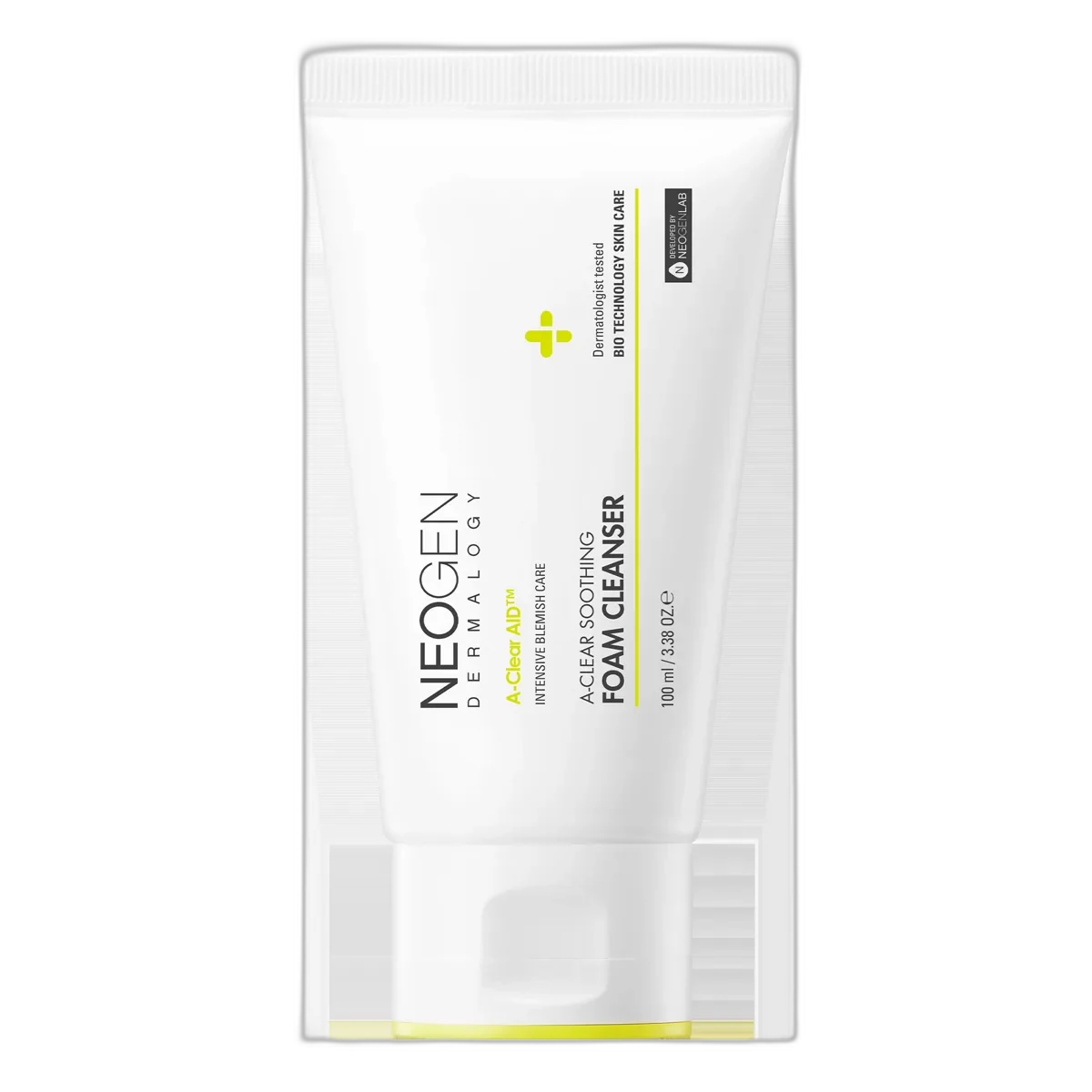
A-Clear Soothing AHA/BHA Foam Cleanser
K-Beauty Cult Acne Cleanser
 Verified reviewer
Pros & cons.
- +Four-acid blend delivers real rinse-off exfoliation without stinging
- +Centella, panthenol, and allantoin provide genuine soothing support
- +Well-formulated pH keeps the acids active and the skin balanced
- +Effective on blackheads and closed comedones within weeks
- +Creamy lather rinses clean without leaving skin feeling stripped
- +Strong per-ounce value compared to Western acid cleansers
- +Backed by Neogen's biotech R&D heritage
- −Added fragrance limits suitability for truly sensitive skin
- −Tea tree oil scent lingers and can feel medicinal
- −Too drying for dry or eczema-prone skin
- −Not a billowy foam — texture may surprise new users
- −Acid concentrations are not disclosed on label
The full review.
Seeing ‘Soothing AHA/BHA Foam Cleanser’ on a bottle often triggers cynicism. Acids and soothing agents rarely coexist, and marketing usually uses ‘soothing’ as a meaningless flourish. Neogen’s A-Clear Soothing Foam Cleanser is the exception. Its name is earned through specific formulation choices that separate a truly gentle cleanser from one that merely claims to be.
Neogen Dermalogy is the consumer arm of Neogen Corporation, a Korean biotechnology company founded in 2000. For two decades, Neogen has conducted R&D and supplied ingredients to other cosmetic brands. This matters because Neogen’s consumer products reflect a formulator’s mindset. Decisions on ingredients and concentrations come from people who understand what works in a rinse-off context. The A-Clear line launched in 2018 to target the pore-care category, serving users who found gentle centella cleansers too weak and Western spot-treatment washes too harsh.
The formula uses a four-acid blend: salicylic acid acts as the oil-soluble BHA for pore-clearing; glycolic acid is the small-molecule surface exfoliant for texture; lactic acid is the gentler alpha-hydroxy to moderate the acid load; and citric acid is a low-concentration supporting AHA and pH buffer. None of these acids reach leave-on serum concentrations. Because this is a rinse-off cleanser, the goal is not a chemical peel. Instead, it provides slow, daily, cumulative clearing of sebum and dead cell plugs to prevent blackheads and closed comedones. Consistent daily use is more valuable than occasional heavy exfoliation and easier to maintain without compounding irritation.
The soothing components differentiate this product. Centella asiatica extract is high on the ingredient list and provides anti-inflammatory support. It is the K-beauty standard for recovery from chemical exfoliation, and it prevents the tight, squeaky feeling common with daily BHA washes. Panthenol and allantoin add calming effects, while sodium hyaluronate prevents dehydration. This functions as a daily driver rather than a twice-a-week treatment.
The texture is unexpected. It is not a whippy mousse; it is a thick cream from the tube that lathers into a soft, cushiony foam with water. The lather is modest, which suits a pH-controlled acid formulation, as aggressive surfactants would raise the pH and disable the acids. The rinse is clean and the afterfeel is smooth. On oily skin, it resets sebum without causing dryness.
The fragrance is the main caveat. Tea tree oil provides an herbal-medicinal profile under an added floral fragrance, making the scent unmistakable. Most oily and combination skin users find the scent tolerable as it fades quickly after rinsing. However, if you have rosacea, fragrance allergies, or reactive skin, do not use this acid cleanser. Fragrance-free alternatives in this category serve sensitive skin better. While the scent follows K-beauty tradition, it limits suitability for the sensitive-skin buyers the name might suggest.
Performance is strong for an oily-skin acid cleanser. Users report blackhead reduction within two to three weeks, softer pores by week four to six, and improved texture over the first two months. Active breakouts respond more slowly because a cleanser does not replace targeted leave-on acne treatments, but the preventative work on clogged pores reduces new breakouts over time. The salicylic-glycolic pairing works well for users with closed comedones.
At roughly $20 for 160g, the value is clear. It costs less than many fragrance-free Western derm-brand acid cleansers and offers better soothing support. For a daily driver lasting two to three months, the math works. The cleanser fails on sensitive or dry skin, where the acid load, fragrance, and tea tree oil can over-strip. For its target audience—oily to combination skin with acne, blackheads, and texture concerns—this is one of the better K-beauty cleansers available.
Formula
Ingredient analysis.
Full INCI list · pH 5.5
Water, Glycerin, Myristic Acid, Potassium Hydroxide, Stearic Acid, Lauric Acid, Glycol Distearate, Glyceryl Stearate, Cocamidopropyl Betaine, PEG-100 Stearate, PEG-150 Distearate, Salicylic Acid, Lactic Acid, Glycolic Acid, Citric Acid, Centella Asiatica Extract, Camellia Sinensis Leaf Extract, Houttuynia Cordata Extract, Propolis Extract, Melaleuca Alternifolia (Tea Tree) Leaf Oil, Allantoin, Panthenol, Sodium Hyaluronate, Disodium EDTA, Fragrance
Skin match.
The science.
The Science
The four-acid cleanser concept uses decades of exfoliation research. Kligman and others established Salicylic acid's role in clearing oil-filled pores in the 1990s; a 1994 review in Cutis cataloged its use for comedonal acne treatment. Ditre and colleagues characterized Glycolic acid's surface-smoothing action in the mid-1990s. This cleanser uses all four acids at modest concentrations instead of one high-strength acid. A 2015 review in the Journal of Drugs in Dermatology shows that combined AHA/BHA products at lower individual concentrations exfoliate as well as single-acid products at higher concentrations, but with lower irritation. The centella asiatica inclusion follows a 2012 review in Indian Dermatology Online Journal that cataloged its anti-inflammatory and wound-healing mechanisms via asiaticoside and madecassoside. Combining moderate acid exfoliation with centella-based soothing is a hallmark of modern Korean dermatological formulation. This reflects the K-beauty tradition of layered, low-stress efficacy rather than the peak-strength model common in Western acid products.
References
- Salicylic acid as a peeling agent: a comprehensive review — Clinical, Cosmetic and Investigational Dermatology (2015)
- Centella asiatica in dermatology: an overview — Phytotherapy Research (2014)
Dermatologist Perspective
Dermatologists view AHA/BHA cleansers as adjunct tools for acne and pore-care routines. They provide consistent low-dose exfoliation but do not substitute for targeted leave-on treatments in moderate-to-severe acne. Board-certified dermatologists note that for patients who struggle with the irritation of benzoyl peroxide or prescription retinoids, a gentler acid cleanser like this one clears pores while the skin acclimates to stronger therapies. Dermatologists look for soothing additives—centella, panthenol, allantoin—when recommending exfoliating cleansers to patients with combination or reactive skin, as they reduce the drop-out rate from routines that otherwise would have worked.
Where it fits in your routine.
Rub a pea-sized amount into wet palms to create a light lather. Massage onto damp skin for thirty to sixty seconds, targeting the T-zone and oily areas. Rinse well with lukewarm water and apply a hydrating toner. Use once or twice daily based on tolerance. If you have not used acid cleansers before, start once daily for the first week. Do not use strong leave-on exfoliants on the same day. Always apply broad-spectrum sunscreen in the morning, because AHA use increases sun sensitivity.
At $20 for 160g, this cleanser offers high value in the K-beauty acid category. It costs roughly half what a comparable Western dermatology-brand acid cleanser typically costs, but the formula is better soothed and more consistently tolerated during long-term daily use. The per-ounce math is favorable, and the tube lasts two to three months with twice-daily use. This cleanser provides the most value for oily and combination skin buyers who would otherwise buy more expensive pore-care products — it replaces a separate exfoliating toner in many routines.
Oily and combination skin users with blackheads, closed comedones, enlarged pores, or persistent texture concerns can use this daily acid cleanser without overstripping. It also works for K-beauty enthusiasts seeking a middle-ground cleanser between gentle centella washes and harsh spot-treatment products.
Dry, eczema-prone, rosacea, or fragrance-sensitive skin — the combined acid load, fragrance, and tea tree oil trigger these conditions. Skip this if you use strong leave-on exfoliants daily; adding this cleanser risks over-exfoliation.
Product details.
Thick cream that turns into a soft, cushiony foam when mixed with water. It is not a whippy mousse; it is more substantial and creamy.
A floral fragrance covers a distinct herbal tea-tree-and-mint profile. The scent is noticeable but fades before you rinse.
Standard squeeze tube with flip cap. Simple, travel-friendly, and clearly labeled.
The first wash produces an immediate squeak-clean feeling and a subtle tingle from the acids. Skin looks slightly pinker for a few minutes; this is normal. Over the first two weeks, blackheads become softer and easier to clear. Active breakouts reduce around weeks three to four.
Approximately 2-3 months with twice-daily face cleansing.
12 months
All Year
The backstory.
Neogen Dermalogy is the skincare arm of Neogen Corporation, a Korean biotech founded in 2000 that originally built its business supplying R&D services and ingredients to other cosmetics brands. The A-Clear line launched in 2018 as Neogen's answer to the pore-care focused K-beauty category, positioned for the international K-beauty consumer who wanted something stronger than Centella-only gentle cleansers but gentler than the harsh Western spot treatments.
About Neogen
Legacy Brand (20+ years)Neogen Dermalogy is the consumer arm of Neogen Corporation, a Korean biotechnology company founded in 2000 that supplies ingredients and R&D services to other skincare brands. The scientific depth of the parent company gives Neogen's own products more formulation credibility than typical indie K-beauty lines.
Common myths.
Cleansers with AHA and BHA are marketing — acids rinse off before they work.
Rinse-off acids provide less chemical exfoliation than a leave-on toner or serum, but they clear sebum and loosen clogged pores during contact time. The main benefit is consistent light exfoliation at every wash without the risk of a potent leave-on product.
If a cleanser doesn't sting, the acids aren't working.
Stinging indicates irritation, not effectiveness. Well-formulated acid cleansers use soothing agents like centella to prevent stinging while they deliver measurable surface exfoliation and pore-clearing benefits.
FAQ.
Can I use this cleanser every day?
Yes — the acid blend is gentle enough for daily use on most oily and combination skin at rinse-off contact time. Use it once daily for the first week to let your skin adjust, then move to twice daily if comfortable. Use it every other day if you notice tightness or increased redness.
Is this safe to use with retinol or prescription retinoids?
Use these on alternate days if you are new to retinoids or have reactive skin. Experienced users on moderate retinoid strengths can usually use this cleanser in the morning with a nighttime retinoid. Reduce frequency if you see irritation.
Why is there fragrance in a sensitive-skin product?
The fragrance follows a typical K-beauty formulation choice, where scent is part of the user experience. Most skin types tolerate the added fragrance, but users with rosacea, fragrance allergies, or highly reactive skin should choose a fragrance-free acid cleanser.
How does this compare to other K-beauty acid cleansers?
This cleanser exfoliates more than gentler centella-only cleansers. It is more soothing and hydrating than harsher Western salicylic acid washes. It occupies a useful middle lane that fits easily into a daily routine.
Does this help with closed comedones specifically?
Yes — salicylic acid's oil-solubility and glycolic acid's surface action target the skin pattern that produces closed comedones. Results on closed comedones usually show in four to six weeks of consistent use, which is faster than using a pure AHA cleanser.
Can I use this as a second cleanse after an oil cleanser?
Yes — K-beauty users often use this product this way. Oil cleanse first to remove sunscreen and makeup, then use this cleanser to lift residual oil and deliver the acid actives directly to cleaner skin.
Will this make my acne worse before it gets better?
Chemical exfoliation clears existing clogs, so a short purge period in the first week or two is possible. If breakouts worsen dramatically or last past three weeks, reduce use and reassess. This usually means you are overusing the product or the fragrance or tea tree is aggravating your skin.
What the community says.
"Noticeable smoother skin after first use"
"Effective on blackheads and clogged pores"
"Good value for the size"
"Doesn't feel stripping despite acids"
"Cult K-beauty favorite for oily skin"
"Fragrance is strong for a sensitive-skin product"
"Too drying for dry or reactive skin"
"Tea tree scent lingers"
"Not a traditional foam — more of a creamy lather"
Featured in.
People also looked at.