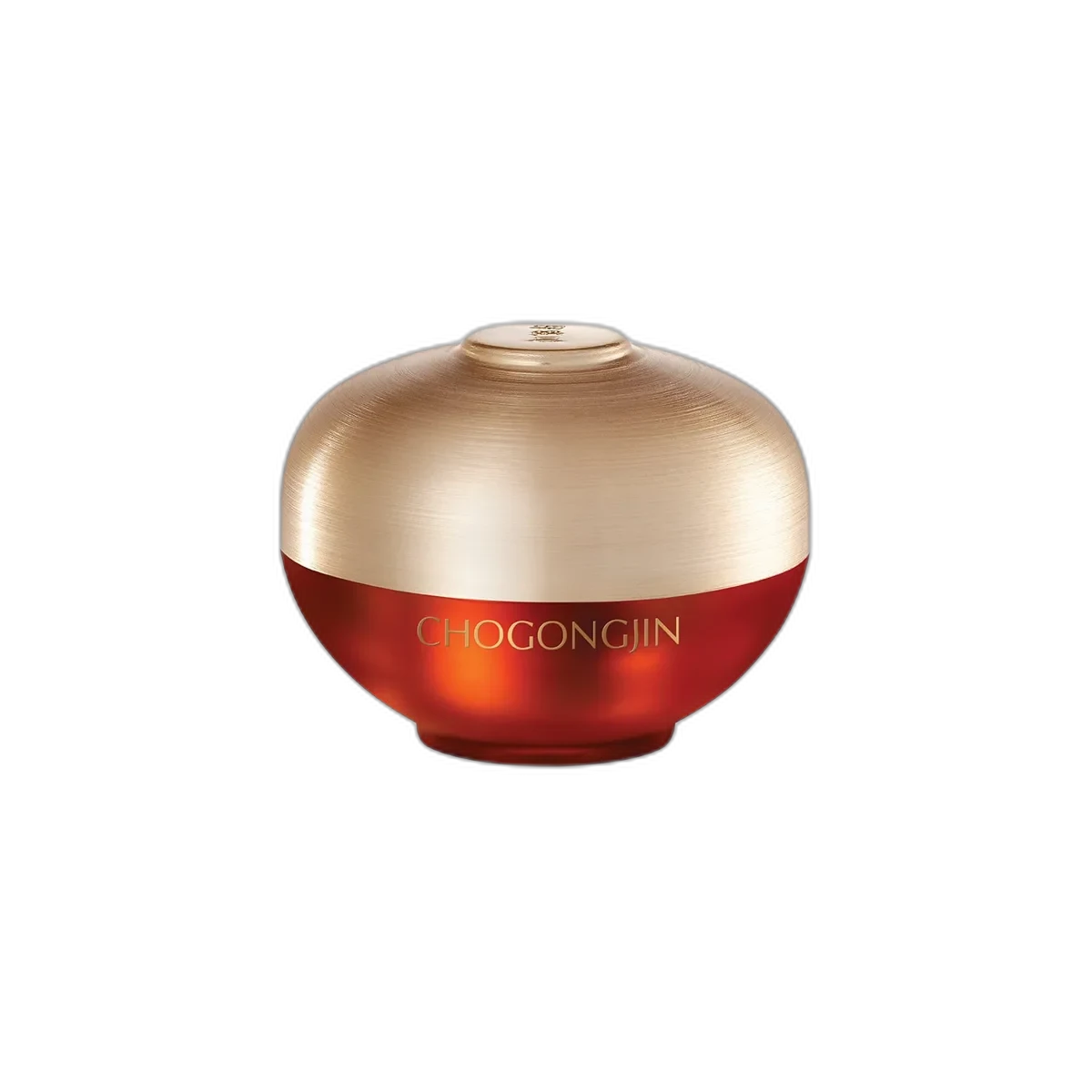
Chogongjin Sosaeng Jinbon Eye Cream
Hanbang Luxury Eye Ritual
 Verified reviewer
Pros & cons.
- +Phellinus Linteus mushroom as the first ingredient — a unique, research-backed hanbang choice
- +Adenosine provides Korean MFDS-approved anti-wrinkle functionality with clinical evidence
- +Rich, bouncy texture that deeply nourishes dry under-eyes without feeling greasy
- +Luxurious packaging with included spatula for hygienic application
- +BioGongjin fermented herbal complex at a reportedly high 30-35% concentration
- +Excellent user satisfaction with 4.6/5 across 8,000+ reviews
- −Eight identified fragrance allergens plus synthetic fragrance applied near the eyes
- −Niacinamide at estimated 0.8-1.25% is below the efficacy threshold for significant brightening
- −Contains deer antler extract and likely animal-derived collagen — not vegan or cruelty-free
- −Rich formula is too heavy for oily skin types and may emphasize wrinkles on some users
- −Proprietary fermented complex lacks independent clinical validation
- −Price varies wildly (5-52) depending on retailer, making value assessment difficult
The full review.
Before K-beauty became synonymous with sheet masks and glass skin on social media, Korean skincare had a much older tradition rooted in hanbang — traditional herbal medicine that dates back to the Joseon dynasty. Hanbang skincare uses fermented botanicals, medicinal mushrooms, ginseng, and ingredients that read more like an apothecary ledger than a beauty label. The Missha Chogongjin Sosaeng Jinbon Eye Cream is steeped in this tradition, and it does not apologize for it. The name itself — Chogongjin, roughly meaning “beautiful palace complexion” — announces its ambition to evoke the skincare rituals of Korean royalty.
The formula opens with an unusual first ingredient: Phellinus Linteus extract, a medicinal mushroom known as sang-hwang in Korean. Most eye creams start with water. This one starts with mushroom. It is a bold choice that immediately signals this product’s hanbang identity, and it is backed by more research than you might expect. A 2018 study demonstrated anti-pigmentation effects comparable to arbutin in UV-induced hyperpigmentation models, while a 2022 study in the Journal of Nanobiotechnology showed that Phellinus Linteus nanovesicles inhibited UV-induced skin aging through cross-kingdom regulation. The science is emerging rather than established, but it is genuinely promising — and it gives this eye cream a foundation that no water-first formula can claim.
The BioGongjin proprietary complex reportedly constitutes 30 to 35 percent of the formula — a fermented blend of traditional Korean herbal ingredients that includes ginseng, angelica root, cornus fruit, rice flower, and sugarcane extracts. Fermentation in hanbang skincare serves a dual purpose: it breaks down plant compounds into smaller, more bioavailable molecules while producing beneficial metabolites. The candida bombicola ferment listed in the INCI represents this fermentation process. Whether the specific combination delivers synergistic benefits beyond the individual ingredients is not independently validated, but the approach is consistent with the hanbang philosophy of holistic formulation.
Adenosine, positioned further down the ingredient list, is the most clinically validated anti-wrinkle active in the formula. Approved by Korea’s MFDS as a functional anti-wrinkle ingredient, adenosine has been studied in a randomized, placebo-controlled trial of 126 women showing measurable reduction in periorbital lines. It is a quiet workhorse in many Korean anti-aging products, and its presence here gives the formula credible anti-wrinkle credentials.
Niacinamide makes an appearance at the tenth position, but third-party analysis estimates its concentration at 0.8 to 1.25 percent — below the two to five percent range where clinical studies have demonstrated significant brightening and barrier-supporting effects. At this level, niacinamide provides a modest supporting role rather than the starring brightening effect you might hope for from a MFDS-registered whitening product.
The texture is genuinely impressive. Despite a rich ingredient list that includes shea butter, meadowfoam seed oil, macadamia seed oil, and sunflower seed oil, the cream manages to feel bouncy and cushiony rather than heavy. The multiple silicones — dimethicone, cyclopentasiloxane, cyclohexasiloxane — create a smooth application that allows the rich botanicals to sink in without sitting on top of the skin. The included spatula is a welcome touch for hygienic dispensing, and the ornate packaging makes the application feel like a deliberate ritual rather than a hurried skincare step.
The fragrance is where this product loses significant ground. The INCI lists Parfum plus eight individually identified fragrance allergens: benzyl salicylate, alpha-isomethyl ionone, citronellol, geraniol, linalool, limonene, hydroxycitronellal, and hexyl cinnamal. For a product applied to the thinnest, most reactive skin on the face — millimeters from the mucous membranes of the eyes — this fragrance load is excessive. The herbal scent is admittedly characteristic and even pleasant for hanbang enthusiasts, but the allergenic potential is real and concerning. Ophthalmologists would likely flag this product without hesitation.
The deer antler extract adds another layer of complexity. Cervus Elaphus velvet extract is a traditional Korean medicine ingredient believed to contain growth factors and amino acids that support tissue nourishment. Whether these translate to meaningful benefits at cosmetic concentrations in an eye cream is unclear. For consumers with ethical concerns about animal-derived ingredients, this is a clear disqualifier — as is the soluble collagen, which is likely animal-derived given the brand’s traditional formulation approach.
At 2 for 30 milliliters from the Missha US site — though available for 5 to 2 through Korean beauty retailers — the pricing reflects the premium hanbang positioning. The product lasts three to four months with twice-daily use, making the effective daily cost moderate. For dry skin types who find Western eye creams too simple and who are drawn to the hanbang philosophy, this offers an immersive experience with genuine traditional medicine ingredients. For fragrance-sensitive consumers, ingredient minimalists, or vegans, this is a non-starter.
The 4.6-star average across approximately 8,000 reviews on YesStyle speaks to a loyal and enthusiastic user base that values the hanbang approach and the sensorial luxury of the product. That satisfaction is real. But it is satisfaction within a self-selecting audience — those reviews come overwhelmingly from people who sought out a hanbang eye cream, not from a broad cross-section of eye cream users. For the right consumer, this is a genuinely special product. The challenge is that the fragrance load shrinks the definition of the right consumer considerably.
Formula
Ingredient analysis.
Full INCI list
Phellinus Linteus (Mud Mushroom) Extract, Butylene Glycol, Butyrospermum Parkii (Shea) Butter, Hydrogenated Poly(C6-14 Olefin), Water, Dimethicone, Limnanthes Alba (Meadowfoam) Seed Oil, Pentaerythrityl Tetraethylhexanoate, Behenyl Alcohol, Niacinamide, Stearyl Alcohol, Cyclopentasiloxane, Pentylene Glycol, Polyglyceryl-3 Methylglucose Distearate, Hydroxypropyl Starch Phosphate, Potassium Cetyl Phosphate, Cyclohexasiloxane, 1,2-Hexanediol, Chondrus Crispus (Irish Moss) Extract, Chlorella Vulgaris Extract, Saccharum Officinarum (Sugarcane) Extract, Theobroma Cacao Seed Extract, Candida Bombicola/Glucose/Methyl Rapeseedate Ferment, Oryza Sativa (Rice) Flower Extract, Panax Ginseng Root Extract, Soluble Collagen, Angelica Gigas Root Extract, Cornus Officinalis Fruit Extract, Thymus Vulgaris (Thyme) Extract, Cervus Elaphus (Antler/Velvet) Extract, Macadamia Integrifolia Seed Oil, Althaea Rosea Flower Extract, Helianthus Annuus (Sunflower) Seed Oil, Glyceryl Stearate, Diisostearyl Malate, Silica, Acrylates/C10-30 Alkyl Acrylate Crosspolymer, Glucose, Caprylyl Glycol, Cetearyl Glucoside, Fructooligosaccharides, Fructose, Potassium Hydroxide, Glycerin, Dipotassium Glycyrrhizate, Adenosine, Sodium Phytate, Dextrin, Ethylhexylglycerin, Polyglyceryl-10 Stearate, Sodium Stearoyl Glutamate, Cetearyl Alcohol, Tin Oxide, Phenoxyethanol, Parfum (Fragrance), Benzyl Salicylate, Alpha-Isomethyl Ionone, Citronellol, Geraniol, Linalool, Limonene, Hydroxycitronellal, Hexyl Cinnamal, Mica, Titanium Dioxide
Skin match.
The science.
The Science
Adenosine is the most compelling active in this formula. It is a Korean MFDS-approved anti-wrinkle functional ingredient. A randomized, placebo-controlled study by Abella et al. (PMID: 18489289) used 126 women aged 45-65 to evaluate adenosine formulations for periorbital wrinkle reduction, which provides the clinical basis for its Korean regulatory approval.
Phellinus Linteus, the mushroom extract used as the formula's base, has growing evidence. A 2018 study (PMID: 29316744) showed anti-pigmentation effects in UV-induced hyperpigmentation guinea pig models comparable to arbutin, suggesting melanin-inhibiting properties for dark circle reduction. A 2012 study (PMID: 22988890) showed immunomodulatory effects that protect against atopic dermatitis by inhibiting IgE production. Most notably, a 2022 study in the Journal of Nanobiotechnology showed that Phellinus Linteus exosome-like nanovesicles inhibited UV-induced skin aging via cross-kingdom regulation—a finding that positions this mushroom as a serious anti-aging ingredient.
Panax ginseng root extract, another hanbang staple, showed significant wrinkle improvement and increased type I procollagen synthesis in human skin during a 24-week randomized controlled trial (PMID: 20041778). The niacinamide is estimated at below 1.25% in this formula, which is below the 4-5% concentration where most clinical benefits are well-studied.
References
- Anti-pigmentation effects of Phellinus linteus extract on UV-induced hyperpigmentation — Photochemistry and Photobiology (2018)
- Blind, randomized, placebo-controlled study evaluating adenosine formulations for periorbital wrinkle reduction — Journal of Cosmetic Dermatology (2008)
- Anti-wrinkle effect of red ginseng on human skin — Journal of Ginseng Research (2009)
Dermatologist Perspective
Dermatologists would value the adenosine for its MFDS-approved anti-wrinkle functionality and find the emerging research on Phellinus Linteus scientifically interesting. However, board-certified dermatologists would have serious concerns about the fragrance load; applying eight identified allergens plus synthetic fragrance to the periorbital area lacks clinical justification. The niacinamide concentration below efficacy thresholds would also draw scrutiny. Dermatologists familiar with hanbang ingredients would acknowledge their traditional significance but note that the proprietary fermented complex lacks the independent clinical validation required for evidence-based recommendations.
Where it fits in your routine.
Use the included spatula to dispense a small amount of cream. Tap it onto the orbital bone with your ring finger, moving from the inner to the outer corner of the under-eye, then along the brow bone. Use morning and evening after serum and before moisturizer. This thick formula works as a sole eye treatment; you do not need to layer additional eye products.
Prices for this product vary widely — from 5-27 on YesStyle to 2 on the Missha US site. At the low end, the adenosine and medicinal mushroom extract provide good value for a hanbang eye cream. At the high end, the sub-efficacious niacinamide and unvalidated proprietary complex make the value harder to justify. The 30 mL jar lasts 3-4 months using it twice daily, so the daily cost stays moderate. For hanbang enthusiasts, cultural and experiential value exists beyond ingredient analysis.
Dry to normal skin types use this for traditional Korean herbal medicine and the hanbang skincare philosophy. It works for those who want a ritualistic application and a thick, nourishing eye cream for aging, dry under-eyes.
This works for vegans, fragrance-sensitive individuals, oily skin types, ingredient minimalists, and those avoiding animal-derived ingredients (deer antler, collagen). It is a lightweight eye cream. If you have reactive periorbital skin, the fragrance allergen load is a risk.
Product details.
Thick, bouncy cream with a silky consistency. It absorbs better than expected and leaves no heavy or greasy residue. The shea butter and multiple oils create a substantial, cushiony feel.
The scent is a traditional Korean hanbang herbal-oriental fragrance—earthy, botanical, and complex. It contains synthetic fragrance and eight identified fragrance allergens. Opinions vary: some users like the scent, while others find it overwhelming near the eyes.
Gold accents and hanja-style calligraphy decorate the traditional Korean-inspired jar. A spatula comes with the jar for hygienic dispensing. The ornate packaging shows the premium hanbang positioning of the Chogongjin line.
The application feels sensorial and ritualistic. The cream is thick and bouncy, melting into the skin when tapped gently. The herbal fragrance is immediate and sets the hanbang tone. Skin feels deeply nourished and slightly firmed within minutes. Most users feel no stinging, but the fragrance may bother sensitive noses.
3-4 months with twice-daily application to both eyes
12 months
fall winter
The backstory.
The Chogongjin line is Missha's premium hanbang collection, originally launched around 2010 and renewed in 2022 as the Sosaeng Jin formulation. Chogongjin translates roughly to "beautiful palace complexion" — a reference to the skincare rituals of Korean royal courts. The Sosaeng Jin renewal deepened the traditional medicine roots with Phellinus Linteus mushroom as the hero ingredient, a fungus revered in Korean folk medicine for centuries.
About Missha
Established Brand (5–20 years)Seo Young-pil founded Missha in 2000 under Able C&C Co., Ltd. in South Korea. The brand expanded to over 200 franchise locations by 2004 and has been a major K-beauty player for over two decades. The Chogongjin line uses traditional Korean herbal medicine (hanbang) ingredients, but independent clinical validation of the specific proprietary blends is limited.
Common myths.
Hanbang (traditional Korean herbal) ingredients lack scientific backing and are just folklore.
Modern research validates several hanbang ingredients. Animal studies show Phellinus Linteus has anti-pigmentation effects similar to arbutin, and randomized controlled trials show Panax ginseng increases procollagen synthesis. Evidence grows, but many traditional claims lack rigorous clinical validation.
Deer antler extract is cruel and unnecessary in skincare.
Korean medicine traditionally harvests Cervus Elaphus (deer antler velvet) extract from naturally shed or trimmed antlers. It has growth factors and amino acids. Experts debate if these provide skin benefits at cosmetic concentrations, and sourcing ethics remain a valid, personal concern.
FAQ.
What makes the Missha Chogongjin eye cream different from other Korean eye creams?
This eye cream uses hanbang (traditional Korean herbal medicine) principles. Phellinus Linteus medicinal mushroom is the first ingredient, and a proprietary fermented herbal complex makes up 30-35% of the formula. It also contains adenosine (Korean MFDS-approved anti-wrinkle ingredient) and deer antler extract, both from Korean royal court beauty traditions.
Is this eye cream suitable for sensitive skin?
No — the formula has synthetic fragrance and eight EU-designated fragrance allergens, which touch thin, reactive periorbital skin. Thyme extract and several botanical extracts increase irritation risk. If you have sensitive eye-area skin, use fragrance-free alternatives.
Is the Missha Chogongjin eye cream vegan?
No — it contains Cervus Elaphus (deer antler/velvet) extract and soluble collagen, which is likely animal-derived. Missha is not cruelty-free certified because the brand sells in mainland China, where law may require animal testing.
Does this eye cream really reduce wrinkles?
The formula contains adenosine, a Korean MFDS-approved anti-wrinkle functional ingredient that reduces periorbital lines in clinical studies. Panax ginseng also increases procollagen synthesis according to research. However, the niacinamide concentration is sub-efficacious. Expect fine lines to improve gradually over 4-8 weeks instead of seeing dramatic correction.
What is Phellinus Linteus and why is it the first ingredient?
Phellinus Linteus (also called "sang-hwang" in Korean) is a medicinal mushroom used in Korean traditional medicine for centuries. Research shows anti-pigmentation effects comparable to arbutin, anti-inflammatory activity, and UV-protective properties. As the first ingredient, the mushroom extract forms the formula base instead of water — an unusual choice that reflects the hanbang philosophy.
What the community says.
"Rich, bouncy texture that provides deep hydration to dry under-eyes"
"Keeps the eye area moisturized all day and night without reapplication"
"Reduces puffiness and gradually lightens dark circles with regular use"
"Luxurious packaging with spatula included for hygienic application"
"Prevents makeup from caking or creasing around the eyes"
"Heavy fragrance load with 8+ allergens — problematic for sensitive eye-area skin"
"Some users report a tightening or mattifying effect that emphasizes existing wrinkles"
"Contains deer antler extract — not suitable for vegans or those avoiding animal products"
"Niacinamide concentration is below the typical efficacy threshold for significant brightening"
"Price is high relative to the concentration of proven actives"
People also looked at.