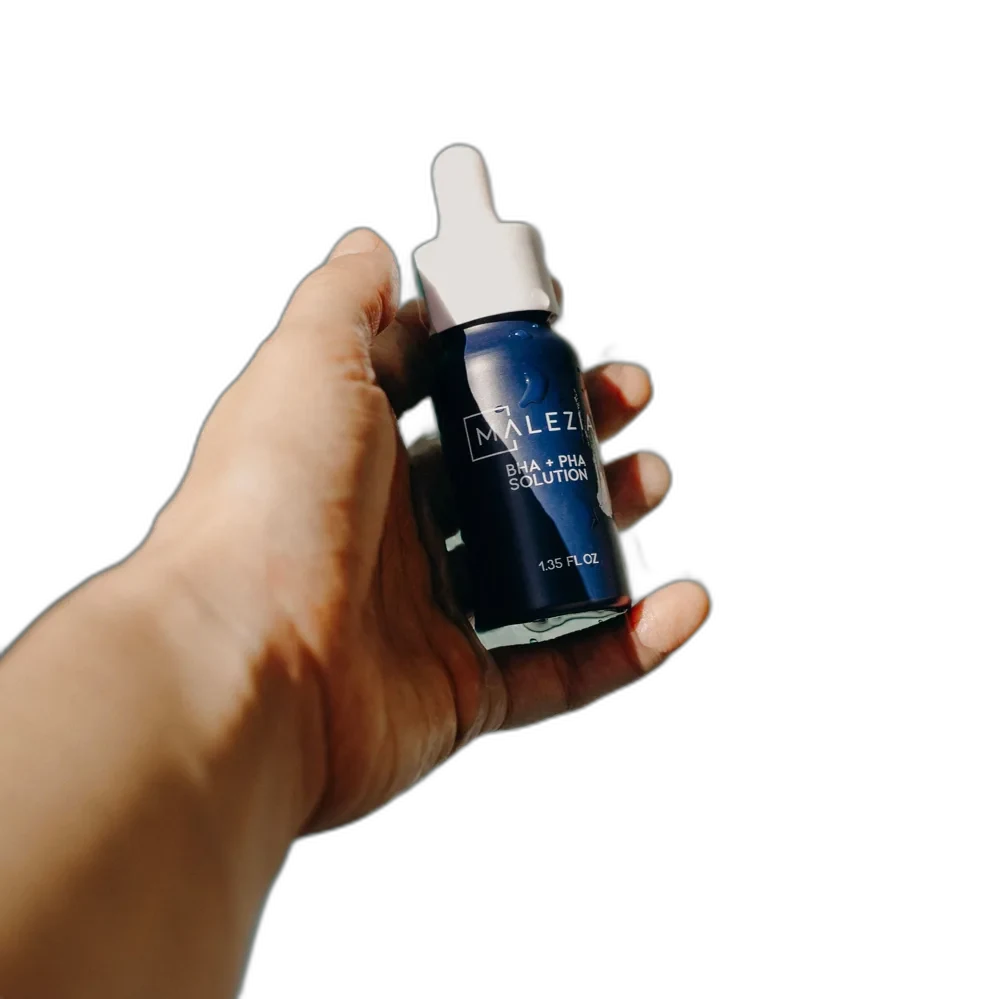
2% BHA Gel Cleanser
Fungal Acne Specialist
 Verified reviewer
Pros & cons.
- +Genuinely fungal-acne safe formulation
- +Full 2% salicylic acid at optimal pH 4.0
- +Gentle glucoside surfactants won't over-strip
- +Panthenol and allantoin soothing built in
- +Fragrance-free, alcohol-free, oil-free
- +Purpose-built by a fungal-acne-focused formulator
- +Reasonable pricing for an indie specialist product
- −Rinse-off format limits BHA contact time
- −Not a replacement for a proper leave-on BHA exfoliant
- −Limited retail availability outside direct site
- −Small indie brand with occasional stock gaps
- −Not pregnancy safe at 2% BHA concentration
The full review.
About Malezia
Indie brand.
Reality
Daniel Sargsyan spent years with small, itchy bumps on his forehead and chest. Every dermatologist he saw diagnosed them as acne, but standard acne treatments made the condition worse. He eventually identified the cause: fungal acne, or Malassezia folliculitis. This yeast overgrowth looks like acne but worsens with most acne treatments because those products contain fatty acids or esters that feed the yeast. Fungal acne is widely undertreated and frequently misdiagnosed, but Sargsyan’s experience was rarer. He could not find commercial skincare products free of ingredients that trigger Malassezia flares. In 2019, he started Malezia to make them. Every product in the line avoids ingredients on the fungal-acne-unsafe list used by dermatology communities and the FungalAcne subreddit for years. This cleanser joined the Malezia lineup in 2023 as a useful expansion of that goal. The logic is simple: 2% salicylic acid is the maximum over-the-counter BHA concentration, and salicylic acid is one of the few conventional acne actives that does not feed Malassezia. Most BHA cleansers use 2% salicylic acid but also include fatty acids, esters, or plant oils that negate the benefit for fungal-acne users. Malezia removes those. The surfactant system uses coco-glucoside and lauryl glucoside—mild sugar-derived cleansers that rinse without fatty acid residues. The pH is buffered to about 4.0, the range where salicylic acid works best. Panthenol and allantoin soothe the skin for twice-daily use. The formula is simple by design. In practice, the cleanser is quiet. It has no tingle, no stinging, and no sensation, which indicates well-buffered acid chemistry rather than low potency. The cleansing feel is mild and the rinse-off is clean. After weeks of consistent use, fungal-acne-prone users typically see small itchy bumps on the forehead, chest, or back clear. Blackheads and traditional comedonal acne also improve because 2% salicylic acid is well-documented for those issues. This is a utility cleanser for a specific problem, not a sensory experience. There are honest limitations. Because this is a rinse-off cleanser, salicylic acid contact time is short. It should not replace a leave-on BHA like Paula’s Choice 2% BHA Liquid for users with significant congestion or hyperkeratinization. Dry and sensitive users should introduce it gradually or use it once daily, as 2% BHA carries a drying risk. Regarding pregnancy, we flag it as not pregnancy-safe because the 2% concentration exceeds levels some clinicians prefer, even if rinse-off use reduces systemic concern. As a small indie operation, Malezia has limited retail availability on its direct site and occasional stock gaps. These caveats do not change the core value. If you have fungal acne, you need products that do not feed Malassezia. Until Malezia, almost no commercial brand built a line around this principle. This cleanser results from someone with the problem taking formulation into their own hands.
Ingredient analysis.
Full INCI list · pH 4
Water, Propanediol, Coco-Glucoside, Glycerin, Lauryl Glucoside, Salicylic Acid, Sodium Citrate, Betaine, Panthenol, Allantoin, Xanthan Gum, Citric Acid, Sodium Hydroxide, Phenoxyethanol, Ethylhexylglycerin
Skin match.
The science.
The Science
Salicylic acid has strong evidence for treating comedonal and inflammatory acne. Peer-reviewed studies in the Journal of the American Academy of Dermatology and similar journals show its keratolytic and comedolytic effects. The maximum 2% over-the-counter concentration improves lesion counts and comedone density over 8-12 weeks of use. Salicylic acid is lipophilic, so it penetrates sebum-filled pores to work within the follicle; this helps treat both acne vulgaris and fungal folliculitis. Research on Malassezia folliculitis notes that salicylic acid is one of the few over-the-counter actives that works against the condition. It likely clears the follicular opening via keratolytic effects and has a mild direct effect on yeast viability. The fungal-acne-safe formulation philosophy of this product follows dermatological literature on Malassezia metabolism. This research shows the yeast uses fatty acids with chain lengths between 11 and 24 carbons as its primary energy source. Consequently, the 'fungal-acne-unsafe' ingredient list—used in specialist communities and based on peer-reviewed Malassezia research—targets fatty acids, fatty alcohols, esters, and polysorbates that break down into carbon sources. The surfactants used here, coco-glucoside and lauryl glucoside, do not feed that metabolic pathway and are among the few commercially viable cleansing agents that meet the criteria. A pH of 4.0 ensures salicylic acid stays in its un-ionized lipophilic form, which penetrates the stratum corneum and pore contents most effectively.
Dermatologist Perspective
Dermatologists recognize fungal folliculitis as distinct from acne vulgaris. Board-certified dermatologists often tell patients with treatment-resistant 'acne' on the forehead, chest, or back to check for Malassezia involvement. For these patients, topical salicylic acid is a common first-line OTC intervention alongside antifungal treatments like ketoconazole shampoo used off-label on the skin. Dermatologists also note that most commercial acne cleansers contain fatty acid esters that worsen fungal folliculitis, making formulations like this one useful. For patients with confirmed Malassezia folliculitis seeking an OTC option between dermatologist visits, clinical discussions increasingly reference Malezia-style products positively.
Where it fits in your routine.
Wet your face, put one or two pumps of gel on your fingertips, and massage it into your skin for 30 to 60 seconds. This increases salicylic acid contact time before you rinse. Use a fungal-acne-safe moisturizer next, such as Malezia's 5% Urea Moisturizer. New users should use it once daily in the evening for the first week, then add morning use if your skin tolerates it. Always use broad-spectrum SPF in the morning because salicylic acid increases sun sensitivity. Stop use if you see significant dryness or irritation.
At $18 for 150ml, this cleanser costs the same as mainstream BHA cleansers. It offers more value for fungal-acne-prone users than larger, cheaper alternatives with unsafe ingredients. For its target audience, the cost-per-use is reasonable and the formulation sophistication is hard to match. Malezia's approach is more cost-efficient than buying a standard BHA cleanser and reformulating your entire routine to avoid triggering ingredients. The lack of larger sizes is a minor value limitation.
Users with confirmed or suspected fungal acne (Malassezia folliculitis) use this, especially if mainstream acne cleansers fail or commercial skincare causes flares. It also works for oily and combination-skin users seeking a mild BHA cleanser without common fragrance and additives.
Avoid the 2% BHA concentration if pregnant. Users with dry or reactive skin should use a gentler, non-acid cleanser. If you do not have fungal acne, cheaper BHA cleansers from CeraVe or Paula's Choice offer similar benefits for ordinary acne.
Product details.
This clear, light gel foams minimally and rinses cleanly without squeakiness.
Essentially no added scent — a faint neutral surfactant smell only.
A simple clear plastic bottle has a minimalist Malezia label — the brand aesthetic is utilitarian and clinical.
First-time users report a gentle cleanse without stinging or tightness. The salicylic acid works without tingling or sensation. This shows the formulation is well-buffered and does not over-strip the skin.
Approximately 2-3 months with twice-daily face use.
12 months
All Year
The backstory.
Malezia was founded in 2019 by Daniel Sargsyan after his own multi-year struggle with fungal acne — a condition caused by Malassezia yeast overgrowth that's often misdiagnosed as regular acne and gets worse with most conventional acne products because they contain fatty acids or esters that feed the yeast. Sargsyan couldn't find commercial products that met the fungal-acne-safe criteria he needed, so he started formulating his own. The brand has grown steadily through the fungal-acne Reddit community and dermatology-nerdy TikTok circles, and this cleanser was added to the line in 2023 to give customers a targeted BHA option within the Malezia ecosystem.
About Malezia
Emerging Brand (2–5 years)Daniel Sargsyan founded Malezia in 2019. As a formulator, he built the brand around fungal-acne-safe skincare. The entire line avoids fatty acids, esters, oils, and other ingredients that feed Malassezia yeast — a niche no other skincare brand fully commits to.
Common myths.
Fungal acne is treated the same way as regular acne.
Fungal acne comes from Malassezia yeast overgrowth. Most acne treatments, including common cleansers, use fatty acids or esters that feed the yeast and worsen the condition. Salicylic acid is one of the few conventional actives that helps instead of hurting, so Malezia built a BHA cleanser.
A 2% BHA cleanser is as effective as a 2% BHA leave-on.
Leave-on BHA products like Paula's Choice 2% BHA Liquid have longer contact time and exfoliate more. A rinse-off BHA supports but does not replace a proper leave-on exfoliant.
FAQ.
Is Malezia 2% BHA Gel Cleanser actually fungal acne safe?
Yes. The Malezia brand avoids ingredients that feed Malassezia yeast. This cleanser uses coco-glucoside and lauryl glucoside surfactants because they do not leave fatty acid residues that trigger fungal acne flares.
Can I use this instead of a leave-on BHA like Paula's Choice 2% BHA?
No. A rinse-off BHA cleanser has limited contact time and exfoliates less than a leave-on product. It acts as a supporting player; if you need deep BHA exfoliation, use a leave-on acid product in your routine.
Will it make my skin dry?
This costs less than most salicylic acid cleansers. Panthenol, allantoin, mild glucoside surfactants, and a pH 4.0 formulation make it tolerable for most users to use twice daily. Dry or sensitive skin should still introduce it gradually.
Is it safe during pregnancy?
We flag it as not pregnancy-safe. 2% salicylic acid is the maximum OTC concentration, and some dermatologists advise pregnant patients to avoid this BHA level to be safe. A gentler cleanser works better during pregnancy.
About Malezia
Yes. A formulator specializing in fungal-acne skincare founded this small indie brand in 2019. It has a devoted following in the fungal acne community. The formulas are transparent, well-documented, and consistently rate highly in that niche.
Pairs Well With
Yes, but as a rinse-off cleanser, it washes away before it interacts with leave-on actives. It pairs well with Malezia's own 5% Urea Moisturizer for a fungal-acne-focused routine.
What the community says.
"Genuinely fungal-acne safe"
"Clears small bumps over a few weeks"
"Gentle surfactants"
"Doesn't over-dry"
"Transparent formulation"
"Limited US retail availability"
"Small brand with occasional stock issues"
"Gel consistency takes getting used to"
People also looked at.