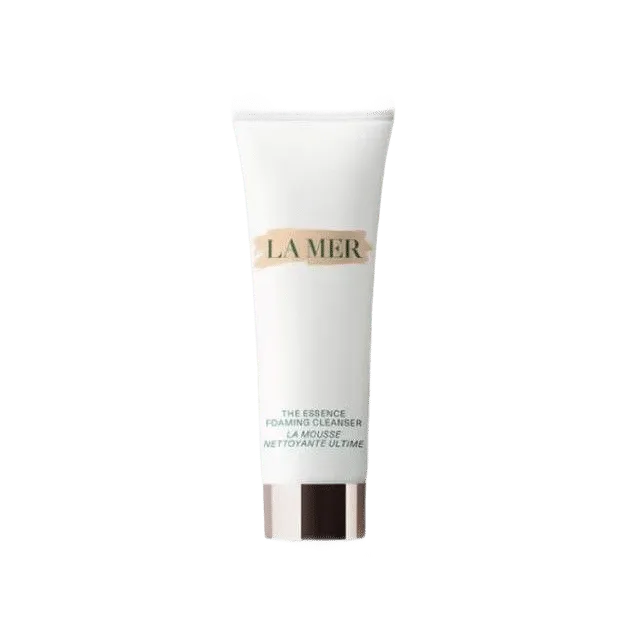
The Cleansing Foam
Luxury Status Symbol
 Verified reviewer
Pros & cons.
- +Exceptionally rich, pillowy foam with a satisfying cleansing ritual quality
- +Unique mineral powder blend (quartz, nephrite, pearl) not found in other cleansers
- +Sulfate-free surfactant system that avoids the harshest foaming agents
- +Temporary brightening effect from pearl powder visible immediately after rinsing
- +Contains hydrating buffers like sodium hyaluronate and trehalose to offset stripping
- +Thorough cleansing without the squeaky-clean aftermath of many foam cleansers
- +Elegant, minimalist packaging consistent with luxury bathroom aesthetics
- −Contains MI/MCI preservatives — well-documented contact allergens restricted in EU leave-on products
- −Extremely overpriced at $115 for a rinse-off product with a basic fatty acid soap base
- −Added fragrance and eucalyptus oil make this unsuitable for sensitive or reactive skin
- −Beneficial actives like Miracle Broth have minimal efficacy in a 30-60 second rinse-off format
- −Multiple synthetic dyes add no skin benefit and increase irritation potential
- −Can leave skin feeling tight and dehydrated, especially for dry skin types
The full review.
Dr. Max Huber spent twelve years fermenting sea kelp in his California laboratory, running over six thousand experiments to create what would become one of skincare’s most mythologized ingredients. He was an aerospace physicist recovering from severe burns after a lab accident, and the Miracle Broth he developed became the foundation of La Mer — a brand that has commanded reverence and premium prices for over six decades. When you squeeze The Cleansing Foam from its elegant white tube, you can almost feel the weight of that story in your hands.
The experience begins promisingly. A small amount of the dense, creamy paste transforms into an extravagantly rich lather when worked between wet palms. The foam is pillowy and abundant, with a faintly gritty texture from the quartz, nephrite, and pearl powders — mineral inclusions you genuinely won’t find in any other cleanser. There’s a fresh, herbal quality to the scent, eucalyptus-forward with marine undertones, and a subtle tingle that signals the formula is doing something on the skin’s surface. Rinsing reveals skin that feels genuinely clean and looks temporarily brighter, likely owing to the pearl powder’s light-reflecting properties.
But here is where we need to talk about what’s actually in the bottle, because the ingredient list tells a more complicated story than the marketing. The cleansing base is built on myristic acid, behenic acid, palmitic acid, and potassium hydroxide — this is, at its core, a saponified fatty acid cleanser. It’s a perfectly functional surfactant system, but it’s the same basic chemistry you’ll find in foam cleansers at a fraction of the price. The addition of sodium methyl cocoyl taurate as a secondary surfactant is a nice touch, as it’s one of the gentler foaming agents available, but it can’t fully counterbalance the stripping potential of the primary soap base.
The Miracle Broth presence here manifests as algae extract and Macrocystis pyrifera kelp protein. Sea kelp is genuinely interesting from a research perspective — a 2023 study in the Journal of Cosmetic Dermatology found that Macrocystis pyrifera ferment demonstrated collagen-enhancing properties in ex vivo skin models. But context matters enormously: those findings apply to leave-on formulations with meaningful skin contact time. In a cleanser that sits on your face for thirty to sixty seconds before being rinsed down the drain, even the most potent actives have limited opportunity to deliver benefits. The sodium hyaluronate, caffeine, trehalose, and aloe are all welcome additions that soften the cleansing experience, but they face the same rinse-off limitation.
Now, the elephant in the room. Scroll to the end of the ingredient list and you’ll find methylchloroisothiazolinone and methylisothiazolinone — commonly abbreviated as MCI/MI. These are among the most well-documented contact allergens in cosmetic dermatology. A 2022 study published in JAMA Dermatology tracked the prevalence of MCI/MI contact allergy across North America and Europe, finding positivity rates as high as 10.8% among patch-tested patients. The EU has already restricted MI in leave-on cosmetic products due to the sensitization risk. While rinse-off products are considered lower risk, finding these preservatives in a one-hundred-and-fifteen-dollar cleanser from a brand that positions itself as the pinnacle of luxury skincare is, to put it diplomatically, a choice.
The formula also contains added fragrance, eucalyptus leaf oil, linalool, and limonene — a full complement of potential irritants that makes this cleanser unsuitable for anyone with sensitive, reactive, or compromised skin. For a brand with La Mer’s resources and price point, fragrance-free and MI/MCI-free formulations should be the baseline expectation, not a premium upgrade.
On the texture and experience front, the cleanser does deliver something that feels distinctly luxurious. The mineral powder blend creates a unique sensory quality, and the foam itself is denser and more satisfying than most foaming cleansers produce. If you have normal to oily skin with no sensitization concerns, the actual cleansing performance is good — thorough without being aggressive, leaving skin that feels clean without the squeaky aftermath that plagues many foam formulas.
The value proposition, however, is nearly impossible to defend. At $115 for 125 milliliters, you’re paying roughly $27 per ounce for a rinse-off product whose beneficial actives have minimal time to work, whose cleansing base is chemically unremarkable, and whose preservative system would raise eyebrows in a product at any price point. La Mer’s brand story is extraordinary. Dr. Huber’s journey from lab accident to sea kelp fermentation is genuinely compelling. But a great origin story doesn’t change what happens when water meets fatty acid meets potassium hydroxide on your face for sixty seconds.
The Cleansing Foam is a product that works. It cleans well, feels fancy, and looks beautiful on a bathroom shelf. But it asks you to pay luxury prices while delivering a formula that doesn’t match the mythology — and includes ingredients that many dermatologists would flag regardless of the brand name on the tube.
Ingredient analysis.
Full INCI list
Declustered Water/Aqua/Eau De-Structuree, Myristic Acid, Glycerin, Behenic Acid, Palmitic Acid, Sodium Methyl Cocoyl Taurate, Potassium Hydroxide, Lauric Acid, Stearic Acid, Algae (Seaweed) Extract, Sesamum Indicum (Sesame) Seed Oil, Medicago Sativa (Alfalfa) Seed Powder, Helianthus Annuus (Sunflower) Seedcake, Prunus Amygdalus Dulcis (Sweet Almond) Seed Meal, Eucalyptus Globulus (Eucalyptus) Leaf Oil, Sodium Gluconate, Copper Gluconate, Calcium Gluconate, Magnesium Gluconate, Zinc Gluconate, Tocopheryl Succinate, Niacin, Sesamum Indicum (Sesame) Seed Powder, Quartz Powder, Nephrite Powder, Pearl Powder, Caffeine, Sea Salt/Maris Sal/Sel Marin, Humic Acids, Sodium Hyaluronate, Sucrose, Tourmaline, Macrocystis Pyrifera (Kelp) Protein, Polyquaternium-51, Aloe Barbadensis Leaf Water, Trehalose, Cellulose, Butylene Glycol, Sodium Coco Pg-Dimonium Chloride Phosphate, Sodium Bicarbonate, Sodium PCA, PEG-3 Distearate, Urea, Fragrance (Parfum), Disodium EDTA, Linalool, Limonene, Phenoxyethanol, Methylchloroisothiazolinone, Methylisothiazolinone, Yellow 5 (CI 19140), Yellow 6 (CI 15985), Blue 1 (CI 42090), Green 5 (CI 61570)
Skin match.
The science.
The Science
La Mer's formulation centers on the Miracle Broth — a fermented blend based on Macrocystis pyrifera, or giant sea kelp. A 2023 study in the Journal of Cosmetic Dermatology by Gold et al. tested Macrocystis pyrifera ferment-containing creams. The study shows Macrocystis pyrifera ferment enhances collagen type I in ex vivo skin models and provides anti-inflammatory and skin-rejuvenation properties. These results apply to leave-on formulations with long skin contact, not rinse-off products.
The surfactant system is also notable. Myristic acid saponified with potassium hydroxide creates potassium myristate — a soap. This removes oil and debris but has a higher pH than the skin's natural acid mantle, which can temporarily disrupt barrier function. The formula uses sodium methyl cocoyl taurate as a co-surfactant to increase gentleness; taurate-based surfactants are milder than sulfates and traditional soaps.
The MCI/MI preservative system is the most scientifically concerning element. A 2022 analysis in JAMA Dermatology tracked isothiazolinone contact allergy trends globally. It found MCI/MI positivity rates in patch-tested patients hit 10.8% in North America by 2017-2018. Rinse-off products have lower sensitization risk than leave-on formulations, but the European Commission's Scientific Committee on Consumer Safety notes even brief exposure can trigger allergic contact dermatitis in sensitized individuals.
The mineral powder complex — quartz, nephrite, tourmaline, and pearl — is interesting for cosmetic chemistry. Pearl powder has conchiolin protein and trace minerals like calcium and magnesium. Traditional Chinese medicine has used pearl powder topically for centuries. While modern peer-reviewed evidence for skin benefits is limited, pearl powder has mild light-diffusing properties that create an immediate visual brightening effect.
References
- Macrocystis pyrifera ferment‐containing creams for optimizing facial skin rejuvenation — Journal of Cosmetic Dermatology (2023)
- Trends in the Prevalence of Methylchloroisothiazolinone/Methylisothiazolinone Contact Allergy in North America and Europe — JAMA Dermatology (2022)
Dermatologist Perspective
Board-certified dermatologists usually say cleansers deliver few active ingredients because contact time is too short for absorption. The presence of methylchloroisothiazolinone and methylisothiazolinone concerns dermatologists, especially allergists and contact dermatitis specialists, because these are frequent preservative allergens in patch testing. Dermatologists typically tell patients with contact dermatitis, eczema, or sensitive skin to avoid MI/MCI-containing products entirely. For healthy, non-reactive skin, the cleanser works but offers no dermatological advantage over well-formulated drugstore alternatives.
Where it fits in your routine.
Wet your face with lukewarm water. Pump a small amount (about the size of a cherry) into your palms and lather. Massage the foam in circular motions across your face and neck for 30-60 seconds, avoiding the eye area. Rinse thoroughly with lukewarm water and pat dry. Use morning and evening, or once daily if the formula feels too stripping. Follow immediately with a hydrating toner or serum to replenish moisture.
At $115 for 4.2 ounces, this is one of the most expensive foaming cleansers on the market. A 1-ounce travel size is available for $35, but neither size offers compelling value. The cleansing base is a standard saponified fatty acid system — the same chemistry found in cleansers costing $8-15. While the Miracle Broth, mineral powders, and supporting actives add formulation complexity, their benefits in a rinse-off format are minimal. The premium here is almost entirely brand equity, packaging, and the sensory experience. For the price of one tube, you could purchase several months' worth of a well-formulated, fragrance-free, MI/MCI-free cleanser and invest the remainder in leave-on actives where your money actually works.
La Mer fans with normal to oily, non-reactive skin who prefer the luxury ritual and sensory experience over ingredient-per-dollar efficiency will find this cleanser unique. It targets brand loyalists, not ingredient purists.
People with sensitive, dry, eczema-prone, or rosacea-affected skin should avoid this cleanser. It contains MI/MCI preservatives, fragrance, and eucalyptus oil. If you prioritize ingredient quality and value for money over brand prestige, spend your budget elsewhere.
Product details.
A fresh, light herbal fragrance uses eucalyptus and marine notes. It smells like La Mer, but the scent is noticeable and may bother fragrance-sensitive individuals.
A matte white tube uses La Mer's minimalist branding and a screw-top cap. It is functional but unremarkable for the price.
The first use produces a thick lather and a distinct tingle from the eucalyptus oil. Skin feels clean and looks brighter immediately after rinsing. Some users feel tightness within minutes, which signals a need for quick hydration. No adjustment period is expected.
2-3 months with once-daily use
12 months
All Year
The backstory.
Born from aerospace physicist Dr. Max Huber's quest to heal his own burns after a lab accident, La Mer's Miracle Broth became the foundation of one of luxury skincare's most storied brands. The Cleansing Foam extends the Miracle Broth concept into a daily cleanser, aiming to infuse even the most transient step of a routine with La Mer's marine fermentation technology.
About La Mer
Legacy Brand (20+ years)La Mer was created in 1965 by aerospace physicist Dr. Max Huber after a lab accident, following 12 years and over 6,000 experiments with sea kelp fermentation. Acquired by Estée Lauder in 1995, the brand commands luxury pricing but its proprietary Miracle Broth has limited independent clinical validation.
Common myths.
The Miracle Broth in this cleanser provides the same benefits as in La Mer's leave-on products.
Active ingredients have little time to absorb in a rinse-off cleanser with 30-60 second skin contact time. The Miracle Broth is present, but it works less than a cream or serum that sits on skin for hours.
Expensive cleansers are inherently better for your skin than drugstore options.
A cleanser must remove dirt and oil without disrupting the skin barrier. The surfactant base (myristic acid, potassium hydroxide) uses a standard soap-type system. The MI/MCI preservatives are problematic at any price point.
FAQ.
Is La Mer The Cleansing Foam worth $115?
For most people, no. While the Miracle Broth and mineral powders are unique, the base formula is a standard fatty acid soap system, and the inclusion of MI/MCI preservatives — known contact allergens that have been restricted in the EU for leave-on products — is concerning at any price point, let alone a luxury one. The premium you're paying is largely for the brand experience and packaging.
Does La Mer The Cleansing Foam contain any irritating ingredients?
Yes. This formula contains methylchloroisothiazolinone and methylisothiazolinone (MI/MCI), two of the most common causes of preservative-related contact allergies. It also contains added fragrance, eucalyptus leaf oil, linalool, and limonene — all potential irritants. People with sensitive or reactive skin should use caution.
Can I use La Mer The Cleansing Foam if I have dry skin?
This cleanser's fatty acid soap base and heavy foam strip dry skin. Multiple reviewers report tightness and dryness after use. Dry skin types work better with a cream or oil-based cleanser, even within La Mer's own product line.
What is the Miracle Broth in La Mer products?
Miracle Broth is La Mer's proprietary ingredient created through a bio-fermentation process involving giant sea kelp (Macrocystis pyrifera), vitamins, minerals, and other marine extracts. Developed by Dr. Max Huber over 12 years and 6,000 experiments, it's the signature ingredient across all La Mer products. However, in a rinse-off cleanser, skin contact time is too brief for meaningful absorption of these actives.
Is La Mer The Cleansing Foam good for acne-prone skin?
The thorough cleansing works for acne-prone skin, but the formula contains myristic acid and lauric acid, which are comedogenic. The fragrance and essential oils also trigger breakouts in reactive skin. Other targeted, less irritating options exist for acne-prone skin.
What is Declustered Water in La Mer products?
Declustered Water is La Mer's proprietary water treatment process. The brand claims this process breaks water molecule clusters into smaller groups to improve ingredient penetration. No independent, peer-reviewed research confirms that Declustered Water provides meaningful skin benefits over standard purified water.
Has La Mer The Cleansing Foam been discontinued?
La Mer has introduced The Essence Foaming Cleanser as a newer formulation, which appears to be replacing The Cleansing Foam at major retailers. However, the original Cleansing Foam is still available through some retailers while supplies last.
Community
What the community says.
"Luxurious foaming texture"
"Pleasant scent"
"Leaves skin feeling clean and soft"
"Elegant packaging"
"Brightening effect from pearl powder"
"Extremely high price for a cleanser"
"Can leave skin feeling tight and dry"
"Contains controversial MI/MCI preservatives"
"Not suitable for sensitive skin despite luxury positioning"
"Small amount of product for the price"
People also looked at.