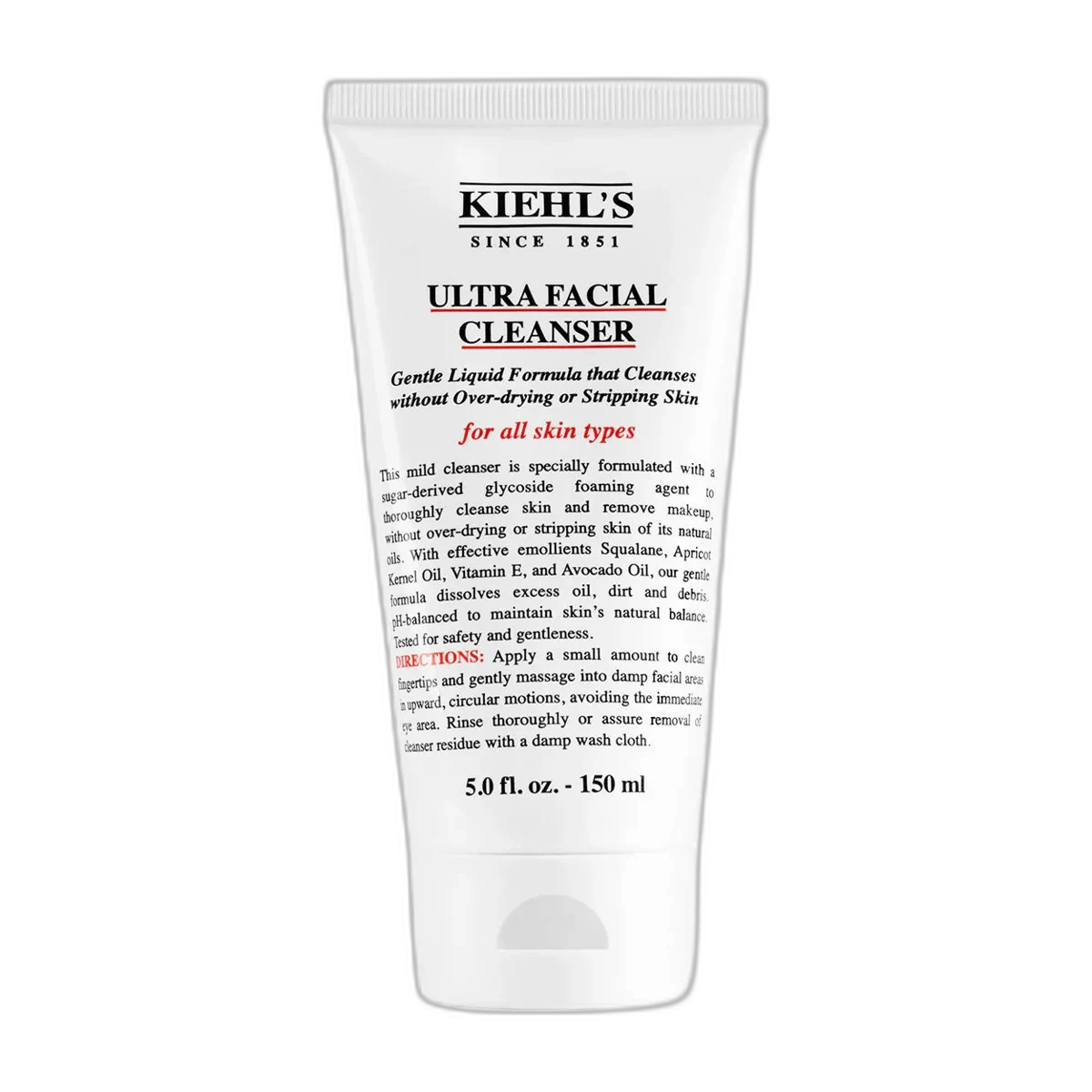
Ultra Facial Cleanser
Everyday Apothecary Essential
 Verified reviewer
Pros & cons.
- +Tri-oil system prevents the tight, stripped feeling common to foaming cleansers
- +Fragrance-free formula suitable for morning and evening use
- +Rinses completely clean without film or residue
- +Practical squeeze tube packaging in two convenient sizes
- +Modest foaming action that satisfies without over-stripping
- +3-4 month lifespan makes the per-use cost reasonable
- −Primary surfactant is sodium laureth sulfate, which may irritate sensitive or compromised skin
- −Contains methylparaben and propylparaben as preservatives
- −Not effective at removing heavy makeup or waterproof sunscreen alone
- −Ascorbyl glucoside inclusion is largely inconsequential in a rinse-off product
- −Premium pricing for a relatively basic cleanser formula
The full review.
Some products have elaborate origin stories. They come from French thermal springs, ancient Korean rituals, or celebrity founders who just discovered hyaluronic acid. The Kiehl’s Ultra Facial Cleanser has no such story. It exists because a 170-year-old apothecary brand needed a cleanser to match its Ultra Facial Cream. It does one thing well: cleans your face without causing post-wash regret.
That sounds easy, but anyone who has used foaming cleansers that leave skin tight and dry knows it is difficult. Foaming cleansers use surfactants to lather. Most surfactants remove everything—dirt, oil, and makeup—along with the natural lipids your skin needs. The Kiehl’s Ultra Facial Cleanser uses a sophisticated approach for a cleanser: a tri-oil conditioning system of squalane, avocado oil, and apricot kernel oil that deposits a thin layer of emollience during wash-off.
The result is a cleanser that foams without typical foam consequences. You get the lather, the feeling of cleanliness, and clear rinsing without a tight, stripped feeling. It is the cleanser equivalent of having your cake and eating it too, if the cake were made of squalane and had no scent.
It smells like nothing. Kiehl’s kept this formula fragrance-free, reflecting the brand’s pharmaceutical heritage rather than its recent use of essential oils. This is right for a morning cleanser; nobody needs a botanical garden at 7 AM before coffee.
The texture is a clear, lightweight gel that needs water activation. It lacks the thick consistency of cream cleansers or the jelly-like bounce of newer gel formulations. It is a straightforward gel that turns into modest foam when you add water and work it between your palms. The lather is fine-textured rather than dense—gentle bubbles, not shaving cream—and rinses clean without film or residue.
Some ingredients may cause pause. The primary surfactant is sodium laureth sulfate. Clean beauty advocates demonize it, while cosmetic chemists defend it. The reality is in between. SLES is a gentler cousin of SLS (sodium lauryl sulfate) because its larger molecules are less penetrating and less irritating. It is fine for most skin types in a rinse-off product. However, for those with eczema, rosacea, or compromised barriers, it can cause irritation, and gentler surfactant options exist.
The preservative system includes methylparaben and propylparaben. These cause consumer anxiety despite extensive safety data at cosmetic concentrations. The Cosmetic Ingredient Review panel—an independent expert panel—has repeatedly affirmed their safety. Consumer perception matters, and many brands use alternative preservative systems. Kiehl’s offers paraben-free options in other lines.
The vitamin C derivative—ascorbyl glucoside—is at the end of the ingredient list. In a rinse-off product with brief skin contact, its antioxidant contribution is modest. It is a nice-to-have, not a reason to buy. The real value lies in the conditioning oils that make daily cleansing pleasant.
As a daily driver, the Kiehl’s Ultra Facial Cleanser excels at mundane skincare. It removes overnight oil in the morning. It cleans daily grime in the evening, though it should not remove heavy makeup or waterproof sunscreen—pair it with an oil cleanser for that. It works day after day without causing irritation, stripping, or requiring thought. This is what a good cleanser should do.
At $26 for 5 ounces, it is not a budget pick, but the price is not outrageous. A bottle lasts 3-4 months, making the monthly cost roughly the price of two coffees. The 2.5-ounce travel size at $16 is handy for trips but has worse per-ounce value.
This product will not transform your skin. It will not brighten, resurface, or anti-age. It is a cleanser that performs cleanser tasks with quiet competence. In a market of cleansers promising to be serums, this product simply does its job and gets out of the way.
Ingredient analysis.
Full INCI list
Water, Sodium Laureth Sulfate, Decyl Glucoside, Glycerin, Cocamidopropyl Betaine, Disodium Cocoamphodiacetate, Acrylates Copolymer, PEG-200 Hydrogenated Glyceryl Palmate, Lauryl Glucoside, Sodium Chloride, Pentylene Glycol, Triethanolamine, Phenoxyethanol, PEG-7 Glyceryl Cocoate, Ethylhexylglycerin, Distearyl Ether, Behenyl Alcohol, Methylparaben, Laureth-2, Citric Acid, Disodium EDTA, Propylparaben, Polyaminopropyl Biguanide, Sodium Methylparaben, Squalane, Prunus Amygdalus Dulcis (Sweet Almond) Oil, Prunus Armeniaca (Apricot) Kernel Oil, Tocopherol, Ascorbyl Glucoside, Persea Gratissima (Avocado) Oil
Skin match.
The science.
The Science
This cleanser uses lipid replenishment to minimize surfactant system irritation. Squalane, a saturated hydrocarbon from squalene, mimics skin sebum and integrates into the stratum corneum lipid matrix. A 2009 study in the International Journal of Cosmetic Science shows squalane application improves skin barrier function and reduces transepidermal water loss.
The surfactant blend reduces irritation: sodium laureth sulfate (SLES) has larger ethoxylated molecules than sodium lauryl sulfate (SLS), so it penetrates the skin less and denatures fewer proteins. The co-surfactants — decyl glucoside, cocamidopropyl betaine, and disodium cocoamphodiacetate — are all mild to very mild surfactants. Amphoteric surfactants (cocamidopropyl betaine, disodium cocoamphodiacetate) buffer SLES irritation through micelle interaction, creating mixed micelles with lower critical micelle concentrations and less monomer activity at the skin surface.
Glycerin is fourth in the formula; it acts as a humectant to retain moisture during cleansing. Research in the British Journal of Dermatology shows glycerin improves skin hydration and barrier repair, even during brief-contact cleansing.
Dermatologist Perspective
Dermatologists often recommend the Kiehl's Ultra Facial Cleanser as a reliable, simple daily cleanser. Board-certified dermatologists note the conditioning oil system is a thoughtful addition to a foaming cleanser because it helps maintain barrier integrity during cleansing — a factor many cleanser selections overlook. However, dermatologists treating eczema or rosacea patients typically suggest sulfate-free alternatives, since even milder SLES can exacerbate these conditions. For most patients with normal to combination skin, this cleanser balances cleansing efficacy and gentleness.
Where it fits in your routine.
Wet your face with lukewarm water. Squeeze a nickel-sized amount into your palms and lather. Massage the product onto your face and neck in circular motions for 30-60 seconds. Avoid the eye area. Rinse with lukewarm water and pat dry. Use morning and evening. For makeup removal, use an oil-based cleanser or cleansing balm first as part of a double-cleanse routine.
At $26 for 5 fl oz, this cleanser is accessible-premium—costing more than drugstore brands but less than luxury cleansers. The value comes from the conditioning oil blend and Kiehl's formulation heritage, not exotic or trending ingredients. Using it twice daily lasts 3-4 months, costing about $7-9 per month. The 2.5 oz size at $16 works for travel but has worse per-ounce economics. For a brand with 170+ years of apothecary heritage, the price is fair.
This fragrance-free daily cleanser works for anyone seeking to protect their skin's moisture balance. It suits combination skin types who want a foaming cleanser that does not dry the skin, and people building a Kiehl's-centered routine with the Ultra Facial Cream.
People with very sensitive, eczema-prone, or rosacea-affected skin need sulfate-free alternatives. Consumers seeking paraben-free formulas should also look elsewhere. Anyone expecting transformative skincare benefits from their cleanser — brightening, anti-aging, acne treatment — should use leave-on products for those results instead.
Product details.
All Year
The backstory.
Part of Kiehl's Ultra Facial line, which has become the brand's most recognized collection. The cleanser was developed to complement the iconic Ultra Facial Cream, sharing the same philosophy of reliable, no-nonsense hydration. It represents Kiehl's apothecary approach — simple formulation, effective ingredients, minimal marketing theatrics.
About Kiehl's
Legacy Brand (20+ years)Kiehl's started as a New York City apothecary in 1851 and has formulated skincare for over 170 years. L'Oréal acquired the brand in 2000. In 2005, the brand launched its Dermatologist Solutions line, built with an advisory panel of leading dermatologists. Its formulations use pharmaceutical heritage and modern clinical research.
Common myths.
Foaming cleansers strip the skin and damage the moisture barrier.
Squalane, avocado oil, and apricot kernel oil in this formula counteract the surfactant system's stripping potential. These oils deposit a thin conditioning layer during cleansing, so the foam cleanses without removing moisture.
Parabens in skincare are dangerous and users avoid them.
This formula uses methylparaben and propylparaben as preservatives at regulatory-approved concentrations. Decades of safety data support these levels. The Cosmetic Ingredient Review panel and the European Commission's Scientific Committee on Consumer Safety both affirm their safety in cosmetic products at concentrations up to 0.4% for individual parabens.
FAQ.
Is Kiehl's Ultra Facial Cleanser good for sensitive skin?
The formula works for most skin types. The tri-oil system (squalane, avocado, apricot kernel) prevents stripping. But sodium laureth sulfate is the primary surfactant, which irritates very sensitive or eczema-prone skin. Reactive skin users may prefer the newer Ultra Facial Barrier-Hydrating Cleanser.
Does Kiehl's Ultra Facial Cleanser remove makeup?
It removes light makeup, dirt, and excess oil. It does not break down heavy foundation, waterproof mascara, or long-wear products. For thorough makeup removal, use it as the second step after an oil-based cleanser or balm in a double-cleanse routine.
Why does Kiehl's Ultra Facial Cleanser contain parabens?
Methylparaben and propylparaben act as preservatives to stop microbial contamination and extend shelf life. They use concentrations well within the Cosmetic Ingredient Review panel's regulatory safety limits. Some consumers prefer paraben-free products, but decades of safety data support these ingredients in cosmetics.
Can I use Kiehl's Ultra Facial Cleanser with retinol?
Yes — its gentle, conditioning formula works as a cleanser in a retinol routine. The squalane and plant oils help maintain barrier integrity, which matters when using irritating actives like retinol. Cleanse gently, pat dry, and wait a few minutes before applying retinol.
Is Kiehl's Ultra Facial Cleanser worth the price?
At $26 for 5 oz, the price exceeds drugstore cleansers, but the squalane and plant oil blend conditions skin during washing. The 5 oz tube lasts 3-4 months with twice-daily use, making the monthly cost about $7-9. Value depends on how much you prioritize a cleanser that protects your barrier while cleansing. ---
What the community says.
"Doesn't strip or dry out the skin despite foaming lather"
"Works well for combination and sensitive skin types"
"Fragrance-free and gentle enough for daily use"
"A little product goes a long way"
"Contains sodium laureth sulfate which some users prefer to avoid"
"Contains parabens as preservatives"
"Some find it too drying for very dry or eczema-prone skin"
"Price is high for a basic cleanser formula"
People also looked at.