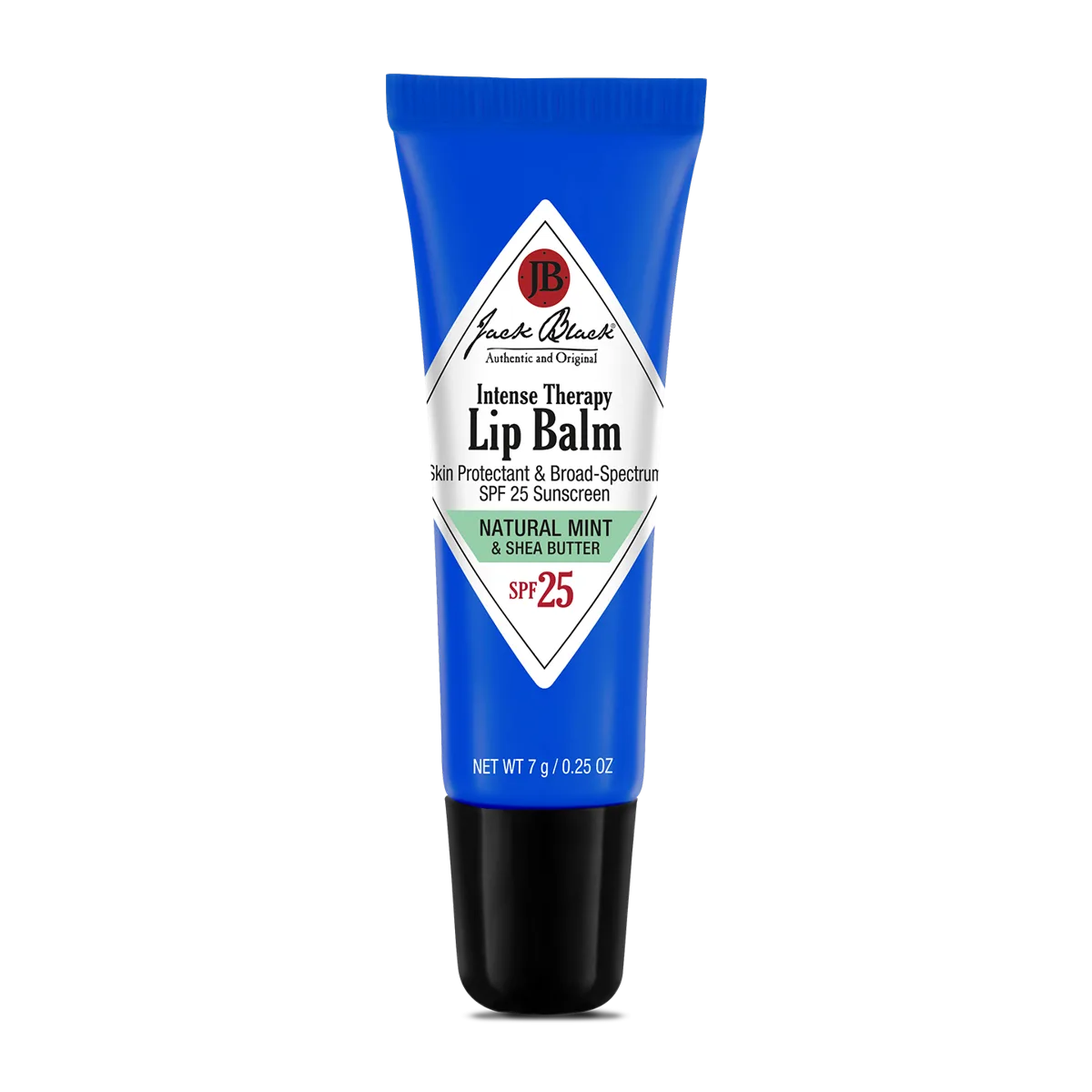
Intense Therapy Lip Balm SPF 25
Lip Care Holy Grail
 Verified reviewer
Pros & cons.
- +Petrolatum at 40.2% provides medical-grade occlusive protection for genuine lip repair
- +SPF 25 with UVA/UVB coverage fills a critical gap in most people's sun protection
- +Exceptional texture — rich enough to heal, light enough to wear comfortably all day
- +Multiple flavor variants share the same effective base formula for consistent quality
- +Shea butter, cocoa butter, and avocado oil provide deep emollient conditioning
- +Allure Best of Beauty winner with massive crossover appeal across demographics
- +Excellent value at $10 with 2-3 months of daily use per tube
- −Contains lanolin which affects the approximately 1-6% of people with wool sensitivity
- −Octinoxate raises environmental and hormonal disruption concerns for some consumers
- −Flavor compounds are not individually disclosed on the ingredient list
- −Not vegan due to beeswax, lanolin, and cocoa butter ingredients
- −Squeeze tube format slightly less convenient than twist-up stick applicators
The full review.
There’s a particular kind of product success that no marketing team can engineer: the moment a product transcends its intended audience and becomes genuinely universal. Jack Black’s Intense Therapy Lip Balm was designed for men who’d never owned a lip product fancier than a gas station tube of ChapStick. What happened instead is that it became a quiet obsession across gender lines, showing up in the pockets of dermatologists, beauty editors, ski instructors, and anyone who’d ever experienced the particular misery of cracked winter lips.
The secret isn’t mysterious once you look at the formula. This is a petrolatum-forward lip treatment — not a cosmetic lip gloss pretending to be therapy. Petrolatum sits at the top of the active ingredient list at 40.2%, which is a medically significant concentration. This isn’t decorative; it’s the same occlusive approach used in prescription-strength barrier repair products. Petrolatum reduces transepidermal water loss more effectively than any other commonly available ingredient, and at this concentration, it turns the lip balm into a genuine healing treatment for damaged lip tissue.
The supporting cast is equally purposeful. Shea butter and cocoa butter provide emollient conditioning that softens cracked tissue, while avocado oil delivers oleic acid and plant sterols that penetrate beneath the surface layer. Lanolin — which will be a dealbreaker for the small percentage of people who are sensitive to it — adds a woolwax-based emollience that’s been used in lip care for over a century because nothing quite replicates its ability to soften without feeling greasy. Beeswax and ozokerite provide structural integrity so the balm stays put rather than sliding off your lips the moment you step outside.
The SPF 25 protection is where this lip balm shifts from excellent to genuinely important. Lip skin is thinner than facial skin, contains very little melanin, and is chronically underprotected. UV exposure on the lips isn’t just a cosmetic concern — it’s associated with actinic cheilitis and increased cold sore outbreaks triggered by UV radiation. Despite this, the vast majority of premium lip balms skip SPF entirely. Jack Black’s decision to include avobenzone at 3% and octinoxate at 7.5% addresses a real gap in most people’s sun protection routine. It’s not the highest SPF you can find in a lip product, but it’s meaningful protection that most people wouldn’t otherwise have.
The texture is where Jack Black earned its cult following. This balm found the exact sweet spot that lip care consumers spend years searching for: rich enough to feel therapeutic, light enough to not feel like you’re wearing something. It glides on with a buttery smoothness, sits on the lips with a subtle natural sheen rather than a glossy finish, and doesn’t migrate or feel heavy. The original Natural Mint variant adds a brief cooling sensation that signals the product is working without being medicinal. It’s the kind of texture that makes people immediately think ‘I need to tell someone about this’ — which is exactly how a men’s grooming product ended up with 3,700+ reviews on Sephora.
The multiple flavor variants — Natural Mint & Shea Butter, Grapefruit & Ginger, Black Tea & Blackberry, Lemon & Shea Butter — share the same base formula, so the therapeutic performance is identical regardless of which tube you grab. This is a smart approach: it allows personalization without the quality inconsistency that sometimes plagues flavored lip products. The ‘Flavor’ listed on the ingredient list is unspecified, which is the one transparency gap in an otherwise straightforward formulation.
There are two genuine limitations worth noting. First, the formula contains lanolin, which is an exceptional emollient but also a relatively common allergen — estimates range from 1-6% of the general population having some degree of lanolin sensitivity. If you’ve had reactions to wool or lanolin-containing cosmetics, this isn’t the lip balm for you. Second, the octinoxate in the SPF system has faced environmental concerns regarding coral reef impact and some debate about hormonal effects, though the relevance of these concerns for a lip product applied in small amounts is minimal compared to full-body sunscreen.
At $10 for a 0.25 oz tube that lasts two to three months with regular use, the value proposition is excellent. It’s more expensive than drugstore lip balms, but the performance gap is genuine — this isn’t a branding premium on a basic formula. The therapeutic petrolatum concentration, the SPF protection, the quality of the emollient blend, and the award-winning texture all justify the price. For a product that you’ll use multiple times daily and that genuinely improves the condition of your lips, $10 is an easy ask.
The final word on Jack Black’s Intense Therapy Lip Balm is that it earned its reputation the hard way — not through celebrity endorsement or viral marketing, but through the accumulated word-of-mouth of millions of people who tried it and couldn’t shut up about it. In a category flooded with products that promise therapy and deliver cosmetics, this one actually treats your lips like they need help.
Ingredient analysis.
Full INCI list
Active Ingredients: Avobenzone 3%, Octinoxate 7.5%, Petrolatum 40.2%. Inactive Ingredients: Beeswax, Butyrospermum Parkii (Shea) Butter, C18-38 Alkyl Hydroxystearoyl Stearate, Camellia Sinensis (Green Tea) Leaf Extract, Cyclohexasiloxane, Cyclopentasiloxane, Flavor, Lanolin, Microcrystalline Wax, Ozokerite, Persea Gratissima (Avocado) Oil, Polyglyceryl-3 Beeswax, Theobroma Cacao (Cocoa) Seed Butter, Tocopheryl Acetate
Skin match.
The science.
The Science
This formula contains 40.2% petrolatum, an ingredient decades of dermatological research call the gold standard occlusive agent. A 1972 study in the Journal of the Society of Cosmetic Chemists by Laden and Felger shows petrolatum reduces transepidermal water loss (TEWL) by up to 99% — a level no other widely available ingredient reaches. This matters for lip tissue, which lacks sebaceous glands and cannot produce its own protective lipid layer.
The SPF component addresses a clinical vulnerability. A 2017 study in the Journal of the American Academy of Dermatology found the lower lip is a common site for actinic keratosis and squamous cell carcinoma of the face, yet people often neglect lip sun protection. The avobenzone (3%) and octinoxate (7.5%) combination provides broad-spectrum protection for both UVA (320-400nm) and UVB (280-320nm) wavelengths.
Shea butter (Butyrospermum parkii) provides a mixture of fatty acids — mostly oleic (40-60%), stearic (20-50%), and linoleic (3-11%) acids — and triterpene alcohols with anti-inflammatory properties. Research in the Journal of Oleo Science (2010) shows shea butter's triterpene fraction has anti-edema effects similar to some pharmaceutical anti-inflammatory agents, supporting its use in wound and burn care.
Avocado oil (Persea gratissima) adds a lipid profile of oleic acid and phytosterols. Studies in the Journal of the American Oil Chemists' Society show avocado oil promotes collagen synthesis in dermal connective tissue, which helps repair chronically damaged lip tissue with consistent use.
References
- Transepidermal water loss reduction by petrolatum — Journal of the Society of Cosmetic Chemists (1972)
- Lip sun protection and actinic keratosis risk — Journal of the American Academy of Dermatology (2017)
- Anti-inflammatory properties of shea butter triterpenes — Journal of Oleo Science (2010)
Dermatologist Perspective
Board-certified dermatologists say the lips are often the most neglected part of sun protection routines. Dermatologists note lip skin is vulnerable to UV damage because it has minimal melanin and a thinner stratum corneum than facial skin. They frequently recommend products that combine emollient therapy with SPF protection, like this one, for patients with actinic cheilitis, UV-triggered cold sore outbreaks, or chronic lip dryness. The petrolatum-forward formulation follows dermatological guidance for barrier repair — petrolatum is the most common occlusive recommended in clinical practice to heal damaged or compromised skin. Dermatologists advise reapplying lip SPF products every 1-2 hours during sun exposure and after eating or drinking.
Where it fits in your routine.
Apply a thin, even layer to clean, dry lips. Apply in the morning for daily protection and reapply as needed, especially after eating or drinking. Reapply every 1-2 hours during prolonged sun exposure. For overnight intensive repair, apply a thick layer before bed; the petrolatum base stays active all night. For best absorption on severely chapped lips, gently exfoliate with a lip scrub before the first application.
At $10 for 0.25 oz, this lip balm sits between drugstore and luxury prices. The per-use cost is low. One tube lasts 2-3 months of daily use, costing roughly $0.10-0.15 per application for a product that combines therapeutic-grade lip repair with SPF 25 sun protection. No drugstore lip balm at half the price offers this combination of petrolatum concentration, SPF level, and emollient quality. The value comes from its dual functionality — it replaces both a healing lip treatment and a daily lip SPF, acting as two products in one.
Use this if you want one lip product that heals dryness and provides sun protection. It works well for people outdoors, in cold or windy climates, or with chronically chapped lips that basic lip balms do not resolve.
Avoid this product if you have a known lanolin allergy. Beeswax and lanolin content makes this unsuitable for strict vegans. People seeking octinoxate-free or reef-safe formulations should choose alternatives.
Product details.
Varies by flavor variant. The original Natural Mint & Shea Butter has a subtle cool mint scent. Other variants include Grapefruit & Ginger, Black Tea & Blackberry, and Lemon & Shea Butter.
A slim squeeze tube uses a slant-tip applicator for precise application. It fits in pockets. Color-coded tubes identify each flavor variant.
The formula softens and comforts skin on first application. The petrolatum-rich formula creates a protective layer without heaviness. The mint variant provides a brief cooling sensation. No adjustment period is needed — it works from the first use.
2-3 months with multiple daily applications
12 months
All Year
The backstory.
The Intense Therapy Lip Balm launched alongside Jack Black's original product line in 2000 and quickly became the brand's runaway bestseller — so much so that many consumers know Jack Black as 'the lip balm company' rather than a full skincare line. Its success was driven by word-of-mouth from men who discovered it at Nordstrom and Sephora counters, and it crossed gender lines early, becoming equally popular with women despite the brand's men's-grooming positioning.
About Jack Black
Established Brand (5–20 years)Jack Black launched in 2000. The Intense Therapy Lip Balm is its most iconic product and has won multiple Allure Best of Beauty awards. The brand is dermatologist-tested. Edgewell Personal Care acquired Jack Black in 2018 for nearly $100 million, driven largely by the Intense Therapy Lip Balm.
Common myths.
Petrolatum lip balms cause dependency and make lips drier over time.
This is a persistent skincare myth. Petrolatum is a highly effective occlusive ingredient; it reduces transepidermal water loss by up to 99%. It does not suppress your lips' natural moisture production. Instead, it prevents existing moisture from evaporating.
SPF in lip balm fails because it wears off too fast.
SPF in lip balm works as labeled if applied correctly. Reapplication is key. Lips face high friction from eating, drinking, and licking, so reapply every 1-2 hours during sun exposure. The SPF 25 in this balm provides real protection between applications.
FAQ.
Which Jack Black lip balm flavor is best?
The original Natural Mint & Shea Butter is the bestseller and the safest choice for first-time buyers; it has a subtle cooling sensation that is not overpowering. Grapefruit & Ginger is the second most popular and has a refreshing citrus-spice profile. All flavors use the same base formula, so efficacy is identical across variants.
Is Jack Black Intense Therapy Lip Balm good for severely chapped lips?
Yes — the 40.2% petrolatum concentration targets intensive lip repair. It forms a strong occlusive barrier that locks in moisture and lets damaged lip tissue heal. Most users see significant improvement in severely chapped lips within 2-3 days of consistent application.
Can women use Jack Black lip balm?
Absolutely. Despite Jack Black's men's branding, this lip balm has a massive crossover following among women. The formula is gender-neutral, and the subtle finish works under or over lip color. It's one of the top-selling lip balms at Sephora regardless of gender demographics.
Does Jack Black lip balm contain lanolin?
Yes, lanolin is in the inactive ingredients. Lanolin is an excellent emollient, but 1-6% of the population has a lanolin sensitivity. If you react to wool or other lanolin-containing products, patch test on your inner arm before applying to your lips.
Is SPF 25 enough for lip protection?
SPF 25 offers meaningful protection for daily lip care by blocking about 96% of UVB rays. This works for casual daily exposure. Reapply every 1-2 hours during extended outdoor activities like hiking or beach days, and use a higher-SPF lip product as well.
What the community says.
"Best lip balm many users have ever tried — frequent 'holy grail' designation"
"Not greasy or shiny, absorbs well and lasts for hours"
"SPF protection is a rare and welcome feature in a premium lip balm"
"Multiple flavor options allow personalization without formula compromise"
"Heals severely chapped and cracked lips within days"
"Contains lanolin which some users are allergic to"
"Flavor options use undisclosed flavor compounds"
"Tube format can be less convenient than twist-up sticks"
"Price is higher than drugstore lip balms though lower than luxury options"