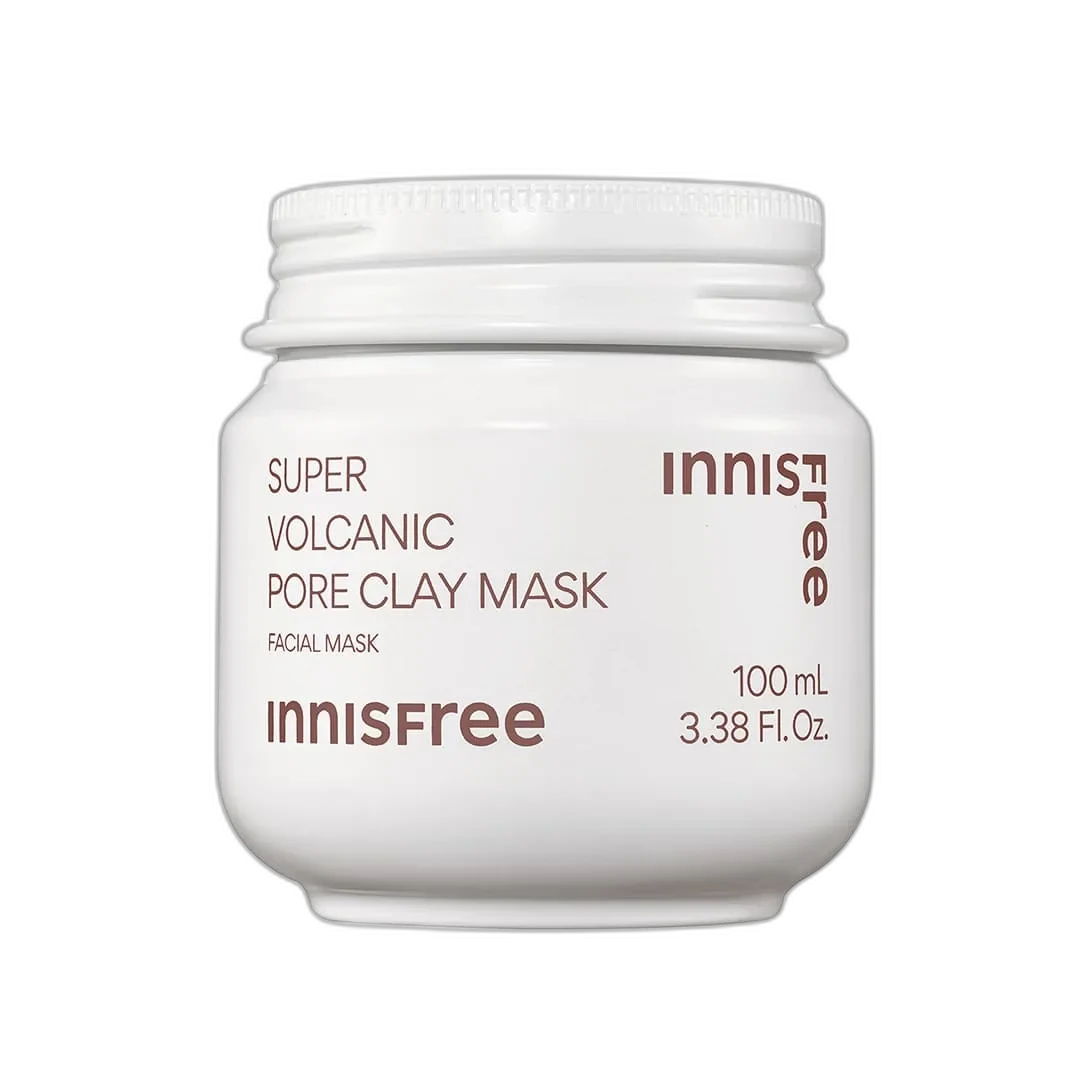
Super Volcanic Pore Clay Mask 2X
K-Beauty Pore Reset
 Verified reviewer
Pros & cons.
- +Triple-mineral system (volcanic ash, kaolin, bentonite) provides thorough multi-level sebum absorption
- +Sustained-release AHA copolymer adds chemical exfoliation to a physical clay mask — genuinely innovative
- +Trehalose prevents the extreme dryness and cracking common in simpler clay masks
- +Fragrance-free formula is unusual and welcome for a K-beauty mask
- +Exceptional longevity — $18 jar lasts 4-6 months of weekly use
- +Cooling menthoxypropanediol provides a refreshing spa-like application experience
- +Immediately visible pore refinement and matte finish after each use
- −Pore-minimizing effects are temporary, lasting only 1-2 days before reverting
- −Contains walnut shell powder — controversial physical exfoliant with irregular particle edges
- −Difficult to fully rinse off compared to gel or cream masks
- −Not suitable for dry, sensitive, or barrier-compromised skin types
- −Tree nut allergen concern from the walnut shell powder ingredient
- −Does not effectively remove deep blackheads despite pore marketing claims
The full review.
There is a particular kind of satisfaction that oily skin types know: the moment you rinse off a clay mask and your skin looks like it belongs in a commercial. Pores tighter. Surface smooth. Oil nowhere to be found. The Innisfree Super Volcanic Pore Clay Mask 2X delivers that moment reliably, and it has been doing so across multiple reformulations since the volcanic line launched in 2012 using mineral-rich ash from Jeju Island — a place so geologically significant that UNESCO designated it a World Natural Heritage site.
The 2X formulation represents Innisfree’s most ambitious version of this mask. The original was a straightforward affair: volcanic ash, clay, rinse, done. The 2X upgrades to a triple-mineral system — volcanic ash clusters, kaolin, and bentonite — each handling sebum absorption at a different level. The volcanic ash, listed fourth in the INCI after water, titanium dioxide, and butylene glycol, brings the brand’s signature porous microparticles with reportedly twice the surface area of the original. Kaolin handles gentle surface oil absorption. Bentonite, the heavy-lifter among clays, swells on contact with moisture to draw impurities from deeper within pores.
What elevates this beyond a basic clay mask is the supporting technology. A lactic acid/glycolic acid copolymer provides sustained-release AHA exfoliation throughout the masking period — this is the kind of formulation detail that separates serious products from generic mud masks. Rather than dumping free acid onto your skin for a brief contact period, the copolymer gradually releases its exfoliating payload over the eight to ten minutes the mask sits on your face. Surface texture smoothing, cell turnover promotion, and gentle desquamation happen alongside the clay’s oil absorption, turning a single masking session into both purification and exfoliation.
Trehalose, a natural sugar, is the ingredient that shows the formula’s intelligence. Clay masks have an inherent problem: the very mechanism that absorbs oil also absorbs water from your skin, leaving it feeling like sandpaper after rinsing. Trehalose acts as a cell-protecting humectant, stabilizing moisture during the drying process and preventing the mask from becoming a moisture vampire. This is why the Innisfree clay mask dries to a matte finish without the cracking and extreme tightness that inferior clay masks inflict.
The cooling sensation from menthoxypropanediol is part practical, part theatrical. The cooling temporarily constricts blood vessels near the skin surface, which contributes modestly to the pore-minimizing appearance. But mostly, it makes the masking experience feel refreshing and spa-like — an emotional payoff that keeps you coming back for your weekly pore treatment. K-beauty has always understood that skincare should feel good, and this mask nails that principle.
The texture is satisfying — a smooth, creamy gray paste that spreads evenly without clumping or pulling at the skin. Eight to ten minutes is the sweet spot for application time; at that point, the mask is set but not overly dry. Rinsing requires patience — the clay clings more stubbornly than gel or cream masks, and you will need lukewarm water and some gentle circular motions to fully remove it. The payoff after rinsing is immediate: visibly refined pores, a smooth matte canvas, and that clean feeling oily skin types live for.
The honest limitation of this mask — and of all clay masks — is that the results are temporary. Pore minimization and oil control typically last one to two days before sebum production returns to baseline. This is not a flaw of the product; it is a fundamental reality of how clay masks work. Anyone expecting permanent pore reduction from a topical mask is chasing a biological impossibility. What this mask does provide is a reliable weekly reset for oily skin, and when used consistently, the cumulative AHA exfoliation from the copolymer does contribute to genuine texture improvement over time.
The inclusion of walnut shell powder merits acknowledgment. Walnut shell particles have drawn criticism in the skincare community due to their irregular edges, which can potentially create micro-scratches on delicate skin. In this formula, the walnut shell powder plays a supporting role alongside the gentler clay absorption and chemical exfoliation rather than serving as the primary exfoliant. Still, users with very sensitive or reactive skin should note its presence.
The fragrance-free formulation is a welcome choice for a mask that sits on your face for nearly ten minutes. The only scent is a faint mineral quality from the clays themselves, which most users do not notice. Fragrance-free in a K-beauty mask is still unusual enough to be noteworthy.
At eighteen dollars for 100 milliliters, this is an easy value proposition. A thin layer across the face uses perhaps five milliliters, meaning a single jar provides twenty or more applications — four to six months of weekly masking from a single purchase. The 20 mL mini size at Sephora offers a low-commitment trial for the curious.
The Innisfree Super Volcanic Pore Clay Mask 2X does not reinvent what a clay mask is. It refines it with genuine formulation intelligence — sustained-release exfoliation, protective hydration during drying, triple-mineral purification, and a cooling payoff that makes the ritual worth looking forward to. For oily and combination skin types, this is the weekly pore treatment that has earned its iconic status not through marketing, but through consistent, satisfying results.
Ingredient analysis.
Full INCI list
Water/Aqua/Eau, Titanium Dioxide (CI 77891), Butylene Glycol, Volcanic Ash, Glycerin, Silica, Trehalose, Caprylic/Capric Triglyceride, Kaolin, Bentonite, Polyvinyl Alcohol, Glyceryl Stearate, Stearic Acid, Cetearyl Alcohol, 1,2-Hexanediol, PVP, PEG-100 Stearate, Polysorbate 60, Iron Oxides (CI 77499), Hydrogenated Vegetable Oil, Xanthan Gum, Juglans Regia (Walnut) Shell Powder, Lactic Acid/Glycolic Acid Copolymer, Sorbitan Stearate, Zea Mays (Corn) Starch, Polyacrylate-13, Polysorbate 20, Mannitol, Dextrin, Theobroma Cacao (Cocoa) Extract, Microcrystalline Cellulose, Lactic Acid, Polyisobutene, Menthoxypropanediol, Tetrasodium Pyrophosphate, Disodium EDTA, Ethylhexylglycerin, Sorbitan Isostearate, Aluminum Hydroxide, Triethoxycaprylylsilane, Tocopherol
Skin match.
The science.
The Science
The Innisfree Super Volcanic Pore Clay Mask 2X works by combining mineral-based oil absorption with sustained-release exfoliation technology. Kaolin and bentonite are the most studied clay ingredients in dermatological literature. A study in the Journal of Cosmetic Dermatology found that bentonite significantly reduced Propionibacterium acnes populations and sebum oxidation products on the skin surface, which supports its use for oily and acne-prone skin.
The volcanic ash uses physical adsorption. The porous microstructure of volcanic rock creates a high surface area to absorb oil, a standard material science principle. However, peer-reviewed dermatological studies specifically validating Jeju volcanic ash in skincare are limited. Innisfree's internal consumer testing shows 94% of participants agreed the product cleanses pores and saw a visible reduction in oiliness after use, but these are not independently published clinical studies.
The lactic acid/glycolic acid copolymer advances topical exfoliation delivery. Copolymer forms of AHAs release active components gradually, which extends the effective contact window during the 8-10 minute masking period. Lactic acid at low concentrations promotes gentle desquamation and hydration, while glycolic acid — the smallest AHA molecule — smooths surface texture by penetrating the stratum corneum.
Trehalose, a disaccharide found naturally in many organisms, has documented cell-protective properties. Research shows trehalose protects cell membranes from dehydration stress, helping maintain skin hydration even as the clay ingredients absorb surface moisture. This addresses a primary complaint with clay masks: excessive drying and tightness.
Dermatologist Perspective
Dermatologists view clay masks as a reasonable supplementary treatment for oily and acne-prone skin, though pore-minimizing effects are cosmetically temporary rather than structurally permanent. The triple-clay formulation is sound; kaolin and bentonite are well-established oil-absorbing minerals in dermatological practice. Board-certified dermatologists would appreciate the AHA copolymer for mild chemical exfoliation but would caution that a weekly clay mask does not substitute for daily BHA or retinoid treatment for persistent pore concerns. The walnut shell powder may concern dermatologists who prefer chemical over physical exfoliation for facial skin.
Where it fits in your routine.
Apply an even layer to the face after cleansing, avoiding the lips and eye area. Apply more product to the nose, T-zone, and areas prone to congestion and oiliness. Leave on for 8-10 minutes until the mask feels set but not cracked. Rinse with lukewarm water using gentle circular motions to dissolve the clay. Pat dry and immediately apply a hydrating toner, serum, and moisturizer. Use 1-2 times per week for oily skin, or once weekly for combination skin. Do not use on the same day as retinol, strong acid peels, or other exfoliating treatments.
At $18 for 100 mL, this clay mask has excellent cost-per-use value. Each 5 mL application means one jar lasts 20+ sessions — about four to six months of weekly use at under $1 per use. This multi-mechanism clay mask at Sephora contains volcanic ash, dual clays, sustained-release AHA, and a cooling agent. Its price competes with drugstore clay masks that have less ingredient complexity. The 20 mL mini offers a low-risk trial.
Oily and combination skin types need a reliable weekly pore treatment that does more than basic clay masking. This works for anyone wanting immediate visible pore refinement plus gentle chemical exfoliation and a cooling, spa-like masking experience.
Avoid this mask if you have dry, sensitive, or barrier-compromised skin — the triple-clay system and AHA exfoliation increase dryness and irritation. People with a walnut or tree nut allergy must avoid this due to the walnut shell powder ingredient. Adding a weekly exfoliating clay mask to a routine with strong acid treatments or retinol may cause over-exfoliation.
Product details.
This gray-brown clay paste is creamy and smooth. It spreads easily across the face and dries to a matte finish in 8-10 minutes without cracking or feeling tight.
Minimal — no added fragrance. The clay ingredients have a faint clean/mineral scent that most users do not notice.
A sturdy plastic jar uses a screw-on lid and Innisfree's earthy volcanic-inspired design. The wide-mouth jar makes scooping easy. A 20 mL mini size also exists.
The first application feels cool as menthoxypropanediol activates on skin. The mask dries to a matte gray finish within 8-10 minutes. Rinsing leaves skin smoother, more refined, and with visibly tighter pores. Skin feels clean and matte — apply hydration right away.
4-6 months with 1-2x weekly use
12 months
spring summer
The backstory.
Innisfree's volcanic clay mask was one of the products that put K-beauty on the global map in the early 2010s. The original leveraged Jeju Island's volcanic geography — a UNESCO World Heritage site — to create a pore-care mask with genuine terroir. The 2X reformulation, launched around 2018, upgraded from a simple clay-and-volcanic-ash formula to a 10-in-1 multi-action treatment, adding AHA exfoliation and cooling technology while keeping the volcanic core that made the original iconic.
About Innisfree
Established Brand (5–20 years)Innisfree's Volcanic line has led the brand's pore-care since 2012. This clay mask is one of K-beauty's most recognized masks globally. The 2X reformulation moves from a 6-in-1 to a 10-in-1 formula, adding chemical exfoliation and cooling technology to the original volcanic ash base.
Common myths.
Clay masks permanently shrink pores.
Genetics determine pore size; topical products cannot permanently change it. Clay masks temporarily minimize pore appearance by absorbing the sebum that stretches pore openings. This effect lasts 1-2 days before pores return to their natural size as sebum production resumes.
Leave clay masks on until they dry and crack completely.
Leaving a clay mask on too long draws moisture from the skin, causing irritation and barrier damage. This mask works best when removed in 8-10 minutes, once it is set but not fully cracked. The trehalose in this formula prevents extreme drying, but leaving it on over 15 minutes still over-strips.
FAQ.
How often should I use the Innisfree Volcanic Clay Mask?
Use 1-2 times per week for oily skin. For combination skin, once weekly on the T-zone works. More frequent use risks over-stripping the skin's natural moisture barrier, even if skin feels oily. Always use hydrating products after masking.
Does the Innisfree Volcanic Mask remove blackheads?
The triple-clay system and AHA copolymer loosen surface-level blackheads with consistent weekly use. However, deep blackheads need sustained BHA treatment instead of a weekly clay mask. This mask prevents new congestion and reduces surface oil better than it extracts deep blackheads.
Is the walnut shell powder in this mask safe for skin?
Walnut shell powder is a physical exfoliant. Irregular particle edges cause controversy due to micro-scratching concerns. In this formula, walnut shell powder works with gentler clay-based absorption and AHA exfoliation instead of acting as the primary exfoliant. People with very sensitive or reactive skin may avoid physical exfoliants entirely.
What's the difference between the regular and 2X volcanic mask?
The 2X version uses reformulated Volcanic Cluster Spheres with twice the sebum-absorbing surface area. It adds lactic acid/glycolic acid copolymer for chemical exfoliation, walnut shell powder for physical exfoliation, and menthoxypropanediol for a cooling sensation. While the original was a simpler clay-only mask, the 2X is a multi-action pore treatment.
Can I use the volcanic mask with retinol?
Do not use them on the same night. The AHA copolymer in this mask and retinol together cause over-exfoliation and irritation. Use your clay mask and retinol on alternate evenings — for example, mask on Monday and Thursday, retinol on Tuesday and Friday.
Community
What the community says.
"Visibly minimizes pore appearance immediately after use"
"Effective at absorbing excess oil without completely stripping skin"
"Smooth, creamy texture that spreads easily and evenly"
"Refreshing cooling sensation during application"
"Good value — a little product goes a long way for months of weekly use"
"Noticeable skin smoothing and brightening effect after rinsing"
"Can be difficult to fully rinse off — requires patience and lukewarm water"
"Pore-minimizing and brightening effects are temporary, fading within 1-2 days"
"Contains walnut shell powder which can micro-scratch sensitive skin"
"Can feel overly drying if left on longer than recommended"
"Not effective at removing deep blackheads despite pore claims"
"Tree nut allergen concern from walnut shell powder"
Featured in.
People also looked at.