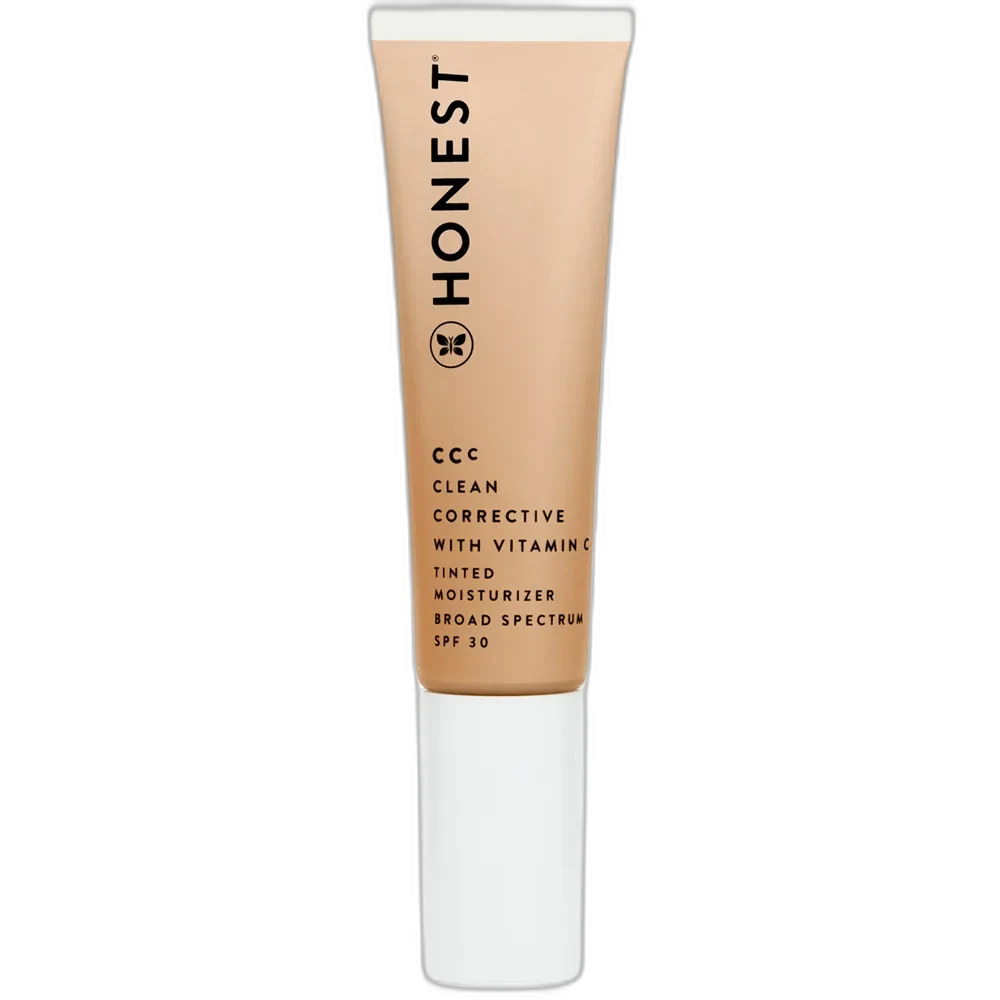
CCC Clean Corrective with Vitamin C Tinted Moisturizer SPF 30
Budget Tinted Mineral SPF
 Verified reviewer
Pros & cons.
- +Mineral filters plus iron oxides for visible light protection
- +Stable oil-soluble vitamin C derivative under the SPF
- +Fragrance-free and essential-oil-free clean formulation
- +Shade range is more inclusive than most mineral SPFs
- +Near-drugstore pricing for a derm-office-style formula
- +Works as both a sunscreen and a no-makeup daily base
- −Sheer coverage cannot replace a full foundation
- −Shade range narrower than a dedicated foundation line
- −Can pill under silicone-heavy primers if layered too fast
- −Isostearic acid may not suit some acne-prone users
The full review.
Most tinted sunscreen buyers assume they are just buying color for aesthetics. For years, that was true. Since 2018, research shows that tint pigments—specifically iron oxides—do something clear mineral filters cannot: they attenuate visible light, including the blue end of the spectrum. This light triggers melasma and post-inflammatory hyperpigmentation. Tinted sunscreens shifted from cosmetic extras to functional tools for pigment concerns. Dermatology-channel brands led this shift; EltaMD UV Clear Tinted and SkinCeuticals Physical Fusion became staples in pigment clinics. Mass-market brands followed later, and Honest Beauty’s CCC Clean Corrective Tinted Moisturizer closed that gap. It offers a near-drugstore price, making derm-office alternatives look punitively marked up for similar formulations. The formula deserves a closer look. The UV filters are titanium dioxide and zinc oxide, placing it in the mineral-only category dermatologists prefer for sensitive, pregnant, and pigment-prone patients. Iron oxides provide the visible-light attenuation, alongside a stable oil-soluble vitamin C derivative, tetrahexyldecyl ascorbate. This adds an antioxidant layer under the SPF without the instability or irritation risk of pure L-ascorbic acid. Expensive prestige products use this same combination because oil-soluble vitamin C tolerates a mineral filter base better than water-soluble versions. Silicone-based emollients, jojoba esters, helianthus seed wax, allantoin, rice bran extract, rosemary leaf extract, and tocopherol support these actives. These skin-conditioning and mild antioxidant ingredients prevent a bare-bones sunblock feel. It contains no added fragrance, no essential oils, no problematic chemical sunscreens, no parabens, and no phthalates. It applies more smoothly than traditional mineral creams. The silicone and ester base provides enough slip to spread one quarter-teaspoon—the amount needed to hit SPF 30—evenly over a full face. The finish is a soft satin, neither dewy nor matte, looking like evened-out skin rather than makeup. Coverage is sheer to light: redness softens and tone evens, but blemishes or dark spots remain visible. For more coverage, apply concealer to specific spots. On no-makeup days, it provides the finish that makes tinted moisturizers popular. The seven-shade range is more inclusive than most mineral SPFs but narrower than a foundation line. It acts as a tinted SPF rather than a true base product; swatch test if your skin tone falls outside common ranges. Think of this as an SPF that replaces your daily sunscreen for extra polish and pigment protection for melasma-prone users. For heavy outdoor exposure, layer a clear SPF under or over it, as most people under-apply tinted SPF. For daily office-to-grocery-store use, it is a sensible mass-aisle option for consolidated routines or clean-beauty preferences. At $27 for a 30 ml tube, it is priced like a mid-range drugstore SPF but performs above that tier. Honest Beauty is not usually linked to sun protection innovation, but this product argues otherwise.
Ingredient analysis.
Full INCI list
Active Ingredients: Titanium Dioxide, Zinc Oxide. Inactive Ingredients: Water, Propanediol, Polyglycerin-3, Neopentyl Glycol Diethylhexanoate, Coco-Caprylate/Caprate, Cetyl Ethylhexanoate, Cetyl Dimethicone, Dimethicone, Helianthus Annuus Seed Extract, Helianthus Annuus Seed Wax, Acacia Decurrens Flower Wax, Jojoba Esters, Polymethylsilsesquioxane, Polyhydroxystearic Acid, Polyglyceryl-10 Pentaisostearate, Polyglyceryl-2 Isostearate, Polyglyceryl-3 Polyricinoleate, Polyglyceryl-6 Polyricinoleate, Isostearic Acid, Disteardimonium Hectorite, Mica, Iron Oxides, Synthetic Fluorphlogopite, Silica, Sodium Chloride, Tetrahexyldecyl Ascorbate, Allantoin, Oryza Sativa Bran Extract, Rosmarinus Officinalis Leaf Extract, Tocopherol, Lauroyl Lysine, Glycerin, Ethylhexylglycerin, Trisodium Ethylenediamine Disuccinate, Phenoxyethanol
Skin match.
The science.
The Science
The evidence base for tinted mineral sunscreen has grown substantially in the last several years. Zinc oxide and titanium dioxide are FDA-monographed, GRASE-classified UV filters with decades of broad-spectrum photoprotection data, and they are the filters most dermatologists recommend for sensitive, pregnant and pediatric patients. The newer and more interesting piece of the science is the role of iron oxide pigments in visible light protection. Published research, including work by Castanedo-Cazares and colleagues, has shown that pigmented sunscreens containing iron oxides attenuate visible light and reduce melasma pigmentation more effectively than non-tinted mineral sunscreens at equivalent UV-SPF ratings. This is the reason tinted SPFs are now a first-line recommendation in many pigment clinics. Tetrahexyldecyl ascorbate, the vitamin C derivative in this formula, has a smaller but supportive evidence base as a stable, oil-soluble ascorbate that converts to active vitamin C on the skin, with published data showing collagen stimulation and antioxidant activity in cell and clinical models. Its stability advantage is practical: it tolerates being mixed with mineral filters in the same formulation better than pure L-ascorbic acid, which is why prestige derm-channel products frequently use it in tinted sunscreen formulations. Allantoin has classical dermatology evidence as a soothing and conditioning agent, and rice bran extract contributes minor antioxidant and skin-conditioning effects. The remaining formulation — silicones, esters, jojoba and sunflower waxes — serves a practical texture and dispersion role without contributing to the active claims.
Dermatologist Perspective
Dermatologists increasingly recommend tinted mineral sunscreens as a first-line recommendation for patients with melasma, post-inflammatory hyperpigmentation or visible-light sensitivity. This product fits that recommendation set: it pairs mineral filters, iron oxides and a stable vitamin C derivative in a single step, which is the specific combination cited in pigment-clinic commentary as the target formulation. Board-certified dermatologists note that this formulation approach is shared with more expensive derm-channel products like EltaMD UV Clear Tinted and SkinCeuticals Physical Fusion, and that a cleaner, more affordable alternative is welcome for patients who cannot easily access the derm-channel versions. Dermatologists caution that a tinted SPF still requires proper application quantity — a quarter teaspoon for the face and neck — and daily reapplication to maintain protection, and that for outdoor sports or prolonged sun exposure, this step is a complement to, not a replacement for, layered sun protection including hats and reapplication.
Where it fits in your routine.
Apply daily as the last step of your AM skincare routine. Dispense about a quarter teaspoon — roughly five pea-sized dots — into your palm, warm it, and press it onto your face and neck. Blend with fingertips using a few gentle passes; do not over-blend or the pigment streaks. Let it set for one minute. For more coverage, spot-apply concealer on top. Reapply every two hours during outdoor activity, using a powder SPF or a clear mineral SPF to avoid disturbing the pigment layer.
At about $27 for 30 ml, this costs as much as a mid-range drugstore SPF but uses a formulation stack that most derm-channel tinted mineral SPFs price at $40–50. The value beats EltaMD UV Clear Tinted (roughly $41) or SkinCeuticals Physical Fusion (roughly $40), and the per-use cost stays low for a daily SPF-and-base hybrid. Shade matching is the only drawback—if you must swatch multiple shades to find a match, the lower price becomes a false economy if no shades work on your skin tone. For everyone within the shade range, this is one of the best-value tinted mineral SPFs in the US market.
Normal, combination, or dry skin types wanting a clean tinted mineral sunscreen that works as a light daily base. It works well for melasma-prone users, pregnant users, or sensitive skin that reacts to chemical filters.
Users who need full-coverage foundation, deep or richly undertoned skin without a matching shade, acne-prone users who react to isostearic acid, and those planning extended outdoor exposure without reapplication discipline.
Product details.
This medium-weight tinted cream spreads easily and sets to a soft satin finish.
Essentially fragrance-free with a faint cosmetic base note.
Simple plastic tube with white branding — straightforward and travel friendly.
The silicone and ester base makes this glide more smoothly than most pure-mineral formulas. It leaves a soft, slightly matte finish that evens skin without a made-up look. Blend for ten seconds; over-blending streaks the pigment. A very light powder on top locks the finish without looking cakey.
2–3 months with daily full-face application.
12 months
All Year
The backstory.
Honest Beauty launched in 2015 as part of Jessica Alba's The Honest Company. The CCC tinted moisturizer was added in 2020 as the brand's flagship answer to the rising interest in tinted mineral sunscreens, specifically for users with melasma and visible-light-sensitive skin, and quickly became one of the line's best-sellers.
About Honest Beauty
Established Brand (5–20 years)Honest Beauty launched in 2015 as the skincare and cosmetics division of The Honest Company, Jessica Alba's clean-consumer-goods brand founded in 2012. The CCC tinted moisturizer joined the line in 2020 and is a high-volume SKU sold at Target, Amazon and Ulta.
Common myths.
A tinted SPF is sunscreen with added color for aesthetics.
The iron oxide pigments that create the tint also block visible light. Published evidence shows this reduces melasma triggers. The tint is functional, not cosmetic.
Clean beauty sunscreens lack the performance of dermatologist-channel mineral SPFs.
This tinted mineral SPF uses iron oxides and vitamin C. It performs as well as brands costing two to three times more. The main gaps are shade range and sensorial polish, not filter efficacy.
FAQ.
How much coverage does it give?
Sheer to light coverage. It evens tone and softens redness but does not hide blemishes or dark spots like a foundation. For more coverage, apply a dab of concealer on top of this product where you want to conceal.
Is it a full replacement for my regular sunscreen?
Yes, if you use a full quarter-teaspoon on the face and neck. Most people do not. For serious outdoor exposure, layer a clear mineral SPF underneath to compensate.
How is the shade range?
The line has alabaster, light, medium, nude, oro medium, caramel and mojave deep shades. It is more inclusive than many mineral SPF lines but remains narrower than a dedicated foundation range — deep and rich skin tones should swatch before committing.
Is it pregnancy-safe?
Yes. The UV filters are mineral only, the product is fragrance-free, and no ingredients have pregnancy concerns. Doctors often recommend it to pregnant users seeking a clean daily SPF.
Will it pill under other products?
It pills if you layer it over silicone-heavy primers or thick moisturizers. Let each prior step absorb for a full minute before applying, and keep layering simple.
What the community says.
"Good value for a tinted mineral SPF"
"Natural-looking finish under no makeup"
"Iron oxides help with melasma and discoloration"
"Fragrance-free and vegan"
"Shade range is more limited than a true foundation"
"Can look slightly dry on very dry skin"
"Coverage is sheer, not buildable"
"Some pilling under other sunscreens"
People also looked at.