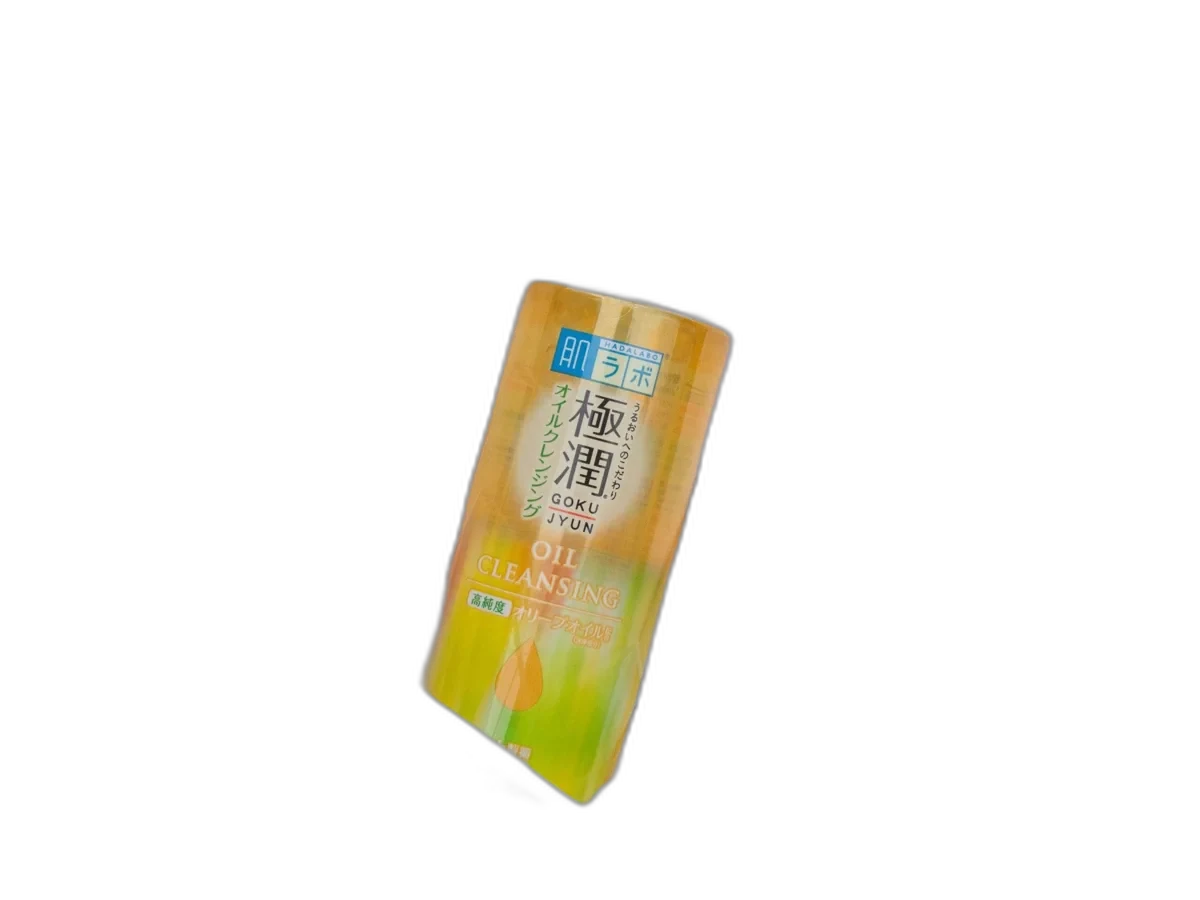
Gokujyun Oil Cleansing
J-Beauty Double Cleanse Essential
 Verified reviewer
Pros & cons.
- +Remarkably minimal 12-ingredient formula eliminates unnecessary additives
- +Dual hyaluronic acid system deposits moisture while cleansing — rare for oil cleansers
- +Dissolves waterproof sunscreen and stubborn makeup with ease
- +Completely fragrance-free and alcohol-free for sensitive skin compatibility
- +Outstanding value at $17 for a 200mL bottle lasting 3-4 months
- +Emulsifies and rinses cleanly with no oily residue left behind
- +Lightweight oil texture that spreads easily and doesn't feel heavy
- −Olive oil component has comedogenic potential for acne-prone skin
- −Not fungal acne safe due to olive oil and ethylhexyl palmitate
- −Contains BHT which some consumers prefer to avoid
- −Plain packaging lacks the aesthetic appeal of premium oil cleansers
- −Requires a second cleanser — not a standalone option
The full review.
Beauty editors rarely feature certain product categories in year-end roundups. These products use plain bottles, lack aspirational branding, and photograph poorly on marble countertops. They work so well and cost so little that recommending them feels anticlimactic. The Hada Labo Gokujyun Oil Cleansing is this kind of product.
The formula contains twelve ingredients. It does not have twelve hero ingredients plus thirty others—it has twelve ingredients total. This simplicity is intentional. Hada Labo operates on the premise that skin needs only what it requires; everything else is filler or a potential irritant. An oil cleanser needs oils to dissolve, emulsifiers to rinse, preservatives for safety, and ideally, skin benefits. This bottle contains exactly that and nothing more.
The oil base combines ethylhexyl palmitate (a lightweight synthetic ester), triethylhexanoin (a light emollient), olive oil, and jojoba oil. Olive oil provides dissolving power—its oleic acid breaks down sebum, sunscreen, and makeup on contact. Jojoba oil is a liquid wax ester that resembles human sebum, so the cleansing does not feel aggressive or foreign. Two PEG-based emulsifiers allow the oil phase to bind with water, turning the oil into a milky emulsion that rinses cleanly.
The formula’s surprise is the dual hyaluronic acid system—the same technology in the Gokujyun foaming wash. Sodium Acetylated Hyaluronate is a modified HA with enhanced skin adhesion. Hydroxypropyltrimonium Hyaluronate is a cationic form that electrostatically bonds to the skin surface during rinsing. Together, they deposit a hydration layer during emulsification. This means your first cleanse—usually the most stripping step—leaves skin more hydrated than it found it. Most oil cleansers, regardless of price, do not offer this innovation.
The experience is as straightforward as the formula. Pump two or three presses of the thin, lightweight oil onto dry hands. Spread it across a dry face. Massage for sixty to ninety seconds. You feel sunscreen and makeup dissolve; the texture changes as the oil breaks down surface debris. Add a splash of water to turn the oil milky white as the emulsifiers activate. Rinse with lukewarm water. Done.
The skin remains clean. It is not stripped, tight, or dry—just clean. The dual HA works quietly, so you move to your second cleanser with skin that feels treated rather than scoured. If you double-cleanse with an oil cleanser that leaves skin feeling like a blank slate, the difference is noticeable.
Olive oil warrants mention for potential comedogenic concerns. Oleic acid dissolves sebum well but can be comedogenic for some acne-prone individuals. This is a legitimate consideration, not a universal dealbreaker; many acne-prone users have no issues with olive oil in a rinse-off product used for under two minutes. However, those with highly congestion-prone skin may prefer a mineral-oil-based or MCT-oil-based alternative.
BHT as an antioxidant preservative draws occasional concern. It is used here at trace concentrations to prevent the olive and jojoba oils from oxidizing, which is a legitimate formulation need. BHT is among the most studied cosmetic ingredients and is generally regarded as safe at skincare levels, though those who avoid it have other options.
The 200mL bottle lasts three to four months with once-daily evening use. This costs roughly four to five dollars per month for a first-step cleanse. This is outstanding value. Comparable oil cleansers from brands with more sophisticated marketing often cost three to five times more for equivalent or smaller volumes, often with longer ingredient lists that do not improve performance.
The packaging is not award-winning. It is a functional plastic bottle with a pump. The label is straightforward. Holding this bottle does not feel like an “experience.” But while an aesthetically pleasing cleansing balm warms and melts between your palms, the Hada Labo has already dissolved your sunscreen, emulsified, and rinsed clean. Efficiency has its own elegance.
Formula
### How to Use

Pump two or three presses of the thin, lightweight oil onto dry hands. Spread across a dry face. Massage for sixty to ninety seconds. Add a splash of water and the oil turns milky white as the emulsifiers activate. Rinse with lukewarm water.

### Who Should Buy

Anyone wanting a simple, effective, and affordable oil cleanser.

### Texture

Thin, lightweight oil.

### Scent

Unscented.

### Packaging

Functional plastic bottle with a pump.

### Best Season

All seasons.

### Common Praise

- Effective at removing makeup and sunscreen.
- Leaves skin feeling clean and hydrated.
- Affordable.

### Common Complaints

- Potential comedogenic concerns for some acne-prone individuals due to olive oil.
- Some users may prefer to avoid BHT.

### Pairs Well With

Any second cleanser.

### Conflicts With

None.

### Best for

- All skin types, including sensitive skin.
- Removing makeup and sunscreen.

### Works for

- All skin types.

### Not ideal for

- Those with highly congestion-prone skin who are sensitive to olive oil.

### AM routine

Not applicable.

### PM routine

First cleanse.Ingredient analysis.
Full INCI list
Ethylhexyl Palmitate, Triethylhexanoin, Sorbeth-30 Tetraisostearate, PEG-20 Glyceryl Triisostearate, Olea Europaea (Olive) Fruit Oil, Water, Dextrin Palmitate/Ethylhexanoate, Simmondsia Chinensis (Jojoba) Seed Oil, BHT, Iodopropynyl Butylcarbamate, Sodium Acetylated Hyaluronate, Hydroxypropyltrimonium Hyaluronate
Skin match.
The science.
The Science
The dual hyaluronic acid system in this oil cleanser solves a formulation problem: delivering humectant benefits in a rinse-off oil-based product where water-soluble ingredients have little contact time.
Hydroxypropyltrimonium Hyaluronate uses electrostatic substantivity. Its positive charge attracts the negatively charged skin surface, so it resists washing away during vigorous rinsing. Research in the International Journal of Biological Macromolecules confirms cationic HA derivatives have higher skin retention than neutral forms in rinse-off applications.
Sodium Acetylated Hyaluronate adheres differently: the acetyl modification increases lipophilicity, which improves stratum corneum penetration and water resistance. Studies in the Journal of Cosmetic Dermatology show this modified HA retains more moisture than standard sodium hyaluronate.
The olive oil base is simple. Oleic acid (55-83% of olive oil) acts as a solvent for oil-soluble impurities and a penetration enhancer. However, research in Dermatitis notes high concentrations of oleic acid can disrupt skin barrier lipid organization. This is why some dermatologists advise against olive oil for acne-prone skin, even in rinse-off products. The jojoba oil component is a wax ester, not a true oil, so it lacks these comedogenic concerns and shows anti-inflammatory properties in studies in Pharmacological Research.
Dermatologist Perspective
Dermatologists endorse oil cleansing to remove sunscreen, sebum, and makeup using the "like dissolves like" principle. Board-certified dermatologists say the dual hyaluronic acid system in this product is a smart strategy to prevent the stripping feeling common in oil cleansers. However, dermatologists warn that olive oil's oleic acid can affect patients with acne or seborrheic dermatitis, suggesting mineral oil or MCT-based alternatives instead. The short contact time of a rinse-off product reduces but does not remove this risk.
Where it fits in your routine.
Apply 2-3 pumps to dry hands. Spread over a dry face and massage gently for 60-90 seconds, targeting areas with sunscreen, makeup, or excess sebum. Focus on the nose, chin, and forehead. Add a little water and keep massaging until the oil turns milky and emulsifies. Rinse well with lukewarm water. Use a water-based second cleanser immediately after.
At about $17 for 200mL, this is one of the most cost-effective oil cleansers. One bottle lasts 3-4 months using 2-3 pumps per evening cleanse, making the per-use cost roughly $0.14-0.19. The dual hyaluronic acid technology is a premium feature usually found in pricier Japanese cleansing oils. No larger sizes or refill options are widely available outside Japan. This price provides pharmaceutical-grade formulation simplicity and an innovative hydration delivery system.
Daily sunscreen users seeking a reliable first-step cleanser. Double-cleansing enthusiasts wanting an affordable, effective oil cleanser with minimal ingredients. People with normal, dry, or combination skin who prefer fragrance-free, no-nonsense formulations. Hada Labo Gokujyun fans wanting to extend the dual-HA philosophy to their cleansing step.
People with highly acne-prone or congestion-prone skin who react to oleic acid. Anyone with fungal acne, because the formula contains Malassezia-feeding ingredients. Consumers who strictly avoid BHT. Those who prefer a standalone cleanser over a double-cleansing routine.
Product details.
Thin, lightweight oil spreads easily on dry skin. It turns into a milky emulsion when water is added, then rinses clean.
Completely fragrance-free — faint neutral oil scent that is barely noticeable
Simple plastic bottle with a pump dispenser. The design is functional and hygienic. The 200mL size is large.
Massage 2-3 pumps onto dry skin for 1-2 minutes. Makeup and sunscreen dissolve during massage. Add water to turn the oil into a milky emulsion. Rinse. Skin feels soft and clean with no oily residue or tightness.
3-4 months with once-daily evening use
12 months
All Year
The backstory.
The Gokujyun Oil Cleansing extends Hada Labo's core philosophy — hyaluronic acid in every step — to the first step of a double-cleansing routine. Developed by Rohto Pharmaceutical, the formula was designed to solve a common complaint about oil cleansers: that they either leave residue or strip too aggressively. The dual-HA approach ensures the skin receives moisture even during the most dissolving step of the routine.
About Hada Labo
Established Brand (5–20 years)Hada Labo was created in 2004 by Rohto Pharmaceutical, a Japanese pharmaceutical company founded in 1899. The Gokujyun line is Japan's best-selling hyaluronic acid skincare range, and the brand's pharmaceutical heritage underpins its no-frills formulation approach.
Common myths.
Oil cleansers clog pores and cause breakouts.
Oil cleansers dissolve and emulsify, so they rinse away when water is added. The oils in this formula dissolve sebum and sunscreen, then the emulsifiers (Sorbeth-30 Tetraisostearate, PEG-20 Glyceryl Triisostearate) wash everything away. However, the olive oil component has comedogenic potential, so acne-prone users must monitor their skin.
You don't need an oil cleanser if you don't wear makeup.
Oil cleansers dissolve sunscreen, environmental pollutants, and excess sebum—not just makeup. Daily SPF users (which dermatologists recommend for everyone) benefit from a first-step oil cleanse to ensure complete sunscreen removal.
FAQ.
Does Hada Labo Gokujyun Oil Cleansing remove waterproof sunscreen?
Yes — the olive oil and ethylhexyl palmitate base dissolves waterproof and water-resistant sunscreens. Massage onto dry skin for at least 60 seconds to break down the sunscreen, then emulsify with water and rinse. Use a water-based cleanser after to finish removal.
Is this oil cleanser good for acne-prone skin?
It works well for many acne-prone users because it removes pore-clogging sunscreen and makeup. However, the olive oil component has a moderate comedogenic rating and triggers breakouts in some acne-prone individuals. Those with very oily or acne-prone skin may prefer an oil cleanser using lighter oils like mineral oil or MCT oil.
Do I still need a second cleanser after this?
Yes — this works as the first step in a double-cleansing routine. It dissolves oil-based impurities (sunscreen, makeup, sebum), but you need a water-based second cleanser to remove remaining water-soluble impurities and ensure a clean surface. The Hada Labo Gokujyun Foaming Face Wash is an ideal partner.
Is Hada Labo Gokujyun Oil Cleansing fungal acne safe?
No — the formula uses olive oil and ethylhexyl palmitate, which feed Malassezia yeast. People with fungal acne should use oil cleansers based on MCT oil (caprylic/capric triglyceride) or mineral oil instead.
How long does a bottle last?
A 200mL bottle lasts 3-4 months if used once every evening. Most users use 2-3 pumps per cleanse. At approximately $0.15 per use, this is one of the most cost-effective oil cleansers available.
Community
What the community says.
"Dissolves sunscreen and waterproof makeup effortlessly"
"Emulsifies and rinses cleanly without residue"
"Thin, lightweight oil texture that's easy to massage"
"Affordable and long-lasting 200mL bottle"
"Leaves skin feeling hydrated rather than stripped"
"Contains olive oil which may be comedogenic for acne-prone skin"
"BHT as a preservative concerns some consumers"
"Pump can be slightly stiff on a new bottle"
"Plain packaging lacks the appeal of trendier oil cleansers"