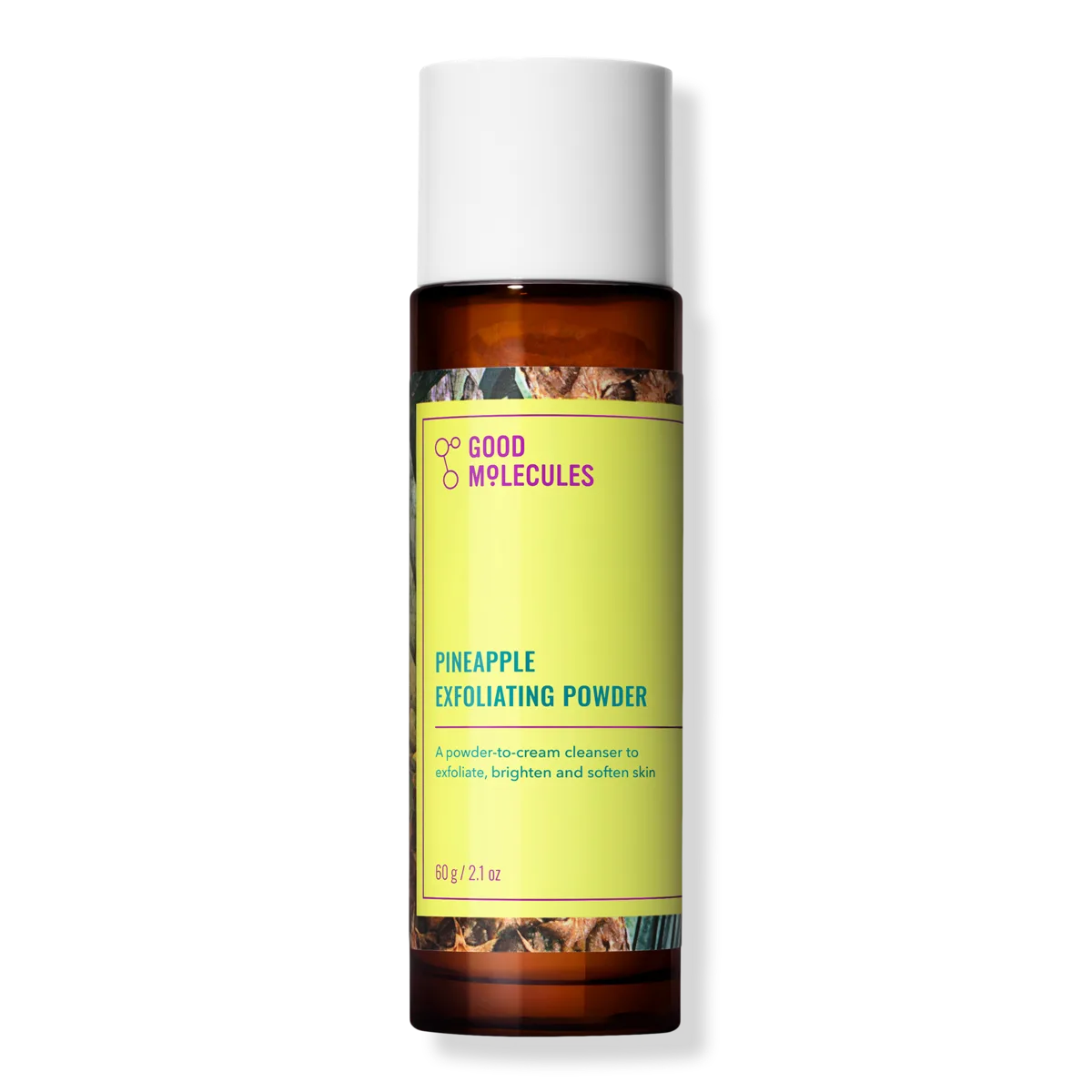
Pineapple Exfoliating Powder
Sensitive Skin Exfoliator
 Verified reviewer
Pros & cons.
- +Enzyme-based exfoliation is gentle enough for daily use on most skin types including sensitive
- +Powder format preserves enzymes and vitamin C at full potency until activation with water
- +Calamine and allantoin actively soothe the skin during and after exfoliation
- +Exceptional value — 60g lasts 4-6 months of daily use at $16
- +Fragrance-free with mild amino acid-based surfactants that don't strip skin
- +Immediate brightening and smoothing effect visible after first use
- −Results are subtler than chemical acid exfoliants for stubborn texture or deep congestion
- −Contains silk powder — not vegan despite being cruelty-free
- −Powder-to-foam format is less convenient than liquid or pad exfoliants
- −Not sufficient as a standalone cleanser for heavy makeup or sunscreen removal
- −Requires mixing with water — slightly messy in practice
The full review.
Dermalogica’s Daily Microfoliant has set the powder exfoliant standard for years. This gentle, enzyme-based formula turns into a creamy foam to polish skin without aggression. At $60 for 74 grams, the gray bottle carries a high price. Good Molecules targeted this price-to-formula ratio.
The Pineapple Exfoliating Powder uses the same premise: a fine powder that activates with water. It provides enzyme-based exfoliation and mild physical polishing via rice starch granules. Bromelain from pineapple extract and papain from papaya act as the primary exfoliating agents. These proteolytic enzymes selectively break down keratin, the structural protein in dead skin cells. This differs from acid exfoliation: instead of dissolving cell bonds like AHAs, enzymes digest the dead cells themselves.
This distinction affects skin tolerance. Acid exfoliants work at a pH that can irritate sensitive skin and continue working until neutralized or rinsed off. Enzyme exfoliants are pH-independent and self-limiting; they work on dead protein and stop when no more dead protein remains. This makes enzyme-based products gentler and suitable for daily use across more skin types, including sensitive skin that might react to a 10% glycolic acid treatment.
The rice starch base serves two purposes. Modified rice starch provides the powder structure and a mild physical exfoliant using smooth, round particles that create gentle friction on wet skin. It also absorbs oil, providing a slight mattifying effect for oily and combination skin. The particles are fine enough to avoid scratching, placing this in the ‘gentle scrub’ category rather than the ‘abrasive scrub’ category.
The supporting ingredients are thoughtful. Calamine—the pink-tinted zinc oxide compound used in itch relief lotions—provides soothing, anti-inflammatory properties. Allantoin reinforces this calming effect and promotes cell regeneration. Together, these two ingredients allow the product to soothe while it polishes. This design reflects Good Molecules’ focus on sensitive skin types who use exfoliation with caution.
3-O-Ethyl Ascorbic Acid, a stable vitamin C derivative, is a smart addition to a powder. Vitamin C in liquid formulas degrades when exposed to air and light. In a dry powder, it remains stable until water activates it at use. Every application delivers fresh, potent vitamin C, which is an advantage over liquid vitamin C cleansers that oxidize once opened.
The cleansing agents—Sodium Cocoyl Isethionate, Sodium Lauroyl Glutamate, and Sodium Lauroyl Aspartate—are amino acid-based, coconut-derived surfactants. They create a soft, creamy foam with water but do not strip natural oils like sulfate-based cleansers. The cleanse is light; it won’t remove heavy makeup or sunscreen alone, making it better as a second cleanse or morning cleanser.
The ritual is simple. Shake a small amount of powder into your palm, add water, rub your hands to create a paste, and massage onto damp skin for 30-60 seconds. The foam is soft, feeling more like a polite moisturizer than a scrub. After rinsing, skin feels smoother and looks brighter. There is no tightness, redness, or stinging. It is exfoliation that feels invisible until you see the results.
Enzyme exfoliation is gentler than acid exfoliation, so results are subtler. For significant texture, deep blackheads, or stubborn dullness, the Overnight Exfoliating Treatment from the same brand ($6, 10% AHA/BHA) delivers more dramatic results. The Pineapple Exfoliating Powder is maintenance, not renovation; it keeps skin polished through daily gentle care rather than intensive treatment.
Good Molecules is an emerging brand founded in 2019. While they lack the dermatological pedigree of legacy brands, the skincare community responds well to their formula-first approach. This product shows their affordable-but-effective positioning is backed by thoughtful formulation.
The non-vegan status (silk powder is an animal-derived ingredient) matters for ethical shoppers. This inclusion from a modern, conscious brand may deter vegan consumers.
At $16 for 60 grams, this is one of the most economical daily exfoliants available. It won’t replace an acid exfoliant for serious resurfacing, but it works as a gentle daily polish to keep skin bright and smooth between treatments.
Ingredient analysis.
Full INCI list
Dimethylimidazolidinone Rice Starch, Sodium Cocoyl Isethionate, Sodium Lauroyl Glutamate, Oryza Sativa (Rice) Lees Extract, Sodium Lauroyl Aspartate, Diglycerin, Silk Powder, Calamine, Ananas Sativus (Pineapple) Fruit Extract, Papain, Actinidia Chinensis (Kiwi) Fruit Extract, Arnica Montana Flower Extract, Allantoin, Maltodextrin, 3-O-Ethyl Ascorbic Acid, Water, Butylene Glycol
Skin match.
The science.
The Science
The proteolytic enzymes in this formula — bromelain from pineapple and papain from papaya — use a mechanism different from chemical acid exfoliation. These enzymes are serine and cysteine proteases that cleave peptide bonds in keratin, the structural protein of the stratum corneum. Research in Biotechnology Research International shows that bromelain and papain selectively digest denatured (dead) protein while leaving intact (living) protein largely unaffected, which explains why enzyme exfoliation is gentle.
A 2012 study in the Journal of Drugs in Dermatology compared enzyme exfoliation with AHA exfoliation. It found enzyme-based treatments produce comparable improvements in skin smoothness and brightness with significantly less irritation. Because the mechanism is pH-independent, enzyme exfoliants do not require the acidic environment (pH 3-4) that AHAs need, which reduces irritation potential.
3-O-Ethyl Ascorbic Acid, the vitamin C derivative used here, is more stable than L-ascorbic acid. Research in the Journal of Cosmetic Dermatology shows this derivative stays potent in formulation longer than pure ascorbic acid and provides brightening and antioxidant properties comparable to L-ascorbic acid upon skin application. The dry powder format increases this stability because the compound only contacts water at the moment of use.
References
- Proteolytic enzymes in skin care: mechanisms of action — Biotechnology Research International (2011)
Dermatologist Perspective
Dermatologists who treat sensitive and rosacea-prone skin often recommend enzyme-based exfoliants instead of AHA/BHA products. Board-certified dermatologists note that the pH-independent mechanism of proteolytic enzymes makes them better tolerated by reactive skin types while still providing meaningful exfoliation. The inclusion of calamine and allantoin follows dermatological recommendations to pair exfoliation with anti-inflammatory agents. Dermatologists typically use enzyme exfoliants as daily maintenance tools rather than intensive treatments, recommending them for patients who need consistent gentle exfoliation without the risk of over-exfoliation.
Guidance
Where it fits in your routine.
Put about half a teaspoon of powder in your palm. Add a few drops of water and rub your hands to make a soft foam. Apply to a damp face using gentle, circular motions for 30-60 seconds — avoid the eye area. Rinse well with lukewarm water. Use daily for normal, combination, and oily skin, or 2-3 times weekly for sensitive skin. It works best as a morning cleanser or evening second cleanse (after oil cleanser for makeup removal).
At $16 for 60g, this powder provides 4-6 months of daily exfoliation at about $0.10 per use. The closest comparable product — Dermalogica Daily Microfoliant — costs $60+ for 74g. The Dermalogica formula has more actives like salicylic acid and more botanicals, but the Good Molecules version has the essentials (enzyme exfoliation, vitamin C, soothing agents) for much less. The value is exceptional for budget-conscious consumers or those testing the powder exfoliant format without a large investment.
This is a gentle daily exfoliant for sensitive skin. It works for people who find acid exfoliants harsh or irritating, and for those testing the powder-to-foam format without spending $60. It also works well for teens or skincare beginners starting exfoliation safely.
Chemical acid exfoliants deliver stronger results for deep texture issues, acne scarring, or stubborn hyperpigmentation. Vegan consumers should note the silk powder inclusion. The powder-mixing step is less practical than a liquid exfoliant for those prioritizing convenience.
Product details.
No added fragrance. The fruit enzymes leave a faint, barely perceptible natural scent.
A plastic shaker bottle with a flip-top cap works like a baby powder container. This design dispenses controlled amounts easily. The dry powder format is stable and lacks the preservatives wet formulas require. The 60g size is generous for the price.
Mixing the powder with water feels like a small ritual. The paste foams gently and glides across the face without harsh friction. Skin feels polished and smooth after rinsing, with no tightness, redness, or stinging. The immediate brightness is noticeable — like a subtle veil has been lifted. This effect is gentler and more surface-level than acid exfoliants, but far more comfortable.
4-6 months with daily use
24 months
All Year
The backstory.
Powder-to-foam exfoliating cleansers originated in Japanese skincare and were popularized in Western markets by Dermalogica's Daily Microfoliant — a product that retails for $60+. Good Molecules entered the category with a formula that hits the same key notes — enzyme exfoliation, rice-based powder, soothing agents — at roughly a quarter of the price, instantly drawing comparisons from the skincare community.
About Good Molecules
Emerging Brand (2–5 years)Beautylish founded Good Molecules in 2019 as its in-house skincare brand. The brand makes affordable, transparent formulations and sells at Ulta Beauty and Target, gaining a loyal following for accessible skincare.
Common myths.
Physical exfoliation is always bad for your skin.
General anti-scrub advice targets products with jagged particles like crushed walnut shells or sugar crystals that cause micro-tears. This powder uses smooth, round rice starch granules. Enzymes drive the exfoliation instead of friction. Light pressure makes the physical component supplementary and non-damaging.
Enzyme exfoliants are too weak to make a real difference.
Papain and bromelain selectively break down keratin, the protein in dead skin cells. Enzyme exfoliants work more gently than AHAs to remove the dead cell layer that causes dullness and rough texture. For sensitive skin that cannot tolerate acids, enzymes exfoliate without the irritation tradeoff.
FAQ.
How does this compare to the Dermalogica Daily Microfoliant?
Both are rice-based enzyme powder exfoliants containing soothing agents. The Good Molecules version costs $16 for 60g, about a quarter of the price of Dermalogica's 74g size ($60+). The Dermalogica formula uses salicylic acid and more botanical extracts. Good Molecules uses pineapple and papain enzymes with vitamin C. Users say the Good Molecules version is slightly gentler, which suits sensitive skin but may work less on stubborn texture.
How to Use ---
Can I use this exfoliating powder every day?
Yes — the enzyme-based exfoliation works daily on normal, combination, and oily skin. For sensitive skin, use it 2-3 times per week and increase frequency as tolerance builds. The fruit enzymes and rice starch exfoliate more mildly than acid-based products, so daily use avoids over-exfoliation.
Is this powder vegan?
No — the formula uses silk powder (Serica) from silkworm cocoons. The product is cruelty-free but not vegan. If you need a vegan exfoliating powder, look for alternatives that use synthetic silk powder.
Do I need to use sunscreen after using this product?
Enzyme exfoliants cause less photosensitivity than AHA/BHA products, but exfoliation still removes some dead cells that provide natural UV protection. Use daily sunscreen, especially if you use this product in the morning as part of your AM cleansing routine.
How long does the 60g container last?
Using about half a teaspoon daily, the 60g container lasts 4-6 months. This is a primary value proposition—at $16, the cost per use is roughly $0.10, making this daily exfoliant economical.
Community
What the community says.
"Gentle enough for daily use on most skin types"
"Great affordable alternative to premium powder exfoliants"
"Generous 60g size lasts for months"
"Leaves skin immediately smoother and brighter after rinsing"
"Less dramatic results than chemical exfoliants for stubborn texture"
"Powder format requires mixing with water — less convenient than liquid"
"Contains silk powder — not vegan"
"Some users find the foam insufficient for deep cleansing"
People also looked at.