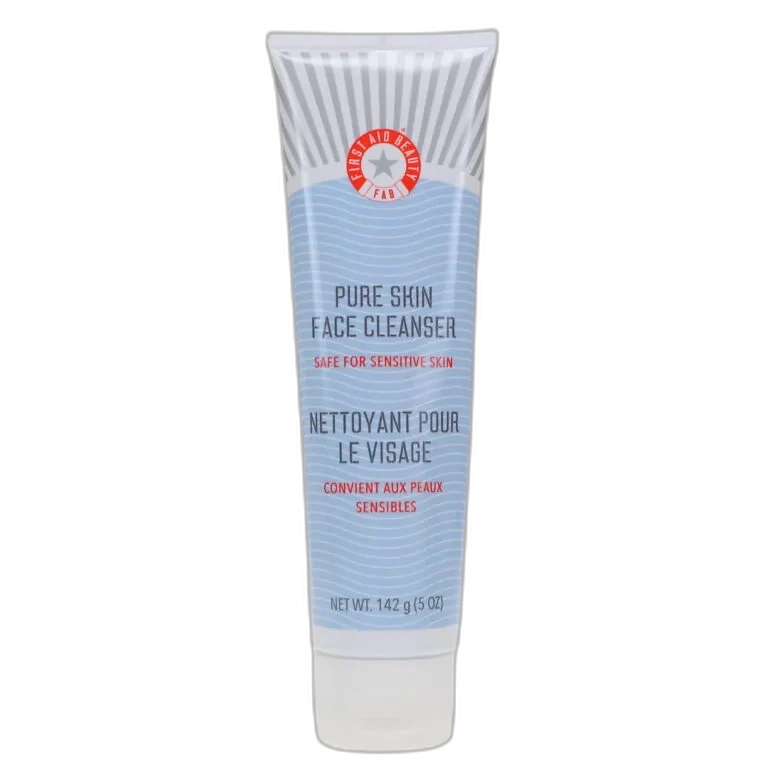
Pure Skin Face Cleanser
Sensitive Skin Staple
 Verified reviewer
Pros & cons.
- +Ultra-gentle sulfate-free formula that never strips, tightens, or irritates even the most reactive skin
- +Integrated antioxidant and anti-inflammatory botanical complex provides active soothing during cleansing
- +15+ years of market history with consistent positive feedback from sensitive skin communities
- +Completely fragrance-free with no artificial colors, parabens, or common sensitizers
- +Versatile enough for both morning cleansing and evening second-cleanse duty
- +Pregnancy-safe formula with no flagged ingredients for expecting mothers
- −Minimal lather may feel insufficient for users accustomed to foaming cleansers
- −Not deeply cleansing enough for very oily skin or heavy waterproof makeup removal
- −Pump mechanism on larger bottles has reported quality control issues
- −Slightly higher price point than drugstore gentle cleansers with comparable mildness
- −Formula is intentionally simple — no active treatment ingredients for targeted concerns
The full review.
While the industry treats every launch like a revolution, a face cleanser that has barely changed since 2009 is quietly radical. First Aid Beauty’s Pure Skin Face Cleanser was a founding product. While the brand was acquired by Procter & Gamble, the clean beauty movement went mainstream, and TikTok turned skincare into entertainment, this cleanser keeps showing up, doing its job, and earning refills from people who stopped looking for something better.
The formula shows restraint. Sodium cocoyl isethionate leads the surfactant system. This coconut-derived cleansing agent is one of the mildest options in dermatological literature. Unlike the sodium lauryl sulfates and sodium laureth sulfates that dominated facial cleansers for decades, sodium cocoyl isethionate cleans effectively without disrupting the skin’s lipid barrier. This distinction matters for anyone whose face feels like plastic wrap after washing.
The formula’s philosophy appears after the surfactant. Instead of loading the list with trending actives that rinse off, First Aid Beauty built their FAB Antioxidant Booster—a trio of feverfew extract, green tea extract, and licorice root extract—into the cleansing base. Feverfew, a relative of chamomile, has documented anti-inflammatory activity. Green tea contributes EGCG and other polyphenols. Licorice root adds soothing and gently brightening properties. Together, they calm the skin during the 30 to 60 seconds the product spends on your face.
Allantoin acts as a cell-conditioning agent that promotes gentle turnover while soothing irritation. Glycerin is a high-ranking humectant, and aloe vera adds calming properties. None of this is revolutionary; all of it is purposeful.
The texture is a dense, whipped consistency that feels like a cold cream when squeezed out. Add water, and it becomes a soft, milky emulsion that glides across the skin without the bubbly theatrics of foaming cleansers. Some users may dislike this. If you require suds to feel clean, this product will frustrate you. The lather is minimal and the cleansing sensation is subtle. Your skin feels clean because it is clean, not because of a foaming agent.
This subtlety is the point for people with rosacea, eczema-prone facial skin, or post-procedure sensitivity. The cleanser does not sting, tighten, or leave a squeaky feeling that signals stripped natural oils. First-time users with sensitive skin often find the unremarkable experience surprising—and that unremarkableness is the design intent. A cleanser that compromised skin doesn’t notice isn’t making things worse.
Makeup removal is competent but limited. Everyday foundation, tinted moisturizer, and mineral sunscreen come off easily. Waterproof mascara and long-wear lip products need an oil-based first cleanse; this is a gentle cream cleanser, not a solvent. For most, it works as a standalone morning wash or the second step in an evening double-cleanse routine.
The packaging is functional. Smaller sizes use a squeeze tube that works well. The larger 8-ounce size uses a pump bottle that some users report occasionally malfunctions—a minor quality control issue that seems like a packaging supplier problem rather than a brand oversight.
The 8-ounce size costs around $24, which lasts roughly three to four months of daily use. This is reasonable for the prestige sensitive-skin category, though budget-conscious shoppers can find similarly gentle formulations at the drugstore for less. The premium buys the specific botanical complex, clean certifications (vegan, cruelty-free, gluten-free, and free from common irritants), and a 15-year track record of not causing problems.
First Aid Beauty has expanded since Lilli Gordon founded it in 2009, but the Pure Skin Face Cleanser expresses the brand’s original thesis: effective skincare for sensitive skin doesn’t need to be expensive, complicated, or full of unnecessary ingredients. It just needs to be thoughtful. This cleanser is exactly that. For the millions of people whose skin reacts to nearly everything, that competence is worth every refill.
Ingredient analysis.
Full INCI list
Aqua/Water/Eau, Sodium Cocoyl Isethionate, Glycerin, Stearic Acid, Hydrogenated Coconut Acid, Sodium Isethionate, Stearyl Alcohol, Allantoin, Chrysanthemum Parthenium (Feverfew) Extract, Camellia Sinensis Leaf Extract, Glycyrrhiza Glabra (Licorice) Root Extract, Aloe Barbadensis Leaf Juice, Tocopherol, Hydrogenated Palm Glycerides Citrate, Phenoxyethanol, Disodium Cocoamphodiacetate, Sodium PCA, Hydroxypropyl Methylcellulose, Coco-Glucoside, Glyceryl Oleate, Sodium Chloride, Disodium EDTA, Citric Acid, Potassium Sorbate, Sodium Benzoate, Maltodextrin, Tetrasodium EDTA
Skin match.
The science.
The Science
The Pure Skin Face Cleanser uses sodium cocoyl isethionate (SCI), a surfactant from coconut fatty acids and isethionic acid. SCI is a well-studied dermatological surfactant and ranks among the mildest options for facial cleansing. Research in the International Journal of Cosmetic Science shows SCI-based cleansers cause significantly less transepidermal water loss (TEWL) than sodium lauryl sulfate-based formulations, which helps protect compromised barrier states.
The FAB Antioxidant Booster complex targets efficacy in rinse-off products. Chrysanthemum Parthenium (feverfew) extract uses parthenolide-depleted compounds with anti-inflammatory properties. Removing parthenolide is key because parthenolide can be a sensitizer, while the remaining feverfew compounds still soothe skin. Camellia sinensis (green tea) extract provides epigallocatechin gallate (EGCG) and polyphenols with documented antioxidant and anti-inflammatory properties. Glycyrrhiza glabra (licorice root) extract adds glabridin and glycyrrhizin, which provide anti-inflammatory and tyrosinase-inhibiting activity.
Rinse-off products have less contact time than leave-on treatments, but research shows brief exposure to anti-inflammatory agents provides meaningful calming effects on sensitized skin—especially with consistent twice-daily use. Allantoin supports this, as dermatological literature has documented its keratolytic and cell-proliferative properties since the mid-20th century.
Citric acid maintains the formula's pH to preserve the skin's natural acid mantle (pH 4.5-5.5). This avoids the disruption caused by alkaline cleansing agents, a process research links to increased sensitivity and barrier dysfunction.
Dermatologist Perspective
Dermatologists often recommend gentle, sulfate-free cleansers for sensitive skin routines, and this product follows that guidance. Board-certified dermatologists note that using sodium cocoyl isethionate as the primary surfactant follows best practices to minimize barrier disruption during cleansing. The fragrance-free, allergen-conscious formulation is a common recommendation for patients with rosacea, atopic dermatitis, and contact dermatitis. Dermatologists also advise patients recovering from chemical peels, laser treatments, or retinoid-induced irritation to use this category of gentle cream cleanser during recovery.
Where it fits in your routine.
Wet your face with lukewarm water. Squeeze a dime-sized amount into your hands and lather. Massage the cream cleanser onto your face and neck in circular motions for 30-60 seconds. Avoid the eye area. Rinse with lukewarm water and pat dry. Use morning and evening. To remove makeup, double cleanse by using an oil-based cleanser first, then this cream cleanser.
At roughly $24 for 8 ounces, the Pure Skin Face Cleanser provides good value for prestige sensitive-skin products. The large size lasts 3-4 months using it twice daily, making the daily cost about $0.20-0.27. A 2-ounce travel size at around $12 lets users test it easily. Drugstore alternatives have similar surfactant profiles for less, but the specific botanical complex, many clean certifications, and FAB's 15-year history of sensitive-skin formulation add value. The brand's credentials under P&G's quality infrastructure justify the premium over generic gentle cleansers.
This cleanser works for sensitive, reactive, rosacea-prone, or dry skin that needs a daily wash without tightness, redness, or irritation. It suits people recovering from skin procedures, those using active retinoid treatments, or anyone using cleansers that failed to be gentle.
People with very oily skin needing a deeper clean may find this too gentle. If you use your cleanser to manage active breakouts, this formula lacks acne-targeting ingredients like salicylic acid or benzoyl peroxide and won't provide the targeted treatment oily, acne-prone skin often needs.
Product details.
This product is fragrance-free and has no discernible scent. It smells neutral and clean, then disappears when it touches water.
Available in a squeeze tube (smaller sizes) and a pump bottle (8 oz and larger). The pump bottle is convenient, though users report occasional quality control issues.
Skin feels clean and comfortable immediately. It leaves no tightness, dryness, or residual film. There is no tingling, stinging, or adjustment period. You can use it daily on compromised or post-procedure skin.
3-4 months with twice-daily facial use
12 months
All Year
The backstory.
The Pure Skin Face Cleanser was one of First Aid Beauty's original launch products in 2009, designed by founder Lilli Gordon to address the gap between harsh prestige cleansers and ineffective gentle ones. It has remained in the core lineup for over 15 years, making it one of the brand's most enduring and recognizable products.
About First Aid Beauty
Established Brand (5–20 years)Lilli Gordon founded First Aid Beauty in 2009 to focus on sensitive-skin-safe formulations. Procter & Gamble acquired the brand in 2018. First Aid Beauty is dermatologist tested and sells clean, effective products through Sephora and Ulta.
Common myths.
A cleanser foams and lathers to remove dirt and makeup effectively.
Sodium cocoyl isethionate is the primary surfactant here. It produces minimal lather but dissolves impurities well. Heavy lather often indicates harsher sulfate-based surfactants that strip the skin barrier.
Rinse-off products wash away too fast to deliver beneficial ingredients.
Contact time is shorter than leave-on products, but the soothing botanicals and allantoin in this formula provide immediate anti-inflammatory benefit during the 30-60 second cleansing process. Some conditioning agents stay on the skin after rinsing.
FAQ.
Is the First Aid Beauty Pure Skin Face Cleanser good for sensitive skin?
Yes — this is a top-rated cleanser for sensitive skin. The sulfate-free, fragrance-free formula uses sodium cocoyl isethionate as its main surfactant, which is one of the mildest options. Allantoin and botanical extracts soothe skin during cleansing.
Can this cleanser remove makeup effectively?
It removes everyday makeup, light foundation, and SPF well. For heavy or waterproof makeup, use an oil-based cleanser first, then use this cream cleanser as the second step to avoid excessive rubbing.
Does the Pure Skin Face Cleanser work for oily or acne-prone skin?
This works as a gentle morning cleanser for oily skin, but the cream-based, non-foaming formula lacks the deep pore-cleansing feel oily skin types prefer. Those with active acne may want a cleanser with salicylic acid or benzoyl peroxide for more targeted treatment.
Is this cleanser pH-balanced?
Yes. First Aid Beauty formulates this cleanser to keep skin's natural acidity, usually between 5.0-6.0. This pH-balanced formula protects the acid mantle to prevent bacteria and moisture loss.
What size should I buy?
The 2 oz travel size works well for testing. The 8 oz bottle has the best per-ounce value for daily use and lasts 3-4 months with twice-daily application. First Aid Beauty also offers jumbo sizes periodically for better value.
Can I use this cleanser after a chemical peel or laser treatment?
This fragrance-free cleanser uses allantoin and anti-inflammatory botanicals to soothe skin. It works well for post-procedure skincare. However, follow your dermatologist's specific post-procedure instructions before using any cleanser.
Is the First Aid Beauty Face Cleanser pregnancy-safe?
Yes. The formula lacks retinoids, salicylic acid, or other ingredients flagged during pregnancy. Its minimal ingredient list makes it a safe cleanser option for expecting mothers, though you should consult your OB-GYN.
Community
What the community says.
"Exceptionally gentle — no tightness or stripping after washing"
"Effective at removing makeup without needing to scrub"
"Fragrance-free with no chemical smell"
"Works well for rosacea and eczema-prone facial skin"
"Whipped cream texture feels luxurious during use"
"May not feel cleansing enough for very oily skin types"
"Pump mechanism on larger bottles occasionally malfunctions"
"Does not lather much, which some users find unsatisfying"
"Can leave a slight residue if not rinsed thoroughly"
"Price is higher than drugstore gentle cleansers with similar ingredients"
People also looked at.