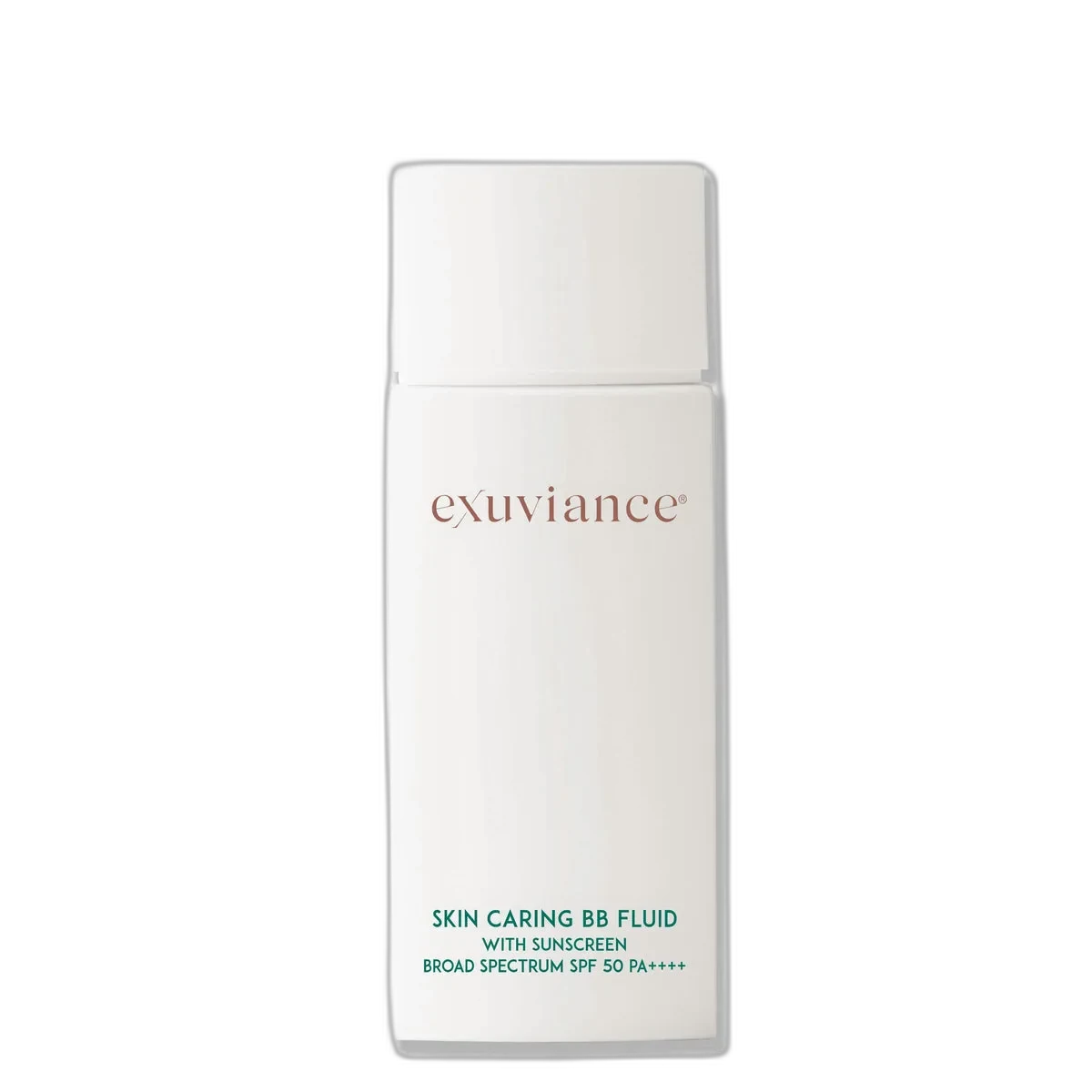
Skin Caring BB Fluid SPF 50
PHA-Powered Mineral Shield
 Verified reviewer
Pros & cons.
- +Dual mineral filters provide broad spectrum SPF 50 with PA++++ UVA rating
- +PHA ingredients offer gentle anti-aging exfoliation without increasing sun sensitivity
- +Lightweight fluid texture with minimal white cast for a mineral sunscreen
- +Green tea EGCG and vitamin E add meaningful antioxidant protection layers
- +Fragrance-free and paraben-free with excellent sensitive skin tolerability
- +Pregnancy-safe mineral-only UV filters with no chemical sunscreen concerns
- +Universal tint provides subtle tone evening on light to medium complexions
- −Product has been discontinued by Exuviance and remaining stock is limited
- −Single universal shade excludes medium-dark to dark skin tones entirely
- −Formula separates visibly and requires thorough shaking before every application
- −Can pill when layered over certain water-based serums or moisturizers
- −Relatively small 1.7 oz bottle runs out quickly with daily face and neck use
The full review.
Finding an excellent product just as a brand discontinues it is frustrating. The Exuviance Skin Caring BB Fluid SPF 50 falls into this category—an innovative mineral sunscreen that did more for skin than most SPFs, now disappearing from shelves.
The Exuviance Skin Caring BB Fluid SPF 50 stands out in the tinted mineral SPF market not because of the sun protection—many formulas use titanium dioxide and zinc oxide well—but because of what NeoStrata added. Gluconolactone and lactobionic acid, the brand’s signature polyhydroxy acids, provide gentle exfoliation and antioxidant protection that builds over weeks of daily use. The formulation reflects the expertise of a company founded by the dermatologists who wrote the textbook on hydroxy acid chemistry.
The texture justifies the name fluid. It pours like tinted water rather than a cream and requires a shake before each use because mineral particles settle. This is a feature of a formula that prioritizes lightweight wear over cosmetic elegance in the bottle. On the skin, it smooths to a sheer, satin finish that looks natural for a mineral sunscreen. The iron oxide universal tint neutralizes the chalky whiteness common in zinc-and-titanium formulas and provides enough coverage to even out minor discoloration.
The SPF 50 protection uses 7% titanium dioxide and 6% zinc oxide—effective mineral filters with a PA++++ UVA rating. There are no chemical filter controversies, reef-safety concerns, or absorption questions for those who want sunscreen to sit on top of the skin. Mineral filters are the gold standard for pregnancy, sensitive skin, and post-procedure use, and this formula delivers them in a wearable vehicle.
The PHA component highlights Exuviance’s heritage. Gluconolactone and lactobionic acid exfoliate by disrupting corneocyte bonds like traditional AHAs, but their larger molecular size means they work more slowly and gently without triggering the photosensitivity seen with glycolic or lactic acid. While putting exfoliating acids in a sunscreen sounds counterintuitive, PHAs are the exception. Over weeks of daily use, this gentle exfoliation improves texture and tone more than a standard mineral SPF.
Green tea extract (as EGCG — epigallocatechin gallate) and vitamin E provide a secondary antioxidant layer against free radicals from UV energy that passes the physical filters. This three-layer approach—physical block, gentle exfoliation, and antioxidant neutralization—is more thoughtful than most tinted SPFs.
This product had two limitations before its discontinuation. First, the universal tint only worked for light to medium skin tones. On deeper complexions, the sheer coverage looked ashy or provided no meaningful tint. A single-shade tinted product felt dated in a market that expects shade ranges.
Second, the separation issue. This is inherent to the fluid mineral formulation, not a defect, but it requires vigilance. Skipping the shake can lead to inconsistent UV filter distribution, undermining protection. Some users also reported pilling when layering over certain water-based serums, a silicone-base compatibility issue requiring trial and error.
At $46 for 1.7 ounces, the price was competitive for a dermatologist-developed mineral tinted SPF with active treatment ingredients. The cost per ounce was reasonable for the PHA and antioxidant payload, though the small bottle size requires frequent repurchasing for daily use.
The discontinuation is unfortunate. This product understood that a daily morning step is a powerful vehicle for cumulative treatment benefits. By adding PHA technology to a daily SPF, Exuviance created a product that improved with use. If you can find remaining stock, the Exuviance Skin Caring BB Fluid SPF 50 remains an excellent mineral tinted SPF—it just has an expiration date on its availability.
Formula
Ingredient analysis.
Full INCI list
Active Ingredients: Titanium Dioxide 7%, Zinc Oxide 6%. Inactive Ingredients: Aqua/Water/Eau, Dimethicone, Isododecane, C12-15 Alkyl Benzoate, Hydrogenated Polydecene, Butyloctyl Salicylate, Gluconolactone, Styrene/Acrylates Copolymer, Alumina, Ammonium Hydroxide, Lactobionic Acid, PEG-9 Polydimethylsiloxyethyl Dimethicone, Phenethyl Benzoate, Nylon-12, Tocopheryl Acetate, Epigallocatechin Gallate, Polyhydroxystearic Acid, Ethylhexylglycerin, Tocopherol, Dimethicone/PEG-10/15 Crosspolymer, Hydrogen Dimethicone, Isohexadecane, Sodium Citrate, Disteardimonium Hectorite, Magnesium Sulfate, Dipropylene Glycol, Propylene Carbonate, Sodium Bisulfite, Triethoxycaprylyl Silane, Phenoxyethanol, Iron Oxides (CI 77492), Iron Oxides (CI 77491, CI 77499).
Skin match.
The science.
The Science
NeoStrata uses polyhydroxy acids, its core area of expertise, in this sunscreen formula. Gluconolactone, a PHA with a molecular weight of 358 Da, exfoliates the stratum corneum. It uses the same desmosome-disrupting mechanism as glycolic acid (76 Da), but its larger size ensures slower, more even penetration. Research by Green et al. in Clinics in Dermatology (2009) shows gluconolactone improves fine lines, mottled pigmentation, and skin roughness similarly to glycolic acid—but without increasing minimal erythemal dose (MED) or photosensitivity. This makes it ideal for a sun protection product.
Lactobionic acid is a bionic acid and the larger cousin to gluconolactone at 358 Da. It adds chelating antioxidant properties beyond exfoliation. Studies show it inhibits matrix metalloproteinase (MMP) activity—enzymes that UV exposure activates to degrade collagen and elastin. In a sunscreen, lactobionic acid addresses photoaging preventively by blocking MMP activity and correctively by promoting cell turnover.
The 6% zinc oxide and 7% titanium dioxide combination provides the most comprehensive mineral UV filter pairing identified by photobiology research. Zinc oxide targets long-wavelength UVA-I rays (340-400nm), the deep-penetrating radiation that drives photoaging, while titanium dioxide excels against UVB and shorter UVA-II wavelengths. The PA++++ rating confirms UVA protection meets the highest Japanese standard.
Epigallocatechin gallate (EGCG), the green tea catechin in this formula, has extensive photoprotective research. A study in the Journal of the American Academy of Dermatology shows topical EGCG reduces UV-induced erythema and DNA damage in human skin. This provides a secondary photoprotective layer alongside the mineral filters.
References
- Polyhydroxy acids (PHAs) and bionic acids: therapeutic potentials — Clinics in Dermatology (2009)
Dermatologist Perspective
Board-certified dermatologists recommend mineral sunscreens as the safest option for sensitive, reactive, and post-procedure skin, and this formula fits that context. Dermatologists noted the polyhydroxy acids as a differentiator; dermatologists often recommend PHAs to patients who cannot tolerate traditional AHAs but need exfoliation. The dual benefit of daily sun protection and gentle PHA-driven skin improvement makes this a common recommendation for patients who want to simplify morning routines without losing active treatment benefits.
Guidance
Where it fits in your routine.
Shake the bottle vigorously for 5-10 seconds before each use to redistribute the mineral filters. Apply a liberal amount to the face and neck as the final step in your morning skincare routine. Use a nickel-sized amount for adequate SPF coverage. Wear it alone for light coverage or under makeup as a tinted primer with sun protection. Reapply every two hours during prolonged sun exposure. For best results, let any underlying serum or moisturizer absorb fully before application to minimize pilling.
At $46 for 1.7 fl oz, this product sits in the mid-range for dermatologist-developed tinted mineral sunscreens. Patented PHA technology, green tea antioxidant, and vitamin E make this more than a simple tinted SPF; these ingredients add treatment benefits that justify the premium over basic mineral sunscreens. However, the small bottle size requires frequent repurchasing for daily users — roughly every two to three months — which makes the annual cost higher than comparable products from pharmacy brands. Since it is discontinued, remaining stock may show varying price points from third-party sellers.
Light to medium skin types wanting a multitasking mineral SPF that improves skin texture over time. It works well for sensitive skin, pregnant individuals, and post-procedure patients needing gentle, effective daily sun protection and anti-aging benefits.
One universal shade does not match medium-dark to dark skin tones. This product is also not ideal for people who dislike shaking products before use or those who experience silicone-base pilling with their current serum routine. Because of the discontinuation, new users must decide if buying a product they cannot reliably repurchase makes sense.
Product details.
Unscented — no detectable fragrance or clinical odor
Plastic squeeze bottle with a flip-top cap. Compact and travel-friendly, but the formula separates and requires shaking before every use.
The fluid feels lightweight for a mineral SPF 50 on first application. The universal tint immediately evens skin tone subtly. It causes no stinging, burning, or adjustment period — it works for daily use from day one.
2-3 months with daily face application
12 months
All Year
The backstory.
This product represents NeoStrata's philosophy that sun protection and skin treatment should not be separate steps. By incorporating their patented PHA technology into a mineral sunscreen, they created a product that addresses photoaging both defensively (UV filters) and actively (exfoliation and antioxidants) in a single application.
About Exuviance
Legacy Brand (20+ years)Exuviance is a consumer line from NeoStrata Company, founded in 1988 by dermatologists Dr. Eugene Van Scott and Dr. Ruey Yu — the researchers who pioneered the use of Alpha Hydroxy Acids in dermatology. The brand was acquired by Johnson & Johnson in 2016 and its formulations are rooted in decades of published AHA and PHA research.
Common myths.
Mineral sunscreens leave a white cast and feel thick on the skin.
This fluid formula uses micronized titanium dioxide and zinc oxide in a silicone base to reduce white cast. Iron oxide tints neutralize remaining chalkiness, but the universal shade mostly suits light to medium complexions.
Exfoliating acids in a sunscreen increase skin sensitivity to the sun.
Polyhydroxy acids like gluconolactone and lactobionic acid do not increase photosensitivity, unlike traditional AHAs such as glycolic acid. NeoStrata's own research shows PHAs exfoliate without the UV sensitivity trade-off.
FAQ.
Does the universal tint work for dark skin tones?
The single universal shade fits light to medium skin tones and does not match darker complexions. The sheer tint extends its workable range, but deeper skin tones will find it ashy or mismatched.
Can I use this BB fluid as my only moisturizer in the morning?
The dimethicone base feels smooth and hydrating, but this is mainly a sun protection product. Dry skin types benefit from layering a hydrating serum or light moisturizer underneath. Oily and combination skin types may find it moisturizing enough alone.
Why does the formula separate in the bottle?
The fluid formulation uses mineral UV filters in a lightweight liquid vehicle. This formula type separates normally—shake the bottle for 5-10 seconds before each application to distribute the active sunscreen ingredients evenly.
Is this sunscreen safe during pregnancy?
Yes — this formula uses only mineral UV filters (titanium dioxide and zinc oxide) that sit on the skin instead of absorbing. The PHA ingredients are pregnancy-safe, unlike glycolic acid and retinoids. This is one of the safer sunscreen choices for expectant mothers.
What the community says.
"Lightweight fluid texture that doesn't feel heavy or greasy"
"Effective sun protection even for fair skin in intense sun"
"Universal tint blends well on light to medium skin tones"
"PHA ingredients provide anti-aging benefits alongside sun protection"
"No white cast typical of mineral sunscreens"
"Universal tint only works for light to medium skin tones"
"Formula separates and requires thorough shaking before use"
"Can pill over certain serums or moisturizers"
"Price is steep for the amount of product"
"Product has been discontinued by the brand"
People also looked at.