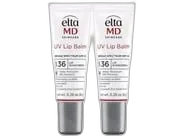
UV Lip Balm Broad-Spectrum SPF 36
Lip Protection Essential
 Verified reviewer
Pros & cons.
- +SPF 36 broad-spectrum coverage exceeds most lip SPF products on the market
- +Hydromanil sustained-release hydration keeps lips moisturized for hours
- +Four-antioxidant complex provides active free radical defense beyond UV filtering
- +Petrolatum and natural wax base creates effective occlusive moisture barrier
- +Travel-friendly tube size fits easily in pockets and bags
- +Fragrance-free and paraben-free formula
- −Noticeable white cast especially on medium to dark lip tones
- −Contains octinoxate which some users prefer to avoid for health or reef concerns
- −Premium price at $21 for a 0.28 oz lip balm
- −Can shift lipstick colors when layered underneath
- −Initial grittiness from zinc oxide requires rubbing lips together to smooth
- −Contains beeswax which excludes vegan consumers
The full review.
Dermatologists want people to know this: lip skin has no melanin. While your face has baseline UV defense, your lips have none. Lip skin is thinner, produces no sebum for natural moisturization, and sits on the most prominent part of your face. This is why dermatologists have handed out EltaMD UV Lip Balm samples for years.
The UV protection architecture is solid. Zinc oxide at 7% handles the UVA spectrum, which causes DNA damage and premature aging. Octinoxate at 7.5% absorbs UVB radiation. Together, they achieve SPF 36 broad-spectrum coverage, which is higher than the SPF 15-25 range of most lip SPF products. This mineral plus chemical filter combination maximizes protection and keeps the texture wearable.
The moisturization system differentiates this lip balm from basic SPF lip products. Hydromanil, derived from the tara tree, provides a 5% concentration sustained-release hydration mechanism. It creates a moisture-retaining film that delivers hydration hours after application. A base of petrolatum, castor oil, olive oil, and a trio of natural waxes (beeswax, carnauba, candelilla) provides the occlusive foundation that prevents transepidermal water loss from the lip surface.
The antioxidant quartet—vitamin C ester, vitamin E, alpha-lipoic acid, and quercetin—is sophisticated for a lip balm. Quercetin, a flavonoid antioxidant, shows photoprotective properties in research and offers UV defense beyond the SPF filters. Alpha-lipoic acid’s dual solubility protects against free radicals in both the aqueous and lipid compartments of the lip tissue. This is active antioxidant defense, not just UV blocking.
The white cast
The white cast is an issue. Zinc oxide at 7% is visible on the thin, pigmented surface of your lips. On lighter skin tones, it creates a slightly milky, luminous appearance. On medium to darker lip tones, it is more conspicuous and creates an unnatural lightening effect. Under lipstick, it can shift colors, specifically creating a bluish undertone under certain reds and berries.
Texture
The texture beats most zinc-containing lip products but has quirks. Initial application has a subtle grittiness from mineral particles, which smooths out as the balm warms and melts into the lip surface. Once settled, it feels like a thick, moisturizing balm—not waxy or overly slick, just hydrated. It stays put well, though eating and drinking will remove it, requiring reapplication.
Conflicts With
Octinoxate is the main concern. While FDA-approved and widely used, octinoxate faces scrutiny for potential hormone disruption and is banned in Hawaii and Key West due to coral reef impact. This hybrid formula won’t qualify for users seeking mineral-only UV protection. EltaMD could reformulate with more zinc oxide or another mineral filter, but this would likely worsen the white cast.
Price
At $21 for 0.28 ounces, this is expensive for a lip balm but mid-range for specialized lip sunscreen. The question is whether effective lip sun protection is worth $21. For anyone who understands cumulative UV damage on unprotected lip tissue, the answer is clear. A single actinic keratosis removal on the lip vermilion costs considerably more.
You buy EltaMD UV Lip Balm because you understand why it matters, not because it is exciting. It lacks cute packaging or trendy flavors. It is not a lip product you show off in your bag. But it protects the two most vulnerable inches of your face with the same seriousness EltaMD brings to your other UV defense. In ten years, when your lips do not look like they spent a decade unprotected in the sun, you will be glad you made the boring choice.
Formula
Ingredient analysis.
Full INCI list
Active Ingredients: Octinoxate 7.5%, Zinc Oxide 7.0%. Inactive Ingredients: Petrolatum, Ricinus Communis (Castor) Seed Oil, Cetearyl Alcohol, Water, Lauryl Laurate, Flavor, Polyethylene, Olea Europaea (Olive) Fruit Oil, Hydrogenated Soybean Oil, Beeswax, Glycerin, Glyceryl Behenate, Copernicia Cerifera (Carnauba) Wax, Euphorbia Cerifera (Candelilla) Wax, Hydrogenated Castor Oil, Hydrolyzed Caesalpinia Spinosa Gum, Microcrystalline Wax, Caesalpinia Spinosa Gum, Sodium Benzoate, Potassium Sorbate, Ascorbyl Palmitate, Thiotic Acid, Tocopheryl Acetate, Quercetin
Skin match.
The science.
The Science
Lip skin presents unique photoprotection challenges that the UV Lip Balm is specifically formulated to address. The vermilion border of the lip contains little to no melanin, lacks sebaceous glands, and has a thinner stratum corneum compared to other facial skin — making it disproportionately susceptible to UV-induced damage.
Zinc oxide at 7% provides broad-spectrum UV protection through physical scattering and absorption of UV radiation. Its particular value in lip products stems from its UVA coverage, as UVA radiation penetrates deeper into tissue and is the primary driver of DNA damage and photoaging in thin lip skin. Studies have consistently demonstrated zinc oxide's stability advantage over chemical-only filters, as it does not degrade with UV exposure.
Octinoxate at 7.5% contributes UVB absorption that complements zinc oxide's broader but less intense UVB coverage. The combined SPF 36 provides protection against approximately 97% of UVB radiation, meeting the American Academy of Dermatology's recommendation of SPF 30 or higher.
Research on actinic cheilitis — a premalignant condition of the lower lip caused by chronic UV exposure — supports the importance of dedicated lip photoprotection. A study published in the Journal of the American Academy of Dermatology highlighted that consistent use of lip sunscreen significantly reduces the incidence of actinic keratoses on the lip vermilion, particularly in fair-skinned individuals.
Quercetin, included in the antioxidant complex, has demonstrated photoprotective properties beyond simple free radical scavenging. Research published in Molecules (2019) showed that quercetin absorbs UV radiation in the UVB and short-wave UVA range, providing supplementary photoprotection alongside the primary UV filters. Alpha-lipoic acid's role as a universal antioxidant — effective in both aqueous and lipid phases — is particularly relevant for lip tissue, which contains both hydrophilic and lipophilic compartments.
Dermatologist Perspective
Dermatologists universally recommend dedicated lip sun protection, and the EltaMD UV Lip Balm is among the most commonly recommended options in clinical practice. Board-certified dermatologists note that lip cancer accounts for approximately 0.6% of all cancers in the United States, with the vast majority occurring on the lower lip — the area most exposed to direct UV radiation. The SPF 36 broad-spectrum rating exceeds the minimum SPF 30 recommended by the American Academy of Dermatology. Dermatologists particularly recommend this product for patients with a history of cold sores (UV exposure can trigger HSV-1 reactivation), fair-skinned individuals, outdoor workers, and anyone taking photosensitizing medications. The addition of antioxidants beyond the UV filters is viewed as a meaningful enhancement over simpler lip SPF products.
Where it fits in your routine.
Apply a thick layer to lips at least 15 minutes before sun exposure. Reapply every 2 hours during outdoor activity, and immediately after eating, drinking, or toweling off. Wear it alone or as a base layer under lipstick or gloss — let the balm set for one minute before applying color products. For daily use, apply in the morning with your sunscreen and carry the tube to reapply throughout the day.
At $21 for 0.28 ounces, this sits in the premium lip care segment. Specialized lip sunscreens with SPF 30+ and antioxidant complexes are rare; most alternatives offer less SPF or less moisturization. The Hydromanil hydration system and four-antioxidant complex provide value beyond UV filtering. One tube lasts 2-3 months with regular daily use. This costs about $7-10 per month for daily lip protection—a reasonable preventive skincare investment from a brand with three decades of UV protection expertise.
This is for outdoor users, especially fair-skinned people, those with cold sores, outdoor workers, and anyone serious about lip sun protection. It is essential for facial sunscreen users who neglect their lips.
This contains octinoxate, so it is not a mineral-only sunscreen. The white cast may show under dark lipstick shades if you want a sheer, invisible lip SPF. Vegan consumers should note the beeswax content.
Product details.
Fragrance-free but has a mild, neutral flavor that does not dominate.
Standard lip balm tube (0.28 oz) fits in any pocket or bag for travel. A twist-up mechanism makes application easy.
Lips feel moisturized and protected immediately. The white cast shows clearly — especially on darker lip tones — but fades as the balm settles. Rubbing lips together blends the zinc oxide more evenly. If wearing under lipstick, let the balm set for one minute.
2-3 months with daily use (applying 2-3 times per day)
12 months
All Year
The backstory.
Developed as the natural extension of EltaMD's UV sunscreen expertise to the most neglected area of facial sun protection — the lips. Lip skin is thinner, has no melanin, and produces no sebum, making it uniquely vulnerable to UV damage and dryness. The UV Lip Balm was engineered to address all three vulnerabilities simultaneously.
About EltaMD
Legacy Brand (20+ years)EltaMD began with Swiss healing ointment traditions. It launched in the US in 1988 as a professional wound care line for hospitals and burn centers. The brand moved to consumer skincare in 2007 and is the #1 dermatologist-recommended professional sunscreen brand. Colgate-Palmolive acquired EltaMD in 2018.
Common myths.
Regular lip balm provides enough sun protection.
Standard lip balms have zero UV protection. Lip skin lacks melanin for natural defense, so it is one of the body's most UV-vulnerable areas. Using dedicated lip SPF like this product is the only way to protect lips from UV damage, which causes actinic cheilitis and lip cancer.
SPF lip products are only needed at the beach.
Most lip sun damage comes from cumulative daily UV exposure. Up to 80% of UV radiation reaches the skin even on overcast days. Dermatologists recommend daily lip SPF year-round, especially for people with fair skin or a history of cold sores (which UV can trigger).
FAQ.
Does EltaMD UV Lip Balm leave a white cast?
Yes — the 7% zinc oxide leaves a visible white cast, especially on medium to darker lip tones. The cast fades as the balm melts, and rubbing lips together helps distribute it evenly. Under lipstick, it shifts colors and creates a bluish undertone under certain shades.
Is EltaMD UV Lip Balm reef safe?
Not entirely — it contains octinoxate (7.5%), which Hawaii and Key West banned due to coral reef impact. The zinc oxide component is reef-safe, but the octinoxate makes this a hybrid formula that fails reef-safe requirements under current legislation.
Can I wear lipstick over EltaMD UV Lip Balm?
Yes, but let the balm set for about a minute before applying color. The zinc oxide's white cast may shift lipstick colors slightly; some users report a bluish undertone under certain reds and berries. Sheer glosses and nude shades are less affected.
How often should I reapply EltaMD UV Lip Balm?
Reapply every 2 hours during sun exposure, and immediately after eating, drinking, or toweling off. These activities remove Lip products faster than facial sunscreen, so frequent reapplication keeps protection active.
Is EltaMD UV Lip Balm good for cold sores?
Lip SPF does not treat cold sores, but dermatologists recommend it to prevent UV-triggered HSV-1 reactivation. UV exposure triggers cold sores; consistent lip sun protection reduces outbreak frequency for susceptible individuals.
What the community says.
"Highly moisturizing formula keeps lips hydrated all day"
"Effective broad-spectrum SPF 36 protection"
"Convenient tube size for travel and daily carry"
"Long-lasting formula that doesn't require constant reapplication"
"Noticeable white cast on lips, especially under lipstick"
"Can feel slightly gritty initially from zinc oxide"
"Some users find it too thin and needing frequent reapplication"
"May create a bluish hue under certain lipstick colors"