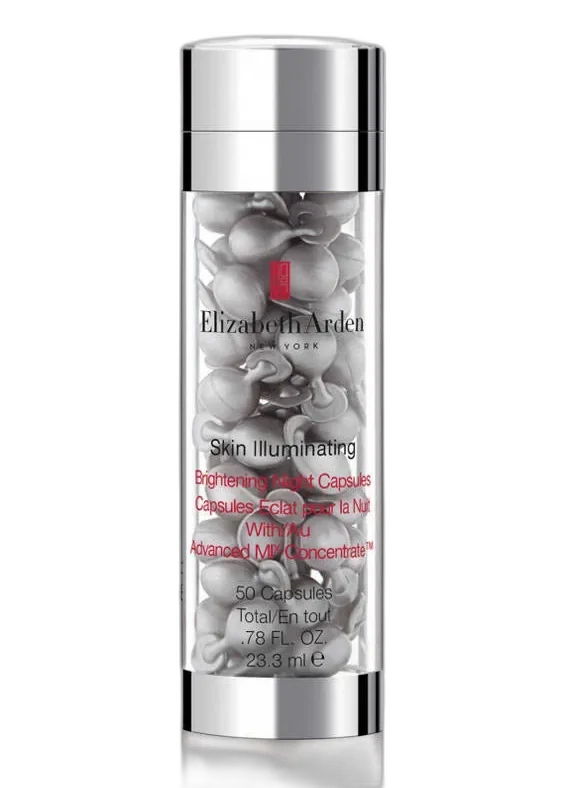
Skin Illuminating Brightening Night Capsules
Brightening Capsule Format
 Verified reviewer
Pros & cons.
- +Anhydrous capsule format genuinely protects the vitamin C ester from oxidation
- +Multi-pathway brightening — vitamin C, HMPD-style active, niacinamide, licorice
- +Completely fragrance-free and tolerated by sensitive skin
- +Silky texture absorbs without pilling under moisturizer
- +Single-dose precision eliminates application guesswork
- +Travel-friendly individual doses
- +Slow but real visible brightening over 8-12 weeks
- +Pioneering capsule format with 35-year track record
- −Expensive per dose at roughly $1.76 per night
- −Plastic capsule shells aren't typically curbside recyclable
- −Inflexible dosing — one capsule whether you need it or not
- −No retinoid or strong acid for users wanting visible resurfacing
- −Slower visible results than L-ascorbic acid serums in fresh formulations
The full review.
In 1990, Elizabeth Arden changed the prestige skincare market. They launched Ceramide Capsules—small, pearl-like, single-dose pods you twist open and press into your skin. This format solves a real problem: ceramides and other lipid actives oxidize easily, and conventional bottle packaging exposes them to air and contamination. By sealing each dose in an anhydrous shell, the capsules keep the chemistry fresh from manufacture to use. The original Ceramide Capsules became a long-running luxury skincare cult favorite, and this format eventually created a whole subcategory of single-dose ampoule and capsule products.
The Brightening Night version, released in 2018, applies that delivery system to a problem where the format matters. Pigmentation actives are highly stability-sensitive. L-ascorbic acid oxidizes in water and turns brown in a bottle within weeks. HMPD-style brightening molecules perform poorly in aqueous environments. Most pigmentation serums either accept bottle degradation over months or formulate in ways that compromise active concentration. The capsule format avoids this. Every pearl is a single, sealed, anhydrous silicone-and-oil dose. The vitamin C ester, HMPD-related active, niacinamide, and licorice extract inside arrive at your skin as fresh as the day they were filled. The delivery system matches the chemistry of the actives.
The formula is thoughtful. Tetrahexyldecyl ascorbate is the chosen vitamin C—an oil-soluble ester that converts to active ascorbic acid in skin. It offers better stability and less irritation than L-ascorbic acid, especially in an anhydrous environment. The brightening molecule blend addresses melanogenesis interference through a mechanism distinct from vitamin C, providing a multi-pathway approach to pigment. Niacinamide adds melanosome transfer inhibition and barrier support; this matters because compromised barriers often flare with hyperpigmentation. Licorice root extract provides glabridin, a tyrosinase-inhibiting compound with evidence in pigmentation research. Phytic acid offers mild exfoliation and antioxidant action. There are no aggressive acids, retinoids, or hydroquinone, but the layered approach follows modern brightening protocols: multiple gentle pathways stacked together in a formula protected from oxidation.
The sensorial experience keeps users loyal. The capsule is a small ritual—twist the cap, dispense the exact amount, and press it into your face. There is no waste, no dropper guesswork, and no risk of using too much or too little. The texture is silky, absorbs quickly, and leaves a satin finish that does not pill under a moisturizer. It is fragrance-free, which is rare at this price and makes it usable for sensitive skin. There is no stinging, tingling, or purging. This is a slow-burn brightening serum that works over weeks rather than overnight.
Most users see luminosity improvements within about two weeks. Visible fading of dark spots and tone evenness develops over 8-12 weeks of consistent nightly use, matching published research on gentle brightening combinations. Pair it with strict daily sunscreen—and ideally a morning antioxidant—to compound results. Skipping sunscreen undoes the work every day, the most common reason brightening routines fail.
Limitations involve cost and waste. At $88 for 50 capsules, you pay about $1.76 per night, which adds a meaningful monthly cost to a routine. The capsules are small plastic shells that are not curbside recyclable in most places, a sustainability concern in 2026. The rigid one-capsule-per-night dosing means you cannot use a smaller amount or stretch a capsule over two days. The format is precise but inflexible.
For gentle, multi-pathway brightening in a format that protects actives, this is a strong luxury option. It is a good pick for reactive skin that cannot tolerate stronger protocols, or for users wanting a brightening treatment that fits into any routine. It earns the place Elizabeth Arden has held for the capsule format for 35 years.
Formula
Ingredient analysis.
Full INCI list
Cyclopentasiloxane, Caprylic/Capric Triglyceride, Dimethicone, PPG-12/SMDI Copolymer, Tetrahexyldecyl Ascorbate, Bis-Ethylhexyl Hydroxydimethoxy Benzylmalonate, Tocopheryl Acetate, Helianthus Annuus (Sunflower) Seed Oil, Olea Europaea (Olive) Fruit Oil, Ascorbyl Tetraisopalmitate, Squalane, Niacinamide, Glycyrrhiza Glabra (Licorice) Root Extract, Phytic Acid, Glycerin, Bisabolol
Skin match.
The science.
The Science
Tetrahexyldecyl ascorbate is an oil-soluble ascorbic acid ester. Research shows it is more stable than L-ascorbic acid in topical formulations and converts to active vitamin C in skin. Published studies show vitamin C esters provide antioxidant and brightening benefits with better stability in non-aqueous bases—the exact environment this capsule provides. The hydroxymethoxyphenyl decanone-related active in this formula belongs to a class of synthetic molecules that interfere with melanogenesis by modulating the tyrosinase pathway; published clinical evidence for this is growing but limited. Niacinamide has the strongest evidence base in the formula. Multiple peer-reviewed studies show it inhibits melanosome transfer to keratinocytes, a mechanism distinct from tyrosinase inhibition that targets late-stage pigmentation. Licorice root extract contains glabridin, a polyphenol with documented tyrosinase-inhibiting activity in published in-vitro and limited clinical work. Phytic acid is a mild chelator and antioxidant that exfoliates gently and has appeared in brightening protocols for decades. This multi-pathway brightening strategy—combining tyrosinase inhibition, melanosome transfer inhibition, and antioxidant protection—aligns with the dermatological consensus that gentle, layered approaches work better and tolerate better than single-active high-strength approaches for most patients. The anhydrous capsule delivery format solves well-documented stability problems with brightening actives in conventional aqueous serum bases. Published packaging-and-stability research shows that air, water, and light degrade many vitamin C derivatives and pigmentation actives over time.
Dermatologist Perspective
Dermatologists often recommend gentle multi-pathway brightening approaches for patients with melasma or sensitive skin. Aggressive single-active protocols (high-strength hydroquinone, prescription tretinoin, strong glycolic peels) often cause irritation that worsens pigmentation through post-inflammatory hyperpigmentation. The combination of a vitamin C ester, niacinamide, and licorice extract matches what board-certified dermatologists often suggest for starter or maintenance brightening routines, especially for patients who cannot tolerate stronger options. Dermatologists also note that single-dose capsule formats benefit patients prone to skin reactions because they eliminate contamination risks from repeatedly opening a serum bottle and ensure consistent active concentration throughout the product's use life. The fragrance-free formulation suits rosacea, eczema, and post-procedure skin. Dermatologists emphasize that any brightening protocol must include rigorous daily sun protection, as UV exposure is the primary driver of new pigmentation regardless of treatment.
Where it fits in your routine.
Apply nightly to dry skin after cleansing. Twist or snap one capsule, dispense the whole dose into your palm or onto fingertips, and press into face and neck before other treatments or moisturizers. Wait 30 seconds for absorption, then layer your nighttime moisturizer on top. One full capsule covers face and neck. If you use a prescription retinoid, alternate nights to avoid stacking actives—for example, capsules Sunday/Tuesday/Thursday and retinoid Monday/Wednesday/Friday. Always use daily sunscreen in the morning, as UV exposure drives new pigmentation and undoes brightening progress.
At $88 for 50 capsules, the per-night cost is about $1.76. This costs more than a comparable bottled brightening serum but fits luxury single-dose formats. The capsule packaging protects stability-sensitive actives, justifying the premium. The format earns its price for users facing vitamin C serum oxidation or those needing a fragrance-free, sensitive-skin-friendly brightening option. Shoppers prioritizing ingredient cost-effectiveness can get similar benefits from an oil-soluble vitamin C serum at a lower cost, though stability tradeoffs exist. The 50-capsule jar is the standard size and lasts about seven weeks at one capsule per night.
This fragrance-free, stable night treatment brightens via multiple pathways. It works for normal, dry, combination, or sensitive skin. It suits users who find L-ascorbic acid serums oxidize or cause irritation.
Use a retinoid or stronger acid product for fast visible resurfacing. Sustainability-focused shoppers may avoid the single-use plastic capsule format and choose a refillable or glass-packaged alternative.
Product details.
Lightweight silicone-oil hybrid that absorbs quickly with a satin finish
Essentially fragrance-free
Pearlescent rounded capsules in a refillable jar
New users notice the single-dose ritual's precision — twist the cap, dispense the exact amount, and avoid waste or oxidation. The texture is silky and absorbs fast without tackiness. It has no fragrance, no stinging or tingling, and no immediate dramatic effect. Within one to two weeks, skin looks more luminous in the morning.
Approximately 50 nights of use — about 7 weeks of nightly application
24 months
All Year
The backstory.
Elizabeth Arden launched the original Ceramide Capsules in 1990 and effectively created the prestige single-dose capsule category. The Brightening Night version, released in 2018, extended that pioneering delivery system to address pigmentation specifically — using the anhydrous capsule environment to protect a vitamin C ester and an HMPD-based active blend that would degrade quickly in conventional packaging.
About Elizabeth Arden
Legacy Brand (20+ years)Elizabeth Arden launched in 1910. In 1990, Elizabeth Arden introduced the Ceramide Capsules, pioneering the modern single-dose ceramide capsule format. These remain one of the prestige market's longest-running cult-favorite skincare products. The brightening night version uses that delivery system for a pigmentation-focused active blend.
Common myths.
Vitamin C only works in L-ascorbic acid form
L-ascorbic acid has the most published clinical data but faces stability issues. It oxidizes in air and water, turning brown in the bottle within weeks. Tetrahexyldecyl ascorbate is an oil-soluble ester that converts to active vitamin C in skin. It has better stability and less irritation, especially in an anhydrous capsule like this.
The capsule format is marketing — the same formula works in a bottle
No—the capsule provides single-dose anhydrous protection. Putting the same vitamin C ester and HMPD blend in an opened bottle exposes them to air and contamination every use, which reduces their working life. This format does real chemistry work.
FAQ.
How are these different from the original Ceramide Capsules?
The original Ceramide Capsules use ceramides and essential lipids for barrier repair and hydration. The Brightening Night version uses a vitamin C ester, HMPD-style active blend, niacinamide, and licorice extract to target pigmentation and dullness. It uses the same delivery system for a different problem.
Can I use these every night?
Yes — the formula works for nightly use. It is fragrance-free, non-irritating, and gentle enough for most skin types to use daily. If you use a strong retinoid, alternate nights to avoid stacking too many actives.
Are they suitable for sensitive skin?
Yes. The formula is fragrance-free, alcohol-free, and uses gentle brightening actives like the vitamin C ester instead of the more irritating L-ascorbic acid. The capsule format also stops oxidized degradation products from forming, which can irritate skin in older serum bottles.
Can I use one capsule for face and neck?
Yes — one capsule provides enough product for face and neck. If your skin is very dry or your application area is large, mix the dose into a moisturizer to spread it easier.
Is the plastic capsule recyclable?
The capsules are small plastic shells and are not typically curbside recyclable. Some users save the empties for specialty programs like TerraCycle or beauty-brand take-back schemes.
How long until I see brightening results?
Skin looks more luminous within 2 weeks. Dark spots fade and skin tone evens over 8-12 weeks of nightly use. Use daily SPF for maximum benefit; sunscreen prevents new spots.
Community
What the community says.
"Skin looks brighter and more even"
"No irritation despite being active"
"Capsule format is clean and precise"
"Fragrance-free"
"Travel-friendly single doses"
"Expensive per dose"
"Plastic capsule waste"
"Can feel slightly silicone-heavy"
"Have to use the full capsule even on a no-makeup night"
People also looked at.