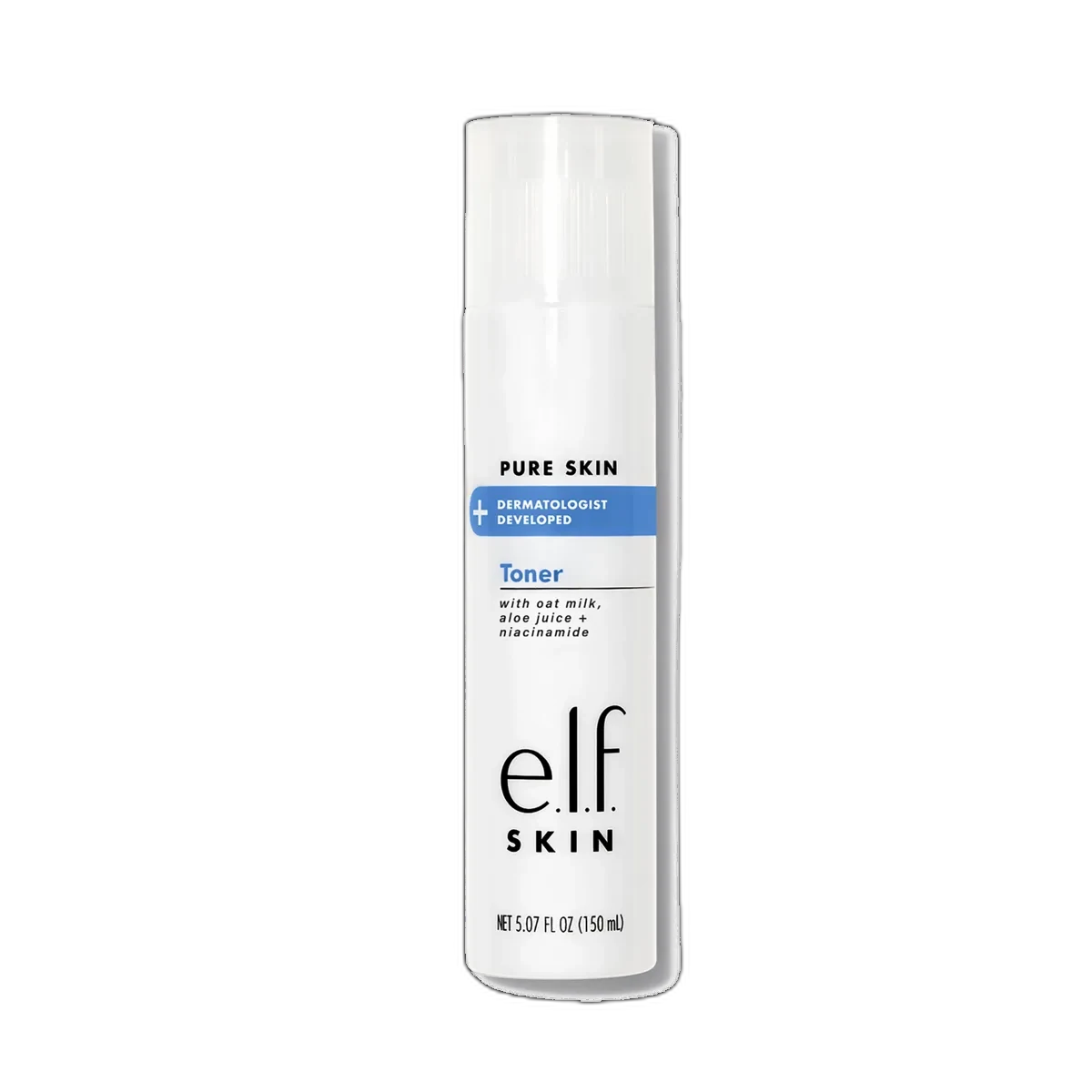
Pure Skin Toner
Barrier-Repair Starter Kit
 Verified reviewer
Pros & cons.
- +Three ceramides (NP, AP, EOP) with cholesterol and phytosphingosine — medical-grade barrier repair at 0
- +Niacinamide at meaningful concentration for both internal ceramide stimulation and skin evening
- +Oat flour, aloe, chamomile, and allantoin provide multi-pathway soothing for sensitive skin
- +Fragrance-free, vegan, and dermatologist-developed with a clean ingredient list
- +Generous 150mL size lasts 3-4 months with twice-daily use
- +Mild glycolic acid assists cell turnover and enhances absorption of subsequent products
- −Some users notice a faint grainy texture from the oat kernel flour
- −Witch hazel water may concern those with very reactive or rosacea-prone skin
- −Glycolic acid, even at low concentration, adds cumulative exfoliation when paired with other acids
- −Effects are gradual and subtle — not immediately dramatic
- −Dispensing mechanism could be improved for precise application
The full review.
Dermatologists consider a specific lipid combination the gold standard for skin barrier repair: ceramides, cholesterol, and phytosphingosine in a ratio that mirrors the skin’s natural lipid matrix. This combination appears in prescription-adjacent products from CeraVe, medical-grade formulations from SkinCeuticals, and barrier-repair treatments costing thirty to sixty dollars. It also appears in a ten-dollar toner from e.l.f.
The Pure Skin Toner includes Ceramide NP, Ceramide AP, and Ceramide EOP — the three ceramide classes most abundant in the human stratum corneum — alongside cholesterol and phytosphingosine. This is not a token ceramide mention at the bottom of an ingredient list. The supporting lipid infrastructure (sodium lauroyl lactylate as an emulsifier compatible with ceramide delivery, cholesterol and phytosphingosine as essential lipid partners) shows that someone who understands ceramide biochemistry formulated this product, not just someone who wanted to list ceramides on the label.
Niacinamide sits fourth in the INCI list — a position that indicates a meaningful concentration, likely 2-3%. In this formula, niacinamide has a dual purpose: it provides skin-evening and pore-refining benefits while stimulating the skin’s endogenous ceramide production. The formula supplies ceramides externally (from the three ceramide ingredients) while encouraging the skin to make more of its own. This belt-and-suspenders approach to barrier repair is more thoughtful than most products at any price.
Aloe vera juice is the second ingredient and chamomile flower water is further down the list, establishing the formula’s soothing character. For skin that is sensitized, reactive, or recovering from over-exfoliation or harsh weather, these botanical calming agents provide immediate comfort while the ceramides work on structural repair over days to weeks.
The oat kernel flour adds beta-glucan and avenanthramide soothing without the heavier texture of colloidal oatmeal. Some users notice a faint, barely perceptible graininess from the oat that dissipates on application. This is a worthwhile trade-off for the anti-inflammatory benefits of oat — a toner designed for calming skin, and oat is one of the most evidence-backed soothing ingredients available.
Hyaluronic acid (sodium hyaluronate) handles the hydration mechanics. Applied to slightly damp skin — the optimal condition for HA absorption — it draws moisture into the stratum corneum and creates a hydrated canvas for subsequent products. The glycerin backing it up provides additional humectant support. Together, they deliver immediate plumping and softening that makes a toner feel active rather than just prepping the skin.
The glycolic acid inclusion will generate the most discussion. In a product for sensitive skin, any AHA may seem contradictory. However, the concentration is low — positioned well down the INCI list — and at the formula’s likely pH, the glycolic acid provides gentle surface-level exfoliation that improves cell turnover and product absorption rather than the aggressive peel of higher concentrations. Think of it as a maintenance exfoliation layer rather than a treatment dose.
Witch hazel water appears further down the list, which may concern some sensitive-skin advocates. This is witch hazel water (a hydrosol distillate), not alcohol-based witch hazel extract. At this concentration, it provides mild astringent and antioxidant benefits. For truly reactive skin, patch testing is advisable, but the overall formula context — ceramides, oat, aloe, allantoin — creates a soothing environment that counterbalances any mild astringency.
The texture is a clear, slightly viscous liquid that pours easily and absorbs in seconds. There is no residue, tackiness, or film — just softer, more hydrated skin primed to receive what comes next. This toner improves the efficacy of your entire routine by creating optimal conditions for active ingredient absorption.
At ten dollars for 150mL, the value is extraordinary. Three ceramides, cholesterol, phytosphingosine, niacinamide, hyaluronic acid, glycolic acid, oat flour, chamomile, and aloe are in a product that costs less than a movie ticket. The bottle lasts three to four months with twice-daily use. The annualized cost is approximately thirty to forty dollars for a product that provides the barrier-repair foundation for the rest of your routine.
For skincare beginners, this toner is the best product to start with at this price point. It teaches the skin to be healthier — repairing barrier function, improving hydration retention, and creating conditions where other products work more effectively. It is the foundation that makes a simple routine feel comprehensive.
Formula
Ingredient analysis.
Full INCI list
Water (Aqua), Aloe Barbadensis Leaf Juice, Glycerin, Niacinamide, Trehalose, Ceramide NP, Ceramide AP, Ceramide EOP, Glycolic Acid, Sodium Hyaluronate, Chamomilla Recutita (Matricaria) Flower Water, Tocopheryl Acetate, Hamamelis Virginiana (Witch Hazel) Water, Avena Sativa (Oat) Kernel Flour, Sodium PCA, Allantoin, Phytosphingosine, Cholesterol, Pentylene Glycol, Sodium Lauroyl Lactylate, Caprylyl/Capryl Glucoside, Polyglyceryl-3 Cocoate, Polyglyceryl-10 Laurate, Xanthan Gum, Carbomer, Phenoxyethanol, Ethylhexylglycerin, Sodium Benzoate, Citric Acid, Benzoic Acid, Disodium EDTA, Tromethamine
Skin match.
The science.
The Science
The ceramide-cholesterol-phytosphingosine combination in this toner uses decades of research into stratum corneum lipid composition. The skin barrier contains approximately 50% ceramides, 25% cholesterol, and 15% free fatty acids in lamellar structures. Research in the Journal of Investigative Dermatology shows that topical application of ceramides with cholesterol and free fatty acids in physiological ratios repairs the barrier faster than any single lipid component alone.
The three ceramide classes included — NP, AP, and EOP — are the most abundant ceramide subclasses in human skin. Ceramide NP (non-hydroxy palmitic acid) and AP (alpha-hydroxy palmitic acid) are the main structural lipids, while Ceramide EOP (ester-linked omega-hydroxy palmitic acid) links the lipid lamellae to the cornified cell envelope to provide the structural integrity that prevents barrier breakdown.
Phytosphingosine works as a ceramide precursor and an antimicrobial agent. Research shows phytosphingosine has anti-inflammatory properties and stimulates ceramide synthesis in keratinocytes, adding a barrier repair pathway beyond the externally supplied ceramides.
Dermatological literature documents niacinamide's barrier-strengthening mechanism. Studies in the British Journal of Dermatology show that topical niacinamide at 2% increases production of ceramides, cholesterol, and fatty acids in the stratum corneum, amplifying the external ceramide supply in this formula. The synergy between externally applied ceramides and niacinamide-stimulated endogenous ceramide production creates a more comprehensive barrier-repair approach than either strategy alone.
Dermatologist Perspective
Dermatologists recognize the ceramide-cholesterol-phytosphingosine combination as the evidence-based standard for topical barrier repair. Board-certified dermatologists note that a toner format is advantageous because the lightweight vehicle penetrates the stratum corneum rapidly after cleansing, when the barrier is most receptive. Adding niacinamide to stimulate endogenous ceramide production uses a dual-pathway approach that dermatologists find effective for patients with chronically compromised barriers. Dermatologists advise patients with sensitive skin to watch for reactions to the glycolic acid or witch hazel, though the concentrations in this formula unlikely cause issues for most.
Where it fits in your routine.
After cleansing, pour a quarter-sized amount into your palm or onto a cotton pad while skin is still slightly damp. Pat or press gently across the face and neck; do not rub. For extra hydration, apply 2-3 layers using the patting method, letting each layer absorb before adding the next. Follow with serum and moisturizer. Use twice daily, morning and evening. Store at room temperature away from direct sunlight.
At 0 for 150mL, this toner has the best ingredient-to-price ratio in its category. It contains three ceramides with cholesterol and phytosphingosine, niacinamide, hyaluronic acid, glycolic acid, and oat flour—an ingredient list premium skincare brands charge 5-35 for. One bottle lasts 3-4 months with twice-daily use. This makes the monthly cost .50-3.30 for a barrier-repair toner with multiple active ingredients. The value is unmatched in the drugstore toner market.
This works for dry, sensitive, or barrier-compromised skin needing an affordable repair-focused routine. It suits skincare beginners wanting an effective toner with active ingredients. It also helps those recovering from over-exfoliation, harsh weather exposure, or retinol irritation.
People with very oily skin may not need these additional emollients. Anyone with severe glycolic acid sensitivity should test carefully. If you use multiple exfoliating products, the glycolic acid content here can cause over-exfoliation — a purely hydrating toner without AHA is safer then.
Product details.
All Year Certifications Leaping Bunny CertifiedVeganDermatologist-developed
The backstory.
The Pure Skin line represents e.l.f.'s approach to sensitive-skin-friendly skincare, designed with dermatologist input to be gentle enough for reactive skin while still delivering active ingredients. The toner was formulated as the anchor of the line — a prep step that rebuilds barrier function so that subsequent products work more effectively. The ceramide-cholesterol-phytosphingosine trio mirrors the formula logic of medical-grade barrier repair products at a fraction of the cost.
About e.l.f. Skin
Established Brand (5–20 years)e.l.f. (Eyes Lips Face) launched in 2004 to provide quality beauty at affordable prices. The brand went public on NYSE in 2016 and grew from color cosmetics into dermatologist-developed skincare. All e.l.f. products are vegan, cruelty-free, and Leaping Bunny Certified.
Common myths.
Toners are unnecessary and add an extra step to sell products.
This toner delivers three ceramides, niacinamide, and hyaluronic acid in a lightweight vehicle that penetrates the skin immediately after cleansing — when the stratum corneum is most receptive. These ingredients measurably improve barrier function and hydration, and the improved absorption makes subsequent serums and moisturizers more effective. A toner with active ingredients is a functional treatment step, not a redundant one.
Witch hazel is too harsh for sensitive skin.
Witch hazel water (not witch hazel extract in alcohol) offers mild astringent and antioxidant benefits without significant irritation. This formula lists it low on the INCI — at a concentration that provides gentle toning without the drying effect of alcohol-based witch hazel products.
FAQ.
Is the e.l.f. Pure Skin Toner good for sensitive skin?
Yes — dermatologists helped develop this formula for sensitive skin. The three ceramides, oat flour, and allantoin soothe and repair the barrier. But because it contains glycolic acid (at a low concentration) and witch hazel water, users with severely compromised barriers should patch test first.
Does this toner contain exfoliating acids?
Yes — this toner uses a low concentration of glycolic acid for gentle surface-level exfoliation. At this level, glycolic acid aids cell turnover and product absorption instead of delivering aggressive chemical exfoliation. If you use strong AHA/BHA products, watch for cumulative exfoliation.
How does this compare to CeraVe Hydrating Toner?
Both include ceramides, hyaluronic acid, and niacinamide. The e.l.f. Pure Skin Toner adds glycolic acid for mild exfoliation, oat flour to soothe, and allantoin to calm — ingredients CeraVe's toner lacks. The e.l.f. option is also usually cheaper. CeraVe uses MVE delivery technology to focus more on ceramides.
Can I use this toner with retinol?
Yes — the ceramides, niacinamide, and panthenol in this toner buffer retinol irritation by strengthening the barrier before retinol application. Apply the toner first, wait one minute for absorption, then apply your retinol. The glycolic acid content is mild enough to avoid over-exfoliation when paired with most retinol products.
Why does this toner feel slightly grainy?
The slight graininess some users notice comes from the Avena Sativa (oat) kernel flour. This is not a defect — the oat flour provides beta-glucans and avenanthramides that soothe irritated skin. The texture dissipates quickly on application and does not affect the toner's performance.
Community
What the community says.
"Incredible ingredient list for a 0 toner — ceramides, niacinamide, and HA together"
"Skin feels immediately softer and more hydrated after application"
"Fragrance-free and gentle enough for sensitive skin"
"Great for beginners building a skincare routine"
"Improves product absorption — serums and moisturizer work better after this toner"
"Generous 150mL size lasts months"
"Some users report a slightly grainy texture from the oat flour"
"Witch hazel inclusion may concern those with very reactive skin"
"Glycolic acid at any concentration may be too much for severely compromised barriers"
"Dispensing mechanism could be improved"
"Effects are subtle — not dramatic enough for those seeking visible transformation"