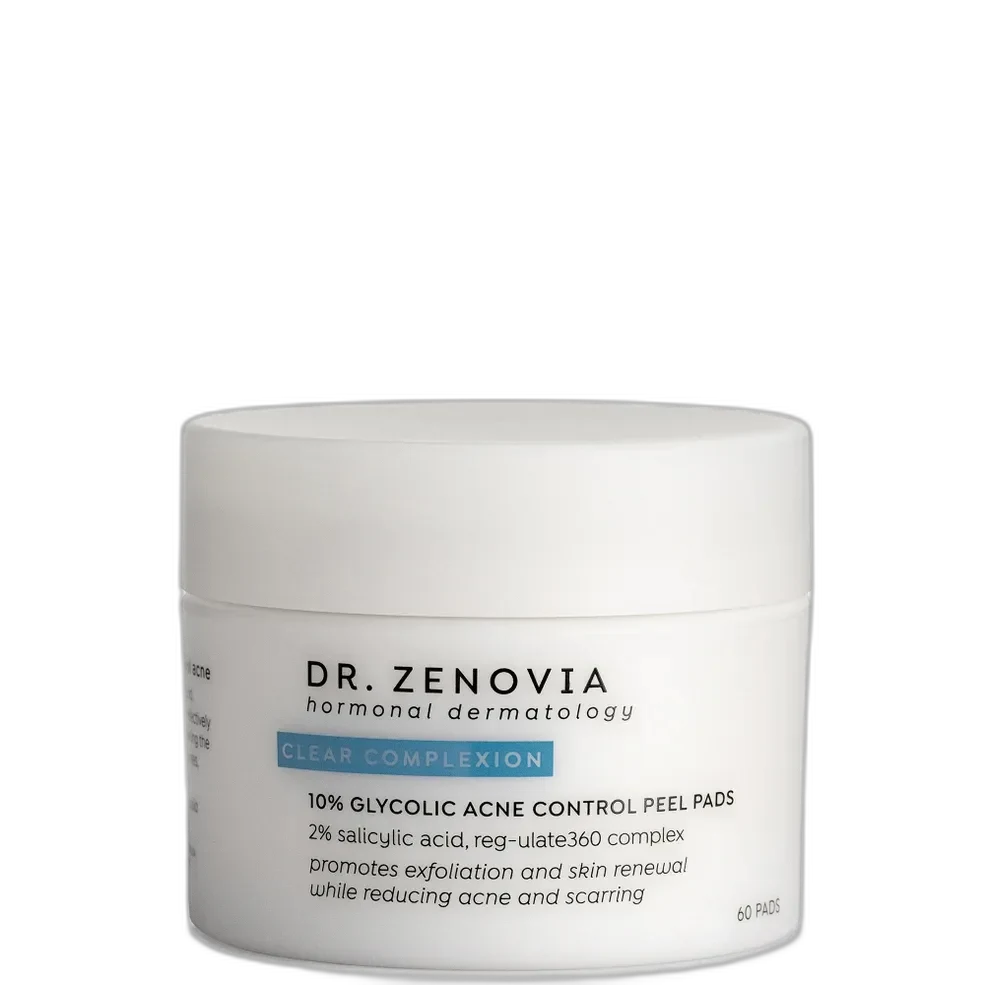
10% Glycolic Acne Control Peel Pads
Adult Acne Pick
 Verified reviewer
Pros & cons.
- +10% glycolic plus salicylic acid in a properly calibrated low-pH formula
- +Niacinamide addresses post-inflammatory hyperpigmentation as breakouts heal
- +Centella, bisabolol, and panthenol buffer the acids for tolerability
- +Alcohol-free formula avoids the stripping of older acne pads
- +Fragrance-free and pad format ensures consistent dosing
- +Built by a dermatologist with hormonal-skincare specialty
- +Effective for adult acne where teen-targeted products fall short
- −Premium price point for the pad format
- −Pad saturation can vary across the jar
- −Not safe to use during pregnancy or breastfeeding
- −Too aggressive for very dry, sensitive, or rosacea-prone skin
- −More packaging waste than a refillable liquid alternative
The full review.
Mainstream acne treatments fail adult acne sufferers. Drugstore options use alcohol-heavy cleansers, harsh benzoyl peroxide, and acne wipes that strip skin without addressing inflammation or lingering dark marks. Dermatologist visits often require prescriptions like tretinoin, oral antibiotics, or hormonal interventions, which demand a full clinical relationship. A middle ground is missing: an over-the-counter product designed by a dermatologist who understands adult acne as a hormonal-inflammatory-pigmentary problem involving sensitivity, barrier issues, and post-inflammatory marks. Dr. Zenovia Gabriel built her brand in 2019 to fill this gap, focusing on women of color often ignored by a category built for teenage white skin. Her 10% Glycolic Acne Control Peel Pads execute this thesis.
The formulation logic is disciplined. Ten percent glycolic acid is a clinical-strength concentration—high enough to exfoliate, but low enough to avoid needing medical supervision. At a pH of around 3.8, the acid is bioavailable in its active protonated form. This avoids the buffering seen in higher-percentage products that add baking soda to claim a “gentler” profile. The pad format adds physical exfoliation and ensures consistent dosing, which is harder with leave-on liquids.
The second acid adds clinical interest. Salicylic acid is oil-soluble, so it enters sebum-filled pores to dissolve comedonal material. This mechanism makes it the most effective single ingredient for blackheads and inflammatory acne. Pairing it with glycolic acid creates a complementary attack: the AHA handles surface texture and cell turnover, while the BHA handles in-pore congestion and inflammation. Most acne products use only one. Combining them at meaningful concentrations addresses the multifactorial reality of adult acne better than single-acid products.
Niacinamide does long-term work for this specific patient. It regulates sebum production, reduces inflammatory tone, and inhibits melanosome transfer from melanocytes to keratinocytes. This inhibition prevents new post-inflammatory hyperpigmentation as acne heals. For darker skin tones, where breakouts leave brown marks for months, this prevention is as important as the acne treatment. The formula reflects Dr. Gabriel’s clinical experience.
A calming supporting cast makes these pads usable for skin that usually cannot tolerate clinical acid concentrations. Centella asiatica, bisabolol, panthenol, and allantoin form a layer that buffers the inflammatory response. Non-alcohol witch hazel provides astringent tannins for pore-tightening without the dehydration of alcohol-based pads. Aloe and sodium hyaluronate provide humectant support to prevent a stripping feel. These ingredients do not dilute acid effectiveness; they simply make the formula tolerable for consistent use.
The texture and experience meet expectations. The cotton round is well-saturated but not dripping. Application is fast, and tingling lasts 30 to 60 seconds before settling. The formula is fragrance-free—a rarity in an aisle full of medicinal or eucalyptus notes—and does not leave a squeaky, stripped feeling.
There are trade-offs. Sixty-five dollars for 60 pads costs roughly a dollar per use, which is expensive compared to drugstore acids or refillable liquids. Pads can be over-saturated or under-saturated depending on the one pulled from the jar, and the format creates more packaging waste than a liquid bottle. Like all clinical-strength acid products, this is not for very dry, very sensitive, or rosacea-prone skin with compromised-barrier issues; those types need gentler exfoliation.
For adult oily and combination skin with hormonal breakouts and post-acne marks—especially women of color whose pigmentation concerns mainstream products overlook—this is one of the most thoughtfully built treatment pads in the dermatologist-developed category. It earns its premium price through formulation sophistication.
About BrandName
About Dr. Zenovia
Formula
Ingredient analysis.
Full INCI list · pH 3.8
Water, Glycolic Acid, Witch Hazel (Hamamelis Virginiana) Extract, Salicylic Acid, Niacinamide, Glycerin, Sodium Hydroxide, Propanediol, Centella Asiatica Extract, Allantoin, Panthenol, Camellia Sinensis (Green Tea) Leaf Extract, Aloe Barbadensis Leaf Juice, Bisabolol, Sodium Hyaluronate, Polysorbate 20, Disodium EDTA, Phenoxyethanol, Ethylhexylglycerin, Citric Acid
Skin match.
The science.
The Science
Glycolic acid is the most-studied alpha hydroxy acid in cosmetic dermatology. Decades of research show its effects on cell turnover, stratum corneum cohesion, and dermal collagen production at concentrations from 5% to 70%. The 10% concentration in this formula is at the high end of effective at-home use and stays below peel-strength levels requiring professional supervision. Evidence shows it works for acne, post-inflammatory hyperpigmentation, photoaging, and texture improvement when applied at a pH that keeps the acid in its active protonated form (typically 3.5-4.0). Salicylic acid is also well-validated for acne. Its lipophilic nature lets it penetrate sebum-filled follicles to dissolve comedonal material, and research shows it works against inflammatory and non-inflammatory acne lesions at concentrations between 0.5% and 2%. Combining AHA and BHA in one product addresses acne's multifactorial nature through surface exfoliation and follicular cleanup. Multiple controlled clinical studies document niacinamide's role in sebum regulation, inflammation reduction, and melanosome transfer inhibition. This makes niacinamide a relevant active for darker skin tones where post-inflammatory hyperpigmentation is a major part of acne. Centella asiatica uses madecassoside and asiaticoside to provide anti-inflammatory effects that soothe the skin and support tolerability of the acid blend.
Dermatologist Perspective
Dermatologists often recommend dual-acid treatments for adult acne patients who need more than teenage spot treatments for hormonal breakouts and post-inflammatory pigmentation. Board-certified dermatologists note that the combination of glycolic acid and salicylic acid suits adult acne because it targets the comedonal component (via salicylic acid's follicular penetration) and the textural and pigmentary component (via glycolic acid's surface exfoliation). The inclusion of niacinamide in this formula is especially valuable for patients with melanin-rich skin, where post-inflammatory hyperpigmentation can last after active acne resolves. Dermatologists caution patients to introduce acid pads gradually, always use daily broad-spectrum sunscreen, and stop if the skin shows persistent irritation or compromised barrier function.
Where it fits in your routine.
Apply at night only to dry skin after cleansing. Use 2-3 nights per week for the first two weeks. Swipe one pad gently across the face, neck, and chest, but avoid the immediate eye area and the corners of the mouth and nose. Let it absorb for 30-60 seconds — tingling is normal — then apply a hydrating serum and a ceramide moisturizer. Use broad-spectrum sunscreen every morning because AHAs and BHAs increase UV sensitivity. Increase frequency as tolerated; most users find 4-5 nights per week works best.
At $65 for 60 pads, each use costs roughly a dollar. This price is high compared to drugstore acid alternatives but reasonable against dermatologist-developed prestige acid treatments. The acid concentrations are clinical-strength, the supporting ingredients are more sophisticated than cheaper options, and the founder's clinical specialty provides a credible heritage drugstore brands lack. The pad format reduces value; a refillable liquid AHA or BHA from Paula's Choice or The Ordinary offers comparable acid chemistry at a lower per-use cost, though it lacks consistent dosing and physical exfoliation. For adult acne patients who need something that actually works after cheaper alternatives fail, the value justifies itself. For those new to acid exfoliation, a cheaper liquid is often the smarter on-ramp.
Adult oily and combination skin types with hormonal acne, congested pores, blackheads, post-inflammatory hyperpigmentation, or texture issues. It works well for women of color because mainstream acne products often fail to address their post-acne marks. This is best for users with a basic skincare routine ready for a clinical-strength chemical exfoliant.
Avoid high-percentage glycolic and salicylic acid combinations if pregnant or breastfeeding. Choose a gentler exfoliant if skin is very dry, sensitive, rosacea-prone, or barrier-compromised. Consult a dermatologist before adding this product if you use prescription retinoids to avoid cumulative irritation.
Product details.
Liquid-saturated cotton pad
Fragrance-free with a faint witch hazel note
Round jar with twist-off lid containing 60 pre-soaked pads
The first few uses cause tingling for 30-60 seconds as the acids work — this is normal and ends within minutes. Some users see mild dryness or slight purging during the first 1-2 weeks as the acids speed up cell turnover and surface pre-existing congestion. Tolerability improves after the second week.
About 4-8 weeks depending on frequency of use
6 months
All Year
The backstory.
Dr. Zenovia Gabriel founded her brand in 2019 after years of clinical practice focused on hormonal skincare and women of color, populations that are often underserved by mainstream acne products. The 10% Glycolic pads were one of the brand's flagship launches and reflect Dr. Gabriel's view that adult acne requires both effective exfoliation and aggressive post-inflammatory pigmentation prevention — hence the niacinamide and the calming supporting cast.
About Dr. Zenovia
Emerging Brand (2–5 years)Dr. Zenovia Gabriel, a board-certified dermatologist, founded Dr. Zenovia Skincare in 2019. Her clinical practice focuses on women of color and hormonal skincare. This hormonal-skincare positioning is rare among dermatologist-developed brands and attracts a loyal following of adult acne and hormonal pigmentation patients.
Common myths.
Acid pads are basically the same as drugstore acne wipes
Drugstore acne wipes usually contain under 2% salicylic acid in an alcohol base. A 10% glycolic plus salicylic acid pad with proper pH and calming ingredients is a different product class—it works more like a leave-on chemical exfoliant treatment than a face wipe.
Higher acid percentages always mean more irritation
Tolerability depends on pH, the supporting cast, and the formula's buffer. A well-formulated 10% glycolic pad can be more tolerable than a poorly formulated 5% glycolic toner with an aggressive vehicle.
FAQ.
How often should I use these pads?
Use 2-3 nights per week for the first two weeks. Increase to 4-5 nights per week if tolerated. Some users use it nightly, but most see best results at 4-5 nights per week, using off nights for hydrating or barrier-supportive routines.
Can I use these with retinol?
Use them on alternating nights initially. Layering 10% glycolic acid with retinol on the same night increases the risk of irritation, flaking, and barrier disruption. Some users tolerate both once they are well-established, but most should keep them separate.
Will these help with hyperpigmentation from old acne marks?
Yes, especially dark marks (post-inflammatory hyperpigmentation) from healed acne. Glycolic acid speeds cell turnover to fade marks, while niacinamide stops new pigment formation. Results appear gradually over 6-12 weeks.
Are these safe to use during pregnancy?
No — high-percentage glycolic acid and salicylic acid are generally not recommended during pregnancy. Use a gentler azelaic acid or lactic acid product during pregnancy and breastfeeding instead.
Why are these so much more expensive than drugstore acid pads?
The acid concentrations are higher, the pH is calibrated for efficacy, and the supporting ingredients (niacinamide, centella, panthenol, bisabolol) are more sophisticated. Drugstore pads with 1-2% salicylic acid in alcohol-heavy bases are different products.
Will these dry out my skin?
They can—especially during the first two weeks and for combination or dry skin. Always use a hydrating serum and a ceramide moisturizer after, and use it less often if you see persistent dryness or irritation.
Are these fragrance-free?
The formula is fragrance-free. The witch hazel and centella produce a faint herbal note, but the product has no added perfume or essential oil masking.
What the community says.
"Visible reduction in breakouts within weeks"
"Smooths texture without stripping"
"Helps with post-acne marks"
"More potent than drugstore acid pads"
"Premium price for a pad format"
"Can be drying for combination skin"
"Pads can be over-saturated or under-saturated"
People also looked at.