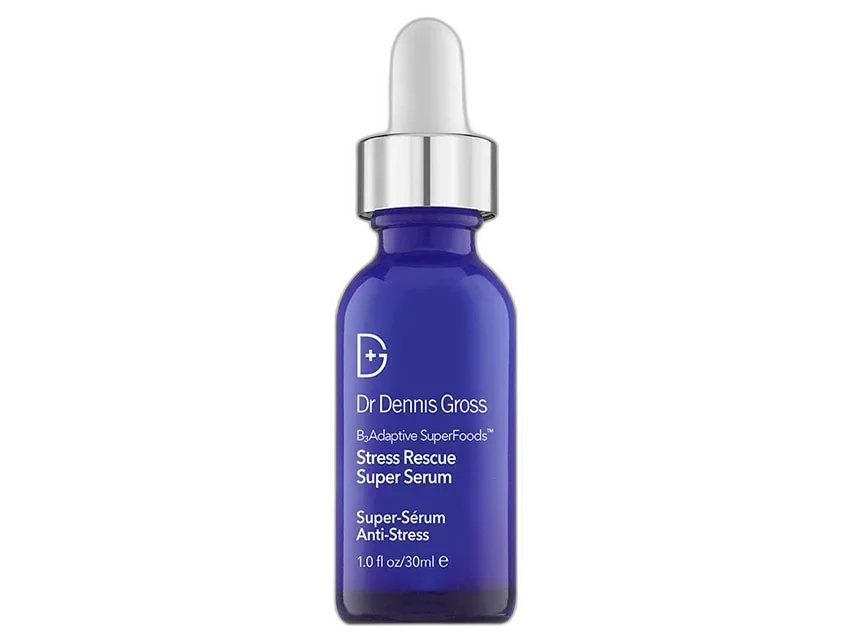
Stress Rescue Super Serum with Niacinamide
Stressed-Skin Specialist
 Verified reviewer
Pros & cons.
- +Clinically meaningful 2.4-3% niacinamide for redness and barrier support
- +Real barrier-repair base with sphingolipids, phospholipids, and squalane
- +Polyphenolic antioxidant complex adds meaningful oxidative stress defense
- +Pregnancy-safe and layers well in both AM and PM routines
- +Palmitoyl tripeptide-28 provides a small bonus collagen-signaling effect
- +Non-tacky feel works under sunscreen or over other serums
- −Contains turmeric, ginger, and lemongrass oils that can sensitize reactive skin
- −Price is high for a 3% niacinamide formula even with the extras
- −Limited retail availability since the line was rationalized
- −Results are subtle and take several weeks of consistent use
The full review.
Around 2020, wellness brands flooded the market with ashwagandha in gummies, tea, protein powder, and skincare. The Stress Rescue Super Serum emerged from this trend. While many adaptogen products rely on marketing over chemistry, this formula survives scrutiny. Dr. Gross prioritized the niacinamide beneath the botanicals and built a functional barrier-repair infrastructure.
View this serum in two layers. The functional layer is a 2.4-3% niacinamide serum containing sphingolipids, phospholipids, squalane, sweet almond seed, beta-sitosterol, and a low dose of palmitoyl tripeptide-28 to support the barrier-lipid profile. This alone makes a competent, well-structured calming serum, regardless of plant extracts. Niacinamide at this concentration interrupts melanin transfer, supports ceramide synthesis, and modulates inflammatory pathways that cause flushed, stressed skin. Combined with a proper lipid refill, it earns the ‘rescue’ label.
The second layer uses adaptogens and superfoods: ashwagandha, rhodiola, maca, shatavari, cordyceps, maitake, goji, acai, and cacao. Topical adaptogen literature is thinner than oral supplement research. The claim that these ingredients address skin-level cortisol is intuitive rather than evidenced. However, these botanicals provide polyphenolic antioxidant activity. Ingredients like ashwagandha and licorice root show in vitro anti-inflammatory effects relevant to skin. If you value the story, you are paying for an antioxidant complex with extra narrative.
Sensory experience reveals both charm and a limitation. The silky fluid-gel absorbs quickly without tacky residue. Initial applications feel calming. The scent is prominent: turmeric root oil, ginger root oil, and lemongrass (cymbopogon schoenanthus) oil create a warm, herbal, spicy aroma. It dissipates within a minute. Most skin types find it pleasant, but those with true sensitivity or fragrance reactions should avoid it. Essential oils at low concentrations can cause issues with long-term daily use, creating a contradiction for a ‘stress rescue’ product.
Results follow a standard niacinamide timeline. Within one week, users notice less redness and more hydration. By weeks three to four, niacinamide shows as calmer reactivity—fewer flush responses to showers, wind, or hot drinks—and a more even tone. The barrier benefit is long-term; by week eight, users find skin less prone to the dry, papery ‘stressed’ look from environmental exposure or active overuse. This is not an overnight transformation. Niacinamide serums are slow burns, and the Stress Rescue Super Serum is no exception.
Value is complex. At $78 for 1 oz, you pay prestige pricing for a 3% niacinamide serum with a well-engineered barrier base and botanical overlay. The Ordinary’s 10% niacinamide is $7, and mid-range niacinamide serums cost $25-40. This product earns its price through formulation thoughtfulness and brand heritage, but only for specific users. If you prioritize ingredient density per dollar, better options exist. If you want one elegant serum for reactive, stressed, slightly dehydrated skin in a prestige context, it earns its place.
Ingredient analysis.
Full INCI list
Sucrose, Water/Aqua/Eau, Propanediol, Ethylhexyl Palmitate, Niacinamide, Squalane, Prunus Amygdalus Dulcis (Sweet Almond) Seed, Glycerin, Grifola Frondosa (Maitake Mushroom) Extract, Lepidium Meyenii (Maca) Root Extract, Lycium Barbarum (Goji) Fruit Extract, Theobroma Cacao Extract, Euterpe Oleracea (Acai) Sterols, Curcuma Longa (Turmeric) Root Oil, Cordyceps Sinensis Extract, Persea Gratissima (Avocado) Fruit Extract, Perilla Frutescens Extract, Asparagus Racemosus (Shatavari) Root Extract, Withania Somnifera (Ashwagandha) Root Extract, Rhodiola Rosea Root Extract, Inonotus Obliquus (Chaga) Extract, Glycyrrhiza Glabra (Licorice) Root Extract, Helianthus Annuus (Sunflower) Seed Oil, Zingiber Officinale (Ginger) Root Oil, Cymbopogon Schoenanthus Oil, Linoleic Acid, Oleic Acid, Linolenic Acid, Lecithin, Lysolecithin, Hydrogenated Phosphatidylcholine, Beta-Sitosterol, Hydrolyzed Sodium Hyaluronate, Phospholipids, Sphingolipids, Adenosine, Lactic Acid, Tocopherol, Palmitoyl Tripeptide-28, Ethylhexylglycerin, Sodium Acrylates Copolymer, Phytic Acid, Citric Acid, Cyclodextrin, Maltodextrin, Phenoxyethanol, Sodium Benzoate, Potassium Sorbate
Skin match.
The science.
The Science
Niacinamide is the most evidence-rich active in this serum, and clinical literature supports most of its claims. Hakozaki et al. (British Journal of Dermatology, 2002) showed that 4% topical niacinamide reduces hyperpigmentation over 8 weeks by interrupting melanosome transfer from melanocytes to keratinocytes. This mechanism differs from tyrosinase inhibition, so niacinamide stacks well with hexylresorcinol or kojic acid. Earlier work by Bissett et al. in the Journal of Cosmetic and Laser Therapy documented niacinamide's effect on barrier lipid synthesis; topical application upregulates ceramide production in keratinocytes and reduces trans-epidermal water loss in a dose-dependent manner. At the 2.4-3% range used here, these effects are meaningful, even if they are less dramatic than the 4-5% concentrations in many studies. The adaptogen story has thinner support. Ashwagandha (Withania somnifera) extract shows in vitro anti-inflammatory and antioxidant activity in dermal fibroblast cultures, and rhodiola extracts have similar data, but human clinical trials on topical application are limited to small pilot studies. The ceramide and phospholipid blend follows work from Man, Feingold, and Elias on physiologic lipid replacement. They established that applying multiple lipid classes together restores barrier function more effectively than any single lipid alone—which is why this formula includes sphingolipids, phospholipids, squalane, and sterols in the same base rather than a single ceramide claim.
References
- The effect of niacinamide on reducing cutaneous pigmentation and suppression of melanosome transfer — British Journal of Dermatology (2002)
Dermatologist Perspective
Dermatologists frequently recommend niacinamide serums at the 2-5% range for patients with redness, reactivity, or early post-inflammatory pigmentation; this serum's concentration falls in that therapeutic window. Board-certified dermatologists note that pairing niacinamide with a meaningful barrier-lipid base—as this formula does—is generally more effective than niacinamide alone for stressed or reactive skin. Patients with a history of fragrance or essential oil sensitization typically pass over this product because the turmeric and ginger oils become liabilities. It is suggested for patients who want a calming step to layer into a morning or evening routine without conflicts.
Where it fits in your routine.
Apply once or twice daily. Cleanse, tone if you like, then press 3-4 drops into the face and neck. Wait 60 seconds for absorption, then use a moisturizer and — in the morning — broad-spectrum SPF. It layers cleanly with vitamin C in the morning and retinol at night. Patch test on the inner forearm first if you have a history of reacting to essential-oil-containing skincare.
At $78 for 1 oz, the value case is this serum's weakest point. Niacinamide products at $25-40 work similarly, and The Ordinary's 10% version costs under $10. This formula adds barrier-lipid infrastructure, an antioxidant complex, and a dermatologist-developed brand with a 25-year track record. It is a justifiable purchase for shoppers who value barrier-repair engineering and use the Dr. Gross ecosystem. For shoppers treating this as a commodity niacinamide serum, it is overpriced. The price reflects brand heritage and formulation thoughtfulness rather than hype, but the premium lowers the value score.
Adults with normal, combination, or dry skin face stress-driven redness, dullness, or barrier weakness and want a calming serum for a fuller routine. It works well for existing Dr. Dennis Gross users who want an anti-inflammatory step with their retinol or vitamin C.
People with fragrance or essential oil sensitization, active rosacea that flares from mild botanicals, and shoppers seeking niacinamide value can find cheaper options that provide most of the same core benefits.
Product details.
Silky fluid-gel that absorbs quickly to a soft satin finish
Warm herbal from the turmeric, ginger, and lemongrass oils
Amber glass bottle with dropper applicator
It feels cool and has a faint herbal scent from the essential oils. Most users feel a calming effect within the first few applications. The fragrance disappears within a minute, and normal skin does not sting.
Approximately 2-3 months with daily full-face application
12 months
All Year
The backstory.
Launched around 2020 as part of Dr. Gross's B3Adaptive SuperFoods sub-line, the Stress Rescue Super Serum was developed at the height of the adaptogen-skincare crossover moment. It became popular during the pandemic as users sought calming products and has seen reduced retail presence since the line was rationalized.
About Dr. Dennis Gross Skincare
Established Brand (5–20 years)Dr. Dennis Gross Skincare is led by a board-certified dermatologist with a long-running Manhattan practice, with 25 years of brand history and consistent clinical grounding in its formulations.
Common myths.
Topical adaptogens work the same way as oral adaptogens.
Topical adaptogens work via local antioxidant and anti-inflammatory pathways, unlike the HPA-axis cortisol regulation from oral use. In this serum, they work like any polyphenolic antioxidant; this is valuable but differs from the supplement version.
FAQ.
What does 'stress rescue' actually mean on the label?
This brand frames how cortisol-driven inflammation affects skin via redness, dullness, dehydration, and barrier weakness. The formula uses niacinamide, adaptogens, and barrier lipids to target those symptoms instead of treating "stress" itself.
Can I use this with my retinol?
Yes, this pairing works well. The niacinamide reduces retinol flush, and the ceramide-adjacent lipid blend supports the barrier retinol can disrupt.
Is the essential oil content an issue?
Yes for sensitive skin — turmeric, ginger, and lemongrass oils have fragrance and can sensitize over time. Normal skin types usually tolerate them. If you avoid essential oils by principle, choose a fragrance-free niacinamide option instead.
Is it pregnancy safe?
Yes. Niacinamide, adaptogens at this level, and the botanical antioxidants are safe during pregnancy and breastfeeding.
Does it replace my moisturizer?
No. This is a treatment serum, not a moisturizer. Use a hydrating cream after to lock it in, especially on drier skin.
How is this different from The Ordinary's 10% niacinamide?
This serum has a lower niacinamide concentration (around 3%) but uses a thicker base of adaptogens, ceramide-adjacent lipids, and peptides. It targets calming and barrier support instead of oil control.
What the community says.
"Visibly calms redness and stress-flushed skin"
"Lightweight feel layers well in a full routine"
"Pleasant absorption without tackiness"
"Essential oil content can irritate sensitive skin"
"Expensive for a niacinamide-focused serum"
"Limited availability since the line was rationalized"
People also looked at.