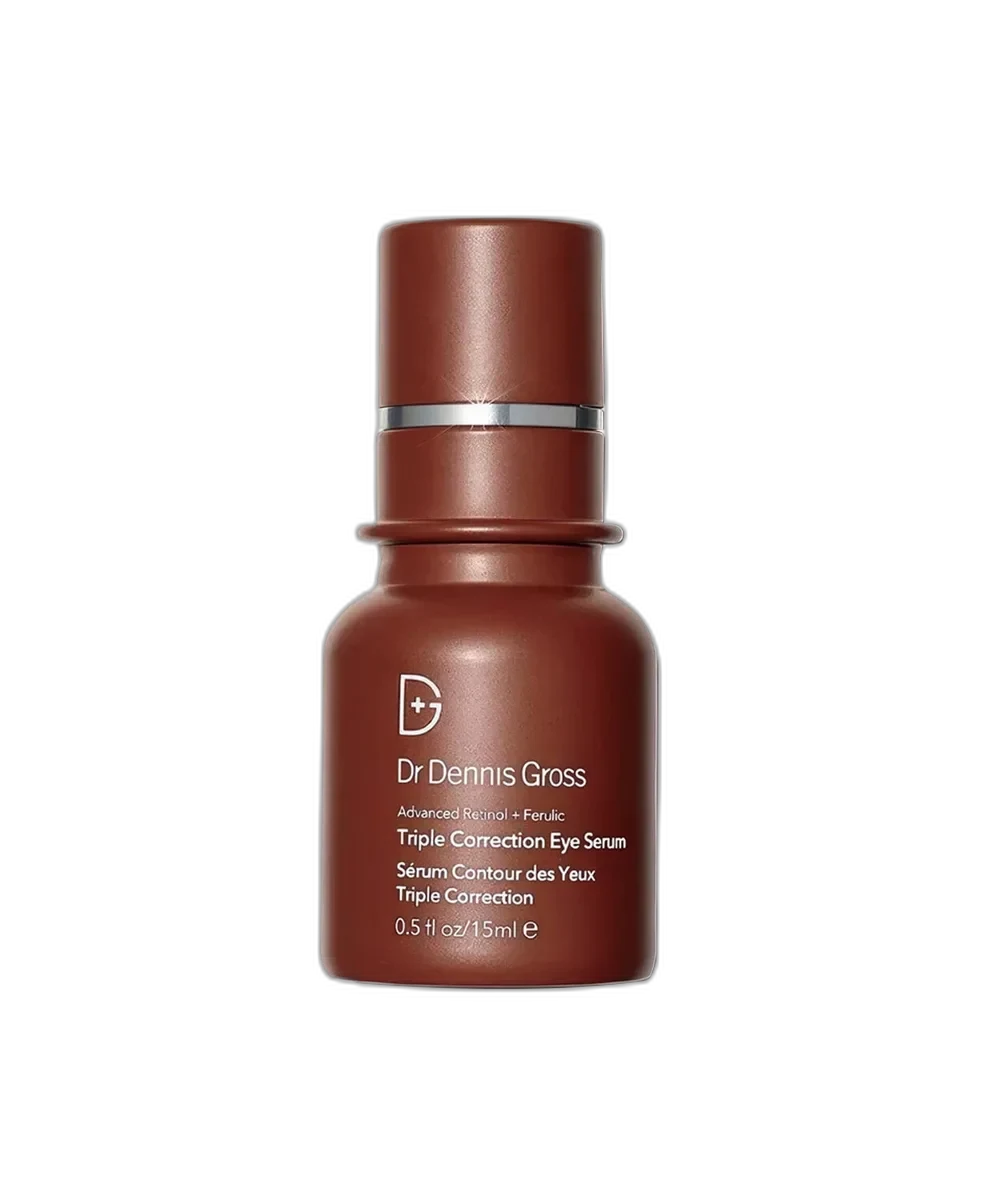
Advanced Retinol + Ferulic Triple Correction Eye Serum
Bakuchiol-Forward Eye Retinol
 Verified reviewer
Pros & cons.
- +Bakuchiol-forward architecture delivers retinol benefits at eye-safe strength
- +Iron oxide tint provides instant cosmetic brightening under concealer
- +Caffeine addresses vascular component of puffiness and dark circles
- +Licorice, mulberry, and uva ursi trio fades pigment-driven shadows
- +Tetrapeptide-21 supports firmness and crepe-line smoothing
- +Fragrance-free base suits most users including mildly sensitive eyes
- −Small 0.5 oz tube at $73 has weak per-milliliter value
- −Single universal tint may not suit very fair or very deep complexions
- −Retinol and trace AHAs rule it out during pregnancy
- −Can feel slightly tacky under thick concealer formulations
The full review.
Untreated skin around the eyes often betrays retinol users. While cheeks and foreheads look smoother and brighter, the under-eye area stays the same or looks worse. You likely avoid retinol there because it causes flaking and stinging for three days. If so, the Triple Correction Eye Serum fits your needs.
The INCI list distinguishes this from other retinol eye products. Bakuchiol sits ahead of retinol, which is unusual. Most prestige brands lead with retinol to drive sales; Dr. Gross inverts this because eye skin cannot handle face-strength retinoid doses. Bakuchiol engages similar gene pathways at a lower concentration. The retinol still performs collagen work, but it acts as a cosupplement rather than the lead.
The formula addresses specific under-eye complaints. Caffeine handles the vascular component of dark circles. Tetrapeptide-21 tackles crepe texture and fine lines. Licorice root, mulberry bark, and uva ursi act as tyrosinase inhibitors to fade pigment-driven shadows over weeks. Potassium azeloyl diglycinate, a gentler azelaic acid derivative, adds brightening. Ferulic acid and ubiquinone stabilize the retinol. Finally, iron oxides in the base pink the product to visually neutralize blue-toned shadows upon application. This “you’ll see something the first morning” effect helps justify the $73 price tag for most users.
The product behaves smoothly. A tiny pump or pea-sized amount dabbed along the orbital bone blends in fifteen seconds with a faint satin finish. The neutral warm peach tint works under most concealers, though very fair or very deep complexions may notice it until they warm it between fingertips. Most people feel no sting or tingle because the acid load is lower on the ingredient list and designed for the eye area.
Short-term results are mostly cosmetic from the caffeine and iron oxide. This honest trick works when users need to leave the house quickly. Real results appear in weeks three to six, as crepey fine lines at the outer corner soften and the skin looks denser and less translucent. By week twelve, pigment-driven shadows fade noticeably, though vascular-driven circles return with fatigue—no eye serum fixes sleep.
The limitations are clear. The 0.5 oz tube is small, but most users make it last three to four months. The price is steep and no larger size exists. Because the formula contains low-level AHAs and salicylic acid, extremely sensitive eye areas may still react; it is calibrated for tolerance, not immunity. While the tint works for most medium complexions, the lack of shade options is a missed opportunity for a 2021-era product.
Should you buy it? If you use a Dr. Gross face retinol from this line, this is the matched eye companion. If you are shopping blind, you pay for the bakuchiol-forward architecture and the iron oxide tint trick. Together, these justify the premium better than many $73 eye creams.
Ingredient analysis.
Full INCI list
Water/Aqua/Eau, Propylene Glycol, Ethoxydiglycol, Bakuchiol, Retinol, Nephelium Lappaceum Leaf Extract, Ferulic Acid, Ubiquinone, Quercetin, Camellia Sinensis Leaf Extract, Sodium Hyaluronate, Saccharide Isomerate, Phospholipids, Centella Asiatica Extract, Caffeine, Salix Alba (Willow) Bark Extract, Salicylic Acid, Arctostaphylos Uva-Ursi Leaf Extract, Morus Alba Bark Extract, Glycyrrhiza Glabra (Licorice) Root Extract, Potassium Azeloyl Diglycinate, Glycolic Acid, Panthenol, Butylene Glycol, Tetrapeptide-21, Caprylic/Capric Triglyceride, Glycerin, Leuconostoc/Radish Root Ferment Filtrate, Mandelic Acid, Potassium Hydroxide, Maltodextrin, PVM/MA Decadiene Crosspolymer, Polysorbate 20, Citric Acid, Sodium Citrate, Phenoxyethanol, Sodium Benzoate, Potassium Sorbate, Iron Oxides (CI 77491, CI 77492)
Skin match.
The science.
The Science
The formula makes three testable claims — it fades dark circles, reduces fine lines, and improves crepey texture — using different mechanisms. The anti-wrinkle claim uses the combined retinol-bakuchiol pathway from the 2019 Dhaliwal et al. trial in the British Journal of Dermatology. That study shows bakuchiol 0.5% and retinol 0.5% produce comparable wrinkle reduction and pigment improvement over 12 weeks, though bakuchiol is better tolerated. In this eye serum, Dr. Gross puts bakuchiol before retinol on the INCI, so the combined retinoid effect uses a lower pure retinol dose for eye skin. tetrapeptide-21 provides the peptide contribution; in vitro and early clinical work shows it upregulates collagen type I and glycosaminoglycan expression in dermal fibroblasts. The dark circle claim uses two mechanisms: caffeine vasoconstricts superficial capillaries to reduce the blue-toned vascular component, while the licorice root (glabridin), mulberry bark, and uva ursi trio inhibit tyrosinase to address pigment-driven circles. Glabridin's tyrosinase inhibition is well documented in the Journal of Investigative Dermatology (Yokota et al., 1998) and is the best-evidenced of the three botanicals. The iron oxide pigment inclusion acknowledges that instant visible improvement helps adherence — a concept supported by cosmeceutical trial retention studies, where products with perceivable immediate effects show higher compliance rates at 8 and 12 weeks.
References
- Prospective, randomized, double-blind assessment of topical bakuchiol and retinol for facial photoageing — British Journal of Dermatology (2019)
Dermatologist Perspective
Dermatologists often recommend lower-strength retinoid products for the periocular area because the thinner stratum corneum and increased sensitivity make face-strength retinols hard to tolerate. Board-certified dermatologists note that the bakuchiol-forward positioning in this formula is a sensible tolerance choice. They also note the multi-mechanism approach to dark circles — addressing vascular, pigment, and cosmetic components separately — reflects how clinicians think about the problem. Patients who are pregnant, actively reactive, or using prescription retinoids around the eyes often skip this product, which is suggested for patients wanting one eye step that covers multiple concerns.
Guidance
Where it fits in your routine.
Apply morning and night after serums and before moisturizer. Use a pea-sized amount, dab it along the orbital bone with your ring finger, and blend until the tint disappears. Avoid the lash line and the upper lid crease. Use once daily if you are new to retinol around the eyes, then move to twice daily if tolerated. Always apply broad-spectrum SPF over the area during the day — retinized skin burns faster, and the eye area is vulnerable.
At $73 for 0.5 oz, this eye serum is high-end prestige but not the most expensive in its category. The price makes sense because of the bakuchiol-retinol architecture, the brightening trio, the peptide and tint inclusion, and Dr. Dennis Gross's 25-year derm-developed track record. Since users apply a pea or less per use, one tube lasts three to four months, lowering the cost per application. It is not a bargain, but it competes well against prestige eye products with fewer active mechanisms.
Adults over 30 who want a single eye product that addresses fine lines, crepe texture, and dark circles in one step, and who are comfortable with a subtle tinted finish. It's especially well-suited to existing Dr. Gross face retinol users.
Avoid this if you are pregnant or breastfeeding, have very fair or very deep skin that the tint does not match, or have highly reactive eye areas. Do not layer this on top of prescription tretinoin applied to the periocular area.
Product details.
Lightweight gel-fluid with a faint peachy tint
Neutral, no added fragrance
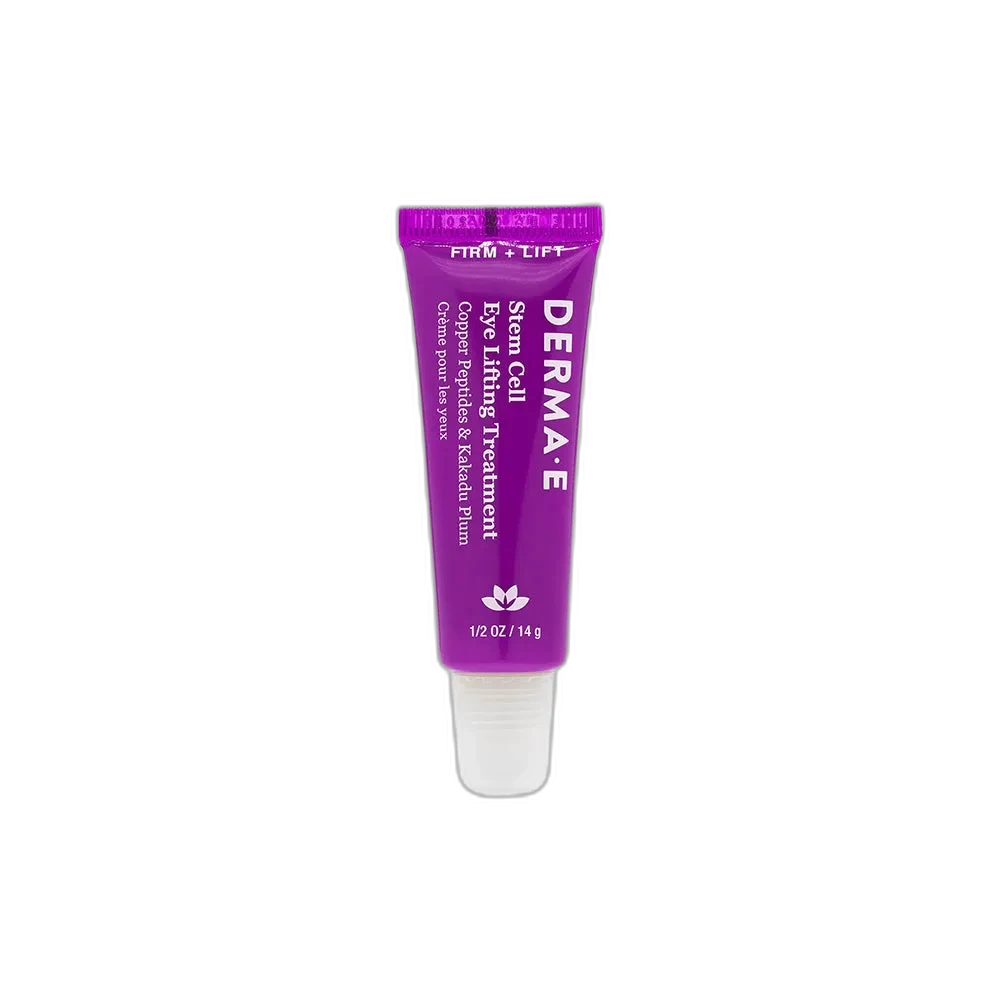
Opaque tube with precision tip applicator
The iron oxide tint and caffeine provide an immediate cosmetic brightening effect. Real retinization is quiet—no peeling, just slightly smoother crepe lines by week three. A faint tingle occurs during the first few uses but subsides.
Approximately 3-4 months with twice-daily pea-sized application
12 months
All Year
The backstory.
Released in 2021 as the eye-area entry in the Advanced Retinol + Ferulic line, it was designed to address the complaint Dr. Gross heard most in consultation: patients loved their face retinoids but couldn't tolerate them under the eye and ended up with a two-speed look.
About Dr. Dennis Gross Skincare
Established Brand (5–20 years)Dr. Dennis Gross Skincare is led by a board-certified dermatologist with a Manhattan practice, and the brand's formulations typically reflect his clinical approach to pairing retinoids with acids and antioxidants. The line has been in prestige retail for 25 years.
Common myths.
Retinol in eye products is always too strong for this delicate area.
Dose matters more than category. This formula uses retinol as a cosupplement to bakuchiol instead of the lead active. This calibrates the delivered retinoid strength for eye skin instead of scaling it down from a face product.
FAQ.
What are the 'three corrections' in the name?
Dark circles, fine lines, and crepey texture. The formula uses different active subsets for each: pigment inhibitors for tone, retinol plus peptides for lines, and caffeine plus iron oxide tint for the vascular and cosmetic aspects of dark shadows.
Will the tint match my skin tone?
The tint is a subtle warm peach that looks neutral on most medium skin tones. Very fair and very deep complexions may see it slightly — blend it with a fingertip until it disappears.
Is this safe to use right up to the lash line?
Apply it along the orbital bone, not the lid margin. Eye serums migrate into the tear film and cause irritation if applied too close to the lashes.
Can I use it with my face retinol on the same night?
Yes, but apply your face retinol first and wait a few minutes before adding this. Don't layer a stronger face retinoid directly onto the same under-eye patch.
Is this safe during pregnancy?
No. The retinol content makes it unsuitable during pregnancy or breastfeeding.
How soon will I see dark circles fade?
The vascular and cosmetic improvement is immediate from caffeine and tint. Pigment-driven dark circles take 8-12 weeks to visibly soften.
Community
What the community says.
"Instantly brightens with subtle tint"
"Noticeably smoother crepey skin within a month"
"Gentle enough for daily use under the eyes"
"Tint may not match very light or very deep skin tones perfectly"
"Small 0.5 oz tube at a premium price"
"Can feel slightly tacky under concealer"
People also looked at.