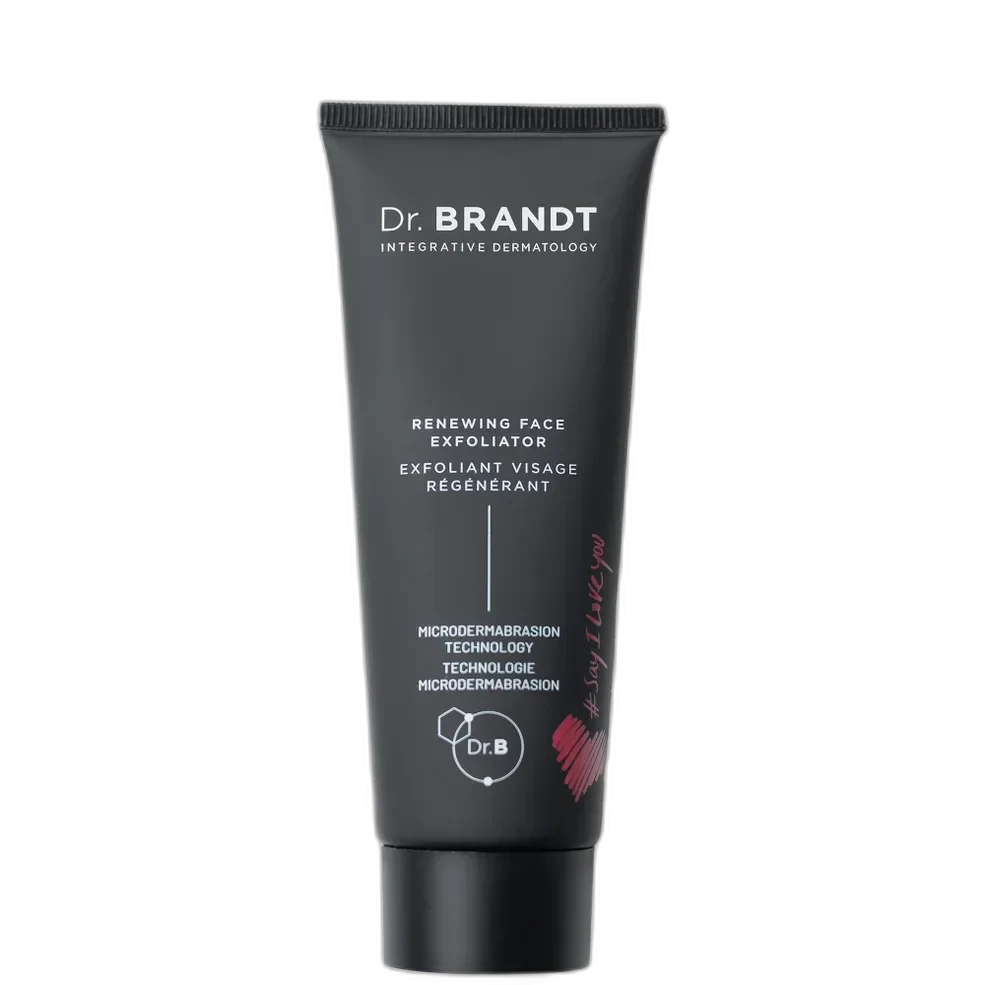
Microdermabrasion Renewing Age-Defying Face Exfoliator
Reformulated Cult Scrub
 Verified reviewer
Pros & cons.
- +Biodegradable wood-cellulose beads replace the old alumina crystals
- +Real glycolic and lactic acid backbone gives meaningful chemical exfoliation
- +Gentler tactile experience than the original formulation
- +Works for a broad range of non-sensitive skin types
- +Vegan, cruelty-free, and silicone-free
- +Visibly smoother and brighter skin after consistent weekly use
- −Citrus oils and menthol make it unsuitable for sensitive skin
- −Strong fragrance persists after rinsing
- −$79 price is steep vs. comparable AHA-only options
- −Fans of the original may miss the alumina's dramatic polish
- −Can't be layered with other actives on the same night
The full review.
Formula
Around 2022, Dr. Brandt Skincare did something legacy brands rarely do: it reformulated a flagship product. The original Microdermabrasion Exfoliating Face Cream — the white tube of aluminum oxide crystals on Sephora shelves for nearly two decades — underwent a soft reinvention. Wood-cellulose microgranules replaced the alumina crystals. The formula also increased its acid load, moving glycolic acid and lactic acid from supporting roles to co-actives. The branding changed little, so most casual shoppers likely missed it. But the formula philosophy shifted. The original used the mechanical aggression of mineral crystals and a small amount of lactic acid. The new version works differently: the mechanical component is softer, while glycolic acid — the smallest, most penetrating AHA — leads the resurfacing. You still get the tactile feel of a physical scrub and immediate smoothness upon rinsing, but the long-term visible results come from an AHA treatment rather than a mineral polish. The cellulose beads also offer a practical advantage: they are biodegradable, which matters as microplastic beads and mineral particles face scrutiny. Using it feels different than the original. A cool menthol tingle occurs on application, signaling the formula change more clearly than the label. The scrub texture is gentler, the beads are less scratchy, and the rinse-off feels less raw-polished than the alumina version. The trade-off is the afterglow: glycolic acid works for hours after rinsing, slowly loosening dead cells and brightening the surface. After two to four weeks of consistent weekly use, you see the cumulative effect of an AHA treatment layered on physical refinement — a steady brightening instead of a one-hit gleam. However, the fragrance situation worsened. The new INCI includes lemon peel oil, lime peel oil, citral, and menthol — all known irritants for sensitive skin. This is a surprising choice for a product marketed for delicate complexions. The scent is fresh and spa-ish, but in 2026 it feels dated. A modern reformulation would use a fragrance-free base instead of citrus oils, especially since the target user — someone seeking aggressive resurfacing — often manages post-acne scars, early aging, or hyperpigmentation and may have barrier sensitivity. The price remains unchanged. At $79 for 60ml, this is premium-tier scrubbing. Comparable resurfacing from Paula’s Choice 8% AHA or The Ordinary Glycolic Acid Toning Solution costs much less if you skip the physical component. You pay for the dual mechanism in one jar, the updated cellulose bead technology, and two decades of brand trust. It makes sense if you want both physical and chemical exfoliation in one step, tolerate the fragrance and menthol, or want the updated version of the original. If you want pure AHA resurfacing, have reactive skin, or are budget-conscious, other smarter choices exist in a category that has grown since this product first launched.
Ingredient analysis.
Full INCI list
Water/Aqua/Eau, Cellulose, Caprylic/Capric Triglyceride, Cetearyl Alcohol, Glycerin, Hydrogenated Vegetable Glycerides, Stearyl Stearate, Cetearyl Glucoside, Glycolic Acid, Lactic Acid, Sodium Benzoate, Xanthan Gum, Sodium Hydroxide, Copernicia Cerifera (Carnauba) Wax, Rhus Verniciflua Peel Wax, Menthol, Citral, Citrus Limon (Lemon) Peel Oil, Allantoin, Levulinic Acid, Sodium Levulinate, Sodium Phytate, Citrus Aurantifolia (Lime) Oil, Punica Granatum Pericarp Extract
Skin match.
The science.
The Science
Combining physical and chemical exfoliation works if the mechanical part is gentle. Wood-cellulose microgranules are biodegradable and non-sharp; they cause less mechanical stress on the stratum corneum than mineral crystals or hard natural beads. The chemical exfoliation is more notable: glycolic acid is the smallest, most deeply-penetrating AHA. Clinical literature supports its effects on stratum corneum thickness, cell turnover, hyperpigmentation, and fine lines at typical cosmetic concentrations. Lactic acid has roughly three times the molecular weight, providing gentler surface exfoliation and a humectant effect. Using these two AHAs together is well-studied and forms the basis of many modern dermatologist-recommended resurfacing products. Adding physical exfoliation to an AHA routine has less evidence. Most contemporary dermatology research favors one exfoliation modality rather than stacking them, as cumulative barrier stress builds over time. This product balances that risk—the cellulose beads are softer than alumina, and the brand recommends use once- or twice-weekly—but modern evidence does not show it is superior to a straight AHA serum. The menthol and citrus oils are purely sensory and add nothing to exfoliation.
Dermatologist Perspective
Dermatologists generally see the reformulated Dr. Brandt exfoliator as an improvement. Switching from aluminum oxide to softer cellulose beads and increasing glycolic acid aligns the product with modern chemical-exfoliation best practices. Board-certified dermatologists typically recommend chemical or physical exfoliation as a primary modality instead of combining them. While this product is well-executed, it is not generally superior to a straight AHA leave-on for patients seeking resurfacing. The citrus and menthol content may concern patients with rosacea or reactive skin. For non-sensitive patients who want the tactile experience of a scrub plus AHA benefits, it is a reasonable choice.
Where it fits in your routine.
Apply a pea-sized amount to clean, damp skin once or twice weekly. Massage in small circles for 60-90 seconds, avoiding the eye area. Rinse well with lukewarm water. Use a hydrating serum and a moisturizer immediately after. Do not use retinoids, acids, or vitamin C on the same night. Use sunscreen the next morning; glycolic acid increases UV sensitivity.
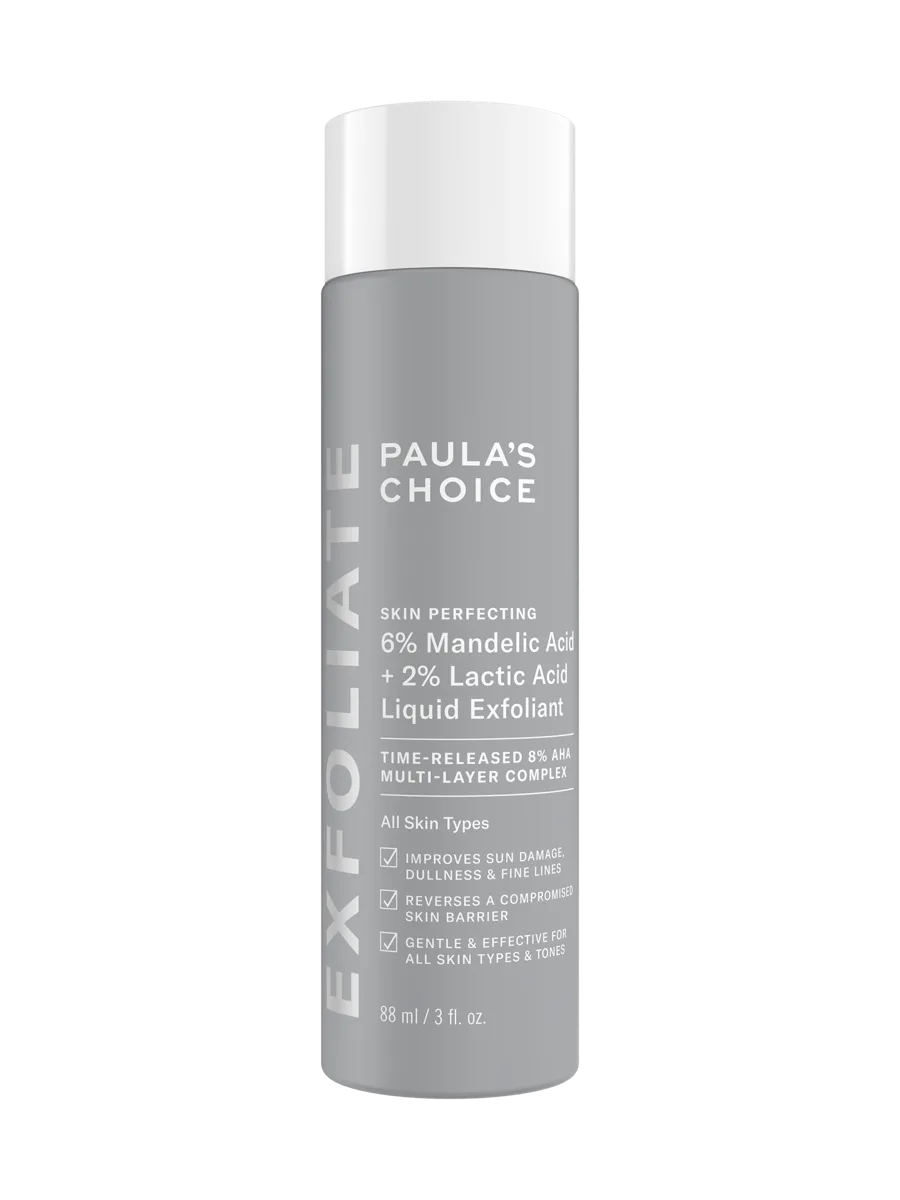
At $79 for 60ml, this product costs a premium. No larger size lowers the per-ounce price. The price reflects the dual mechanism, updated biodegradable beads, and brand recognition. The downside is simple: a well-formulated AHA leave-on like Paula's Choice 8% AHA or Naturium Mandelic Topical Acid 12% provides comparable or better resurfacing for half the cost or less, with less fragrance. This is a reasonable premium pick for shoppers wanting a scrub-plus-acid combination in one step. Better value exists for anyone willing to use separate products for physical and chemical exfoliation.
Non-sensitive skin types wanting a dual-action exfoliator will like this. It provides immediate tactile smoothing and long-term AHA resurfacing. It also suits fans of the original Dr. Brandt scrub who want a gentler, modern version with a proper AHA component.
People with sensitive, rosacea-prone, or reactive skin. People who use AHAs or retinoids regularly. People seeking the best value — comparable AHA-only products cost less and provide similar resurfacing.
Product details.
Rich white cream with finely suspended wood-cellulose particles
Strong fresh citrus with a subtle menthol cool note
--- The updated white tube has minimalist branding — it is cleaner than the original silver packaging ---
The first use provides a mild cooling sensation from the menthol, a gentle granular feel from the cellulose beads, and visible freshness after rinsing. It is less dramatic than the alumina original, but less likely to leave skin feeling over-scrubbed.
4-6 months with once- or twice-weekly use
12 months
All Year
The backstory.
The original Dr. Brandt microdermabrasion scrub used aluminum oxide crystals — effective but increasingly out of step with sustainability concerns and modern derm guidance. This reformulation swapped in wood-cellulose microgranules and elevated the AHA content, keeping the category leadership while updating the approach.
About Dr. Brandt
Legacy Brand (20+ years)Dr. Brandt Skincare, founded in 1995 by dermatologist Fredric Brandt, reformulated its iconic microdermabrasion scrub in the early 2020s to replace the aluminum oxide crystals with wood-cellulose microgranules. The brand maintains broad distribution at Sephora, Dermstore, and Amazon.
Common myths.
The reformulation is less effective than the original.
Different, not less. The alumina version used more mechanical exfoliation; the new version uses glycolic acid for more chemical work. Total exfoliation is comparable, but the feel is different.
AHA + physical exfoliation in one product is too much.
Use this combination once or twice a week with sunscreen and no other actives. Most non-sensitive skin tolerates it. The cellulose beads are softer than alumina or sugar.
FAQ.
How is this different from the original microdermabrasion scrub?
This version swaps aluminum oxide crystals for wood-cellulose microgranules and adds glycolic acid as a resurfacing active. It is gentler mechanically, stronger chemically, and matches modern dermatology's preference for AHA-based exfoliation.
How often should I use it?
Use this once or twice a week at most. The glycolic acid resurfaces the skin alongside the physical component; using it more often can compromise your barrier.
Can I use it with retinol?
Don't use them on the same night. Alternate days, then always apply a moisturizer and next-day sunscreen.
Is it safe for sensitive skin?
No. The citrus oils, menthol, and fragrance, combined with AHAs and mechanical exfoliation, suit reactive skin poorly. Use a simpler mandelic acid or PHA product instead.
Does it have a cooling effect?
Yes, because of the menthol. Some users find it refreshing; others find it irritating. If you are menthol-sensitive, this product is not for you.
Is it worth $79?
This is a good AHA-plus-physical exfoliant, but it costs a lot. Paula's Choice 8% AHA and The Ordinary Glycolic Acid Toning Solution resurface skin similarly for less money, if you do not need the physical component.
What the community says.
"Gentler than the original formula"
"Visible smoothing and brightening"
"Nicer creamy texture"
"Real AHA backbone"
"Works well on combination skin"
"Strong citrus fragrance"
"Menthol tingle"
"Still expensive for a scrub"
"Fans of the original miss the alumina crystals"
People also looked at.