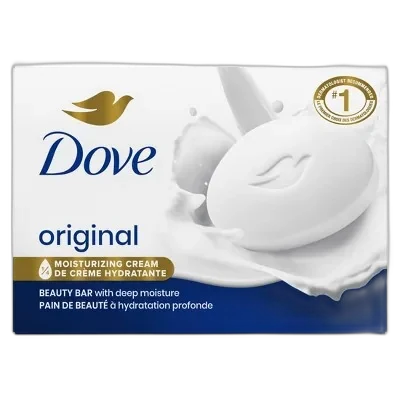
Beauty Bar White
The Original Gentle Cleanser
 Verified reviewer
Pros & cons.
- +Syndet formulation cleanses at near-neutral pH 7, dramatically less barrier-disrupting than soap's pH 9-10
- +1/4 moisturizing cream matrix deposits emollient fatty acids on skin during cleansing
- +#1 dermatologist-recommended bar soap in the US with nearly seven decades of clinical backing
- +Extraordinary value at roughly $1.50 per bar, with multi-pack options for even greater savings
- +Available in virtually every grocery store, drugstore, and mass retailer in the United States
- +Suitable for face, hands, and full body — simplifies the cleansing routine to a single product
- +Rich, creamy lather that makes the affordable price point feel luxurious
- −Contains fragrance, which may irritate users with sensitivities or allergies
- −Sodium tallowate is animal-derived — not suitable for vegans
- −Moisturizing cream content may feel too rich for oily or acne-prone skin
- −Bar format is less convenient and arguably less hygienic than pump-dispensed liquid cleansers
- −The near-neutral pH 7 is still above the skin's natural acid mantle of 4.5-5.5
The full review.
Most skincare products have origins, but few start in a hospital. Lever Brothers developed the Dove Beauty Bar in the 1950s as a clinical solution, not a luxury item. It was a cleanser for burn patients with damaged skin that could not tolerate soap. That medical history remains in the formula on drugstore shelves today; its core technology has stayed fundamentally unchanged for nearly seven decades.
The key fact is that Dove is not soap. This is chemistry, not marketing. Saponification—a reaction between fats and lye—makes traditional bar soap. This process produces surfactant molecules with an alkaline pH, usually between 9 and 10. Your skin’s natural acid mantle sits at pH 4.5-5.5. Washing with soap forces your skin to recover from a pH assault that temporarily disrupts the barrier function. Doing this twice a day for years chronically undermines the skin surface.
Dove avoids this. Its primary surfactant, sodium lauroyl isethionate, is a synthetic detergent—a syndet—that cleanses at approximately pH 7. This is the difference between cold water and ice water; one is much less damaging. This formulation decision, commercialized in 1957, is why dermatologists have recommended Dove over soap for longer than most people have been alive.
The ‘1/4 moisturizing cream’ claim on Dove packaging since the original launch refers to the stearic acid content. This forms a creamy emollient matrix within the bar. During cleansing, this matrix deposits a thin film of fatty acids on the skin, partially replenishing the lipids the surfactant removes. The result is skin that feels clean but not stripped—what Dove users have called ‘softer after washing’ for generations.
The bar produces a thick, creamy lather that differs from soap foam. While soap lather feels thin and squeaky, Dove’s foam feels silky and substantial. It rinses clean without heavy residue or a waxy coating, leaving skin calm and comfortable rather than tight and parched.
The ingredient list is short. Sodium tallowate and sodium palmitate provide structural integrity to the bar. Cocamidopropyl betaine boosts foam quality and reduces irritation. The formula contains sixteen ingredients, which is minimal compared to modern thirty-ingredient cleansers.
Honesty requires balance. The formula contains fragrance—the classic Dove scent. For most users, this familiar note makes the cleansing experience feel less clinical. For users with fragrance sensitivities or allergies, this is a concern that Dove addresses with their Sensitive Skin variant.
The sodium tallowate comes from animal fat, so this bar is not for vegans. This functional ingredient aids moisturizing and structural integrity, but consumers using animal-derived ingredients should note this.
For acne-prone and very oily skin, the moisturizing cream content can feel too thick, and the tallow-derived ingredients may contribute to comedogenicity for sensitive individuals. This cleanser optimizes for normal, dry, and combination skin; it was not designed to degrease oily T-zones or treat acne.
The value is high. At roughly a dollar fifty per bar, lasting three to five weeks of daily use, Dove Beauty Bar costs less per wash than almost any skincare product. Multi-packs lower the cost further. A dermatologist would recommend this product, and a college student can afford it—a rare combination in skincare.
Some products succeed through innovation; others through consistency. Dove has used the same method and the same reason since Eisenhower was president. It remains the #1 dermatologist-recommended bar in America after sixty-eight years. That is evidence, not nostalgia.
Ingredient analysis.
Full INCI list · pH 7
Sodium Lauroyl Isethionate, Stearic Acid, Sodium Tallowate, Sodium Palmitate, Lauric Acid, Sodium Isethionate, Water, Sodium Stearate, Cocamidopropyl Betaine, Sodium Cocoate, Sodium Palm Kernelate, Fragrance, Sodium Chloride, Tetrasodium EDTA, Tetrasodium Etidronate, Titanium Dioxide (CI 77891)
Skin match.
The science.
The Science
Dove differs from traditional soap because it uses a syndet surfactant system instead of a saponified one. A landmark study in the Journal of the American Academy of Dermatology (Baranda et al., 2002) shows that syndet bars like Dove disrupt the skin's stratum corneum less than soap bars. This study measured disruption via transepidermal water loss (TEWL), skin surface pH, and corneocyte integrity.
The pH difference drives this advantage. Traditional soap has an alkaline pH of 9-10, which swells the stratum corneum, disrupts intercellular lipid lamellae, and temporarily impairs the acid mantle that protects against pathogenic microorganisms. Dove has a near-neutral pH of approximately 7 and produces less of these effects.
A study in Dermatology (Ananthapadmanabhan et al., 2004) analyzed these cleansers and found that soap-based cleansers cause more skin protein damage, more lipid extraction, and higher surface roughness than syndet-based cleansers. The stearic acid-rich moisturizing cream in Dove's formula mitigates lipid loss by depositing a thin emollient film during cleansing.
The American Academy of Dermatology recommends syndet bars over traditional soap for patients with atopic dermatitis and sensitive skin to reduce irritation and better preserve skin barrier function. No other consumer cleanser matches Dove's nearly seven-decade track record of safety and efficacy in this population.
References
- Skin surface pH in acne patients and healthy individuals and its correlation with the skin type — Journal of the American Academy of Dermatology (2002)
- Cleansing without compromise: the impact of cleansers on the skin barrier and the technology of mild cleansing — Dermatologic Therapy (2004)
Dermatologist Perspective
Dermatologists have recommended Dove Beauty Bar for nearly seven decades; it is the most frequently cited gentle cleanser in dermatological practice. Board-certified dermatologists note that the syndet formulation's near-neutral pH is its main clinical advantage because it preserves the acid mantle that traditional soap disrupts. Dermatologists recommend Dove for patients with atopic dermatitis, post-procedural sensitivity, radiation therapy-related skin irritation, and general dry skin management. Pediatric dermatologists also frequently recommend it for childhood eczema. This recommendation is common for patients who cannot afford specialized medical cleansers, as Dove provides comparable gentleness at a fraction of the cost.
Where it fits in your routine.
Wet the bar and your skin with lukewarm water. Lather the bar between your hands to create a creamy foam. Apply the foam to your face, body, or hands using gentle circular motions. For facial use, apply the foam from your hands instead of rubbing the bar directly on your face for a gentler cleanse. Rinse thoroughly with lukewarm water. Use twice daily or as needed. Store the bar on a draining soap dish to prevent it from dissolving in standing water.
The Dove Beauty Bar offers the best value in skincare. At about $1.50 per bar — and under $1.00 per bar in multi-packs — this dermatologist-recommended gentle cleanser works for face, body, and hands at a near-zero per-use cost. Daily use lasts 3-5 weeks per bar, keeping the annual cost under $20 for a product that replaces face wash and body wash. No other product has this level of dermatological endorsement and clinical evidence at this price. The only value factor is your skin type; oily or acne-prone skin may need a less moisturizing cleanser regardless of price.
This cleanser works for normal, dry, combination, or sensitive skin. It suits anyone needing a gentle, affordable daily cleanser for face and body. It is ideal for people switching from harsh soap to improve skin comfort, families sharing one cleanser, and patients whose dermatologist has recommended a mild, non-soap cleanser.
The CeraVe Moisturizing Cream feels too thick for very oily or acne-prone skin. Vegans should avoid this product because it contains sodium tallowate (animal-derived tallow). People with fragrance sensitivities should use Dove Sensitive Skin bar instead. Anyone seeking active treatment ingredients (salicylic acid, benzoyl peroxide) requires a different type of cleanser.
Product details.
This smooth, dense bar produces a thick, creamy lather. The 1/4 moisturizing cream content makes the foam feel silky, unlike the thin, squeaky lather of traditional soap. It rinses clean and leaves no heavy residue.
The classic Dove scent is clean, fresh, and slightly floral. This familiar, mild fragrance is neither perfumey nor medicinal. It is one of the most recognizable scents in personal care.
Each bar has the iconic white-and-blue paper wrapper with the Dove bird logo. You can buy them individually or in multi-packs of 2, 4, 6, 8, 10, and 14 bars. Multi-packs lower the per-bar cost. A 3.17 oz travel size is also available.
Switching from traditional bar soap shows immediate results — skin feels clean without a tight, stripped sensation. The creamy lather feels high-end for the price. Many first-time users say this is when they realize soap has been drying their skin.
3-5 weeks per bar with daily face and body use
36 months
All Year
The backstory.
Dove was born from a surprisingly practical origin — it was developed in the 1950s by Lever Brothers as a non-irritating cleanser for burn patients and people with sensitive skin. The '1/4 moisturizing cream' tagline, which debuted with the original 1957 launch, isn't just marketing — the stearic acid content creates a genuine emollient matrix within the bar. Dove remained a niche player until 1979 when Unilever relaunched it with a dermatologist-backed campaign that proved it was measurably less drying than soap. By 1986, it was the best-selling bar in America.
About Dove
Legacy Brand (20+ years)Dove launched in 1957 as the first beauty bar alternative to soap. It pioneered cleansers that moisturize instead of strip. Dove is the #1 dermatologist-recommended bar soap in the US and has clinical studies backing it for nearly seven decades. Now a Unilever brand, Dove has one of the longest track records in consumer skincare.
Common myths.
Dove is just soap with fancy marketing.
Dove is not soap. True soap comes from saponification (fats + lye) and has an alkaline pH of 9-10. Dove is a syndet bar that uses sodium lauroyl isethionate to cleanse at a near-neutral pH of ~7. This chemical difference explains why clinical studies show Dove causes less skin barrier disruption than soap.
Bar cleansers are less hygienic than liquid body wash.
Studies show bacteria on bar soap do not transfer to skin during normal use. Surfactants in the bar create a hostile environment for bacteria. A 1988 study in Epidemiology and Infection found no evidence of bacterial transfer from contaminated bars to users' skin.
FAQ.
Is Dove Beauty Bar actually soap?
No — Dove is a syndet (synthetic detergent) bar, not soap. Traditional soap uses saponification and has an alkaline pH of 9-10 that disrupts the skin barrier. Dove uses sodium lauroyl isethionate as its primary surfactant to cleanse at a near-neutral pH of approximately 7. This is why dermatologists have recommended Dove over soap for nearly seven decades.
Can I use Dove Beauty Bar on my face?
Yes — Dove's near-neutral pH and mild surfactant system work for facial cleansing. Many dermatologists recommend it as a simple, affordable face wash. However, the moisturizing cream content may feel too thick for very oily or acne-prone skin. For most skin types, lather the bar in your hands and apply the foam to the face instead of rubbing the bar directly for a gentle, effective cleanse.
Is Dove Beauty Bar good for eczema?
Many dermatologists recommend Dove as a gentle cleanser for eczema-prone skin. Its syndet formulation irritates less than traditional soap. The near-neutral pH preserves the skin's acid mantle, and the moisturizing cream content prevents post-wash dryness that triggers eczema flares. For severe eczema, Dove also offers a Sensitive Skin variant without fragrance.
Why do dermatologists recommend Dove?
Dove is the #1 dermatologist-recommended bar in the US. Clinical studies show its syndet formulation causes less skin barrier disruption, less transepidermal water loss, and less irritation than traditional soap. The near-neutral pH, mild surfactants, and built-in moisturizing cream make a cleanser dermatologists trust for sensitive, post-procedure, and compromised skin.
Is Dove Beauty Bar vegan?
No — the original Dove Beauty Bar contains sodium tallowate from animal fat (tallow). This makes the Dove Beauty Bar unsuitable for vegans. Dove does not offer a vegan variant of the original Beauty Bar, though some other Dove products use plant-based formulations.
How long does a Dove Beauty Bar last?
One person using a standard 3.75 oz bar daily on the face and body typically uses it for 3-5 weeks. A soap dish with drainage extends the bar's life by keeping it out of water. Multi-packs save money per bar for households that use them quickly.
What the community says.
"Doesn't dry out skin like regular soap"
"Leaves skin feeling soft and moisturized"
"Incredibly affordable and available everywhere"
"Gentle enough for sensitive and eczema-prone skin"
"Perfect lather — rich and creamy without being slimy"
"Contains fragrance, which some sensitive skin users prefer to avoid"
"Not ideal for very oily or acne-prone facial skin"
"Contains animal-derived ingredients (sodium tallowate) — not vegan"
"Bar format can be less hygienic in shared bathrooms"
"Can leave a film that feels too rich for oily skin types"
Featured in.
People also looked at.