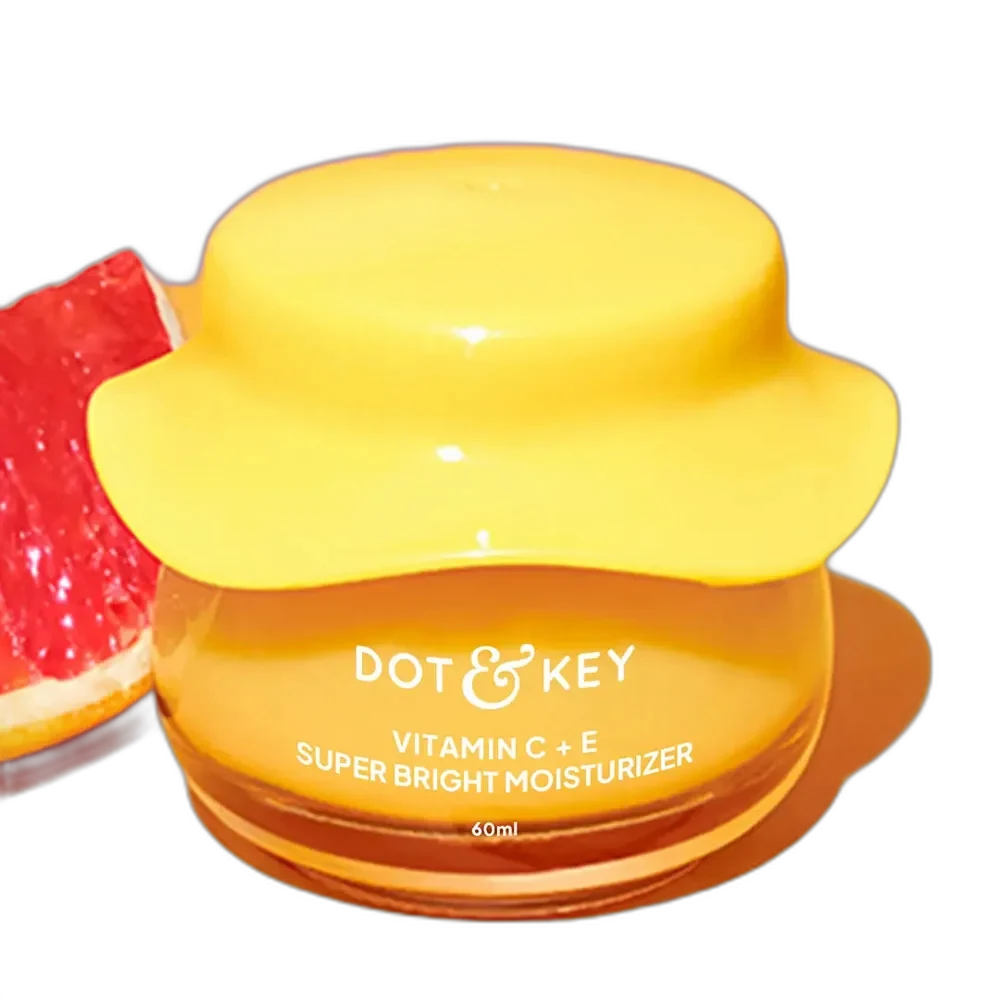
Vitamin C + E Super Bright Moisturizer SPF 20
Budget Brightening Moisturizer
 Verified reviewer
Pros & cons.
- +Three anti-pigmentation pathways stacked in one budget formula
- +Ethyl ascorbic acid is more stable than L-ascorbic acid in this kind of product
- +Niacinamide at meaningful levels for melanosome transfer inhibition
- +Licorice root adds a second tyrosinase inhibition pathway
- +Affordable for the formulation complexity
- +Centella, panthenol, and sodium hyaluronate support barrier hydration
- −SPF 20 is insufficient as a standalone sunscreen for outdoor use
- −Added fragrance rules out sensitive, rosacea-prone, or reactive skin
- −Uses older chemical UV filters including octinoxate
- −Limited availability outside India
- −Titanium dioxide leaves faint cast on deeper skin tones
The full review.
Hyperpigmentation is the most common skincare concern in India. Most Western brands historically underserve South Asian consumers. Deeper skin tones experience post-inflammatory hyperpigmentation more easily after acne, shaving, waxing, or minor injury. In India, the cultural aesthetic focuses on even skin tone and brightness rather than the wrinkle-focused anti-aging marketing seen in the West. Indian indie brands like Dot & Key build entire product lines around this. This brightening moisturizer is one of the category’s top sellers. The formulation does not rely on a single hero ingredient; instead, it stacks three anti-pigmentation pathways, mimicking how dermatological clinical practice treats PIH.
These three pathways explain why this cream works at a price point where most brightening moisturizers fail. Ethyl ascorbic acid is a stable vitamin C derivative that provides antioxidant and moderate tyrosinase-inhibition effects. Niacinamide sits high in the INCI list and acts as the main brightening workhorse. It reduces melanosome transfer from melanocytes to keratinocytes, targeting a different part of the pigmentation cascade than tyrosinase inhibition. Licorice root extract provides glabridin, another tyrosinase inhibitor that complements the vitamin C on the same enzyme. Together, these three actives hit three different steps in melanogenesis. This mirrors how clinical dermatologists treat hyperpigmentation by combining topical vitamin C, niacinamide, and a tyrosinase inhibitor (hydroquinone, azelaic acid, or kojic acid) instead of using one agent. Dot & Key puts a simplified version of this combination into one moisturizer. The formulation logic is more sophisticated than the price suggests.
The SPF is complicated. The product is labeled SPF 20, which is below the SPF 30 minimum dermatologists recommend for daily use and far below the SPF 50+ standard in the K-beauty and J-beauty markets this product imitates. SPF 20 blocks about 95% of UVB at the standardized dose, but real-world application often yields effective protection closer to SPF 8-12. The chemical filters—ethylhexyl methoxycinnamate (octinoxate) and butyl methoxydibenzoylmethane (avobenzone)—are first-generation UV absorbers. Octinoxate is being phased out of newer formulas due to reef-safety concerns and better alternatives. Titanium dioxide provides a small mineral backup, but the concentration here does not significantly broaden the protection profile. Treat this moisturizer as an antioxidant-plus-backup-SPF layer, not a primary sunscreen. Apply a dedicated SPF 30+ sunscreen on top for any meaningful time outdoors.
The cream performs well. It is a medium-weight white cream that spreads easily and absorbs within about 60 seconds without sticky or greasy residue. The titanium dioxide can leave a very faint cast on deeper skin tones, but it is less pronounced than a pure mineral sunscreen because chemical filters do most of the UV work. The formula also includes sodium hyaluronate, panthenol, allantoin, and centella asiatica extract to provide hydration and barrier support. The moisturizer feels effective without the stinging or dryness common in unstable vitamin C products.
The added fragrance is the biggest non-SPF flaw. The scent is light and pleasant to most, but it is a dealbreaker for fragrance-sensitive skin, rosacea-prone users, or reactive barriers. Dot & Key’s fragrance-free barrier cream is a better option for those users. Many fragrance-free brightening alternatives exist at similar or slightly higher prices.
For Indian and South Asian consumers targeting hyperpigmentation on a budget, this product works as claimed at an accessible price. This three-pathway brightening approach usually costs $40 from premium indie brands, but Dot & Key offers it for under $15. The limitations are clear: the SPF is too low to stand alone, the fragrance excludes sensitive skin, and international availability is limited. Within these constraints, it is a thoughtfully constructed formula.
Ingredient analysis.
Full INCI list · pH 5
Aqua, Ethylhexyl Methoxycinnamate, Glycerin, Butyl Methoxydibenzoylmethane, Titanium Dioxide, Cetearyl Alcohol, Niacinamide, Ethyl Ascorbic Acid, Tocopheryl Acetate, Caprylic/Capric Triglyceride, Sodium Hyaluronate, Panthenol, Centella Asiatica Extract, Licorice Root Extract, Allantoin, Glyceryl Stearate, PEG-100 Stearate, Dimethicone, Xanthan Gum, Phenoxyethanol, Ethylhexylglycerin, Disodium EDTA, Parfum.
Skin match.
The science.
The Science
Dermatological literature supports multi-pathway topical pigmentation treatment. A 2017 review in the Indian Journal of Dermatology analyzed the melanogenesis cascade and found four intervention points: inhibiting tyrosinase activity (the rate-limiting enzyme in melanin synthesis), blocking melanosome transfer from melanocytes to keratinocytes, speeding epidermal turnover to shed pigmented cells, and using antioxidants to interrupt UV-induced oxidative stress that triggers melanogenesis. Clinical trials show that combining agents at different cascade points outperforms single-agent treatments.
Ethyl ascorbic acid (3-O-ethyl ascorbic acid) is a vitamin C derivative more stable than L-ascorbic acid in aqueous formulations. A 2019 study in the International Journal of Molecular Sciences tested its skin penetration and conversion to free ascorbic acid. It found ethyl ascorbic acid crosses the stratum corneum more easily than L-ascorbic acid because of lower polarity, then enzymes convert it to active vitamin C in viable epidermal layers. This conversion is slower than direct L-ascorbic acid application, but the stability advantage in formulations with water, chemical UV filters, and various pH conditions is significant.
Studies focus on niacinamide's effect on melanosome transfer. A 2002 paper in the British Journal of Dermatology (Hakozaki et al.) showed 2-5% niacinamide reduced melanosome transfer from cultured melanocytes to keratinocytes by 35-68% in vitro. An in vivo trial showed measurable hyperpigmentation reductions over an 8-week application period.
Licorice root extract contains glabridin, a natural tyrosinase inhibitor. A 2004 study in Phytotherapy Research showed glabridin reduced UVB-induced pigmentation in hairless mice and inhibited melanogenesis in cultured B16 melanoma cells.
The SPF 20 rating is below the SPF 30 minimum the American Academy of Dermatology and most international dermatology bodies recommend for daily use.
References
- Nicotinic acid/niacinamide and the skin — International Journal of Cosmetic Science (2005)
- The effect of niacinamide on reducing cutaneous pigmentation — British Journal of Dermatology (2002)
Dermatologist Perspective
Dermatologists treating hyperpigmentation usually combine multiple pigmentation-targeting agents instead of one ingredient, so multi-pathway brightening moisturizers align with clinical practice. Board-certified dermatologists often prescribe combinations of topical vitamin C, niacinamide, and a dedicated tyrosinase inhibitor like hydroquinone or azelaic acid for patients with melasma, post-inflammatory hyperpigmentation, and solar lentigines. Regarding the SPF component, dermatologists say SPF 20 is inadequate for daily outdoor protection. They note hyperpigmentation-prone patients need SPF 30 or higher because UV exposure drives most pigmentation conditions. Dermatologists treating patients with darker skin tones find that preventing sun-induced pigmentation works better than treating it later, making adequate SPF critical in any brightening regimen.
Where it fits in your routine.
Apply once every morning after cleansing and treatment serums. Use one pump for the face and neck. Warm the product between clean fingertips and press it into the skin. Wait 60-90 seconds for full absorption. Apply a dedicated SPF 30+ sunscreen on top before any outdoor exposure. Do not use this product as your only sun protection for extended outdoor activities. At night, use a separate non-SPF moisturizer or barrier cream.
At about $14 for 60 mL, the formulation complexity offers strong value. The three-pathway brightening approach and stable vitamin C derivative provide real ingredient value for this price, especially in Indian markets where similar international brands cost two to three times more. One jar lasts 2-3 months with once-daily morning use. However, the inadequate SPF rating lowers the value. Users treating this as their primary sunscreen lack enough protection, and adding a dedicated sunscreen increases total routine costs. For users seeking a brightening serum/moisturizer layer with backup SPF, the value is strong. For users seeking a single-product AM solution, the SPF shortfall significantly reduces effective value.
Indian and South Asian consumers want to treat hyperpigmentation, post-inflammatory marks, and dullness on a budget. This works well if you want one brightening layer that uses vitamin C, niacinamide, and licorice root, and you use a dedicated primary sunscreen.
Skip if you have sensitive, rosacea-prone, or reactive skin; the added fragrance is an issue. Skip if you want a single-product AM solution with adequate sun protection, as SPF 20 is too low for standalone use. Skip if you live outside India and cannot easily use international shipping.
Product details.
Medium-weight white cream that spreads easily and absorbs within 60 seconds.
Noticeable light perfume from added parfum.
Plastic pump jar, travel-friendly, opaque for ingredient stability.
Skin softens immediately without stinging despite the vitamin C content. This shows the ethyl ascorbic acid derivative works well for a daily moisturizer. There is no purging or adjustment period. Most users see visible skin brightening by week 6-8.
2-3 months with once-daily morning application.
12 months
All Year
The backstory.
Dot & Key built this product for the Indian market where hyperpigmentation, dark spots, and post-inflammatory marks from acne are among the most commonly reported skin concerns. The brand chose ethyl ascorbic acid over L-ascorbic acid for formulation stability with the chemical UV filters, and added niacinamide and licorice root to create a multi-active brightening layer that works alongside the modest SPF 20 protection.
About Dot & Key
Emerging Brand (2–5 years)Dot & Key launched in 2018 in India as an ingredient-led direct-to-consumer brand. Its vitamin C line is one of the brand's most popular product families in Indian markets, but it lacks independent international validation.
Common myths.
Ethyl ascorbic acid is less effective than L-ascorbic acid.
Ethyl ascorbic acid is more stable than L-ascorbic acid. It converts to vitamin C in the skin at a slower rate. In a daily moisturizer exposed to water, light, and pH stress over months, a stable derivative often delivers more total active ingredient than an oxidized L-ascorbic acid formula.
SPF 20 in a daily moisturizer is enough sunscreen for most people.
SPF 20 is the minimum for indoor incidental exposure. Dermatologists recommend at least SPF 30, and ideally SPF 50, for outdoor activities, long walks, or commuting. Use an SPF moisturizer as a backup layer, not a replacement for a dedicated sunscreen.
FAQ.
Does this moisturizer really brighten skin?
Yes, gradually. niacinamide, ethyl ascorbic acid, and licorice root extract target pigmentation via three mechanisms: melanosome transfer inhibition, tyrosinase inhibition, and antioxidant protection. Most users see less dullness in 2-3 weeks and measurable pigmentation reduction at 6-8 weeks.
Is SPF 20 enough for daily sun protection?
It's sufficient for indoor incidental UV exposure from windows and brief commutes, but dermatologists generally recommend SPF 30 or higher for any meaningful outdoor time. Treat this moisturizer as a backup layer and apply a dedicated SPF 30+ sunscreen on top if you're going outside.
Can I use this with a separate vitamin C serum?
Yes. Apply your vitamin C serum first, wait for absorption, then apply this moisturizer as your SPF layer. The two do not conflict. Stacking the vitamin C dose can accelerate brightening results for users targeting hyperpigmentation.
Is this moisturizer fragrance-free?
No. It has added parfum (fragrance). Users with fragrance sensitivity, rosacea, or reactive skin should use Dot & Key's fragrance-free alternatives instead.
Can I use this at night?
You can, but this AM product contains SPF that provides no value overnight. A dedicated ceramide or retinoid-compatible night cream works better for PM use and helps the sunscreen filters in this product last longer before expiry.
Is it safe during pregnancy?
Yes. The formula lacks retinoids, salicylic acid, or essential oils flagged for pregnancy caution. Niacinamide, vitamin C derivatives, and licorice root are safe during pregnancy and breastfeeding.
Does it leave a white cast?
A little. The titanium dioxide can leave a faint cast on deeper skin tones, but it is softer than a pure mineral sunscreen since chemical filters provide most of the UV protection. Rub the product in thoroughly for best results.
---
What the community says.
"Visible brightening within 6-8 weeks"
"Three-pathway pigmentation approach"
"Affordable price"
"Non-sticky texture"
"SPF 20 is too low for outdoor use"
"Added fragrance bothers sensitive users"
"Small 60 mL size"
"Uses older chemical UV filter (Octinoxate)"
People also looked at.