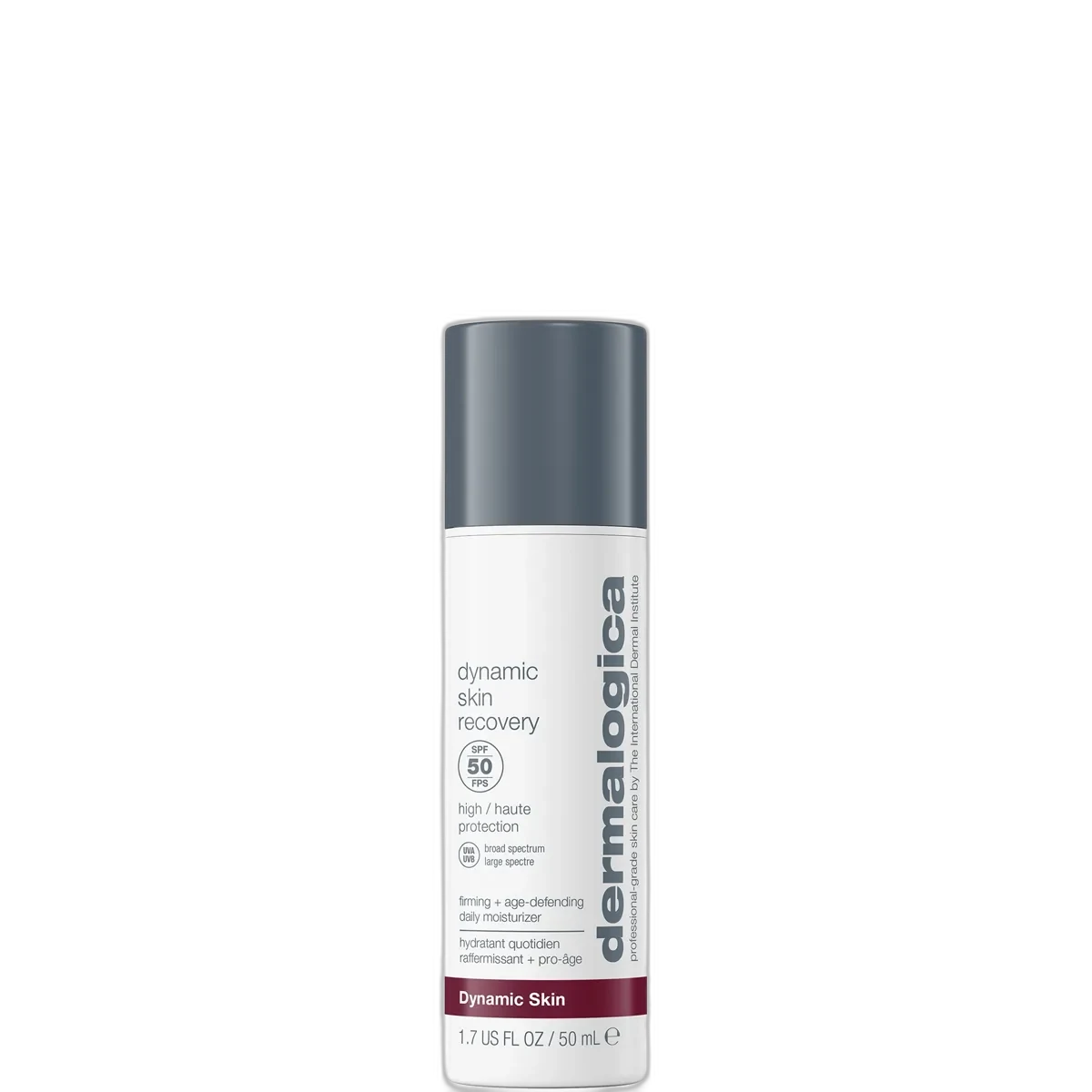
Dynamic Skin Recovery SPF 50
Anti-Aging SPF Workhorse
 Verified reviewer
Pros & cons.
- +Oleosome Encapsulation Technology boosts SPF 50 performance with fewer chemical filters
- +Palmitoyl Tetrapeptide-7 actively modulates UV-induced inflammatory aging beyond simple UV blocking
- +Rich enough to replace a separate morning moisturizer for normal-to-dry skin
- +No white cast — chemical filter system absorbs invisibly regardless of skin tone
- +Airless pump packaging protects formula integrity and allows precise dispensing
- +Carnosine provides anti-glycation protection that sunscreen alone cannot deliver
- −Extensive essential oil blend with seven documented fragrance allergens is excessive for daily use
- −$87 for 1.7 oz creates a $2+ daily cost for consistent sunscreen use
- −Too rich and emollient for oily or acne-prone skin — causes shine and potential breakouts
- −Avobenzone can sting eyes when product migrates during heat or perspiration
- −No water resistance claim limits utility for outdoor activities and exercise
The full review.
Most SPF moisturizers follow a hierarchy: they are either a moisturizer with sunscreen or a sunscreen that moisturizes. The Dermalogica Dynamic Skin Recovery SPF 50 aims higher. It works as a moisturizer, a sunscreen, and an anti-aging treatment at once, using Oleosome Encapsulation Technology to achieve this.
Oleosomes are natural microspheres in safflower seeds that store energy and moisture. Dermalogica uses these structures to deliver sunscreen filters by encapsulating chemical UV absorbers within the oleosomes. This increases the effective SPF per unit of chemical filter, so less active ingredient is needed for SPF 50, and improves the feel by reducing the heavy, greasy sensation typical of high-concentration chemical sunscreens. This technology is the formula’s main innovation; it allows a hydrating cream to reach SPF 50 without feeling like plastic on the skin.
The four-filter sunscreen system uses avobenzone for UVA, homosalate and octisalate for UVB, and octocrylene for UVB protection and avobenzone stabilization. The 2022 reformulation replaced octinoxate with this combination to meet regulatory trends and reef-safety standards. The protection is robust, with 18% total active filters enhanced by the oleosome delivery.
The anti-aging layer sets this product apart from sunscreens that only provide UV protection. Palmitoyl Tetrapeptide-7 modulates the inflammatory response to UV exposure by reducing IL-6 production, the inflammatory cytokine that drives the photoaging cascade. Since some UV penetrates the skin even with SPF 50, this peptide manages the biological response to that penetration.
Carnosine, added in the 2022 reformulation, targets glycation, an aging pathway sunscreen alone cannot stop. Reactive carbonyl species—oxidative byproducts from UV and environmental exposure—attack collagen and elastin proteins to create advanced glycation end-products (AGEs) that stiffen and discolor skin. Carnosine scavenges these carbonyl species before they damage structural proteins. This addition shows Dermalogica’s formulators look beyond simple UV blocking.
The texture meets the moisturizer promise. This medium-weight cream is thicker than a gel-cream but lighter than a traditional night cream. It absorbs within a minute and leaves skin hydrated rather than coated. Squalane, glycerin, urea, and the oleosome complex provide multi-mechanism moisturization that lasts all day. For normal-to-dry and mature skin types, this replaces a separate moisturizer and simplifies the morning routine.
Scent
There are several frustrations. The essential oil content is excessive. Rosewood, rose damascena, geranium, clove (both leaf and bud), lemon, cypress, palmarosa, lemongrass, and eucalyptus create a strong floral-herbal scent that lingers. The fragrance allergens—linalool, eugenol, limonene, citronellol, geraniol, benzyl benzoate, and citral—resemble a contact dermatitis screening panel. For daily use on skin exposed to UV and other actives, this essential oil load is hard to defend dermatologically.
Common Complaints
Eye migration is a real issue. Users report stinging and burning when the product moves toward the eyes during heat or exercise. This is common with avobenzone-based chemical sunscreens, and the rich, creamy texture may worsen this as perspiration moves the product on the skin surface.
Not ideal for
This product is too rich for oily and combination skin types. The emollient base that suits dry and mature skin creates visible shine on oily skin within hours, and the occlusive ingredients can increase congestion and breakouts in acne-prone skin. This product targets a specific audience.
At eighty-seven dollars for 1.7 ounces, the daily cost for the recommended use (2.5 pumps per application, lasting roughly five to six weeks) is approximately $2.00-2.50 per day. This is premium pricing for sunscreen; the anti-aging actives must work with the UV protection to justify it. The 3.4 oz jumbo size and the auto-replenish discount at Dermstore lower the cost for regular users.
This product does what few SPF moisturizers do: it treats sun protection as one layer of a comprehensive anti-aging strategy. The oleosome technology, the anti-inflammatory peptide, the carbonyl-scavenging carnosine, and the antioxidant tea extract work together to address photoaging. If your skin tolerates the essential oils and likes the thick texture, it is one of the most thoughtfully formulated SPF moisturizers in professional skincare.
Ingredient analysis.
Full INCI list
Active Ingredients: Avobenzone 3.0%, Homosalate 5.0%, Octisalate 3.0%, Octocrylene 7.0%. Inactive Ingredients: Water/Aqua/Eau, Octocrylene, Carthamus Tinctorius (Safflower) Oleosomes, Butylene Glycol, Homosalate, Dimethicone, Butyl Methoxydibenzoylmethane, Ethylhexyl Salicylate, C12-15 Alkyl Benzoate, Propanediol, Polysorbate 80, Palmitoyl Tetrapeptide-7, Dipotassium Glycyrrhizate, Aniba Rosodora (Rosewood) Wood Oil, Camellia Sinensis Leaf Extract, Pelargonium Graveolens Flower Oil, Eugenia Caryophyllus (Clove) Leaf Oil, Laminaria Digitata Extract, Saccharomyces Cerevisiae Extract, Rosa Damascena Flower Oil, Eugenia Caryophyllus (Clove) Bud Oil, Citrus Limon (Lemon) Peel Oil, Cupressus Sempervirens Leaf Oil, Cymbopogon Martini Oil, Cymbopogon Schoenanthus Oil, Citrus Limon (Lemon) Peel Extract, Eucalyptus Globulus Leaf Oil, Helianthus Annuus (Sunflower) Seed Oil, Tocopherol, Squalane, Caprylyl Glycol, Acrylates/C10-30 Alkyl Acrylate Crosspolymer, Carnosine, Lecithin, Urea, Caprylic/Capric Triglyceride, Glycerin, Pentylene Glycol, Bisabolol, Glucosamine HCl, Ethylhexylglycerin, 1,2-Hexanediol, Titanium Dioxide, Gluconolactone, Polysorbate 60, Trisodium Ethylenediamine Disuccinate, Sorbitan Isostearate, Decyl Glucoside, Aminomethyl Propanol, Hydroxyethyl Acrylate/Sodium Acryloyldimethyl Taurate Copolymer, Polysilicone-11, Sodium Acrylates Copolymer, Phenethyl Alcohol, Sodium Benzoate, Linalool, Eugenol, Limonene, Citronellol, Geraniol, Benzyl Benzoate, Citral
Skin match.
The science.
The Science
The oleosome delivery system uses a new approach to sunscreen formulation. Oleosomes are natural lipid bodies in seeds—spherical droplets with a phospholipid monolayer and structural proteins called oleosins. In this formula, safflower-derived oleosomes encapsulate the chemical UV filters. This biomimetic delivery system improves filter distribution on the skin surface and enhances photon-absorbing efficiency through controlled release and even coverage.
The four-filter chemical system provides broad spectral coverage. Avobenzone (butyl methoxydibenzoylmethane) absorbs strongly across the UVA spectrum (peak absorption ~360 nm) but is photolabile and degrades upon UV exposure. Octocrylene stabilizes this via energy transfer, absorbing excited-state energy from photoactivated avobenzone and dissipating it as heat. This avobenzone-octocrylene pairing is a well-validated stabilization strategy in sunscreen chemistry.
Palmitoyl Tetrapeptide-7 (formerly Palmitoyl Tetrapeptide-3) modulates the cutaneous inflammatory response to UV radiation. Research shows this peptide suppresses IL-6 secretion—a pro-inflammatory cytokine that drives matrix metalloproteinase activation and collagen degradation. By reducing the inflammatory cascade from UV photons that penetrate even SPF 50 protection, the peptide complements the physical UV-blocking function.
Carnosine (beta-alanyl-L-histidine) is a natural dipeptide with anti-glycation properties. It reacts with reactive carbonyl species and advanced lipoxidation end-products to prevent them from cross-linking collagen and elastin fibers. Research in the British Journal of Dermatology shows topical carnosine application reduces advanced glycation end-products in skin models, making it an effective anti-aging active in this UV-protective context.
Dermatologist Perspective
Dermatologists would see this as a well-formulated broad-spectrum chemical sunscreen with legitimate anti-aging actives—ideal for patients with normal-to-dry, photoaged skin wanting simplified morning routines. The SPF 50 broad-spectrum claim meets AAD recommendations for daily sun protection. Board-certified dermatologists would note the comprehensive UV filter system and the innovative oleosome delivery. However, the high essential oil content—including fragrance allergens like eugenol, linalool, and limonene—is unnecessary and problematic for patients with rosacea, eczema, or contact dermatitis. Dermatologists would also recommend reapplication every two hours during prolonged exposure, as the formula lacks a water-resistance claim.
Where it fits in your routine.
Apply 2.5 pumps (approximately a nickel-sized amount) to the face and neck. Use this as the final morning skincare step, after serum and before makeup. Blend evenly and wait one minute to absorb. Reapply every 2 hours during prolonged sun exposure. This replaces your morning moisturizer for normal-to-dry skin. For combination skin, use a lighter moisturizer first, then apply this as your sunscreen step.
The 1.7 oz standard size costs $87 and lasts about 5-6 weeks with daily use, averaging $2.00-2.50 per day. The 3.4 oz jumbo size offers better per-ounce value. Dermstore's auto-replenish at $73.95 (15% off) is the cheapest way to buy it. The oleosome technology, anti-aging peptide, and carnosine set this apart from simpler SPF moisturizers, but the price premium is high—comparable broad-spectrum SPF 50 moisturizers cost one-third as much. The value is highest for users who buy a separate moisturizer and sunscreen, as this replaces both.
Normal, dry, or mature skin types wanting a simple morning routine with anti-aging treatment and SPF 50 protection. It suits Dermalogica AGE Smart line devotees who want sunscreen to fight photoaging instead of just blocking UV. It works for users who prefer a thick, hydrating sunscreen texture and the floral essential oil scent.
Oily and acne-prone skin types will find this too thick and potentially pore-clogging. People with fragrance sensitivity should avoid the extensive essential oil blend and its seven documented allergens. Budget-conscious sunscreen users can find effective broad-spectrum SPF 50 for much less. Those who exercise or perspire heavily during the day should note the lack of water resistance and the potential for eye stinging.
Product details.
Rosewood, rose damascena, geranium, clove, lemon, and cypress essential oils create a complex, assertive floral and botanical fragrance. The formula has no synthetic fragrance, but the natural oil blend is prominent and unmistakable.
An opaque plastic airless pump bottle protects the formula from oxidation and contamination. The pump dispenses precise amounts (2.5 pumps recommended per application). Sizes include 0.4 oz travel, 1.7 oz standard, 3.4 oz jumbo, and 4.0 oz professional.
Applies smoothly with a hydrating, creamy feel and absorbs faster than its weight suggests. The floral-herbal scent is immediate and lasts several minutes. No white cast. Skin feels moisturized and protected without greasiness, though oily skin types may see shine within a few hours. It works well as a makeup base.
5-6 weeks with daily facial application (1.7 oz size, 2.5 pumps per use)
12 months
All Year
The backstory.
Originally launched around 2014 as part of the AGE Smart line, this product was significantly reformulated in January 2022. The reformulation replaced octinoxate with a broader four-filter chemical sunscreen system, upgraded the peptide from Palmitoyl Tripeptide-5 to Palmitoyl Tetrapeptide-7, and added carnosine as an antioxidant dipeptide. The changes reflect both regulatory trends (moving away from octinoxate) and advancing peptide science.
About Dermalogica
Legacy Brand (20+ years)Dermalogica was founded in 1986 by Jane Wurwand in Los Angeles and developed in partnership with the International Dermal Institute. This SPF moisturizer was reformulated in 2022 to replace octinoxate with a broader chemical filter system, reflecting the brand's ongoing formula refinement.
Common myths.
Chemical sunscreens are worse than mineral sunscreens.
This formula uses a chemical filter combination (avobenzone + homosalate + octisalate + octocrylene) for broader, more elegant UV protection than most mineral formulas. The oleosome technology reduces the required chemical filter amount. Both chemical and mineral approaches have trade-offs; consistent daily use matters.
An SPF moisturizer provides no anti-aging benefits beyond sun protection.
Palmitoyl Tetrapeptide-7 modulates UV-induced inflammatory signaling, carnosine scavenges glycation-promoting oxidative byproducts, and the antioxidant complex addresses free radical damage. These active anti-aging mechanisms work with the UV protection instead of acting as marketing claims layered onto a sunscreen.
FAQ.
Is Dermalogica Dynamic Skin Recovery SPF 50 a chemical or mineral sunscreen?
This chemical (organic) sunscreen uses four active filters: Avobenzone 3%, Homosalate 5%, Octisalate 3%, and Octocrylene 7%. The titanium dioxide in the inactive ingredients acts as a colorant, not a sunscreen-active concentration. These chemical filters provide broad-spectrum UVA/UVB protection without the white cast of mineral sunscreens.
Can I use this as my only morning moisturizer?
Normal to dry skin gets enough hydration from the squalane, glycerin, urea, and safflower oleosome technology alongside SPF 50 protection. Oily skin types will find it too heavy as a standalone moisturizer and may prefer a lighter product.
Is this sunscreen reef-safe?
The 2022 reformulation removed octinoxate, a filter banned in Hawaii due to reef toxicity. The current formula still contains octocrylene and homosalate, which some environmental groups flag as concerning for marine ecosystems. It is improved but not fully reef-safe by the strictest definitions.
Why is this sunscreen so expensive?
The $87 price covers its professional-grade positioning, patented Oleosome Encapsulation Technology, anti-aging peptide and antioxidant complex, and premium essential oil blend. The 3.4 oz jumbo size has better per-ounce value for regular users. Deciding if the anti-aging actives in a sunscreen justify this premium over a simpler SPF is a personal value judgment.
Does this sunscreen leave a white cast?
No — the active filters are transparent once absorbed as a chemical sunscreen. Most users report no white cast on any skin tone. The titanium dioxide in the formula acts as a low-concentration colorant, not at levels that cause visible residue.
What the community says.
"Absorbs quickly without leaving a white cast despite SPF 50"
"Hydrating enough to replace a separate morning moisturizer"
"Works beautifully as a makeup base with a natural satin finish"
"Leaves skin feeling soft, plump, and dewy throughout the day"
"Contains genuine anti-aging peptides alongside sun protection"
"Too rich and heavy for oily or combination skin — causes visible shine"
"Strong floral botanical scent from extensive essential oil blend"
"Can sting or burn eyes if product migrates during heat or sweating"
"Premium $87 price for 1.7 oz is difficult to justify for daily sunscreen use"
"Some acne-prone users report breakouts and clogged pores"
People also looked at.