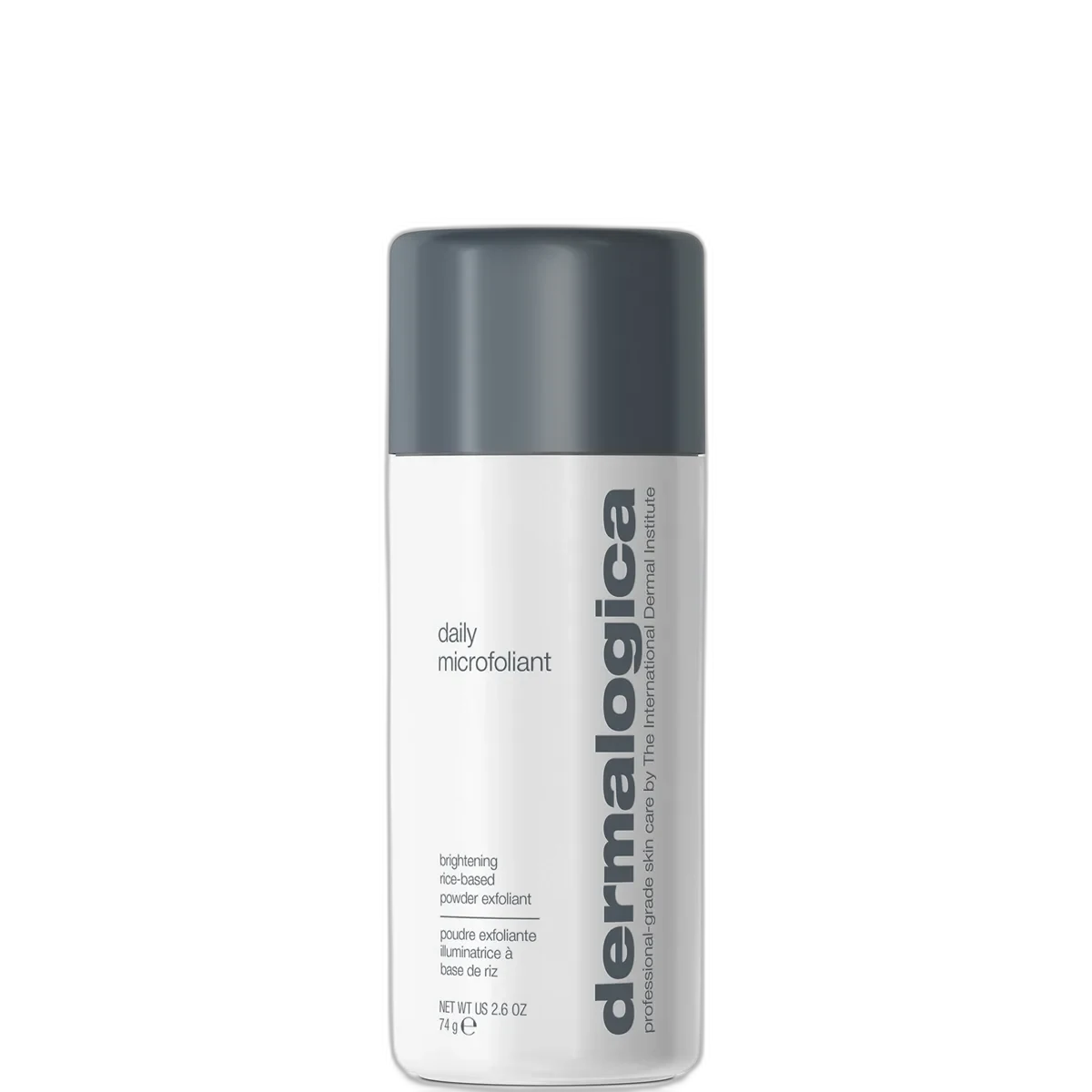
Daily Microfoliant
Cult Classic Exfoliant
 Verified reviewer
Pros & cons.
- +Triple exfoliation (enzyme + BHA + physical) achieves comprehensive smoothing no single mode can match
- +Powder format delivers freshly activated papain enzyme with every use — no degradation in the bottle
- +User-adjustable intensity — more water for gentler exfoliation, less for stronger polish
- +Colloidal oatmeal and allantoin provide effective soothing during the exfoliation process
- +Brightening complex with licorice root, green tea, and phytic acid targets uneven tone
- +Travel-friendly powder format with no liquid restrictions or leaking risk
- +Eco-friendly refill pouches available at a lower price point
- −$69 for 2.6 oz is premium pricing despite the long-lasting powder format
- −Daily use is too frequent for many sensitive skin types despite the product name suggesting otherwise
- −Contains tea tree oil, grapefruit peel oil, and limonene — sensitizers on freshly exfoliated skin
- −Powder can be messy and moisture in the container causes clumping
- −Contains hydrolyzed wheat protein — a concern for those with topical gluten sensitivity
The full review.
It’s the rare skincare product that can claim two decades of market dominance without a reformulation, and the Dermalogica Daily Microfoliant wears that longevity like a quiet badge. Launched around 2001, when the skincare conversation was still dominated by St. Ives Apricot Scrub and aggressive glycolic peels, this powder exfoliant arrived with an idea that was almost too subtle for its time: what if exfoliation could be smart instead of aggressive?
The concept remains elegant. A fine rice-based powder sits dormant in its shaker bottle. You dispense it into wet hands, add water, and the powder transforms into a creamy paste. In that moment of activation, the papain enzyme comes alive — fresh, unoxidized, at full potency. This is the product’s most underappreciated advantage over pre-mixed enzyme washes and serums, where the enzyme begins degrading from the moment of manufacture. Every use of the Daily Microfoliant gives you a freshly activated enzyme treatment.
The triple exfoliation architecture is what makes this product genuinely different from anything that’s tried to copy it. Layer one: papain enzymatically dissolves the keratin bonds holding dead cells to the skin surface. Layer two: salicylic acid penetrates into pores to dissolve sebum plugs and promote cell turnover from within. Layer three: finely milled rice bran and microcrystalline cellulose physically polish the surface, sweeping away what the enzyme and acid have loosened. Each mechanism works through a different pathway, and together they achieve a thoroughness that no single-mode exfoliant can match.
The colloidal oatmeal is the formulation’s insurance policy. Positioned fifth in the ingredient list — suggesting a meaningful concentration — it provides the anti-inflammatory, skin-soothing counterweight that allows three simultaneous exfoliation modes to feel gentle rather than aggressive. Allantoin reinforces this calming function. The result is a product that polishes comprehensively while keeping irritation in check — most of the time.
The ‘most of the time’ caveat matters. Despite the ‘Daily’ in the name, a meaningful number of users report that daily use triggers breakouts, barrier damage, or increased sensitivity. Professional estheticians frequently recommend every-other-day use, particularly for sensitive skin types. This isn’t a flaw in the product — it’s a naming problem. Triple exfoliation, however gentle each mode, is cumulative. Calling it ‘daily’ gives users permission to overdo it, and some do.
The brightening complex works quietly in the background. Licorice root extract inhibits tyrosinase — the enzyme responsible for melanin production. Green tea extract provides antioxidant support. Phytic acid from the rice bran contributes additional brightening through its chelating properties. These aren’t dramatic ingredients, but with consistent use over weeks, the cumulative effect is a genuinely more even, luminous skin tone. Dermalogica’s clinical testing found dark spot minimization within one to four weeks of daily use — a timeline that aligns with what consistent users report.
The texture experience is part of the product’s appeal and, honestly, part of why it’s maintained such loyalty. There’s a tactile satisfaction in the powder-to-paste ritual that liquid cleansers and pre-mixed scrubs don’t offer. The amount of water you add controls the grittiness — a generous splash creates a nearly smooth cream, while a conservative amount produces a more exfoliating texture. This user-adjustable intensity is a subtle but meaningful feature for a product designed to serve all skin types.
The essential oil question follows Dermalogica across its entire range, and it’s particularly pointed here. Tea tree oil and grapefruit peel oil contribute both antimicrobial benefits and fragrance. Limonene, a derivative of the grapefruit oil, is a documented contact allergen that oxidizes on air exposure. In a product designed for daily use on freshly exfoliated skin — when the barrier is most compromised — including known sensitizers is a formulation choice that doesn’t hold up to scrutiny. The product would be stronger without them.
At sixty-nine dollars for 2.6 ounces, the price generates reasonable skepticism. The defense: the powder format means a little goes a long way, and a container typically lasts three to four months of daily use. The refill pouch at sixty-three dollars improves the economics and reduces packaging waste. The per-use cost of roughly sixty to seventy-five cents is not unreasonable for a product that replaces your morning cleanser and exfoliant simultaneously.
After two decades and over six thousand five-star reviews, the Daily Microfoliant has earned its status through something harder to manufacture than hype: consistent results. It hasn’t needed a reformulation because the original idea was sound — triple exfoliation in a format that delivers fresh enzyme activity with every use. The skincare landscape has changed dramatically since 2001, and this product remains relevant because it was ahead of the trends it preceded.
Ingredient analysis.
Full INCI list
Microcrystalline Cellulose, Magnesium Oxide, Sodium Cocoyl Isethionate, Sodium Lauroyl Glutamate, Colloidal Oatmeal, Disodium Lauryl Sulfosuccinate, Oryza Sativa (Rice) Bran, Oryza Sativa (Rice) Starch, Allantoin, Papain, Salicylic Acid, Ginkgo Biloba Leaf Extract, Camellia Sinensis Leaf Extract, Glycyrrhiza Glabra (Licorice) Root Extract, PCA, Hydrolyzed Wheat Protein, Populus Tremuloides Bark Extract, Cyclodextrin, Lauryl Methacrylate/Glycol Dimethacrylate Crosspolymer, Melaleuca Alternifolia (Tea Tree) Leaf Oil, Limonene, Citrus Grandis (Grapefruit) Peel Oil, Citric Acid, Titanium Dioxide (CI 77891), Hexylene Glycol
Skin match.
The science.
The Science
The Daily Microfoliant uses three distinct pathways to exfoliate the skin surface. Papain, a cysteine protease enzyme from Carica papaya, cleaves peptide bonds in devitalized keratin but leaves living cells alone. This enzymatic specificity allows the product to exfoliate effectively at gentle concentrations because the enzyme targets only dead protein.
Salicylic acid, the BHA component, provides lipophilic chemical exfoliation that papain lacks. Because Salicylic acid is oil-soluble, it penetrates the sebaceous follicle to dissolve intercellular lipid bonds between corneocytes. This pore-level activity targets comedone formation and blackheads, which surface-level enzymatic and physical exfoliation miss.
Microcrystalline cellulose and rice bran particles provide immediate physical exfoliation and smoothing. Unlike irregular scrub particles like walnut shells or apricot kernels that create micro-tears in the stratum corneum, the finely milled rice particles and cellulose spheres use uniform geometry to reduce mechanical damage risk.
The FDA recognizes colloidal oatmeal as a skin protectant. Its beta-glucans and avenanthramides provide anti-inflammatory activity to counterbalance exfoliation-induced irritation. Research in the Journal of Drugs in Dermatology shows colloidal oatmeal reduces inflammatory cytokines and strengthens the epidermal barrier, which helps manage the skin's response to triple-mode exfoliation.
The cyclodextrin delivery system improves ingredient penetration, using the same molecular taxi technology found in several other COSRX and professional-grade products. Cyclodextrin forms inclusion complexes with active ingredients to improve delivery into the stratum corneum without disrupting the barrier.
Dermatologist Perspective
Board-certified dermatologists view the Daily Microfoliant as a well-designed gentle exfoliant that combines multiple modalities at gentle concentrations. Dermatologists often recommend it to patients moving away from harsh physical scrubs, as the triple-action approach achieves comparable or superior results with less mechanical trauma. The colloidal oatmeal component follows dermatological guidance to include anti-inflammatory agents in exfoliating products. However, dermatologists note that 'daily' use is not appropriate for all skin types; every-other-day is a safer starting frequency, especially for patients with rosacea or compromised barriers. The essential oil content is unnecessary in a professional-grade product.
Where it fits in your routine.
Put about half a teaspoon of powder into very wet hands. Rub palms for 5-10 seconds to make a creamy paste — more water makes a gentler wash, while less water makes a more exfoliating texture. Massage onto a damp face in gentle circular motions for about 60 seconds, avoiding the eye area. Rinse well with lukewarm water. Use in the morning instead of your cleanser. Start every other day and move to daily use only if your skin tolerates it. Always follow with sunscreen.
At $69 for 2.6 oz, the Daily Microfoliant is a premium exfoliant. The powder format lasts 3-4 months with daily use, making the per-use cost about $0.58-0.77. The $63 refill pouch improves economics. A 0.45 oz travel size ($19.50) lets you test it. Compared to acid exfoliants at similar prices that last 1-2 months, the cost-per-use is competitive. The value increases because it replaces both a morning cleanser and an exfoliant.
Use this for gentle, effective exfoliation to fix dullness, texture, and uneven tone without harsh scrubs. It works for normal, combination, and oily skin types during a morning ritual. It suits users frustrated by pre-mixed enzyme products that lose potency and travelers needing an effective exfoliant that meets liquid restrictions.
Those with active inflammatory acne should avoid physical exfoliation that can spread bacteria. If you have known sensitivity to tea tree oil, grapefruit oil, or papain enzyme, the essential oil content makes this a poor choice. Very dry skin types may find even gentle daily exfoliation too stripping without significant moisturizer follow-up. Budget-conscious consumers can find simpler enzyme or BHA exfoliants at lower price points.
Product details.
Tea tree and grapefruit oils give it a mild herbaceous scent. Dermalogica markets it as free of artificial fragrances, though the natural essential oil scent is noticeable without synthetic fragrance added.
A cylindrical shaker-style bottle uses a sifter top to control powder dispensing. It comes in a 2.6 oz full size, 0.45 oz travel size, and a 2.6 oz refill pouch ($63) that reduces packaging waste. The shaker design is intuitive but needs care to keep water out of the container.
The powder-to-paste activation is engaging: dispense into wet hands, rub together, and the powder becomes a creamy wash. You can feel the micro-grit, but it is not scratchy. Skin feels polished and soft after rinsing, and brightness shows after the first use. Use it every other day to test your skin's tolerance before daily use.
3-4 months with daily use (2.6 oz size)
12 months
All Year
The backstory.
Launched around 2001, the Daily Microfoliant is Dermalogica's most iconic product — one reportedly sells every 10 seconds worldwide. Inspired by traditional Asian rice-washing beauty rituals, the powder format was revolutionary at launch and has spawned an entire category of powder exfoliants. Over two decades later, it remains the #1 powder exfoliant in the US and has won multiple industry awards including Allure Best of Beauty.
About Dermalogica
Legacy Brand (20+ years)Jane Wurwand founded Dermalogica in 1986 in Los Angeles, working with the International Dermal Institute. This product is the brand's most iconic offering — the #1 powder exfoliant in the US with over 6,000 five-star reviews and multiple Allure Best of Beauty awards.
Common myths.
Powder exfoliants are just fancy scrubs.
This product uses a triple exfoliation approach (enzyme + BHA + physical) via three distinct mechanisms. Papain enzymatically dissolves dead protein bonds, salicylic acid chemically clears pores, and rice bran physically polishes the surface. A scrub only does the last part.
You should use this product daily as the name suggests.
Many dermatologists and estheticians recommend using 'Daily' Microfoliant every other day instead. Daily use of the triple exfoliation can overwhelm sensitive skin, while overuse compromises the skin barrier and triggers breakouts.
FAQ.
Is the Dermalogica Daily Microfoliant worth $69?
The 2.6 oz container lasts 3-4 months if used daily, costing about $0.58-0.77 per use. An eco-friendly refill pouch costs $63. This product combines three types of exfoliation and brightening actives, and has held cult status for 20+ years. Value depends on if this triple-action approach works better for you than simpler alternatives.
Does the Daily Microfoliant help with dark spots?
Yes — the formula uses a brightening trio of licorice root extract (tyrosinase inhibitor), phytic acid from rice bran, and green tea extract. It also exfoliates to remove pigmented dead cells. Clinical testing shows minimized dark spots after 1-4 weeks of daily use, though stubborn hyperpigmentation may need dedicated treatment products too.
Is this safe for sensitive skin?
Many sensitive-skin users find it gentle if used every other day with extra water to make a creamier, less gritty paste. The colloidal oatmeal and allantoin soothe skin during exfoliation. However, the tea tree oil, grapefruit peel oil, and papain enzyme can sensitize some people — patch test first if you have very reactive skin.
What the community says.
"Extremely gentle yet effective — skin feels silky smooth after every use"
"Unique powder format is convenient, travel-friendly, and produces no liquid waste"
"Visibly brighter, more even skin tone with regular use"
"Works well even for sensitive and rosacea-prone skin when used correctly"
"Long-lasting — a little powder goes a surprisingly long way"
"$69 for 2.6 oz is expensive for a powder exfoliant"
"Daily use can irritate sensitive skin — many users do better every other day"
"Contains tea tree oil, grapefruit peel oil, and limonene as potential sensitizers"
"Powder format can be messy and water can get into container causing clumping"
"Not effective enough for stubborn hyperpigmentation or deep textural concerns"
People also looked at.