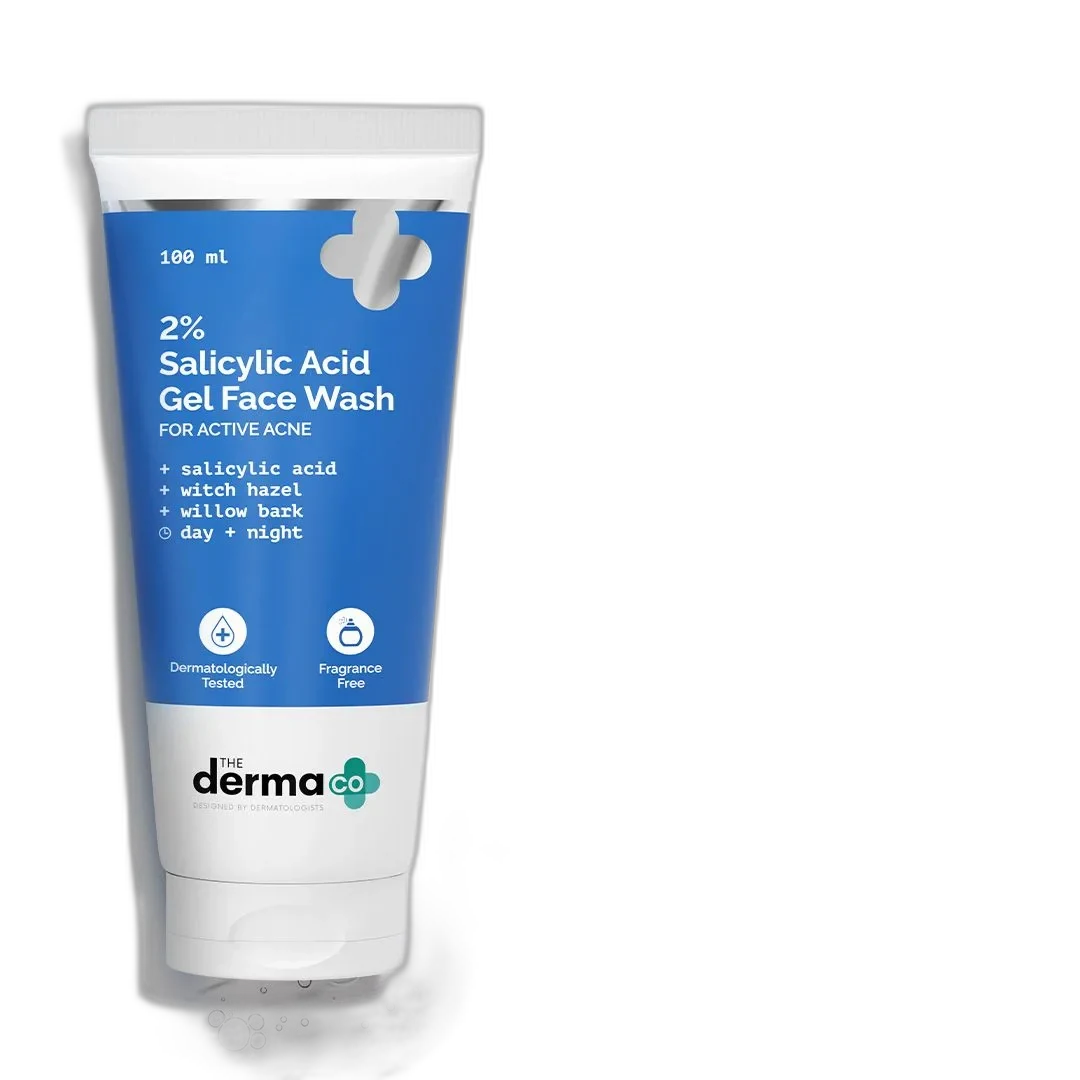
2% Salicylic Acid Face Wash
Budget BHA Cleanser
 Verified reviewer
Pros & cons.
- +Full 2% salicylic acid concentration for meaningful daily exfoliation
- +Sulfate-free surfactant system is less stripping than cheaper rivals
- +Glycerin and panthenol buffer the BHA for better tolerance
- +Rinses clean without leaving residue or tightness on oily skin
- +Pairs well with the brand's niacinamide serum for a simple routine
- +Tens of thousands of verified reviews support its real-world results
- +One of the best values in the Indian budget BHA cleanser category
- +Fragrance-free and suitable for most acne-prone routines
- −Too drying for consistently dry or sensitive skin types
- −Not pregnancy-safe at this salicylic acid concentration
- −Contains benzophenone-4, which some users prefer to avoid
- −Rinse-off contact time limits exfoliation vs. a leave-on BHA
- −Includes light plant oils that may concern fungal-acne-prone users
The full review.
Budget acne cleansers struggle to balance active concentration with surfactant harshness. Most cheap salicylic acid face washes choose one extreme: they use high BHA levels with aggressive sulfates that strip the barrier, or they use low active levels and rely on marketing. The Derma Co’s 2% Salicylic Acid Gel Face Wash, launched in 2020 as part of the brand’s first acne lineup, uses the full over-the-counter BHA concentration with a sulfate-free surfactant system and a buffer of glycerin, panthenol, and allantoin. The formulation isn’t perfect, but it shows more thought for the user experience than most four-dollar cleansers.
The texture sets it apart from rivals. This clear gel foams into a light, creamy lather instead of a squeaky foam. On oily or combination skin, it rinses clean without the tightness that signals a stripped barrier. This is useful when cleansing twice a day with an active-loaded product. Dry and sensitive users will still feel some tightness—2% salicylic acid is 2% salicylic acid, and glycerin cannot erase that—but the effect is lower than the older generation of Indian acne cleansers that dominated this price bracket before 2020.
The active system drives the results. Salicylic acid at 2% is the maximum over-the-counter BHA concentration; its position in the upper-middle of the INCI suggests meaningful inclusion. Willow bark extract further down the list provides a secondary, gentler salicin source for additional exfoliation. Witch hazel adds a light astringent note that works with the salicylic acid to clear sebum. The humectant-and-soothing cast—glycerin, panthenol, xylitol, allantoin—keeps the formula tolerable on the barrier for most oily and combination users.
The question for any BHA cleanser is if exfoliation works when the product sits on the skin briefly. The answer is: somewhat. A rinse-off BHA cleanser does not replace a leave-on salicylic acid treatment for stubborn blackheads or deep acne. It provides steady, low-grade exfoliation during every wash, controls surface oil, and helps the rest of your routine work more effectively. Users report a consistent pattern: reduced T-zone oiliness and a fresher finish within the first week, fewer new breakouts by weeks three to six, and smoother texture with visibly cleaner pore openings by month two. None of this is a miracle.
The cleanser works best as the anchor of a simple, affordable acne routine. Pair it with The Derma Co’s 10% Niacinamide Serum in the morning and a basic moisturizer with SPF, then add a leave-on retinoid or BHA in the evening. This four-product routine costs less than one premium product and addresses acne mechanics at multiple points. This is the specific context the cleanser was designed for.
There are caveats. It contains benzophenone-4, a UV protectant for the bottle rather than a skincare active; fragrance-sensitive users may react to the “benzophenone” family. The formula includes olive and safflower oils, which may not suit fungal-acne-prone users. Dry and very sensitive skin types should use a non-active cleanser and receive salicylic acid via a leave-on treatment to control contact time and frequency. Pregnant users should skip 2% salicylic acid cleansers for gentler acid systems or non-acid options. For the target user—oily, combination, or acne-prone skin seeking a cheap, dependable daily cleanser with real active weight—this is one of the better options at this price point.
Formula
Ingredient analysis.
Full INCI list
Aqua, Sodium Lauroyl Sarcosinate, Acrylates Copolymer, Disodium Cocoamphodiacetate, Cocamidopropyl Betaine, Glycerin, Caprylyl/Capryl Glucoside, Sodium Methyl Cocoyl Taurate, Salicylic Acid, Glyceryl Glucoside, Sodium Hydroxide, Phenoxyethanol, Ethylhexylglycerin, Xylitol, Glucose, Anhydroxylitol, Phoenix Dactylifera Extract, Betaine, Hamamelis Virginiana Extract, PEG-8, Isostearamidopropyl Ethyldimonium Ethosulfate, Propylene Glycol, Olea Europaea Fruit Oil, Carthamus Tinctorius Seed Oil, Panthenol, Xylitylglucoside, Benzophenone-4, Saccharide Isomerate, Citric Acid, Sodium Citrate, Salix Alba Extract, Sodium Benzoate, Allantoin, Sodium Gluconate
Skin match.
The science.
The Science
Salicylic acid at 2% is the maximum over-the-counter concentration in most global markets and has decades of dermatological research supporting its use in acne. As a beta hydroxy acid, it is lipophilic — oil-soluble — so it penetrates sebum-filled follicles and loosens the corneocytes that cause comedone formation. This mechanism differs from AHAs, which work on the skin surface and treat photodamage and pigmentation better than the clogged-pore mechanics of acne.
In a rinse-off cleanser, salicylic acid contact time is brief — typically thirty seconds to a minute — which limits exfoliation depth compared to a leave-on treatment. Published studies on salicylic acid cleansers show reductions in total comedone count and acne lesion count with twice-daily use over 8-12 weeks, but the effects are smaller than those from leave-on 2% BHA products at the same concentration.
Willow bark extract (Salix alba) contains salicin, a glycoside that enzymes can convert to salicylic acid. In topical skincare, the extent of this conversion is debated; willow bark acts as a mild supporting exfoliant rather than a substitute for free salicylic acid. Its inclusion here suggests the formulation uses both active pathways.
The glycerin and panthenol in the base counteract the mild barrier disruption salicylic acid can cause at higher concentrations. Panthenol (provitamin B5) has documented humectant and anti-inflammatory activity, and its presence in an active-loaded cleanser improves tolerance in most users.
Dermatologist Perspective
Dermatologists treating acne in Indian patients often recommend 2% salicylic acid cleansers for a foundational routine, especially for patients with oily or combination skin and comedonal acne. Board-certified dermatologists note that a BHA cleanser works best to support a leave-on salicylic acid, retinoid, or prescription acne regimen rather than as a standalone treatment. The Derma Co's version appears in clinical practice alongside other budget options when cost matters to patients. Dermatologists typically caution against pairing a 2% BHA cleanser with aggressive physical exfoliation or multiple leave-on acids, as the cumulative effect can compromise the barrier. Pregnant patients and patients with rosacea, eczema, or sensitive skin usually use gentler alternatives.
Where it fits in your routine.
Wet your face with lukewarm water. Dispense a small coin-sized amount into damp hands and massage into a light lather across the face. Target the T-zone and breakout-prone areas. Leave the lather on for 30-60 seconds so the salicylic acid has contact time, then rinse thoroughly with lukewarm water. Use once or twice daily based on skin tolerance — start with once daily if your skin is new to BHAs. Always follow with a hydrating moisturizer and, in the AM, broad-spectrum sunscreen.
At roughly $4 for 100 ml, this is a top value pick in the Indian budget BHA cleanser category. The pack-of-three option lowers the per-bottle cost for regular users. This formulation has a comparable active concentration and tolerance profile to premium BHA cleansers from CeraVe, Paula's Choice, or La Roche-Posay, which cost 3-5x more per ml. It earns its shelf space by working dependably at almost any budget. For daily acne routine use in the target market, nothing at this price is meaningfully better.
Oily, combination, and acne-prone skin types need an affordable daily cleanser that uses BHA to work without destroying the barrier. It works well for users in humid climates where surface oil control is a daily battle.
Dry, sensitive, or rosacea-prone skin needs a gentler cleanser. Use salicylic acid in a leave-on treatment to control contact time and frequency. Pregnant users and users with compromised barriers should skip 2% BHA cleansers until those issues resolve.
Product details.
Clear gel that foams into a light, creamy lather
Mild, neutral
100 ml plastic squeeze tube with flip cap
Using this twice daily for one week often reduces T-zone oil and leaves skin fresher after rinsing. Some users feel mild tightness — use a hydrating toner or moisturizer to offset this.
About 2 months with twice-daily face use
12 months
All Year
The backstory.
This face wash was part of The Derma Co's original 2020 acne lineup, launched to address the specific market demand in India for a daily cleanser that could handle humidity-driven oil production without requiring an import. Its positioning alongside the brand's niacinamide serum created a simple acne routine that quickly gained traction on Indian skincare Instagram.
About The Derma Co
Emerging Brand (2–5 years)The Derma Co launched in 2020 as a dermatologist-led direct-to-consumer brand under Honasa Consumer. Its salicylic acid cleansers are among the most widely distributed acne-targeted face washes in the Indian retail market.
Common myths.
A 2% salicylic acid face wash works like a 2% leave-on BHA.
Rinse-off cleansers have contact time measured in seconds, not hours. The exfoliating effect is real but less than a leave-on BHA. For active acne, use this cleanser alongside a leave-on treatment, not instead of one.
You need a BHA cleanser twice a day to control acne.
Most oily-acne-prone users only need once-daily use, especially if they use a leave-on niacinamide or BHA treatment. Twice-daily use over-exfoliates drier or compromised skin.
FAQ.
Is 2% salicylic acid too strong for daily use?
In a rinse-off cleanser, 2% salicylic acid works well for daily use on oily and combination skin. Brief contact time makes the exfoliation milder than a leave-on treatment. Drier or sensitive skin types can start with once-daily use.
Can I use this with a leave-on BHA treatment?
Yes, but you may need to alternate days or skip the leave-on BHA on days you use this cleanser twice. Watch for over-exfoliation signs — tightness, flaking, or irritation — and scale back if they appear.
Is it safe during pregnancy?
Many dermatologists advise avoiding 2% salicylic acid during pregnancy. Rinse-off formulations show lower systemic exposure than leave-on products. If pregnant, use a gentler glycolic or lactic cleanser and consult your doctor.
Will it dry out my skin?
The formula uses glycerin and panthenol to buffer the salicylic acid, making it less drying than traditional acne cleansers. Still, combination and dry skin users must follow with a proper hydrating moisturizer.
How long until I see results?
Skin feels cleaner and surface oiliness decreases within the first week. Consistent twice-daily use shows fewer new breakouts and smoother texture between weeks 3-6.
Does it contain fragrance?
The INCI lists no added fragrance. The formula uses benzophenone-4 as a UV protectant for the bottle; fragrance-sensitive users should note this.
Community
What the community says.
"Effective on active acne"
"Non-stripping foam"
"Affordable for daily use"
"Noticeable oil control"
"Too drying for sensitive skin"
"Contains benzophenone-4"
"Can be too active for daily use in drier climates"
People also looked at.