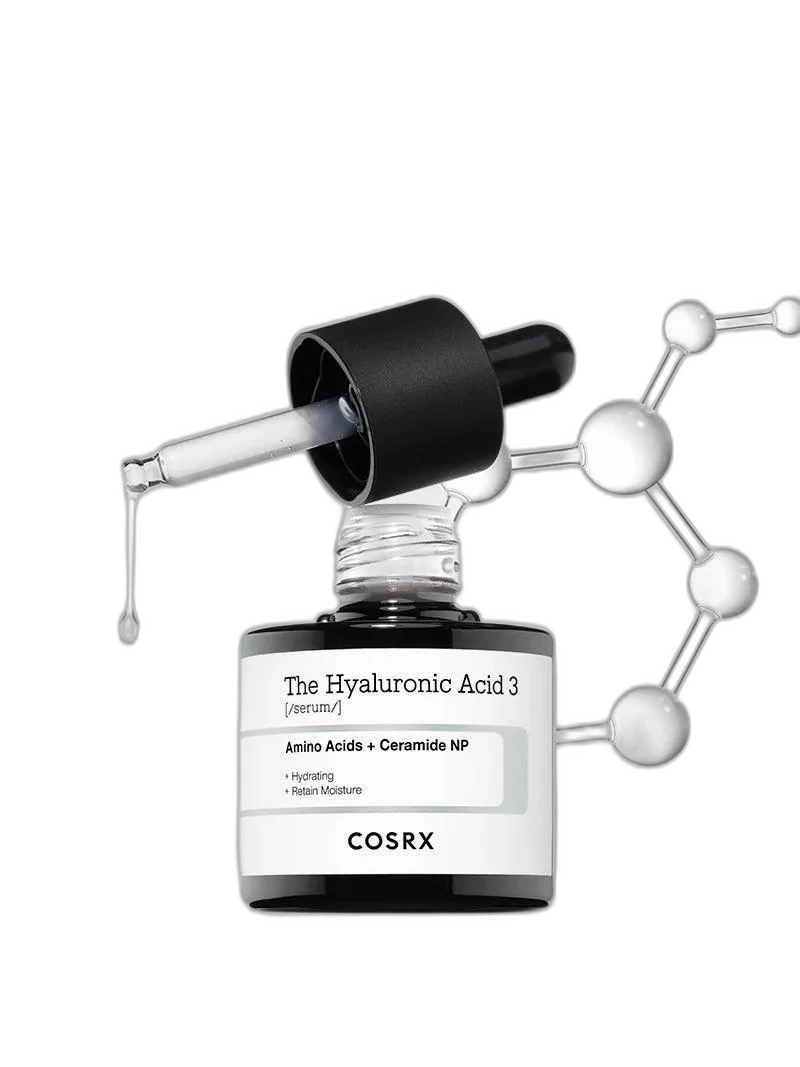
The Hyaluronic Acid 3 Serum
Clinical-Grade Hydration
 Verified reviewer
Pros & cons.
- +3% sodium hyaluronate concentration is higher than most HA serums on the market
- +Ceramide NP-cholesterol-phytosphingosine barrier trio retains the moisture HA attracts
- +Eight-amino-acid NMF complex provides intracellular hydration beyond standard HA serums
- +Silky, non-tacky texture absorbs quickly and layers beautifully under other products
- +Completely fragrance-free and gentle enough for sensitive skin types
- +Immediate visible plumping effect from the first application
- +Dermatologist-tested and hypoallergenic with a clean preservative system
- −20 mL bottle lasts only 3-5 weeks — one of the smallest HA serum bottles on market
- −At $25 per bottle ($1.25/mL), the price-per-use is significantly higher than alternatives
- −Dropper dispenses too little per pull, requiring multiple frustrating draws
- −Contains trace alcohol as a ceramide delivery solvent
- −Results, while real, are not dramatically different from less expensive HA serums
The full review.
When COSRX launched The Hyaluronic Acid 3 Serum in May 2023, it sold out within twenty-four hours. That kind of demand usually tells you more about marketing than about formulation — but in this case, the ingredient list actually backs up the hype. This is not your average hyaluronic acid serum. The problem is that the bottle is also not your average size.
Let’s start with what makes this formula genuinely different. Most HA serums on the market follow a simple template: hyaluronic acid (usually at 0.1-2%), some glycerin, maybe a preservative system, and call it a day. COSRX took a different approach. The 3% sodium hyaluronate concentration is notably higher than standard, providing a denser network of moisture-binding molecules per application. But concentration alone isn’t what sets this apart — it’s what surrounds the HA.
The formula includes ceramide NP, cholesterol, and phytosphingosine — the three lipid pillars of barrier repair. This is significant because hyaluronic acid, for all its moisture-attracting power, doesn’t do anything to prevent that moisture from leaving. It’s a magnet, not a seal. Without barrier support, you’re attracting water to the skin surface only to watch it evaporate, especially in dry or air-conditioned environments. The ceramide-cholesterol-phytosphingosine trio rebuilds the lipid matrix that prevents transepidermal water loss, meaning the moisture this serum attracts actually stays put. It’s the difference between filling a bucket and filling a bucket that doesn’t have holes in the bottom.
Then there’s the eight-amino-acid NMF complex — serine, alanine, glycine, glutamic acid, lysine, threonine, arginine, and proline — alongside sodium PCA, sodium lactate, and PCA. These are components of the skin’s Natural Moisturizing Factor, the water-soluble humectant system that operates inside the corneocytes themselves. If hyaluronic acid hydrates the spaces between skin cells and ceramides repair the walls, the NMF complex hydrates the cells from within. Three levels of hydration architecture in a single serum.
The texture is lovely. It’s silky and slightly viscous, but nowhere near the gloopy, tacky consistency that plagues many HA serums. It absorbs within a minute, leaving behind a subtle dewy finish that layers beautifully under moisturizer and sunscreen. No pilling, no stickiness, no white residue. It’s the kind of serum that disappears into your routine without demanding attention — which, for a hydrating step, is exactly what you want.
Results are visible from the first application. Two to three drops patted onto damp skin produce an immediate plumping effect — nothing dramatic, but your skin looks like it woke up rested and well-hydrated, even if you didn’t. Over two to four weeks of consistent use, fine lines soften, skin texture smooths, and the overall complexion takes on that ‘glass skin’ quality that K-beauty has been chasing for years. The barrier repair components contribute to reduced sensitivity and less moisture fluctuation throughout the day.
Now for the uncomfortable math. Twenty milliliters. At two to three drops twice daily, that’s roughly a month’s supply. At twenty-five dollars. That works out to approximately $1.25 per milliliter, which puts this in luxury territory despite COSRX’s accessible brand positioning. For context, many excellent HA serums offer 30 mL for fifteen to twenty dollars. You’re paying a significant premium for the formulation complexity — the ceramide trio, the NMF complex, the higher HA concentration. Whether that premium is justified depends on whether you view this as ‘just an HA serum’ (overpriced) or as a multi-functional hydration and barrier repair product (reasonable).
The dropper adds a practical frustration. It dispenses very little per pull, requiring two to three draws to get an adequate amount. For a product where every milliliter counts financially, a slow dropper feels less like quality control and more like an annoyance. An airless pump would have been a better choice for both hygiene and user experience.
For COSRX, this serum represents their premium ambitions. The ‘RX’ in their name has always referenced prescription-grade efficacy, and the DermSerum line is where they most fully commit to that promise. The formulation earns it — this is a genuinely sophisticated serum that treats hydration as a multi-system problem rather than a single-ingredient solution. The execution, from the ingredient selection to the texture engineering, is excellent.
But the value proposition remains challenging. When a K-beauty brand known for accessible pricing launches a product that costs more per milliliter than many prestige alternatives, the formulation needs to be not just good but noticeably, undeniably better. And while this serum is undeniably well-made, the experiential difference between it and a good fifteen-dollar HA serum is subtle rather than transformative. Your skin will be hydrated and plumped either way. This one does it with more elegance and barrier support. Whether that elegance is worth the per-month cost is a personal calculation.
Ingredient analysis.
Full INCI list
Water, Butylene Glycol, Propanediol, Glycerin, Sodium Hyaluronate, Pentylene Glycol, 1,2-Hexanediol, Diethoxyethyl Succinate, Sodium Polyacryloyldimethyl Taurate, Betaine, Xanthan Gum, Dimethicone, Hydroxyethyl Acrylate/Sodium Acryloyldimethyl Taurate Copolymer, Sodium PCA, Sodium Lactate, PCA, Glyceryl Acrylate/Acrylic Acid Copolymer, Hydrogenated Lecithin, Ethylhexylglycerin, Serine, Alanine, Glycine, Sodium Phytate, Sorbitan Isostearate, PVM/MA Copolymer, Glutamic Acid, Citric Acid, Lysine HCl, Threonine, Arginine, Sodium Methyl Stearoyl Taurate, Proline, Ceramide NP, Cholesterol, Caprylic/Capric Triglyceride, Phytosphingosine, Stearic Acid, Oleic Acid, Alcohol, Tocopherol, Lactic Acid, Caprylyl Glycol, Caprylhydroxamic Acid
Skin match.
The science.
The Science
The 3% sodium hyaluronate concentration represents a meaningful step up from the industry standard. Most commercial HA serums contain 0.1-2%, and while the relationship between concentration and efficacy isn't perfectly linear, higher concentrations do provide a denser moisture-binding matrix. Research published in Skin Research and Technology (2016) using Raman spectroscopy demonstrated that topically applied hyaluronic acid of different molecular weights penetrates to different skin depths — lower molecular weight forms reach the viable epidermis while higher molecular weight forms create a surface-level moisture film. COSRX's sodium hyaluronate, while listed as a single INCI entry, may contain a blend of molecular weight fractions, which would provide multi-depth hydration.
The ceramide NP-cholesterol-phytosphingosine trio directly addresses the well-established barrier repair model from Elias and colleagues. The Journal of Clinical Investigation (1993) demonstrated that optimal barrier recovery requires the simultaneous delivery of all three classes of stratum corneum lipids — ceramides, cholesterol, and fatty acids. Delivering ceramides alone, or cholesterol alone, actually delayed barrier repair compared to the three-lipid combination. This formula includes stearic and oleic acids alongside the ceramide and cholesterol, approximating the complete lipid replacement approach.
Betaine, included as an osmolyte, provides a hydration mechanism distinct from humectancy. Research in the Journal of Biological Chemistry has shown that osmolytes like betaine accumulate in cells to maintain water balance under osmotic stress — meaning they protect cellular hydration during environmental challenges (cold, wind, low humidity) rather than simply attracting external water like glycerin or HA. This adds environmental resilience to the hydration system.
The NMF amino acid complex supplements the skin's endogenous humectant system. Reduced NMF levels are correlated with increased dryness and impaired barrier function, particularly in atopic dermatitis and aged skin. A study in the British Journal of Dermatology established that topical NMF supplementation improves stratum corneum hydration, supporting the approach of delivering these amino acids alongside hyaluronic acid for complementary hydration mechanisms.
References
- Human skin penetration of hyaluronic acid of different molecular weights as probed by Raman spectroscopy — Skin Research and Technology (2016)
- Basis for the barrier abnormality in atopic dermatitis: outside-inside-outside pathogenic mechanisms — Journal of Clinical Investigation (1993)
Dermatologist Perspective
Board-certified dermatologists recognize hyaluronic acid as one of the most universally well-tolerated hydrating actives, and the 3% concentration in this serum aligns with clinical-grade formulation approaches. Dermatologists note that the inclusion of a ceramide-cholesterol-phytosphingosine complex alongside hyaluronic acid represents a more complete approach to hydration — addressing both moisture attraction and moisture retention simultaneously. Dr. Lindsey Zubritsky has positively mentioned COSRX's serum line for preparing skin and layering well with other actives. Dermatologists commonly recommend applying HA serums to damp skin and sealing with a moisturizer, particularly in low-humidity environments where high-concentration HA can paradoxically draw moisture from deeper skin layers. This product's built-in barrier repair components partially mitigate that concern, though an occlusive moisturizer is still recommended on top.
Where it fits in your routine.
Apply 2-3 drops to damp skin after cleansing and toning. Damp skin provides hyaluronic acid external water to bind, so it does not draw moisture from deeper skin layers. Pat with fingertips for 30-60 seconds until absorbed. Apply a moisturizer immediately to seal the hydration. Use morning and evening. It works well as a hydrating buffer before retinol or vitamin C.
The formulation quality is high. 3% HA with a barrier repair trio and NMF complex is rare at any price. However, at $25 for 20 mL (about one month's supply), this is one of the most expensive HA serums per use on the market. Monthly costs run $25-35 based on application volume. For comparison, excellent HA serums from competing brands offer 30 mL for $15-20. COSRX offers multi-packs ($42.50 for two bottles) for slight savings. Value depends on whether you view this as a premium barrier-repair serum featuring HA (reasonable) or a basic hydrating serum (overpriced). COSRX's twelve-year track record and the formula's clinical complexity justify the premium, but the small bottle size is a friction point.
This hydrating serum goes beyond basic HA. It works for dehydrated, barrier-compromised, or aging skin needing moisture and barrier repair in one step. It suits K-beauty enthusiasts who value sophisticated formulations and accept a premium price for small-batch production.
Skip this if the $25-per-month cost is too high for a hydrating serum. Also skip if your current HA serum works and you have no barrier issues — the new formulation may not change the experience for those with already healthy, well-hydrated skin.
Product details.
All Year Certifications Dermatologist testedHypoallergenic
The backstory.
Launched in May 2023 as part of COSRX's premium 'The RX' DermSerum line alongside the Vitamin C 23 and Niacinamide 15 serums, this product sold out within 24 hours. The line represented COSRX's move into higher-concentration, clinical-positioned products — a step up from their affordable basics into dermatologist-grade territory.
About COSRX
Established Brand (5–20 years)COSRX launched in South Korea in 2013. The name combines 'Cosmetics' with 'Rx' to signal a clinical K-beauty approach. The brand has 135+ global beauty awards and sells in 146+ countries. It uses well-researched actives for effective, no-frills formulations.
Common myths.
Higher concentration of hyaluronic acid is always better
At 3%, hyaluronic acid exceeds most serum concentrations. In very dry, low-humidity environments with little external water, hyaluronic acid draws moisture from deeper skin layers. Apply to damp skin and follow with a moisturizer so hyaluronic acid binds water instead of pulling it from your dermis.
All HA serums are basically the same
This formula uses a ceramide-cholesterol-phytosphingosine barrier repair complex and an NMF amino acid blend, which most HA serums lack. The HA provides hydration, but the barrier components retain that hydration. This differs from serums that use HA in a water base.
FAQ.
What does the '3' in COSRX Hyaluronic Acid 3 Serum mean?
The '3' means the formula has 3% sodium hyaluronate—much higher than the 0.1-2% in most HA serums. Marketing claims mention three molecular weights of HA, but the INCI list shows only one sodium hyaluronate entry. The raw material likely contains a blend of molecular weight fractions, as is common in the industry.
Is 3% hyaluronic acid too much for skin?
Most skin types tolerate 3% well, which increases hydration. But in very dry, low-humidity environments, high-concentration HA draws moisture from deeper skin layers without a moisturizer. Apply to damp skin and seal with a cream so the HA binds external water instead of pulling from your dermis.
How long does the 20 mL bottle last?
Use 2-3 drops twice daily for 3-5 weeks. The bottle is small for a $25 serum, a common concern. Monthly costs range from $25-35 based on application amount. Some retailers offer multi-packs with a slight per-unit discount.
Can I use COSRX HA Serum with retinol?
Yes — this pairing works well. Apply the HA serum to damp skin first to create a hydrating buffer, then use your retinol product. The barrier repair complex (ceramide NP, cholesterol, phytosphingosine) protects against retinol-induced dryness and irritation.
Why does this serum contain ceramides?
The ceramide NP, cholesterol, and phytosphingosine trio repairs the lipid barrier that stops transepidermal water loss. Without barrier repair, hyaluronic acid hydration evaporates fast. By including barrier-rebuilding lipids, COSRX ensures the moisture this serum attracts stays in the skin — a formulation approach most standalone HA serums lack.
Is COSRX HA Serum worth the price compared to cheaper alternatives?
This formulation beats most budget HA serums. The 3% concentration, barrier repair complex, and NMF amino acids are rare at any price. However, at $25 for 20 mL (about a month's supply), the cost per use exceeds alternatives like The Ordinary's HA serum. Whether the formulation sophistication justifies the price premium depends on your skin's needs and budget.
Community
What the community says.
"Lightweight silky texture that absorbs quickly without stickiness"
"Noticeable plumping and hydrating effect from the first application"
"Suitable for sensitive skin with no irritation or fragrance"
"Layers beautifully under other products and sunscreen"
"Higher 3% HA concentration than most competing serums"
"Very small 20 mL bottle runs out in about a month with twice-daily use"
"Price-to-volume ratio feels expensive compared to other HA serums"
"Dropper dispenses too little per pull, requiring multiple draws"
"Not moisturizing enough for very dry skin without a cream on top"
"Some users report no dramatic difference from cheaper HA serums"
People also looked at.