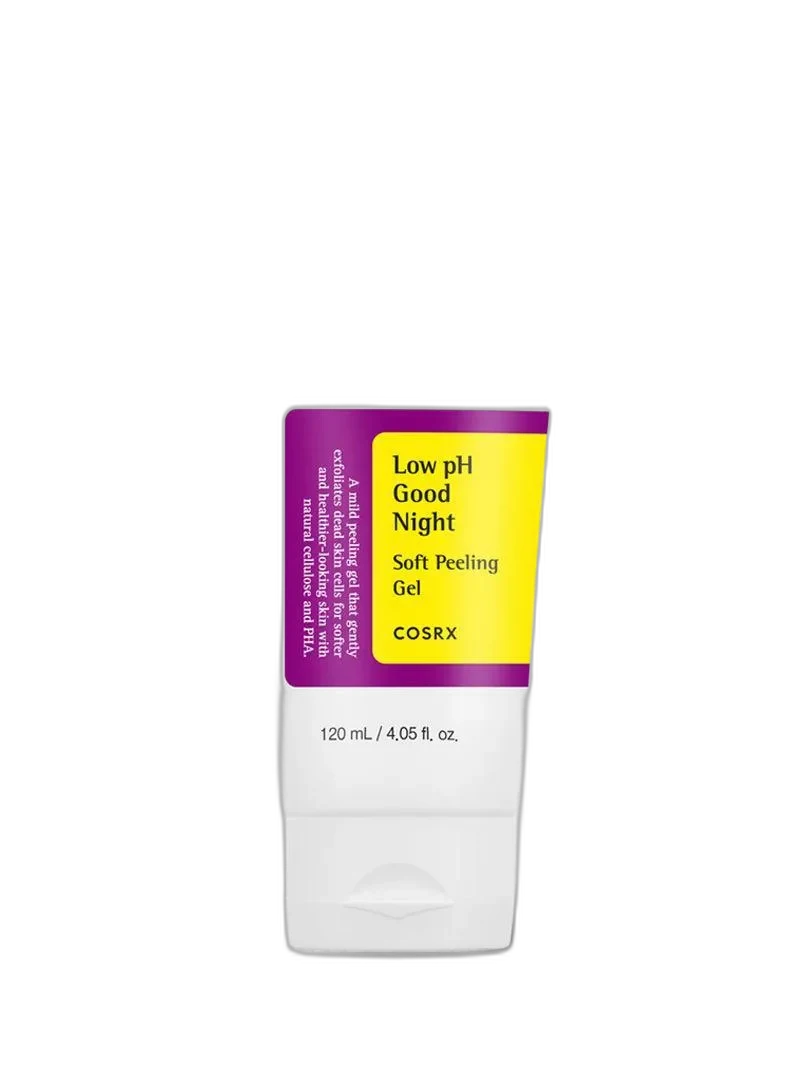
Low pH Goodnight Soft Peeling Gel
Sensitive Skin MVP
 Verified reviewer
Pros & cons.
- +Triple-mechanism exfoliation gentle enough for sensitive and reactive skin types
- +Triple hyaluronic acid complex prevents the dryness typical of exfoliating products
- +pH 6.1 formula respects the acid mantle rather than disrupting it aggressively
- +Fermented ingredients support skin microbiome during the exfoliation process
- +Excellent value at roughly four dollars per month with twice-weekly use
- +No synthetic fragrances, parabens, sulfates, alcohols, or silicones in the formula
- +Pregnancy-safe alternative to retinoid and high-concentration AHA exfoliants
- −Too gentle for stubborn texture, acne, or deep pore congestion concerns
- −Rosa damascena and lavender flower waters are potential sensitizers despite no synthetic fragrance
- −Gommage balling texture can feel unpleasant or messy to some users
- −Niacinamide at sub-therapeutic concentration — more decorative than functional here
- −Requires thorough rinsing to fully remove cellulose residue from skin
The full review.
Sensitive skin users often face redness when told to ‘just exfoliate more.’ Glycolic acid burns, salicylic acid dries, and physical scrubs feel like sandpaper. Many stop exfoliating, leaving a layer of dullness that hydrating serums cannot fix. COSRX built this peeling gel for that specific problem.
Launched in 2021 as the evening counterpart to the Good Morning Gel Cleanser, the Low pH Goodnight Soft Peeling Gel uses a different exfoliation approach. It layers three gentle mechanisms: lactobionic acid (a polyhydroxy acid) chemically dissolves dead cell bonds, papain enzyme selectively breaks down dead keratinocytes, and cellulose fibers physically sweep debris away during massage. Individually, these concentrations are not impressive, but together they produce surprising results.
The formula has a pH of approximately 6.1. While traditional chemical exfoliants work best at pH 3-4, that is intentional. This is not a clinical peel. The higher pH makes lactobionic acid a gentle resurfacer rather than an aggressive exfoliant. Its large molecular structure prevents it from penetrating deep enough to cause the inflammation smaller AHA molecules trigger. This restraint provides value for sensitive and reactive skin.
The texture is a lightweight milky gel that feels watery when dispensed. During massage, soft clumps form under your fingertips within fifteen seconds. These clumps are cellulose fibers and bamboo stem powder balling up from friction. These balls are not dead skin; they are mostly product. Real exfoliation happens chemically and enzymatically beneath the surface. However, the physical massage aids circulation and lymphatic movement while collecting surface debris.
The supporting ingredients are important. COSRX includes three molecular weights of hyaluronic acid—full-size HA, hydrolyzed HA, and sodium hyaluronate—to create a hydration gradient from the surface to the upper epidermis. This is a smart choice because even gentle exfoliation temporarily compromises the moisture barrier. Using humectants during exfoliation replenishes the skin while resurfacing. Lactobacillus/Soybean Ferment Extract and Lactobacillus/Rice Ferment add postbiotic metabolites to support the skin’s microbiome, which helps prevent disruption of the surface bacterial ecosystem.
Regarding scent, COSRX markets this as free from artificial fragrances, and the INCI list contains no synthetic fragrance compounds. However, Rosa Damascena Flower Water and Lavandula Angustifolia Flower Water provide a mild floral aroma. Most people tolerate this well. But for those with fragrance sensitivities or contact dermatitis from botanical extracts, these are potential sensitizers. The niacinamide is at a low supporting concentration—enough for mild brightness, but below the 4-5% threshold required for significant standalone benefits.
Expectations for performance must be calibrated. After one use, skin feels smoother and looks brighter due to dead cell removal. After two weeks of twice-weekly use, you will likely see improved texture, more even tone, and a ‘polished’ quality that helps other products absorb. You will not get the dramatic peeling or pore-clearing of stronger AHAs and BHAs. Users seeking aggressive exfoliation will be disappointed because this product is deliberately gentle. It is a maintenance exfoliant, not a corrective one.
The 120 mL tube is practical and hygienic. Because a small amount covers the face, twice-weekly users get three to four months per tube. At sixteen dollars, exfoliation costs roughly four dollars a month. This is good value for a K-beauty product with high ingredient quality.
This product sits in an awkward middle ground for normal-to-resilient skin. If your skin handles glycolic acid or a BHA toner, this peeling gel lacks potency. It is engineered for gentleness. The bamboo stem powder also adds mild physical abrasion, meaning it is not quite as universally gentle as a pure PHA liquid.
COSRX has built K-beauty products for over a decade, focusing on efficacy over fluff. This peeling gel fits that philosophy. It is not the most exciting product in their lineup and will not produce dramatic before-and-after photos like AHA peels. But for those who thought exfoliation was not for them, this product may prove otherwise.
Formula
PM routine
Ingredient analysis.
Full INCI list · pH 6.1
Water, Bambusa Arundinacea Stem Powder, Cellulose, Glycerin, Rosa Damascena Flower Water, Propanediol, Butylene Glycol, 1,2-Hexanediol, Acrylates/C10-30 Alkyl Acrylate Crosspolymer, Hydroxyacetophenone, Lavandula Angustifolia (Lavender) Flower Water, Tromethamine, Niacinamide, Maltodextrin, Ethylhexylglycerin, Disodium EDTA, Pentylene Glycol, Lactobionic Acid, Papain, Hyaluronic Acid, Hydrolyzed Hyaluronic Acid, Lactobacillus/Soybean Ferment Extract, Sodium Hyaluronate, Sodium Metabisulfite, Lactobacillus/Rice Ferment, Camellia Japonica Flower Extract
Skin match.
The science.
The Science
This formulation uses layered exfoliation and hydration insurance. Science supports each layer, even if this specific combination lacks its own clinical trials.
Lactobionic acid is a well-studied polyhydroxy acid. A 2004 Cutis study established that PHAs provide anti-aging benefits comparable to AHAs but cause significantly less irritation, making them suitable for sensitive skin and rosacea-prone individuals (Cutis, 2004). A 2019 Journal of Cosmetic Dermatology study showed that 10% lactobionic acid effectively reduces skin surface pH without irritation, confirming its gentle exfoliation. The same journal published research showing lactobionic acid increases skin moisture because its multiple hydroxyl groups act as humectants—a dual function that distinguishes PHAs from simpler AHAs.
Papain, a proteolytic enzyme from papaya, uses a different mechanism. Instead of dissolving the 'glue' between dead cells like acids, papain selectively digests dead keratinocytes and leaves living cells intact. A 2022 Journal of Cosmetic Dermatology review confirmed papain breaks peptide bonds in desquamating corneocytes, providing gentler exfoliation than chemical acids alone.
Raman spectroscopy research in Skin Research and Technology (2016) validates the triple hyaluronic acid approach. It showed that different molecular weights of HA penetrate to different depths: high molecular weight HA forms a moisture-retaining film on the surface, while hydrolyzed and low molecular weight HA reaches the upper epidermis and potentially stimulates endogenous HA production. In exfoliation, this multi-depth hydration approach counteracts transepidermal water loss that mild exfoliation can temporarily increase.
Lactobacillus ferment extracts use newer science. A 2023 randomized study in Scientific Reports found that a lotion with probiotic ferment lysate as its primary active significantly enhanced skin barrier function, reducing TEWL and improving hydration and smoothness. While that study used a different product format, the postbiotic principle—that fermentation metabolites support barrier integrity and microbiome balance—applies to their use in this peeling gel.
References
- The use of polyhydroxy acids (PHAs) in photoaged skin — Cutis (2004)
- A 10% Lactobionic acid-containing moisturizer reduces skin surface pH without irritation — Journal of Cosmetic Dermatology (2019)
- An overview of the use of proteolytic enzymes as exfoliating agents — Journal of Cosmetic Dermatology (2022)
- Human skin penetration of hyaluronic acid of different molecular weights as probed by Raman spectroscopy — Skin Research and Technology (2016)
- Effects of a lotion containing probiotic ferment lysate on enhancing skin barrier — Scientific Reports (2023)
Dermatologist Perspective
Dermatologists often recommend polyhydroxy acids as the first-line exfoliant for patients with sensitive skin, rosacea, or those recovering from procedures. Board-certified dermatologists note that lactobionic acid's larger molecular size makes it less likely to penetrate deeply enough to trigger the irritation that glycolic and lactic acids provoke in reactive skin. The pH of 6.1 is higher than traditional chemical peels; dermatologists see this as a deliberate trade-off: reduced potency for near-universal tolerability. The inclusion of papain adds enzymatic exfoliation that dermatologists consider well-suited for sensitive skin, as it selectively targets dead cells without affecting living tissue. Dermatologists commonly suggest this product as a bridge for patients who want exfoliation but react poorly to AHA or BHA products.
Where it fits in your routine.
Apply a quarter-sized amount to dry or slightly damp, freshly cleansed skin in the evening. Massage in circular motions for 30-60 seconds; soft cellulose balls form during use. Avoid the eye area. Rinse thoroughly with lukewarm water to remove all residue. Follow with toner and your remaining evening routine. Use 1-3 times per week. If new to exfoliation, start once weekly and increase as tolerated. Skip on evenings when using retinol, vitamin C serums, or other exfoliating acids.
At $16 for 120 mL, this peeling gel offers real value. Using it twice weekly lasts about three to four months, costing roughly four dollars per month — less than one specialty coffee. This K-beauty product includes triple hyaluronic acid, PHA exfoliation, and fermented extracts at a solid price-to-ingredient ratio. COSRX has provided quality formulations at accessible prices for over a decade, and this product shows their track record of not overcharging for effective basics.
This works for sensitive, reactive, or easily irritated skin that needs the brightness and smoothness of exfoliation without redness or stinging. It also suits exfoliation beginners, pregnant individuals seeking pregnancy-safe options, and anyone needing a gentle maintenance exfoliant between stronger treatments.
This formula lacks the intensity for resilient skin needing aggressive exfoliation for acne, deep texture, or significant hyperpigmentation. Skip this if you have confirmed sensitivities to botanical flower waters; the formula contains rose and lavender waters.
Product details.
This lightweight milky gel forms cellulose fibers during massage. These soft 'balling' clumps roll away dead skin cells without abrasion. The physical sensation is gentle and pillowy.
Damascus rose water and lavender flower water provide a subtle floral aroma. It is not fragrance-free, but the scent is mild enough that fragrance-sensitive users rarely find it problematic.
120 mL squeeze tube with flip-top cap in COSRX's signature minimalist white design. Hygienic dispensing and easy to control product amount.
The first use shows immediate smoothness and a subtle glow. The gommage balling effect — where cellulose fibers clump during massage — surprises new peeling gel users. It causes no stinging, tingling, or adjustment period. Results show after the first application, but cumulative benefits build over 2-3 weeks.
3-4 months with twice-weekly use on face
12 months
All Year
The backstory.
Launched in 2021 as the evening counterpart to COSRX's cult-favorite Good Morning Gel Cleanser, this peeling gel was designed to fill the gap for people who wanted exfoliation benefits but couldn't tolerate traditional AHA/BHA products. The 'Low pH' positioning reflects COSRX's acid-mantle-first philosophy that runs through their entire line.
About COSRX
Established Brand (5–20 years)COSRX launched in South Korea in 2013. The name combines 'Cosmetics' with 'Rx' to signal a clinical K-beauty approach. The brand has 135+ global beauty awards and sells in 146+ countries. It uses well-researched actives to build a reputation for effective, no-frills formulations.
Common myths.
The 'peeling balls' are your dead skin being removed
The balls consist mostly of cellulose fibers from the formula that clump during massage. They pick up some dead skin cells and debris, but most visible material is product, not skin. Lactobionic acid and papain provide the actual chemical exfoliation.
Low pH makes this product strongly acidic and can burn sensitive skin
At pH 6.1, this product stays close to the skin's natural pH of 4.5-5.5. K-beauty calls this "low pH" because it avoids the alkaline pH (8-10) found in traditional soap-based cleansers. It is one of the gentlest exfoliants available.
FAQ.
How often should I use COSRX Low pH Goodnight Soft Peeling Gel?
Apply 1-3 times per week in the evening after cleansing. Use it once weekly if you are new to exfoliation, then increase frequency as your skin tolerates it. The PHA and papain combination is gentle enough for most skin types to use 2-3 times weekly without irritation.
Is COSRX Low pH Goodnight Soft Peeling Gel good for acne-prone skin?
It provides gentle surface-level exfoliation to improve dullness and texture, but it is not formulated for acne. The lactobionic acid works on the skin's surface instead of penetrating pores like salicylic acid. If acne is your primary concern, a BHA product targets it better, but this gel works well as a supplementary texture-smoothing step.
Can I use this peeling gel with retinol or vitamin C?
Yes, but not on the same evening. Skip your retinol or active vitamin C serum on nights you use this peeling gel to avoid over-exfoliation. Alternate nights: use the peeling gel 2-3 times a week and retinol or vitamin C on the other evenings.
What are the white balls that form when I massage this product?
The visible balls are mostly cellulose fibers and bamboo stem powder that clump during friction. These collect some dead skin cells and surface debris, but lactobionic acid and papain enzyme do the real exfoliation beneath the surface.
Is this product pregnancy-safe?
Yes. This peeling gel uses PHA (lactobionic acid) and papain instead of retinoids, high-concentration salicylic acid, or other ingredients typically flagged during pregnancy. The formula has no ingredients on the standard pregnancy-avoid list, so it is a gentle exfoliation option for expectant mothers.
How does this compare to AHA or BHA exfoliants?
This peeling gel is gentler. The lactobionic acid (a PHA) has a larger molecular size than glycolic acid (AHA) or salicylic acid (BHA), so it exfoliates more slowly and causes less irritation. Trade-off: it won't penetrate pores or provide the same intensity of chemical exfoliation. It works for sensitive skin or as a gentle maintenance exfoliant.
Should I use this on dry or wet skin?
Apply to dry or slightly damp skin. If skin is too wet, the cellulose won't form gommage balls and the product slides without exfoliating. Pat your face mostly dry after cleansing, apply the gel, massage gently for 30-60 seconds, then rinse with lukewarm water.
What the community says.
"Extremely gentle even on reactive, sensitive skin"
"Leaves skin noticeably smoother and softer immediately after use"
"Skin looks brighter and more radiant the next morning"
"Does not strip or dry out skin at all"
"A little goes a long way — tube lasts months"
"Exfoliation too gentle for those wanting aggressive results"
"Gommage balling texture feels odd to some users"
"Requires thorough rinsing to remove all residue"
"Minimal visible effect on clogged pores"
People also looked at.