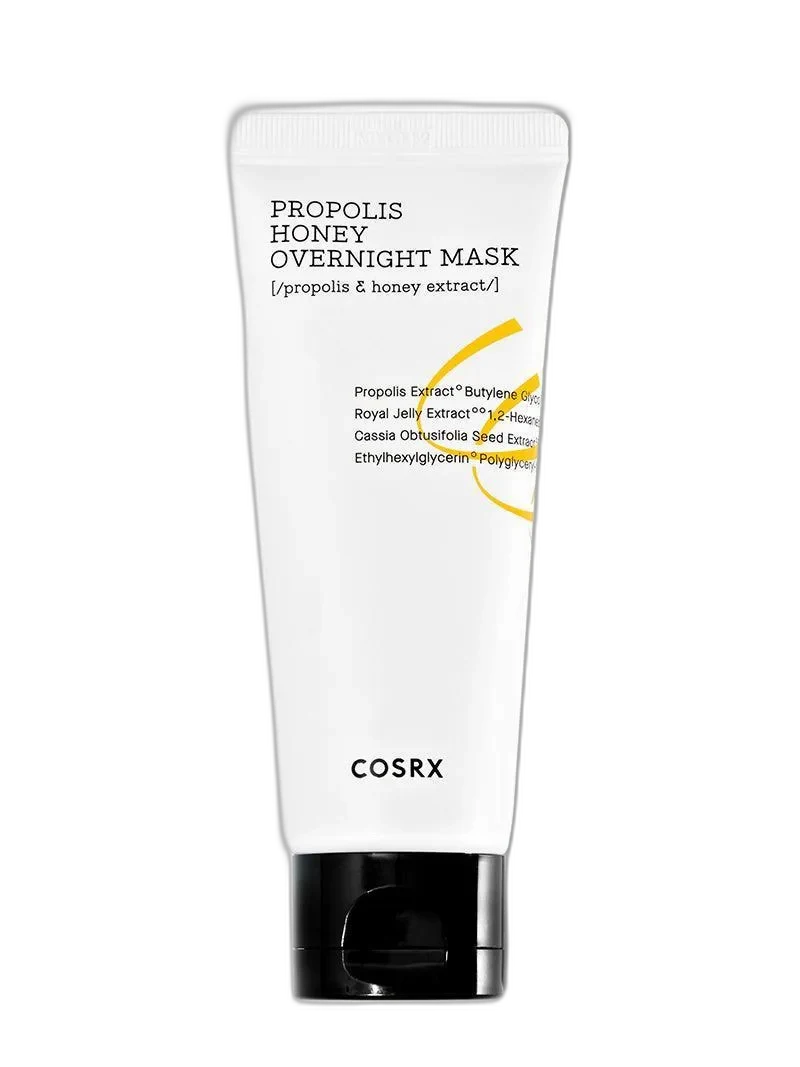
Full Fit Propolis Honey Overnight Mask
Barrier Repair Overnight Hero
 Verified reviewer
Pros & cons.
- +Propolis extract listed first at nearly 60% — genuinely concentrated, not decorative
- +70% bee-derived Pro-Barrier Complex combines propolis, honey, and royal jelly for multi-pathway repair
- +Fragrance-free, silicone-free, alcohol-free with a clean 22-ingredient formula
- +Excellent as a sealing layer over retinol to buffer irritation and lock in moisture
- +Reformulated version eliminates the pilling problem of the original formula
- +Strong value at $18 for a concentrated propolis treatment
- −Four bee-derived ingredients exclude anyone with bee product or pollen allergies
- −Can feel sticky and tacky if too much product is applied
- −Too rich and occlusive for oily skin types — may cause congestion
- −Not fungal acne safe due to sunflower oil and polyglyceryl emulsifiers
- −Jar packaging is less hygienic than a pump or tube format
- −Not vegan due to bee-derived ingredients (propolis, honey, royal jelly, beeswax)
The full review.
Most sleeping masks begin their ingredient list the same way: water. It makes sense — water is cheap, it is the universal solvent for cosmetic formulations, and it allows brands to dissolve their actives while keeping production costs manageable. The COSRX Full Fit Propolis Honey Overnight Mask begins its ingredient list with propolis extract. Water appears sixth. That single formulation decision tells you everything you need to know about what this product is actually trying to do.
This is not a moisturizer that happens to contain some propolis. It is a concentrated propolis treatment that uses a sleeping mask format to keep its active ingredients in contact with skin for eight uninterrupted hours. The distinction matters because it explains both why this product works as well as it does and why its limitations are what they are.
The 70% Full Fit Pro-Barrier Complex breaks down to approximately 59.9% propolis extract, 5.35% honey extract, and 4.75% royal jelly extract — three distinct bee-derived ingredients that address barrier repair through complementary mechanisms. Propolis brings the heavy artillery: flavonoids and phenolic acids with documented anti-inflammatory, antimicrobial, and wound-healing properties. A 2022 review in Molecules surveyed clinical studies showing propolis accelerates wound healing, reduces inflammation, and provides antimicrobial protection against both gram-positive and gram-negative bacteria. A 2024 double-blind randomized controlled trial published in the Journal of Cosmetic Dermatology demonstrated 25-34% wrinkle reduction after just 28 days of topical propolis application.
Honey extract functions as a natural humectant — drawing moisture from the environment into the skin — while providing its own mild antimicrobial benefits. Royal jelly contributes something neither propolis nor honey can: growth factor-like activity. Its signature compound, 10-hydroxy-2-decenoic acid (10-HDA), has been shown to stimulate fibroblast migration and TGF-beta1 production, promoting collagen synthesis. Together, these three ingredients create a system that soothes inflammation (propolis), binds moisture (honey), and supports regeneration (royal jelly) — a more comprehensive approach to overnight repair than any single ingredient could achieve.
Texture
The texture reflects the reformulation work that went into this version. The original COSRX Ultimate Moisturizing Honey Overnight Mask, released around 2015, had a persistent pilling problem — it balled up when layered over serums and treatments, which is a fatal flaw for a product designed to be the final step in a multi-step routine. COSRX responded by removing dimethicone and PEG emulsifiers, replacing them with lighter emulsifiers and beeswax for occlusion. The result is a gel-cream that spreads easily, absorbs noticeably faster, and layers over previous products without drama.
The application experience has a learning curve. Use too much and the formula sits on top of the skin with a persistent tackiness that will transfer to your pillowcase and stick to your hair. The correct amount is smaller than you think — a pea-to-dime-sized amount for the entire face. Applied thinly, it absorbs to a dewy-satin finish within five minutes, and by morning, skin feels genuinely transformed: softer, plumper, calmer, and visibly healthier-looking. The effect is particularly dramatic on dry, winter-stressed skin or skin recovering from aggressive actives like retinol.
Speaking of retinol — this has become one of the most popular uses for this mask, and for good reason. The propolis provides anti-inflammatory support that buffers retinol-induced irritation, the honey and hyaluronic acid maintain hydration that retinol strips away, and the beeswax creates a mild occlusive seal that keeps the retinol and the soothing ingredients in contact with skin overnight. It is a genuinely clever pairing that makes retinol tolerable for people who would otherwise have to reduce frequency or concentration.
The formula is impressively clean: 22 ingredients, no fragrance, no denatured alcohol, no silicones, no parabens. For a sleeping mask, this is unusually short and straightforward. The removal of silicones in the reformulation was a meaningful choice — most sleeping masks use dimethicone as their primary occlusive agent, which can trap heat and sebum against the skin. Here, beeswax provides a lighter, more breathable seal.
The limitation that defines this product’s audience is the bee-derived ingredient profile. Propolis, honey, royal jelly, and beeswax are all potential allergens for individuals with bee product or pollen sensitivities. This is not a minor footnote — propolis contact allergy is well-documented in dermatological literature, and those with existing bee-related allergies should avoid this product entirely. For everyone else, a 48-hour patch test on the inner arm before full facial use is prudent.
Not ideal for
Oily skin types may find this mask too rich. The combination of propolis, honey, and beeswax creates a nourishing, slightly occlusive finish that dry and normal skin absorbs beautifully but that can feel heavy and pore-clogging on oily complexions. The product is also not fungal acne safe — sunflower seed oil and polyglyceryl emulsifiers can feed Malassezia yeast, making it unsuitable for those prone to fungal breakouts.
The jar packaging is the standard industry compromise between aesthetics and hygiene. COSRX includes a spatula, but in practice, most users dip their fingers directly into the product. This is a minor concern for a product used nightly at home, but a pump or tube would have been a more hygienic choice for a formula that contains no aggressive preservatives.
At $18 for 60mL, the value is strong — particularly considering the propolis concentration. Comparable propolis treatments from brands that list their propolis content at similar concentrations typically cost $25-40. The jar lasts five to eight weeks with nightly use, depending on application amount. For a concentrated treatment that replaces both a moisturizer and an overnight mask in your PM routine, the per-use cost is excellent.
The COSRX Full Fit Propolis Honey Overnight Mask is the rare reformulation that actually improved on its predecessor in every measurable way. The higher propolis concentration, the addition of royal jelly, the removal of silicones, and the elimination of pilling add up to a product that does what it claims: deliver genuine overnight barrier repair through concentrated, well-researched bee-derived ingredients. It is not for everyone — the allergen profile and richness ensure that. But for dry, dehydrated, barrier-compromised, or retinol-using skin that can tolerate bee products, it is one of the most thoughtful sleeping masks available at any price.
Ingredient analysis.
Full INCI list
Propolis Extract, Butylene Glycol, Glycerin, Honey Extract, Royal Jelly Extract, 1,2-Hexanediol, Water, Betaine, Cassia Obtusifolia Seed Extract, Carbomer, Arginine, Ethylhexylglycerin, Polyglyceryl-10 Myristate, Polyglyceryl-10 Laurate, Xanthan Gum, Helianthus Annuus (Sunflower) Seed Oil, Sodium Polyacrylate, Panthenol, Allantoin, Adenosine, Sodium Hyaluronate, Beeswax
Skin match.
The science.
The Science
This propolis-led formula uses clinical evidence for bee-derived ingredients in dermatology. A 2022 review in Molecules examined propolis wound healing studies, showing its anti-inflammatory effects via NF-kB signaling inhibition and its antimicrobial activity against pathogens like Staphylococcus aureus and Propionibacterium acnes.
A 2024 double-blind randomized controlled trial in the Journal of Cosmetic Dermatology tested a standardized phenolic acids polymer extract (PAPE) from propolis. It showed 25-34% wrinkle reduction after 28 days of topical application. A 2020 Nutrients study shows propolis suppresses UV-induced photoaging by targeting phosphoinositide 3-kinase, which blocks MMP-1 expression and collagen degradation—a mechanism useful for overnight repair after daily UV exposure.
Royal jelly adds regeneration. Research in BMC Complementary and Alternative Medicine shows royal jelly enhances human dermal fibroblast migration and that its 10-HDA compound stimulates TGF-beta1 production for collagen synthesis. This fibroblast-stimulating effect differs from propolis or honey, making the combination scientifically rational.
A 2024 paper in the International Journal of Dermatology reviewed honey's therapeutic properties, documenting its anti-inflammatory effects via inflammatory cytokine inhibition and its tissue-regenerative properties via epithelialization and angiogenesis promotion. A 2020 Molecules review of bee products in dermatology concluded that combining propolis, honey, royal jelly, and beeswax addresses multiple skin repair pathways at once—the exact approach this formula takes.
References
- Anti-wrinkle efficacy of standardized phenolic acids polymer extract (PAPE) from propolis — Journal of Cosmetic Dermatology (2024)
- Propolis Suppresses UV-Induced Photoaging in Human Skin through Directly Targeting Phosphoinositide 3-Kinase — Nutrients (2020)
- Healing Potential of Propolis in Skin Wounds Evidenced by Clinical Studies — Molecules (2022)
- Bee Products in Dermatology and Skin Care — Molecules (2020)
Dermatologist Perspective
Dermatologists recognize propolis as a beneficial topical ingredient with anti-inflammatory and antimicrobial properties. Board-certified dermatologists note propolis-containing products work for sensitive skin and post-procedure recovery if the patient has no bee product allergy. The fragrance-free, silicone-free formulation meets dermatological recommendations for reactive and barrier-compromised skin. Dermatologists would endorse this mask over retinol treatments, as propolis and panthenol mitigate retinol-induced irritation while beeswax occlusion maintains hydration. The main dermatological caution is allergy screening; propolis contact dermatitis is well-documented. Patients with bee venom or pollen allergies should patch test or avoid the product.
Where it fits in your routine.
After your PM skincare routine (cleanser, toner, serum, treatment), use the included spatula or clean fingers to scoop a pea-to-dime-sized amount. Warm the product between palms and press it onto the face, avoiding the eye area. Apply a thin, even layer; less is more. Wait 5-10 minutes for absorption before lying on your pillow. Rinse with your regular cleanser in the morning. You can also use it as a 10-15 minute wash-off mask during the day for a quick hydration boost.
At $18 for 60mL, this concentrated propolis treatment offers excellent value. Propolis-forward skincare products with similar concentrations usually cost $25-40. One jar lasts about 5-8 weeks if you apply a thin layer nightly. This product replaces both a nighttime moisturizer and a sleeping mask, making the per-use value strong. No other sizes or travel options exist, but the moderate price makes trial purchases low-risk.
This works for dry, dehydrated, or barrier-compromised skin seeking overnight repair instead of just overnight moisturizing. It is ideal for retinol users needing a soothing, hydrating sealing layer. It fits winter skincare routines and post-procedure recovery. K-beauty enthusiasts wanting a propolis treatment with a clean, transparent ingredient list will like it.
Avoid this product if you have allergies to bee product, bee venom, or pollen. The formula is too thick and occlusive for oily skin. Sunflower oil and polyglyceryl emulsifiers make it unsuitable for fungal-acne-prone users. This formula uses only bee-derived ingredients, so vegans seeking a cruelty-free sleeping mask must look elsewhere.
Product details.
It is unscented. Some users detect a faint, natural honey-propolis aroma, but there is no added fragrance.
Amber-brown glass-look jar with a screw-on lid and included spatula. It matches the Full Fit Propolis line aesthetic. Jar packaging is less hygienic than a tube or pump, but the gel-cream texture is easy to scoop.
The gel-cream applies smoothly on first use, leaving a slight tackiness that settles within minutes. By morning, skin feels softer and plumper, with visible reductions in dullness and dry patches. Most users experience no purging, stinging, or adjustment period. Users prone to pillowcase staining should apply a thin layer and wait 5-10 minutes for absorption before lying down.
5-8 weeks with nightly use (small pea-to-dime-sized amount per application)
12 months
fall winter
The backstory.
The original COSRX Ultimate Moisturizing Honey Overnight Mask launched around 2015-2016 and gained a dedicated following for its nourishing properties. However, users consistently complained about pilling when layered over serums and treatments. COSRX reformulated it around 2020 as part of the 'Full Fit Propolis' line relaunch, increasing propolis concentration, adding royal jelly extract, removing dimethicone and PEG emulsifiers, and repositioning it as a 3-in-1 product (overnight mask, cream, or wash-off mask). The reformulation addressed every major complaint while strengthening the formula.
About COSRX
Established Brand (5–20 years)COSRX launched in 2013 with a philosophy of minimal, effective formulations (the name stands for 'Cosmetics + RX'). Over 11 years, the brand has built a reputation for ingredient-forward products dermatologists praise, and AmorePacific acquired it in 2023.
Common myths.
Propolis and honey are the same ingredient and work the same way.
Propolis and honey are different bee products with unique compositions and functions. Honey consists mostly of sugars and binds moisture while providing mild antimicrobial properties. Propolis is a resin from tree buds that contains flavonoids, phenolic acids, and terpenes. These ingredients provide concentrated anti-inflammatory, antimicrobial, and wound-healing properties. This formula uses both because they target different aspects of skin repair.
Sleeping masks are just thick moisturizers with different names.
This product works like a concentrated treatment instead of a moisturizer. Propolis is the primary ingredient instead of water, delivering therapeutic concentrations of anti-inflammatory compounds overnight. The beeswax provides a mild occlusive seal that a standard moisturizer lacks, keeping active ingredients on the skin during sleep.
FAQ.
Can I use the COSRX Propolis Overnight Mask every night?
Yes — the formula is gentle enough for nightly use. The propolis, honey, and royal jelly complex repairs the barrier cumulatively with consistent nightly application. Apply a thin layer (pea-to-dime-sized) to prevent tackiness, and let it absorb for a few minutes before sleeping.
Can I use the COSRX Propolis Mask over retinol?
Yes — many people use this product this way. The propolis, panthenol, and honey buffer retinol-induced dryness and irritation. The beeswax creates a mild occlusive seal to lock in your retinol treatment. Apply retinol first, wait 10-15 minutes for absorption, then apply a thin layer of the mask.
Is the COSRX Propolis Mask safe for people with bee allergies?
No — this product contains four bee-derived ingredients (propolis extract, honey extract, royal jelly extract, beeswax). People with confirmed bee product, bee venom, or pollen allergies must avoid this product. Those with suspected allergies should patch test on the inner arm for 48 hours before facial use.
What is the difference between the original Honey Overnight Mask and the Full Fit version?
The Full Fit version (2020 reformulation) has more propolis, adds royal jelly extract, and lacks dimethicone and PEG emulsifiers. This cleaner formula absorbs better and does not pill — the main issue with the original. The Full Fit version is an upgrade.
Can I use this as a regular daytime moisturizer?
COSRX markets this as a 3-in-1 product (overnight mask, cream, wash-off mask). For daytime use, apply a very thin layer as a moisturizer. Note that the dewy finish feels tacky under makeup for some users. It works best at night, where extended contact time maximizes the propolis benefits.
What the community says.
"Deeply hydrating without feeling greasy or heavy"
"Skin feels soft, plump, and glowing by morning"
"Calms redness and irritation effectively"
"Excellent layered over retinol to buffer dryness"
"Short, clean ingredient list with no fragrance"
"Improved formula does not pill like the original version"
"Can feel sticky or tacky if too much is applied"
"Too rich and occlusive for oily skin types"
"Jar packaging requires fingers or spatula — less hygienic"
"Not fungal acne safe due to sunflower oil and emulsifiers"
"Bee-derived ingredients exclude anyone with bee or pollen allergies"
"60mL jar runs out in 4-6 weeks with nightly use"