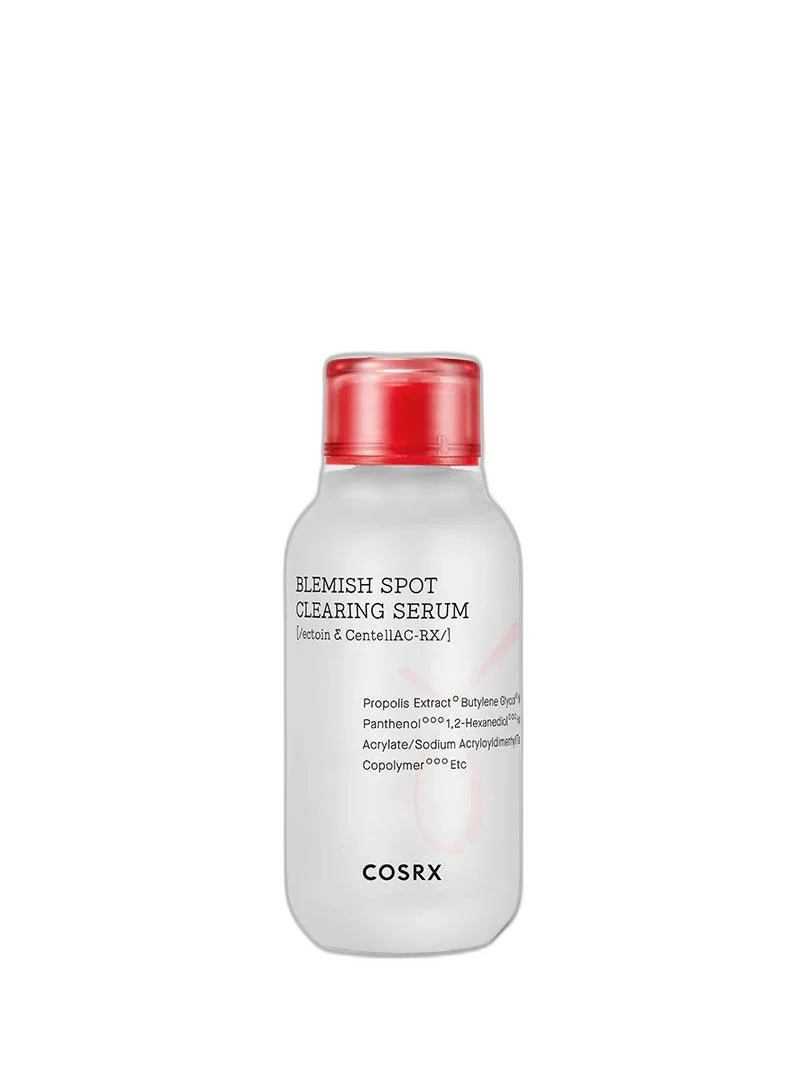
AC Collection Blemish Spot Clearing Serum
Gentle Acne Healer
 Verified reviewer
Pros & cons.
- +Propolis-first formula provides antibacterial action without the drying effects of benzoyl peroxide
- +Clinical-grade 4% niacinamide regulates sebum and fades post-acne hyperpigmentation effectively
- +CentellAC-RX complex uses isolated triterpenoids for targeted wound healing and anti-inflammation
- +Barrier-supportive ingredients (ceramide NP, panthenol) prevent the damage cycle typical of acne treatments
- +Ultra-lightweight watery texture absorbs instantly without clogging acne-prone pores
- +EGF inclusion provides cellular repair signaling that accelerates blemish healing
- −40 mL bottle at $25 offers less volume than COSRX's typically generous sizing
- −Results are gradual — not potent enough as a standalone for moderate to severe acne
- −Tea tree oil may irritate users with specific essential oil sensitivity
- −Not suitable for vegans due to propolis (bee-derived) content
- −Can feel film-like on the skin surface if too much product is applied per application
The full review.
The acne skincare aisle has a violence problem. Benzoyl peroxide bleaches your pillowcases. Salicylic acid strips your moisture barrier. Prescription retinoids make you peel like a snake for a month. These actives work — nobody disputes that — but they often leave your skin in a worse cosmetic state than the acne itself. COSRX’s AC Collection Blemish Spot Clearing Serum represents the K-beauty counter-argument: what if an acne treatment prioritized healing alongside clearing?
The formula leads with propolis extract — not buried in the middle of the INCI, but listed first, as the primary ingredient by weight. Propolis is the resinous substance that bees use to seal and sterilize their hives, and in skincare it provides a combination of antibacterial and anti-inflammatory activity that’s genuinely useful for acne. Research has demonstrated propolis’s ability to inhibit Cutibacterium acnes — the bacterium that colonizes clogged pores and triggers inflammatory acne — while a 2025 study showed propolis extract acting against C. acnes biofilm and reducing virulence gene expression. It’s antimicrobial action with an anti-inflammatory chaser, and it achieves this without the drying, irritating side effects of traditional antimicrobials.
Niacinamide at 4% is a deliberate concentration choice. A clinical trial comparing 4% nicotinamide gel to 1% clindamycin (a prescription topical antibiotic) for moderate inflammatory acne found comparable efficacy at both 4 and 8 weeks — validating this exact concentration for acne management. In this serum, the niacinamide pulls triple duty: regulating sebum production to reduce the oiliness that feeds breakouts, fading post-inflammatory hyperpigmentation from healed blemishes, and reinforcing the skin barrier that other acne treatments often compromise.
COSRX’s proprietary CentellAC-RX complex rounds out the anti-acne strategy with three isolated centella triterpenoids. Rather than using a crude centella extract that varies in potency batch to batch, COSRX specifically includes asiaticoside (which stimulates collagen synthesis for wound healing), madecassic acid (anti-inflammatory), and asiatic acid (barrier strengthening). This targeted approach means you’re getting the specific centella actives that matter for acne healing, not just a green-tinted plant water.
The quiet MVP of the ingredient list might be Rh-Oligopeptide-1 — recombinant human epidermal growth factor. It’s listed last, suggesting trace concentration, but EGF is active at very low levels. A split-face study showed rhEGF cream reduced both inflammatory and non-inflammatory acne lesions while inhibiting the pro-inflammatory cytokines that C. acnes triggers. In this formula, EGF provides cellular-level repair signaling that complements the propolis’s antimicrobial action and the centella’s wound-healing support.
Texture
The texture is almost surprisingly light. This serum behaves more like a watery essence than what most people picture when they think “acne serum.” It drops from the pipette as a thin, translucent liquid, absorbs in seconds, and leaves virtually no residue. The lightness is intentional — acne-prone skin is often oily, and the last thing it needs is a heavy, occlusive serum sitting on top of congested pores. You might initially wonder if something this watery can do anything meaningful. Give it two weeks.
Scent
The experience in those first days is quiet. No tingling that says “it’s working.” No visible peeling that suggests active exfoliation. Just a faint herbal whisper from the tea tree oil and a texture so light it almost feels like you applied nothing. The first sign that the serum is earning its keep comes when active blemishes calm faster than usual — redness subsides within a couple of days, and the angry, inflamed quality of fresh breakouts softens. The post-acne hyperpigmentation fading takes longer, typically 2-4 weeks of consistent use, but it does come.
Conflicts With
The tea tree oil presence is worth noting for sensitive users. While it’s not a high-concentration tea tree product, the Melaleuca alternifolia leaf oil provides additional antimicrobial activity that complements the propolis. For most people, this is a benefit. For those with specific tea tree sensitivity, it’s a potential irritant. Patch test if you’re unsure.
Works for
The inclusion of ceramide NP and panthenol signals something important about this serum’s philosophy: it’s not just fighting acne, it’s actively rebuilding the barrier that acne (and acne treatments) damage. Many acne sufferers are trapped in a cycle where breakout treatments weaken their barrier, which triggers more breakouts, which requires more treatment. This serum breaks that cycle by providing barrier-repair ingredients alongside acne-fighting actives.
Common Complaints
The value proposition has one wrinkle: 40 mL at $25 is a smaller volume for the price than COSRX’s typical generosity. Used twice daily on the full face, the bottle lasts roughly six to eight weeks. Used as a targeted spot treatment, you can stretch it to ten or twelve. It’s not unreasonable for a treatment serum with this ingredient quality, but it’s a departure from the value-forward pricing COSRX is known for.
Best for
This serum is not trying to replace your dermatologist’s prescription. It won’t handle cystic acne or severe inflammatory breakouts on its own. What it does, and does well, is provide a gentle, healing-focused layer in your routine that calms active blemishes, fades their aftermath, and does so without making your skin worse in the process. For mild to moderate acne — especially when paired with a proper cleanser and sunscreen — it’s a thoughtful, evidence-backed approach that respects your skin while treating it.
Ingredient analysis.
Full INCI list
Propolis Extract, Butylene Glycol, Niacinamide, Panthenol, 1,2-Hexanediol, Hydroxyethyl Acrylate/Sodium Acryloyldimethyl Taurate Copolymer, Ethylhexylglycerin, Glycerin, Polyglyceryl-10 Laurate, Polyglyceryl-10 Myristate, Allantoin, Melaleuca Alternifolia (Tea Tree) Leaf Oil, Sodium Hyaluronate, Asiaticoside, Asiatic Acid, Madecassic Acid, Helianthus Annuus (Sunflower) Seed Oil, Macadamia Ternifolia Seed Oil, Sucrose Distearate, Glyceryl Stearate, Hydrogenated Lecithin, Dipropylene Glycol, Ceramide NP, Rh-Oligopeptide-1
Skin match.
The science.
The Science
This serum fights acne using three simultaneous, evidence-backed pathways. First, 4% niacinamide matches the concentration used in a randomized double-blind trial comparing topical nicotinamide to clindamycin for moderate inflammatory acne. Both treatments decreased acne severity at 4 and 8 weeks with no statistical difference. This makes niacinamide a non-antibiotic alternative with comparable clinical outcomes.
Second, propolis provides antimicrobial activity through a mechanism different from conventional antibiotics. A 2025 study shows propolis extract acts against Cutibacterium acnes biofilm—the protective bacterial communities that make acne persistent and treatment-resistant—and reduces virulence gene expression. A 2018 double-blind investigation found a propolis-tea tree-aloe vera combination effective compared to erythromycin cream for acne.
Third, the EGF (Rh-Oligopeptide-1) component has specific acne relevance. A split-face study in 20 Korean patients found rhEGF cream significantly reduced inflammatory and non-inflammatory acne lesions over 6 weeks, while decreasing sebum output and increasing skin hydration. The mechanism inhibits pro-inflammatory cytokines (IL-1alpha, IL-8, TNF-alpha) induced by C. acnes, meaning EGF dampens the inflammatory cascade that drives acne instead of just promoting generic wound healing.
The centella triterpenoids (asiaticoside, asiatic acid, madecassic acid) add wound-healing properties supported by dermatological literature. A 2021 systematic review confirmed Centella asiatica compounds exert therapeutic effects on acne through multiple signaling pathways; a meta-analysis showed a pooled mean difference favoring centella-treated groups in acne lesion reduction.
References
- Topical propolis and tea tree oil combination vs erythromycin for acne — Clinical Pharmacology: Advances and Applications (2018)
- Propolis extract against C. acnes biofilm and virulence gene expression — PMC (2025)
- Efficacy of rhEGF in acne treatment: split-face study — PMC Systematic Review (2021)
- Centella Asiatica compounds in skin diseases — PMC Review (2021)
Dermatologist Perspective
Dermatologists value this serum's healing-focused approach for patients with mild to moderate acne, sensitive skin, or barrier damage from harsh treatments. Board-certified dermatologists note the 4% niacinamide concentration is clinically validated for acne, and the propolis-centella-EGF combination provides a multi-pathway strategy that complements prescription treatments. Dermatologists typically recommend this serum as a supportive product in an acne regimen—not as a replacement for prescription treatments in moderate-to-severe cases, but as a gentle daily serum that promotes healing and post-inflammatory hyperpigmentation fading alongside stronger actives.
Where it fits in your routine.
After cleansing and toning, dispense 2-3 drops with the dropper. Pat onto the full face to prevent acne, or apply to individual blemishes and post-acne marks for targeted treatment. Wait 30-60 seconds for absorption, then apply a lightweight moisturizer. Use morning and evening. You can layer this serum with BHA/salicylic acid products — apply the BHA first, wait a few minutes, then apply this serum on top.
At $25 for 40 mL, this serum costs more per ounce than most COSRX products. COSRX usually offers larger sizes, so this smaller volume is noticeable. However, the ingredient quality is high: propolis is the primary ingredient, with 4% niacinamide, isolated centella triterpenoids, and EGF. As a spot treatment, the bottle lasts 2-3 months, making the daily cost roughly 30-50 cents. The value is reasonable for a treatment serum, but it lacks the standout deal COSRX usually delivers.
People with mild to moderate acne and sensitive skin find benzoyl peroxide and salicylic acid too harsh. It works for post-acne dark spots and hyperpigmentation needing gentle, gradual fading. K-beauty enthusiasts can use this healing-focused acne serum to complement a comprehensive routine. People with acne-prone skin using retinoids can use this soothing, barrier-supportive treatment.
Severe cystic acne requires stronger prescription treatments; this serum alone is not enough. Avoid the propolis if you have a bee product allergy. This formula works too gradually for users expecting immediate, dramatic acne-clearing results. Patch test if you have a tea tree oil sensitivity.
Product details.
The texture is watery and lightweight, acting more like a liquid essence than a viscous serum. It is transparent with a slight shimmer. The formula absorbs within seconds of patting into skin. A dropper allows precise application to specific spots or full-face use.
Melaleuca Alternifolia leaf oil gives it a faint herbal tea tree scent. It is not strongly fragranced; most users find the scent pleasant or barely noticeable. No artificial fragrance is added.
Transparent glass bottle with a dropper cap, 40 mL. Sturdy construction that feels more premium than the price suggests. Clean COSRX minimalist design with the AC Collection's green-accented branding. Dropper allows controlled, precise application.
It applies like water. The light texture makes you wonder if it works. It causes no tingling, burning, or irritation. Active redness calms within 2-3 applications. The propolis-first formula is gentle; it lacks the immediate sensation of benzoyl peroxide or salicylic acid. Trust the process.
1. 5-2 months with twice-daily full-face use, or 2-3 months when used primarily as a targeted spot treatment
12 months
All Year
The backstory.
The AC Collection was born from COSRX's community-driven development process — the brand gathered feedback from acne sufferers who wanted effective products that didn't destroy their skin barrier in the process. The line uses COSRX's proprietary CentellAC-RX complex, which isolates three specific centella triterpenoids rather than using a crude extract. This serum represents the treatment step in a complete acne-care system that prioritizes healing alongside clearing.
About COSRX
Established Brand (5–20 years)COSRX launched in 2013 and has a strong K-beauty reputation for targeted, ingredient-forward skincare. The AC Collection line treats acne-prone skin with the brand's proprietary CentellAC-RX complex. Amorepacific has owned the brand as a subsidiary since 2023.
Common myths.
Effective acne serums use salicylic acid or benzoyl peroxide.
This serum contains neither, but clinical studies support its key ingredients for acne. One trial shows 4% niacinamide matches 1% clindamycin for inflammatory acne. Propolis has antibacterial activity against C. acnes, and centella's anti-inflammatory triterpenoids promote wound healing. Different mechanisms reach the same goal: clearing acne by reducing inflammation and bacterial activity instead of chemical exfoliation.
Propolis products will clog pores and make acne worse.
Propolis is non-comedogenic and has antibacterial properties against acne-causing bacteria. Bees collect this resinous substance, but the purified propolis extract in skincare is a lightweight, anti-inflammatory ingredient, not a pore-blocking wax. People with bee product allergies should patch test before use.
FAQ.
Does the COSRX AC Collection Blemish Serum contain salicylic acid?
No — this serum treats acne differently than BHA/salicylic acid products. It skips chemical exfoliation. Instead, it uses propolis extract for antibacterial action, 4% niacinamide for sebum regulation and brightening, and centella triterpenoids for anti-inflammatory healing. You can use a separate BHA product for exfoliation too — apply the BHA at a different time of day.
Can I use this serum as a spot treatment?
Yes — the dropper allows precise application to individual blemishes or dark spots. Use it as a targeted spot treatment on active breakouts and post-acne marks, or apply it all over the face as a general acne-prevention serum. The 40 mL bottle lasts 2-3 months when used as a spot treatment only.
Is this serum suitable for sensitive skin with acne?
Yes — this formula targets sensitive acne-prone skin. The propolis-first formula works as an antibacterial without the irritation of benzoyl peroxide or the dryness of salicylic acid. The centella complex and panthenol soothe and repair the barrier. Patch test first if you have known sensitivity to propolis (bee products) or tea tree oil.
How long does it take to see results with this serum?
Active redness and inflammation often calm within 2-3 days. Post-acne dark spots usually fade after 2-4 weeks of consistent twice-daily use. Skin clarity and even tone improve fully over 6-8 weeks. This formula focuses on gradual healing instead of aggressive quick-fixes — patience and consistency matter.
Can I use this serum with retinol?
Yes — the soothing, barrier-supportive ingredients (panthenol, ceramide NP, centella) make this serum a good companion to retinol. Apply this serum first to provide a protective, healing layer, then follow with retinol. The niacinamide and panthenol can help buffer potential retinol irritation.
Community
What the community says.
"Lightweight watery texture absorbs quickly without any stickiness or residue"
"Gradually fades post-acne dark spots and hyperpigmentation with consistent use"
"Calms redness and inflammation from active breakouts within days"
"Gentle enough for sensitive acne-prone skin without causing additional irritation"
"Layers beautifully under moisturizer and sunscreen in the morning routine"
"Results are gradual — takes 2-4 weeks to see noticeable fading of dark spots"
"Small 40 mL bottle feels expensive and runs out quickly at the price point"
"Not potent enough as a standalone treatment for moderate to severe acne"
"Can feel film-like on the skin surface if too much product is applied"
"Tea tree oil may irritate some users with specific sensitivity to essential oils"
Featured in.
People also looked at.