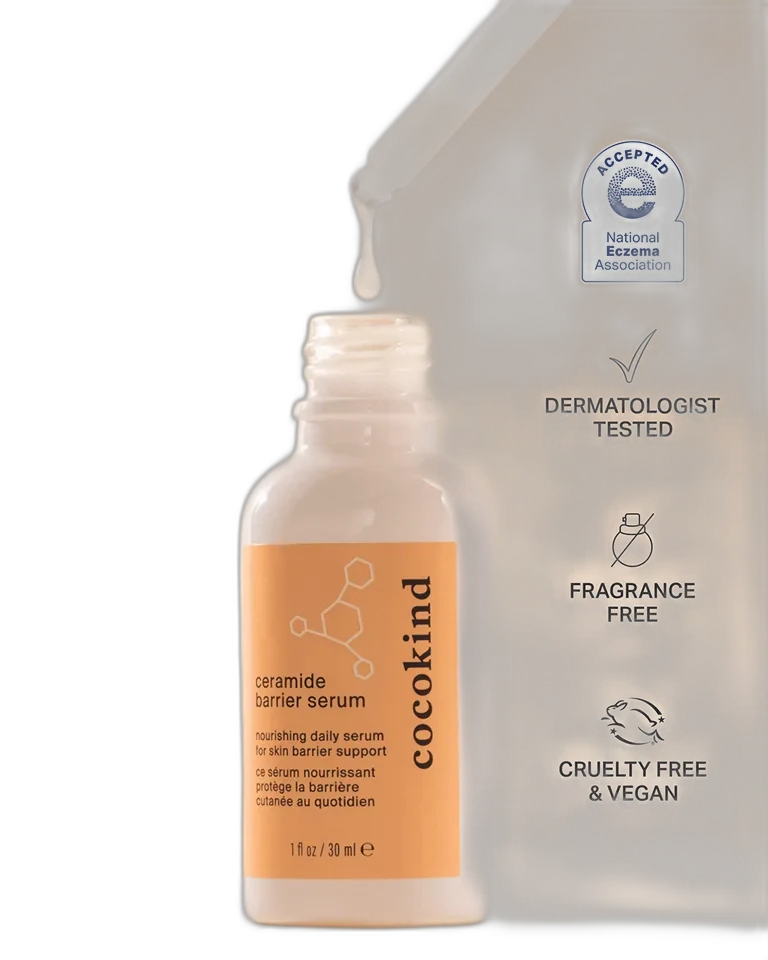
Ceramide Barrier Serum
Clean Barrier Repair Pick
 Verified reviewer
Pros & cons.
- +Five distinct ceramide types (NP, NS, AP, EOS, EOP) plus cholesterol and behenic acid for complete barrier lipid support
- +5% beta-glucan provides meaningful humectant and anti-inflammatory support beyond typical barrier serums
- +Ultra-lightweight texture absorbs in seconds and layers perfectly under any moisturizer
- +Fragrance-free, silicone-free, vegan, and cruelty-free formula
- +Lysolecithin delivery system helps ceramides integrate into the skin's lipid matrix
- +Available in jumbo 2 oz size for better per-ounce value
- +Available at accessible retailers including Target, Ulta, and Whole Foods
- −Lactic acid in the formula causes stinging for some very sensitive users
- −Standard 1 oz bottle feels small for $22 — jumbo size offers better value
- −Texture may feel too thin for users expecting a richer barrier repair product
- −80% aloe base is more marketing philosophy than proven efficacy advantage over water
- −Results are gradual and subtle — not a dramatic overnight barrier fix
The full review.
About Cocokind
Founded in 2014
Myth
Ceramides alone fix barriers.
Reality
The skin’s stratum corneum uses a “bricks and mortar” structure. The ‘bricks’ are dead skin cells, and the ‘mortar’ is a specific mix of three lipid classes: ceramides, cholesterol, and free fatty acids, in a roughly 3:1:1 ratio. Most cheap ceramide serums use only one or two ceramide types and omit the cholesterol and fatty acids. This is like building a wall with mortar missing two of its three ingredients.
How to Use
Not specified in the text.
Texture
This serum is thin. If you expect the thick, viscous feel of CeraVe’s ceramide products, the lightweight, watery consistency of Cocokind’s serum may feel insufficient. But thickness does not equal efficacy. The thin texture absorbs fast — the serum sinks in within seconds, leaving no residue, no stickiness, and no interference with subsequent layers. You might forget you applied it ten minutes later, which is what a well-formulated barrier serum should do.
Scent
Not specified in the text.
Packaging
The 1 oz bottle feels small for $22, but a jumbo 2 oz size costs less per ounce for those who have confirmed compatibility.
Best for
Not specified in the text.
Works for
Not specified in the text.
Not ideal for
Some very sensitive or compromised skin.
Common Complaints
A small minority of users report redness and irritation on first use — patch testing is advisable if your barrier is severely damaged.
Pairs Well With
Not specified in the text.
Conflicts With
Not specified in the text.
AM routine
Not specified in the text.
PM routine
Not specified in the text.
Ingredient analysis.
Full INCI list
Aloe Barbadensis Leaf Juice, Propanediol, Squalane, Glycerin, Sodium Citrate, Gluconolactone, Arginine, Lactic Acid, Musa Sapientum (Banana) Fruit Extract, Lysolecithin, Sclerotium Gum, Sodium Benzoate, Pullulan, Xanthan Gum, Ceteareth-25, Beta-Glucan, Tocopherol, Cetyl Alcohol, Caprylyl Glycol, Helianthus Annuus (Sunflower) Seed Oil, Silica, Behenic Acid, Cholesterol, Ceramide NP, Calcium Gluconate, Ceramide NS, Ceramide AP, Ceramide EOS, Ceramide EOP, Caprooyl Phytosphingosine, Caprooyl Sphingosine
Skin match.
The science.
The Science
This serum uses a five-ceramide approach based on how the stratum corneum organizes lipids. The Journal of Lipid Research identifies at least 12 ceramide subclasses in human skin; ceramides NP, NS, AP, EOS, and EOP are the most functionally important. EOS and EOP are ultra-long-chain ceramides (30-34 carbon atoms) essential for the long periodicity phase (LPP) of the lamellar lipid structure—the organized lipid sheets that waterproof and protect the skin barrier.
This formula includes all three lipid classes required for barrier assembly: ceramides, cholesterol, and a fatty acid (behenic acid). A landmark study by Holleran et al. in the Journal of Clinical Investigation shows that all three lipid classes must exist in a roughly 3:1:1 molar ratio for optimal barrier repair. Supplementing ceramides without cholesterol and fatty acids results in suboptimal barrier recovery.
The 5% beta-glucan concentration is clinically relevant. A 2020 study in the International Journal of Biological Macromolecules shows that topical beta-glucan at 1-5% improves skin hydration, reduces transepidermal water loss (TEWL), and promotes wound healing. Beta-glucan works through direct humectant hydration and immunomodulatory effects—it stimulates macrophage activity and collagen synthesis, aiding skin repair alongside the structural lipid restoration from the ceramides.
The lysolecithin delivery vehicle is notable. Research shows lysophospholipids act as penetration enhancers that deliver lipophilic actives through the stratum corneum. Because they structurally resemble the skin's phospholipid bilayers, they integrate ceramides into existing lipid lamellae more effectively than conventional emulsifier systems.
Dermatologist Perspective
Board-certified dermatologists state that effective barrier repair products need the complete lipid trio—ceramides, cholesterol, and fatty acids—not just ceramides. This serum's five-ceramide complex with cholesterol and behenic acid matches dermatological understanding of barrier lipid biology. Dermatologists often recommend ceramide-based serums for patients with barriers compromised by retinoids, chemical exfoliants, or environmental damage. The fragrance-free, silicone-free formulation works for most patients, though dermatologists may note that the lactic acid content could irritate severely compromised skin.
Where it fits in your routine.
Press 3-4 drops into palms and onto a damp face and neck after cleansing and toning. The lightweight formula absorbs fast, so you can apply moisturizer immediately. Use morning and evening. In the AM, apply moisturizer and sunscreen. In the PM, apply a thicker moisturizer or sleeping mask. It works well with ceramide-rich moisturizers to maximize barrier lipid restoration.
At $22 for 1 ounce, this serum costs a mid-range price for barrier repair products. The formulation—five ceramides, cholesterol, fatty acid, 5% beta-glucan, and squalane—offers value at this price. The jumbo 2 oz size lowers the per-ounce cost for regular users. Cocokind, founded in 2014, is an accessible clean beauty brand without clinical line pricing. This formulation rivals expensive ceramide serums from clinical brands and comes in clean beauty packaging at Target.
Use this if you have barrier damage from over-exfoliation, retinoid use, harsh weather, or environmental stress. It works for dry, dehydrated, and sensitive skin types seeking a lightweight, fragrance-free ceramide serum based on lipid science. It suits clean beauty enthusiasts who want deep formulations without clinical-brand pricing.
Patch test first if your skin is severely compromised or stinging because of the lactic acid content. Users wanting a thicker, more viscous serum texture may find this too thin. Very oily skin types may not need the squalane and lipid content if their barrier is intact.
Product details.
This serum is very lightweight and almost watery, with a slight gel quality. It absorbs within seconds. Skin feels soft and hydrated with no residue or stickiness.
Unscented — no fragrance added. Very faint natural scent from the aloe base.
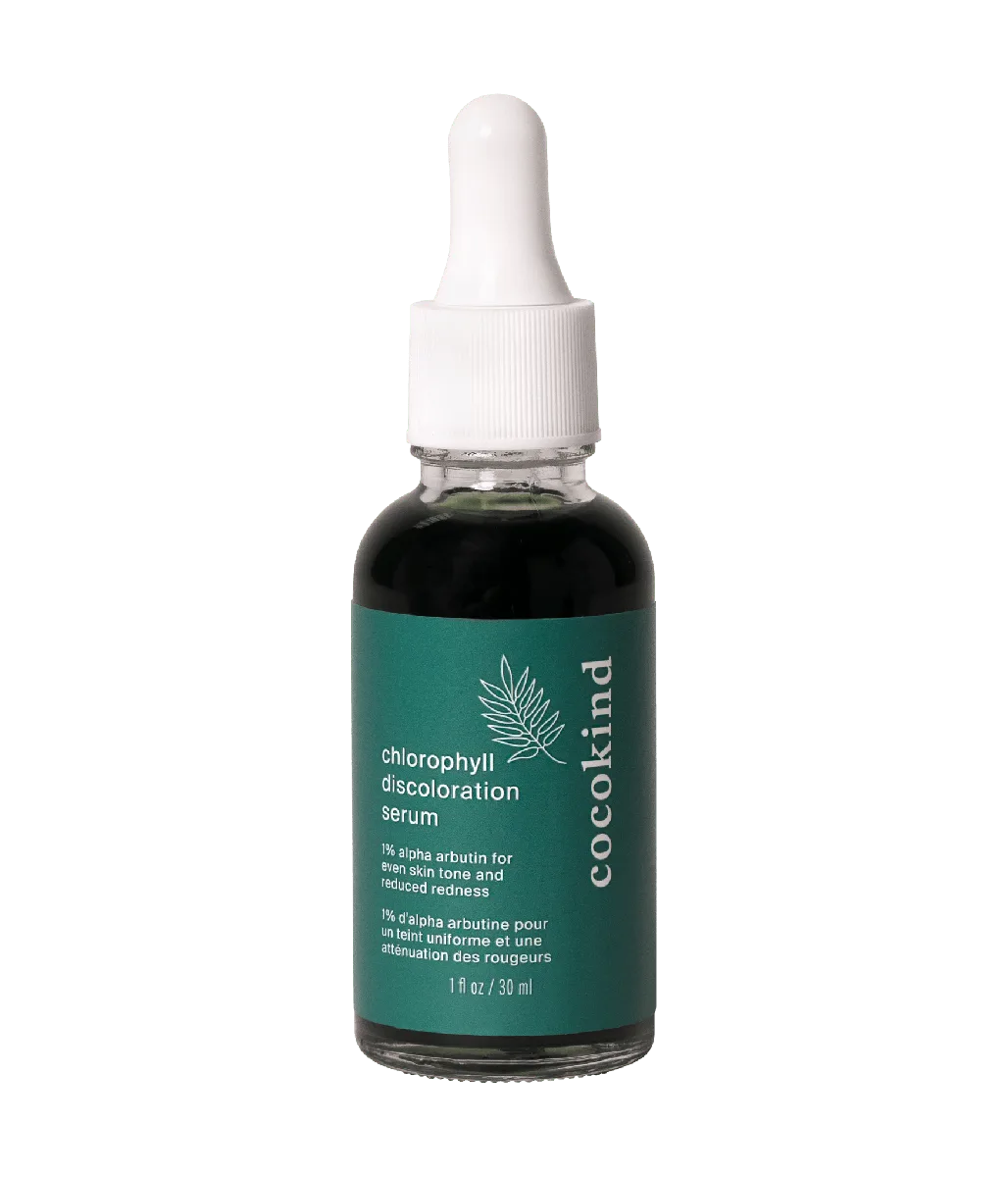
Glass bottle with dropper. The clean, minimalist cream-colored design uses recycled materials, matching Cocokind's sustainability focus. A jumbo 2 oz size is also available.
The serum is thinner than expected for a 'barrier' product; it is almost watery, like an essence rather than a traditional serum. It absorbs within seconds and leaves skin soft and slightly dewy. Most users feel no tingling or need for an adjustment period, though a small minority reports initial stinging, likely from the lactic acid. The lightweight texture layers easily under any moisturizer.
2-3 months with twice-daily application to face and neck
12 months
All Year
The backstory.
Cocokind founder Priscilla Tsai launched the brand in 2014 after struggling with hormonal acne and frustration with the clean beauty market's lack of affordable, science-backed options. The Ceramide Barrier Serum represents the brand's evolution from simple superfood-based products to more sophisticated formulations — it's become one of Cocokind's bestsellers and a Target shelf staple, proving that effective barrier repair doesn't need to cost $50.
About Cocokind
Priscilla Tsai, a former Wall Street banker, founded Cocokind in 2014 to provide affordable, clean skincare. Cocokind sells at Target, Ulta, and Whole Foods. The brand uses ingredient transparency and accessible pricing to build credibility, though its formulations prioritize clean beauty philosophy over clinical-grade efficacy. *Established Brand (5–20 years)*
Common myths.
More ceramides means better barrier repair.
Ceramide type count matters less than including cholesterol and fatty acids. These supporting lipids help ceramides organize in the stratum corneum. This serum has all three lipid classes, which matters more than the ceramide count alone.
Barrier repair serums must feel thick and heavy to work.
This serum has a lightweight, watery texture but stays effective. Lysolecithin, a phospholipid emulsifier, delivers the ceramides, cholesterol, and fatty acids. This helps the lipids integrate into the skin's barrier without a heavy occlusive base.
FAQ.
How many ceramides does the Cocokind Ceramide Barrier Serum contain?
This serum contains five ceramide types: Ceramide NP, Ceramide NS, Ceramide AP, Ceramide EOS, and Ceramide EOP. It also includes cholesterol and behenic acid (a fatty acid). This provides the complete three-class lipid system required for barrier function, which distinguishes it from single-ceramide competitors.
Can I use this serum with retinol?
Yes — this ceramide serum works well with retinol. The five-ceramide complex reinforces the barrier retinol can compromise, which reduces dryness and irritation. Apply the serum before or after retinol, or on alternate nights if your skin is reactive.
Is the Cocokind Ceramide Barrier Serum good for sensitive skin?
The fragrance-free, silicone-free formula works for sensitive skin. However, a small amount of lactic acid causes stinging in some very reactive users. Patch test first if you have severely compromised skin. Most sensitive skin types tolerate it well.
Why is aloe vera the first ingredient instead of water?
Cocokind uses 80% aloe barbadensis leaf juice as the base instead of water. Aloe has natural polysaccharides and anti-inflammatory compounds, which makes the base more soothing for the ceramides and lipids. This clean beauty choice offers marginal benefits over purified water.
Is there a bigger size available?
Yes — Cocokind offers a 2 fl oz jumbo size of the Ceramide Barrier Serum. This size has better value per ounce than the 1 fl oz bottle for users who find the Ceramide Barrier Serum works for their skin.
What the community says.
"Lightweight texture absorbs instantly without stickiness"
"Noticeably calmer, less reactive skin within days"
"Affordable five-ceramide formula with clean ingredient list"
"Fragrance-free and suitable for sensitive skin"
"Visible improvement in barrier function and hydration"
"Caused redness and stinging for some sensitive users"
"1 oz bottle feels small for the price"
"Aloe base may not suit all skin types"
"Some found the texture too thin for their barrier repair needs"
"Results are subtle — not dramatic overnight changes"
People also looked at.