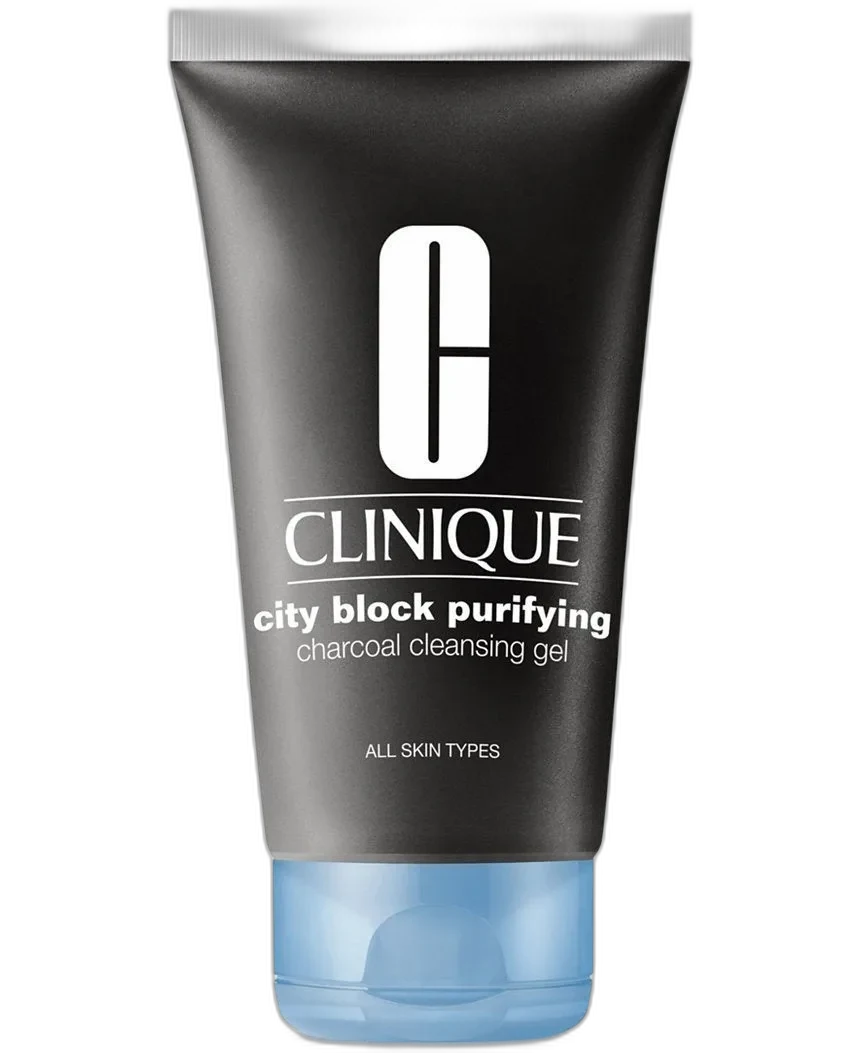
City Block Purifying Charcoal Cleansing Gel
Anti-Pollution Daily Cleanser
 Verified reviewer
Pros & cons.
- +One of the gentlest surfactant systems available in any charcoal cleanser at any price point
- +Sulfate-free formula using oat amino acids and cocoyl glutamate
- +Caffeine adds antioxidant anti-pollution benefit during cleansing step
- +Fragrance-free and oil-free formula
- +Rinses cleanly without stripped or tight feeling
- +Fungal acne safe with a simple clean ingredient list
- −Contains MI/MCI preservatives — documented contact allergens that contradict the brand's allergy-tested positioning
- −Limited availability suggesting possible discontinuation
- −Charcoal contact time in wash-off format is too brief for deep pore benefits
- −Twenty-five dollars for a simple gel cleanser is a prestige premium
- −Small review base makes long-term performance difficult to validate
The full review.
Clinique’s founding story is allergy testing. It’s literally the brand’s origin myth — dermatologist Norman Orentreich partnering with Vogue in 1968 to create the first prestige skincare line that was allergy-tested and fragrance-free. Every Clinique product carries that implicit promise: we’ve thought about what could irritate your skin, and we’ve removed it. Which makes the City Block Purifying Charcoal Cleansing Gel a genuinely confusing product.
Reality
The surfactant system is beautiful. Cocamidopropyl hydroxysultaine, coco-betaine, sodium lauroyl oat amino acids, decyl glucoside, sodium cocoyl sarcosinate, and disodium cocoyl glutamate — this reads like a dermatologist’s wish list for gentle cleansing. Oat amino acid surfactants are among the mildest cleansing agents available. Cocoyl glutamate is derived from coconut oil and glutamic acid. Decyl glucoside is so gentle it’s used in baby washes. There isn’t a sulfate in sight. For a charcoal cleanser — a category that often defaults to harsh, stripping formulations — this level of surfactant care is genuinely impressive.
The charcoal component serves its purpose as an anti-pollution agent. Activated charcoal adsorbs surface-level particulate matter, excess sebum, and environmental residue through physical attraction. In a rinse-off cleanser with seconds of skin contact, the charcoal’s benefit is primarily surface-level — removing the invisible film of urban pollution that accumulates throughout the day. Don’t expect deep pore extraction from a wash-off format. That requires the extended contact time of a leave-on mask.
Caffeine adds an antioxidant dimension, neutralizing pollution-generated free radicals during the cleansing step. It’s a smart inclusion for an anti-pollution product — addressing both the physical particulates and the oxidative stress they cause.
And then there’s methylchloroisothiazolinone and methylisothiazolinone. MI and MCI are documented contact allergens that have been restricted in leave-on products across the European Union since 2017. They remain permitted in rinse-off products, but they are among the most common causes of allergic contact dermatitis diagnosed by patch-testing dermatologists worldwide. The American Contact Dermatitis Society named methylisothiazolinone its Allergen of the Year in 2013.
For any brand, this preservative choice would raise eyebrows. For Clinique — the brand that exists because of allergy testing — it’s genuinely difficult to explain. The rest of the formula goes to extraordinary lengths to be gentle, and then the preservative system introduces one of dermatology’s most thoroughly documented sensitizers. It’s like building a house with impeccable craftsmanship and then installing a front door that occasionally shocks people.
Texture
The texture is pleasant enough. A dark gray translucent gel that lathers into a light foam, it feels gentle on application and rinses cleanly without leaving a stripped or tight sensation. The charcoal gives it visual appeal — there’s something satisfying about washing with a dark product and seeing it rinse away clear. Skin feels clean and refreshed afterward.
Availability
Availability appears to be waning. The product is difficult to find at many major retailers, suggesting it may be in the process of discontinuation or replacement within Clinique’s lineup. This wouldn’t be surprising — the All About Clean line has been absorbing and updating many of Clinique’s older cleansing products, and the MI/MCI issue alone is reason enough for a reformulation.
Price
At roughly twenty-five dollars for five ounces, the price is fair for a prestige cleanser — nothing exceptional, nothing outrageous. Two to three months of daily evening use from a single tube. The value proposition depends entirely on whether the gentle surfactant system matters enough to you to overlook the preservative issue. For most consumers, the answer should probably be no — there are excellent gentle cleansers without MI/MCI available at every price point.
Summary
This product is a case study in how a single ingredient choice can undermine an otherwise thoughtful formulation. The surfactant system deserves genuine praise. The preservative system deserves genuine criticism. And the contradiction between the two tells you something about the distance between a brand’s marketing identity and its formulation decisions.
Ingredient analysis.
Full INCI list
Water, Cocamidopropyl Hydroxysultaine, Coco-Betaine, Sodium Lauroyl Oat Amino Acids, Decyl Glucoside, Sodium Cocoyl Sarcosinate, Acrylates Copolymer, Sodium Chloride, Disodium Cocoyl Glutamate, Glycerin, Caffeine, Butylene Glycol, Sodium Cocoyl Glutamate, Monosodium Citrate, Citric Acid, Charcoal Powder, Sodium Hydroxide, Disodium EDTA, Methylchloroisothiazolinone, Methylisothiazolinone, Phenoxyethanol, Iron Oxides (CI 77499)
Skin match.
The science.
The Science
The surfactant system in this cleanser represents current best practices in gentle cleansing chemistry. Amino acid-based surfactants like sodium lauroyl oat amino acids and sodium cocoyl sarcosinate have been shown to produce significantly lower irritation potential than traditional sulfate surfactants in clinical testing. Cocoyl glutamate surfactants maintain skin barrier integrity better than sodium lauryl sulfate during cleansing, preserving natural moisturizing factors and stratum corneum lipids.
The charcoal component functions through physical adsorption — its microporous structure provides enormous surface area that attracts and holds organic molecules, including pollution-derived particulate matter and excess sebum. However, the brief contact time in a rinse-off product limits the extent of this adsorption compared to leave-on formats like masks.
The MI/MCI preservative concern is well-documented in dermatological literature. Methylisothiazolinone was named the American Contact Dermatitis Society's Allergen of the Year in 2013, and subsequent epidemiological studies confirmed rising sensitization rates across multiple populations.
Dermatologist Perspective
Dermatologists have mixed views on this product. The surfactant system is exemplary — gentle enough for most skin types and consistent with evidence-based cleansing recommendations. However, board-certified dermatologists who perform patch testing note that the MI/MCI preservative system is one of the most common allergens they identify in patients with facial contact dermatitis. Dermatologists who focus on sensitive skin would likely recommend alternative gentle cleansers without these preservatives.
Where it fits in your routine.
Massage a small amount onto damp skin at night. Focus on areas with high pollution and oil exposure: forehead, nose, and chin. Lather gently for thirty seconds. Rinse well with lukewarm water. Use toner and moisturizer after. This works as the second step in a double-cleansing routine.
At roughly twenty-five dollars for five ounces, this matches standard prestige cleanser pricing. The surfactant system justifies a premium over basic gel cleansers, but the MI/MCI preservative issue undermines its value. One tube lasts two to three months with daily use. Because of limited availability and preservative concerns, most consumers find better value in gentle, MI/MCI-free cleansers at lower price points.
Urban oily and combination skin types want a sulfate-free, fragrance-free charcoal cleanser with a gentle surfactant system. This works best for those not sensitive to MI/MCI preservatives.
People with known sensitivity to methylisothiazolinone or methylchloroisothiazolinone. Sensitive and eczema-prone skin types. Budget-conscious shoppers who find cheaper, gentle cleansers without these preservative concerns.
Product details.
Dark gray translucent gel lathers into a light, airy foam. It is not thick or heavy and spreads easily on wet skin.
Fragrance-free with a very faint neutral product scent.
Dark squeeze tube with a flip-top cap. The sleek, urban design matches the City Block branding.
The dark gel color looks striking on first use. It lathers gently without heavy foam. Skin feels clean and refreshed after rinsing, not tight or stripped like many charcoal cleansers. No adjustment period is required.
2-3 months with daily evening use
12 months
All Year
The backstory.
Part of Clinique's City Block range targeting urban environmental stressors. The cleanser was designed to address the specific challenge of removing invisible pollution particulates — PM2.5, heavy metals, and polycyclic aromatic hydrocarbons — that accumulate on city-dwellers' skin throughout the day and contribute to premature aging and inflammation.
About Clinique
Legacy Brand (20+ years)Clinique launched in 1968, the first prestige cosmetics brand to be fragrance-free and allergy-tested. It grew from a partnership with dermatologist Norman Orentreich. As an Estée Lauder Companies subsidiary, Clinique led dermatologist-guided skincare and is one of the most recognized prestige skincare brands worldwide.
FAQ.
Is Clinique City Block Charcoal Cleanser sulfate-free?
Yes — this cleanser uses a gentle surfactant system of oat amino acids, coco-betaine, and cocoyl glutamate instead of sulfates. It is one of the mildest charcoal cleansers available and cleans without stripping.
Does the charcoal in this cleanser actually work?
Charcoal has brief contact time with skin in a wash-off format. It primarily removes surface-level pollution particulates and excess oil during cleansing. Deep pore extraction requires the leave-on contact time found in masks, not cleansers.
Why does this cleanser contain MI/MCI preservatives?
The brand includes methylchloroisothiazolinone and methylisothiazolinone despite its focus on allergy testing. MI/MCI are documented contact allergens, which is a concern for a daily face wash. People with known sensitivity to these preservatives should avoid this product.
Is Clinique City Block Charcoal Cleanser discontinued?
Many retailers have limited stock of this product. Clinique may discontinue or replace it in the Clinique lineup. Check Clinique.com or Macy's for current availability.
Can I use this cleanser for double cleansing?
Yes — this works well as the second step in a double-cleansing routine. Use an oil cleanser or balm first to dissolve sunscreen and makeup, then follow with this gel cleanser to remove remaining residue and pollution particles.
Community
What the community says.
"Gentle sulfate-free cleansing that doesn't strip skin"
"Dark color makes it fun and visually satisfying to use"
"Removes makeup and pollution residue effectively"
"Lathers lightly without excessive foam"
"Contains MI/MCI preservatives which are known sensitizers"
"Charcoal can stain washcloths and light towels"
"Limited availability — difficult to find at many retailers"
"Not dramatically different from any other gentle gel cleanser"
People also looked at.