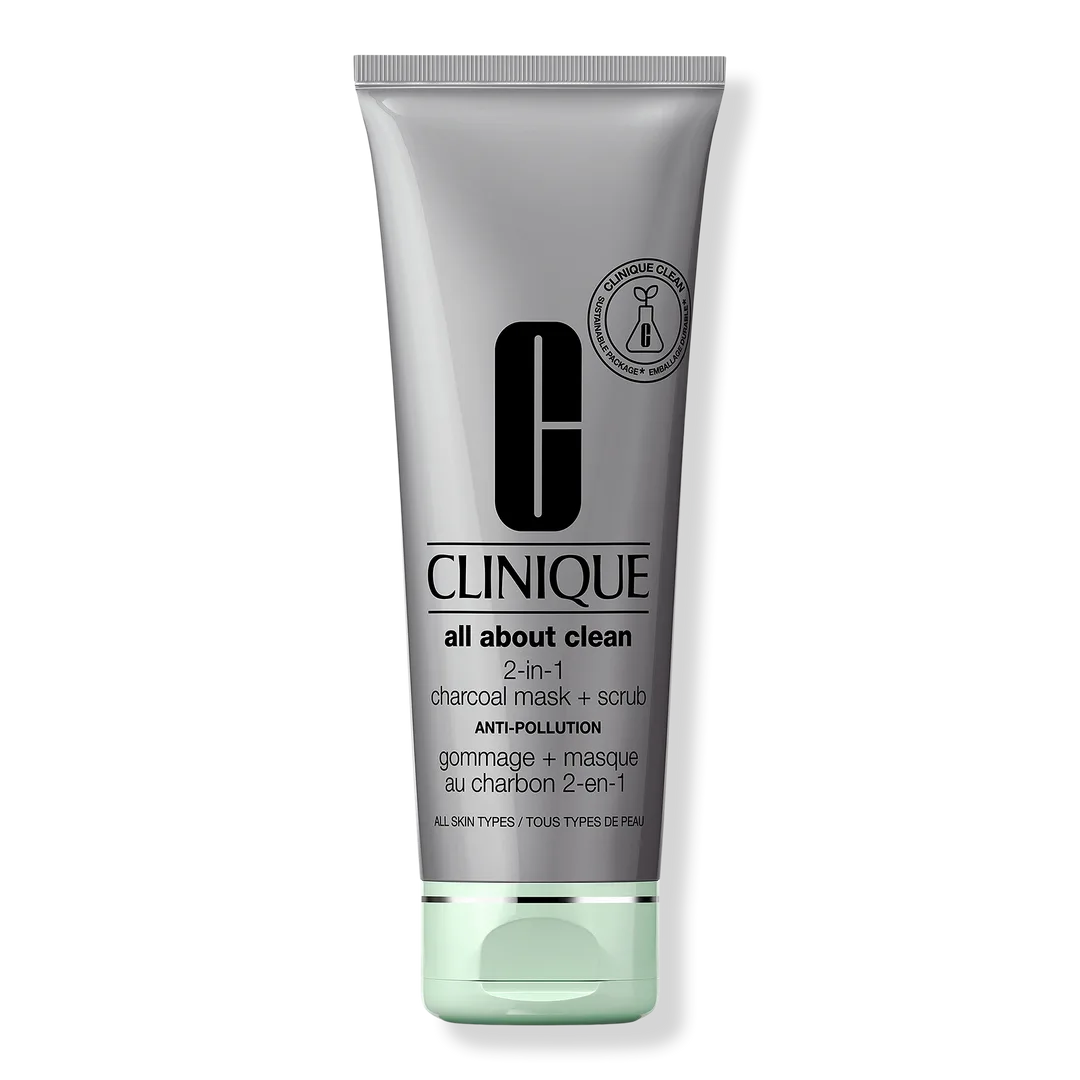
All About Clean Charcoal Mask + Scrub
Double-Duty Detox
 Verified reviewer
Pros & cons.
- +Genuine dual-function design works as both a drawing clay mask and physical scrub
- +Acetyl glucosamine adds chemical exfoliation alongside the physical scrub particles
- +Fragrance-free, sulfate-free, and allergy-tested — true to Clinique's sensitive skin commitment
- +Dual charcoal system with bamboo and standard charcoal for broader adsorption
- +Gentle taurate surfactant won't over-strip skin during rinse
- +Clean formula with no silicones, parabens, or oils
- −Thirty-eight dollars is steep for a kaolin-charcoal formula at 3.4 ounces
- −Physical scrub particles may irritate very sensitive or rosacea-prone skin
- −Charcoal stains light-colored towels and washcloths
- −Pore-tightening effects are temporary, lasting only 24-48 hours
- −Limited review base makes long-term efficacy harder to validate
The full review.
Clinique used charcoal first in the City Block line, a pollution-focused range with a charcoal cleansing gel and targeted treatments. When Clinique moved cleansing products under the All About Clean umbrella around 2021, the charcoal mask received an upgrade. It uses gentler surfactants, adds acetyl glucosamine for chemical exfoliation, and uses a dual-function format that works as a mask or a scrub depending on how you rinse.
The concept is simple and works. Apply the dark gray clay paste to clean, dry skin. Wait five minutes while kaolin draws out excess oil and charcoal adsorbs surface impurities. Add water and massage in circles to activate the physical scrub. The fine particles provide moderate exfoliation—more than a washcloth, less than a gritty nineties apricot scrub. Rinse to leave skin smoother, cleaner, and temporarily tighter in the pores.
The dual charcoal system is a smart detail. Standard charcoal powder and bamboo charcoal powder have different pore structures and adsorption profiles, so combining them provides a broader spectrum of impurity removal. Whether this differs from a single-charcoal formula is debatable, but this formulation separates prestige products from basic ones.
Acetyl glucosamine adds genuine value. It is a gentle chemical exfoliant—an amino sugar that works on bonds between dead corneocytes without the irritation of glycolic acid or the contraindications of salicylic acid. Using it alongside physical scrub particles provides both mechanical and chemical exfoliation in one treatment, which is more efficient than either method alone.
The formula is clean for a prestige product. It is fragrance-free, sulfate-free, paraben-free, oil-free, and silicone-free. The surfactant is sodium methyl cocoyl taurate, a gentle cleansing agent used in baby products. For a brand built on allergy-tested, dermatologist-guided formulations, this ingredient list matches the brand promise.
But it costs thirty-eight dollars for kaolin clay, charcoal, and a few supporting ingredients. The L’Oreal Pure Clay mask delivers a similar charcoal-kaolin experience for under fifteen dollars. Innisfree’s volcanic clay masks cost half as much. The Clinique tax buys fragrance-free assurance, acetyl glucosamine, and the brand’s allergy-testing protocol—important for Clinique’s core customer who trusts the green-and-white packaging. For others, the value is harder to justify.
Texture
The texture is pleasant. It spreads smoothly and does not dry to a tight, cement-like finish like some clay masks. The scrub particles are fine enough to avoid micro-tears but coarse enough to work. It rinses cleanly without a film, though it will destroy a white washcloth—charcoal products and light linens do not mix.
Best for
Pores appear visibly smaller for twenty-four to forty-eight hours after use, the expected timeline for a clay mask’s temporary tightening. Real benefits come with consistent weekly use over four to six weeks, when congestion, blackhead density, and skin texture show cumulative improvement. This is a maintenance tool for oily and combination skin, not a miracle product.
Who Should Buy
Clinique loyalists will find this a seamless addition to a Three-Step routine. It works as a pre-cleansing treatment step, and the gentle formula won’t disrupt the balance of Clinique counters have calibrated for decades. For shoppers without brand loyalty, the question is: is allergy-tested, fragrance-free charcoal worth the premium? For sensitive oily skin, it may be. For everyone else, good drugstore alternatives exist.
Ingredient analysis.
Full INCI list
Water/Aqua/Eau, Kaolin, Maltodextrin, Butylene Glycol, Silica, Magnesium Aluminum Silicate, Glyceryl Stearate, PEG-100 Stearate, Sodium Methyl Cocoyl Taurate, Gentiana Lutea (Gentian) Root Extract, Laminaria Saccharina Extract, Charcoal Powder, Tocopheryl Acetate, Acetyl Glucosamine, Caprylyl Glycol, Sucrose, Xanthan Gum, Disodium EDTA, Chlorphenesin, Phenoxyethanol, Titanium Dioxide (CI 77891), Iron Oxides (CI 77499), Bamboo Charcoal Powder
Skin match.
The science.
The Science
Dermatological literature documents Kaolin clay's oil-absorbing properties. This natural aluminum silicate uses physical adsorption; its plate-like molecular structure attracts and holds sebum, dead skin cells, and environmental particulates. Adding activated charcoal increases the mask's adsorption capacity because its microporous structure provides a large surface area per gram.
Acetyl glucosamine uses a different mechanism. As an amino sugar precursor to hyaluronic acid, it inhibits glycosidic bonds between corneocytes in the upper stratum corneum. This promotes gentle desquamation without the pH-dependent activity of alpha hydroxy acids. It works at near-neutral pH, unlike glycolic acid which requires acidic conditions to exfoliate. This allows it to work in the clay mask's formulation without pH optimization that could compromise other ingredients.
Dermatologist Perspective
Dermatologists recommend clay-based masks for oily and combination skin as a once-to-twice-weekly treatment to manage excess sebum and pore congestion. Board-certified dermatologists note that combining physical and chemical exfoliation in one product is efficient but requires correct frequency; overuse can compromise the skin barrier even in oily skin types. The fragrance-free, allergy-tested formulation meets dermatological recommendations for patients seeking a treatment mask without common sensitizers.
Where it fits in your routine.
Apply a thin, even layer to clean, dry skin. Avoid the eye area and lips. Leave on for five minutes. For a scrub, add water and massage in gentle circular motions. Rinse thoroughly with warm water. Follow with toner and moisturizer. Use once or twice per week. Do not use on the same evening as chemical exfoliants or retinoids.
At $38 for 3.4 ounces, this clay mask sits at the high end of its category. One tube lasts four to six months with weekly use. This makes the per-use cost roughly two dollars, which is reasonable for a prestige treatment. However, drugstore brands offer effective charcoal-kaolin masks for much less. The Clinique premium price includes a fragrance-free formulation, allergy testing, acetyl glucosamine, and the brand's dermatologist-guided development process. Whether the markup is worth it depends on your irritant sensitivity and brand trust.
Oily and combination skin types want a fragrance-free, allergy-tested weekly mask from a trusted prestige brand. It works for Clinique loyalists adding a pore-clearing step to their Three-Step routine.
Sensitive, rosacea-prone, or dry skin. Budget-conscious shoppers seeking charcoal-kaolin masks at drugstore prices. People with a compromised skin barrier or active eczema.
Product details.
Thick, dark gray clay paste with fine gritty particles. It applies smoothly and sets to a semi-dry finish within five minutes. Massaging with water turns the drawing mask into an exfoliating scrub.
Fragrance-free with a faint neutral clay-mineral scent. No added perfume.
Gray squeeze tube with flip-top cap. Clean Clinique design language. Functional and travel-friendly.
The mask feels cooling as it sets on first use. A slight tightening sensation shows the kaolin drawing oil to the surface. Massaging to scrub provides moderate exfoliation. Skin looks cleaner and pores appear temporarily smaller immediately after rinsing. No adjustment period is required.
4-6 months with once-weekly use
12 months
All Year
The backstory.
Part of Clinique's All About Clean line, which consolidated and rebranded the brand's cleansing products around 2021. This mask replaced an earlier City Block charcoal product, modernizing the formula with gentler surfactants and the addition of acetyl glucosamine while maintaining Clinique's core commitment to fragrance-free, allergy-tested products.
About Clinique
Legacy Brand (20+ years)Clinique was founded in 1968 as the first prestige cosmetics brand to be allergy-tested and fragrance-free, developed in partnership with dermatologist Norman Orentreich and Vogue editor Carol Phillips. A subsidiary of Estée Lauder Companies, Clinique pioneered the concept of dermatologist-guided skincare with its original Three-Step System and remains one of the most widely recognized prestige skincare brands worldwide.
Common myths.
Charcoal masks pull toxins out of your skin
Charcoal adsorbs excess oil and surface impurities via physical attraction. It does not extract toxins from deep within skin. The pore-clearing benefit is real, but the mechanism is surface-level adsorption rather than detoxification.
FAQ.
How often should I use Clinique Charcoal Mask + Scrub?
Use one to two times per week on clean, dry skin. Apply a thin layer and leave for five minutes. Massage gently with water to activate the scrub before rinsing. Do not use on the same night as chemical exfoliants or retinoids.
Is Clinique Charcoal Mask good for sensitive skin?
This mask is fragrance-free and allergy-tested. However, the physical scrub particles and clay drawing action can overstimulate very sensitive or rosacea-prone skin. Patch test on your jawline first and use once weekly to start.
Can I use this mask with retinol?
Yes, but not on the same night. Physical exfoliation and retinol's chemical exfoliation can strip the barrier. Use the mask on nights you skip retinol, or space them at least 24 hours apart.
Does the charcoal stain skin?
No, the charcoal rinses cleanly from skin. It stains light-colored towels and washcloths, so use a dark cloth when removing the mask.
What is the difference between mask mode and scrub mode?
Apply and leave on for five minutes to work as a drawing clay mask that absorbs oil and impurities. Adding water and massaging in circular motions activates the fine particles as a physical scrub to buff away dead skin cells. The acetyl glucosamine provides chemical exfoliation during both phases.
What the community says.
"Leaves skin feeling deeply clean and refreshed without tightness"
"Dual mask-and-scrub function saves time in weekly routine"
"Fragrance-free and gentle enough for regular use"
"Visible pore refinement after consistent weekly use"
"No harsh sulfates — uses gentle taurate surfactant"
"Thirty-eight dollars is expensive for a clay mask at this size"
"Physical scrub particles may be too abrasive for sensitive skin"
"Charcoal can be messy and stains light-colored towels"
"Effects are temporary — oil and congestion return within days"
Featured in.
People also looked at.